
Spain's Tactical Evolution: How Luis de la Fuente Built a Vertical Machine for the 2026 World Cup
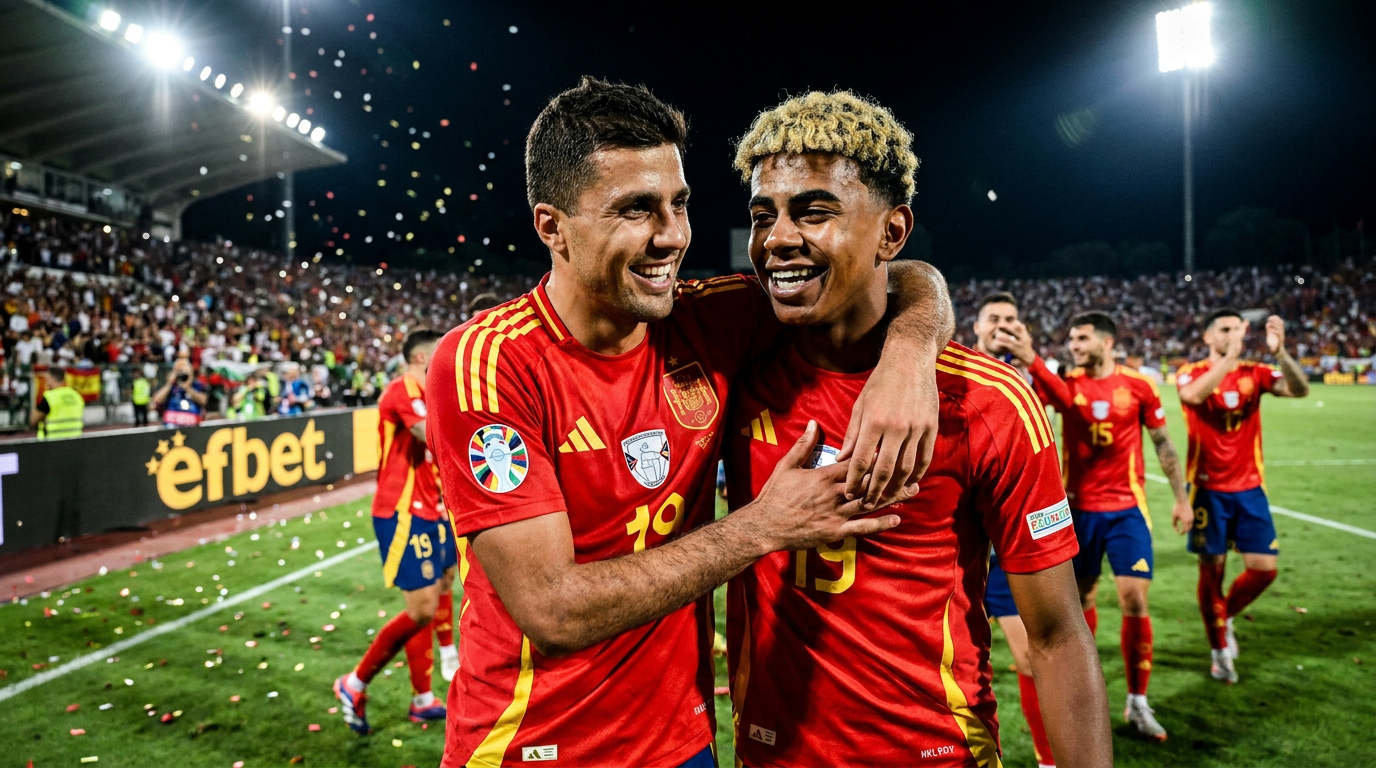
Following their record-breaking Euro 2024 triumph, Spain arrives at the 2026 World Cup having traded slow possession for a lethal, vertical 4-3-3. Anchored by a single pivot and explosive wide wingers, La Roja has become international football's most dynamic attacking force.
By Factlen Editorial Team
- Tactical Analysts
- Analysts who view Spain's evolution as the necessary modernization of positional play.
- Spanish Supporters
- Long-time fans who are thrilled by the return of entertaining, high-scoring football.
- Neutral Observers
- Observers who acknowledge the attacking brilliance but worry about vulnerabilities to elite counter-attacks.
What's not represented
- · Opposing Managers
- · Defensive Traditionalists
Why this matters
Spain's shift from suffocating, horizontal 'tiki-taka' to a direct, transition-heavy style redefines the tactical meta of international football. Their success forces opponents to adapt to a team that can both dominate the ball and strike instantly on the counter.
Key points
- Spain has transitioned from slow, horizontal possession to a direct, vertical 4-3-3 under Luis de la Fuente.
- The system relies heavily on Rodri as a single pivot, allowing the rest of the midfield to push into advanced attacking zones.
- Wingers Lamine Yamal and Nico Williams hug the touchlines to stretch defenses and open the central half-spaces.
- Spain's aggressive counter-press is designed to win the ball back high up the pitch, generating nearly eight attacking-third regains per match.
Spain's arrival at the 2026 FIFA World Cup marks the culmination of a profound tactical revolution. Gone are the days of the sterile, thousand-pass sequences that defined their disappointing 2018 and 2022 campaigns. Under manager Luis de la Fuente, La Roja has morphed into a vertical, ruthless machine, arriving in North America as the reigning European champions and one of the heavy favorites to lift the trophy.[2][7]
The transformation from horizontal tiki-taka to what some analysts are calling 'tiki-taka 2.0' is rooted in a fundamental shift in philosophy. While Spain still commands the ball—averaging around 63 to 65 percent possession—they no longer use it passively. Instead, possession is weaponized to move the opposition, create overloads, and launch rapid attacks into the spaces left behind.[1][6]
At the heart of this system is a fluid 4-3-3 formation that relies on a single defensive pivot, a role almost exclusively occupied by Rodri. In an era where many international sides opt for double pivots to ensure defensive stability, De la Fuente’s reliance on a lone holding midfielder is a brave, high-risk calculation. Rodri acts as the connective tissue, dictating the tempo and sweeping up danger, which allows the rest of the midfield to push aggressively forward.[2][7]
When Spain establishes sustained possession in the opponent's half, their shape radically alters. The 4-3-3 blossoms into a 3-2-5 or even a 2-3-5 attacking structure. Five players occupy the last line of the opposition's defense, pinning them back, while the supporting cast forms a tight rest-defense net behind the ball to suffocate counter-attacks before they can begin.[1]

The most visible departure from the Spain of the 2010s is the profile of their wide players. Where managers once deployed playmakers like Andrés Iniesta or David Silva on the flanks to drift inside, De la Fuente utilizes pure, vertical wingers. Lamine Yamal and Nico Williams are instructed to hug the touchlines, stretching the opposition's defensive block to its absolute limits.[2][6]
This extreme width serves a dual purpose. First, it isolates Yamal and Williams in one-on-one situations against isolated fullbacks, allowing them to use their elite dribbling to break into the penalty area. Second, by pulling defenders out wide, it pries open the central half-spaces for Spain's dynamic midfield interiors—players like Pedri, Gavi, and Dani Olmo—to exploit.[1][4]
First, it isolates Yamal and Williams in one-on-one situations against isolated fullbacks, allowing them to use their elite dribbling to break into the penalty area.
The fullbacks in this system operate with deliberate asymmetry to maintain balance. While one fullback, often Pedro Porro on the right, will make aggressive overlapping runs outside of Yamal, the opposite fullback—such as Marc Cucurella or Alejandro Grimaldo—will frequently invert. By tucking inside next to Rodri, the inverted fullback creates a makeshift double pivot that protects the center of the pitch against quick transitions.[2]
Spain’s buildup play from the back is equally meticulous. Unai Simón operates essentially as a sweeper-keeper and a deep-lying playmaker. The center-backs split wide, and Simón steps up to act as a third central defender in possession. This invites the opposition to press high. Once the trap is set, Spain uses their 92 percent pass completion rate in their own third to bypass the first line of pressure, instantly accelerating the attack.[1][6]
Off the ball, Spain is arguably just as lethal. They do not retreat into a passive mid-block when possession is lost. Instead, they execute a ferocious counter-press, aiming to win the ball back within seconds. During their flawless Euro 2024 run and their unbeaten World Cup qualifying campaign, they averaged nearly eight possession regains in the attacking third per match, turning defensive actions into immediate scoring opportunities.[3][4]

However, this high-wire act is not without its vulnerabilities. The aggressive positioning of the fullbacks and the reliance on a single pivot mean that if an opponent can successfully bypass Spain's initial counter-press, there are vast tracts of space to exploit in transition. Teams with elite, direct wingers and accurate long-range passers can punish the spaces left behind Spain's advancing defensive line.[1][5]
Furthermore, the system's success is heavily tethered to the fitness and form of a few irreplaceable profiles. Rodri’s ability to single-handedly manage the midfield transition is unique, and any absence forces De la Fuente to alter the team's structural geometry. Similarly, the specific one-on-one threat provided by Yamal and Williams is difficult to replicate with the squad's other, more associative attackers.[2][7]

Despite these inherent risks, the results speak for themselves. Spain scored a tournament-record 15 goals at Euro 2024 and followed it up with 21 goals in six World Cup qualifying matches. They have proven they can dismantle low blocks with intricate wide combinations and punish high lines with blistering pace.[2][3]
As the 2026 World Cup unfolds across North America, Spain’s tactical blueprint stands as the benchmark for modern international football. By fusing the technical supremacy of their past with the vertical ruthlessness of the present, Luis de la Fuente has built a machine that doesn't just want to keep the ball—it wants to destroy you with it.[4][6]
How we got here
Dec 2022
Luis de la Fuente is appointed senior manager, replacing Luis Enrique after a disappointing World Cup exit.
Jun 2023
Spain wins the UEFA Nations League, securing De la Fuente's first trophy and validating his tactical tweaks.
Jul 2024
Spain wins Euro 2024 with a perfect record and a tournament-record 15 goals, cementing the new 4-3-3 system.
Nov 2025
Spain completes an unbeaten World Cup qualifying campaign, dominating Group E with 21 goals.
Jun 2026
Spain arrives in North America as one of the heavy favorites for the 2026 FIFA World Cup.
Viewpoints in depth
Tactical Purists
Analysts who view Spain's evolution as the necessary modernization of positional play.
For tactical analysts, Spain's shift represents the death of dogmatic tiki-taka. They argue that possession without penetration had become a fatal flaw for the national team in 2018 and 2022. By introducing pure wingers and a willingness to play direct, line-breaking passes, purists believe Luis de la Fuente has successfully merged the control of the 2010s with the high-octane transition mechanics required to win in modern football.
Traditional Supporters
Long-time fans who are thrilled by the return of entertaining, high-scoring football.
The Spanish fanbase endured years of frustrating tournament exits characterized by endless sideways passing and a lack of cutting edge. Supporters have rallied behind this new iteration because it is inherently more exciting. The emergence of fearless teenagers like Lamine Yamal provides a direct, unpredictable flair that makes the team a joy to watch, rather than just a mathematical exercise in ball retention.
Skeptical Pragmatists
Observers who worry the aggressive system leaves Spain too vulnerable to elite counter-attacks.
While acknowledging the attacking brilliance, pragmatists point to the inherent risks of committing five players to the front line and relying on a single pivot. They argue that against top-tier opposition with world-class transitional speed—such as France or Brazil—Spain's high defensive line and inverted fullbacks could be horribly exposed if the initial counter-press fails to win the ball back immediately.
What we don't know
- Whether the single-pivot system can withstand the transitional speed of elite South American or European rivals in the knockout stages.
- How De la Fuente will adapt the system if Rodri sustains an injury, given his irreplaceable role in the squad.
- If the teenage wingers can maintain their explosive form across the grueling month-long tournament schedule.
Key terms
- Single Pivot
- A lone defensive midfielder positioned in front of the back line to break up attacks and initiate possession.
- Rest-Defense
- The defensive structure a team maintains while attacking, designed to immediately stop counter-attacks if the ball is lost.
- Half-Spaces
- The vertical channels on the pitch between the center and the wide flanks, often exploited by attacking midfielders.
- Inverted Fullback
- A wide defender who moves centrally into the midfield when their team has the ball, rather than overlapping down the wing.
- Positional Play
- A tactical philosophy where players occupy specific zones to create numerical advantages and passing triangles.
Frequently asked
Why did Spain abandon traditional tiki-taka?
The old style became too slow and predictable against deep defenses. Spain modernized by adding vertical wingers and faster transitions to turn possession into actual scoring chances.
How does Spain line up under Luis de la Fuente?
They use a fluid 4-3-3 that transforms into a 3-2-5 in possession, utilizing Rodri as a single pivot and keeping their wingers extremely wide.
What is Spain's biggest tactical weakness?
Their aggressive high press and advancing fullbacks leave large spaces behind the defense, making them vulnerable to rapid counter-attacks if they lose the ball.
Sources
Source coverage
7 outlets
3 viewpoints surfaced







[1]Tactical Football AnalysisTactical Analysts
Spain Tactics In Possession: World Cup 2026
Read on Tactical Football Analysis →[2]Ruta MisterSpanish Supporters
Luis de la Fuente tactics with Spain
Read on Ruta Mister →[3]The Hard TackleSpanish Supporters
The Architect: Luis de la Fuente and his tactics
Read on The Hard Tackle →[4]World Soccer TalkNeutral Observers
Spain 2026 World Cup preview: Squad breakdown and tactical analysis
Read on World Soccer Talk →[5]SquawkaTactical Analysts
Spain stats and analysis: European champions tactical breakdown
Read on Squawka →[6]The IndependentTactical Analysts
How Spain have developed 'tiki-taka 2.0' in pursuit of World Cup glory
Read on The Independent →[7]Sporting LifeNeutral Observers
Spain World Cup 2026 Betting Odds & Team Guide
Read on Sporting Life →

More in sports
See all 12 stories →Injury
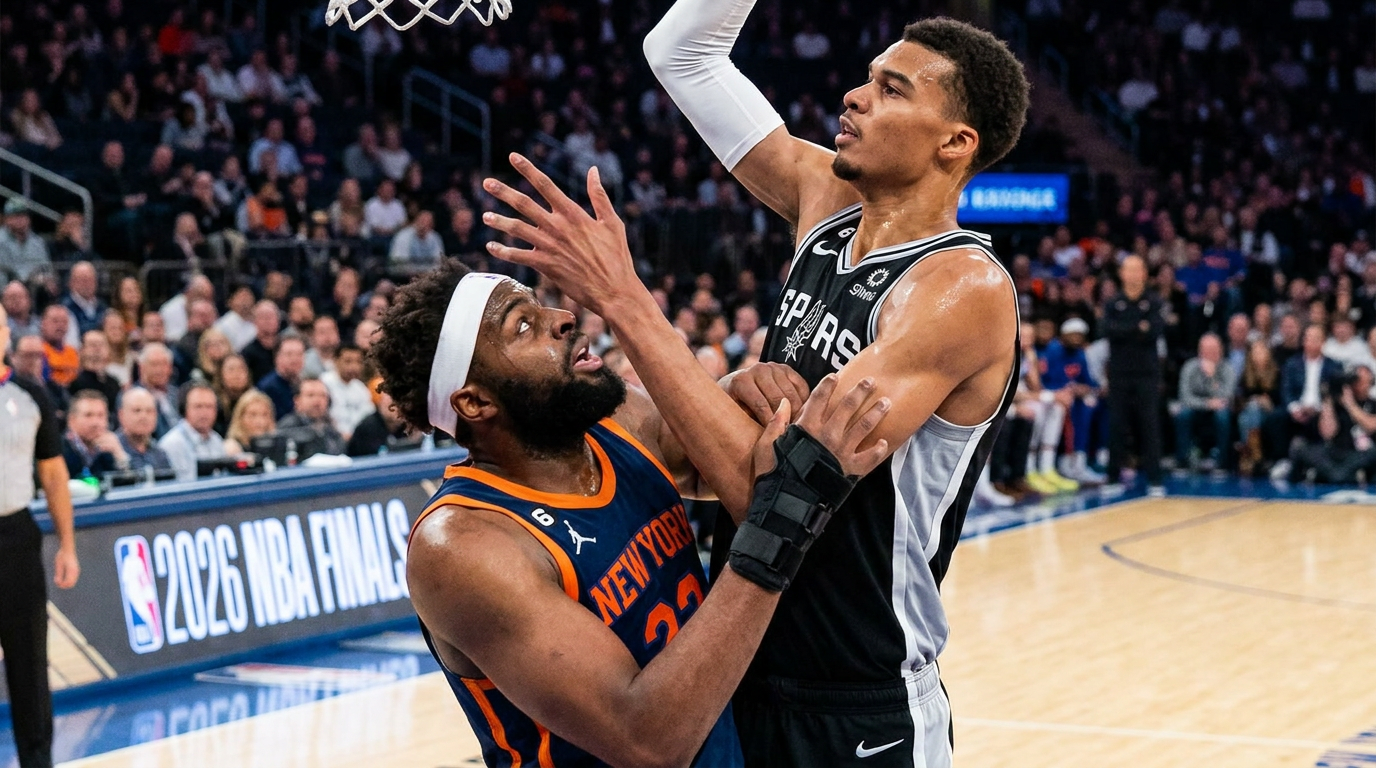
Mid-June Basketball Injury Report: Stars Overcome Setbacks for the NBA Finals
6 sources
Standings
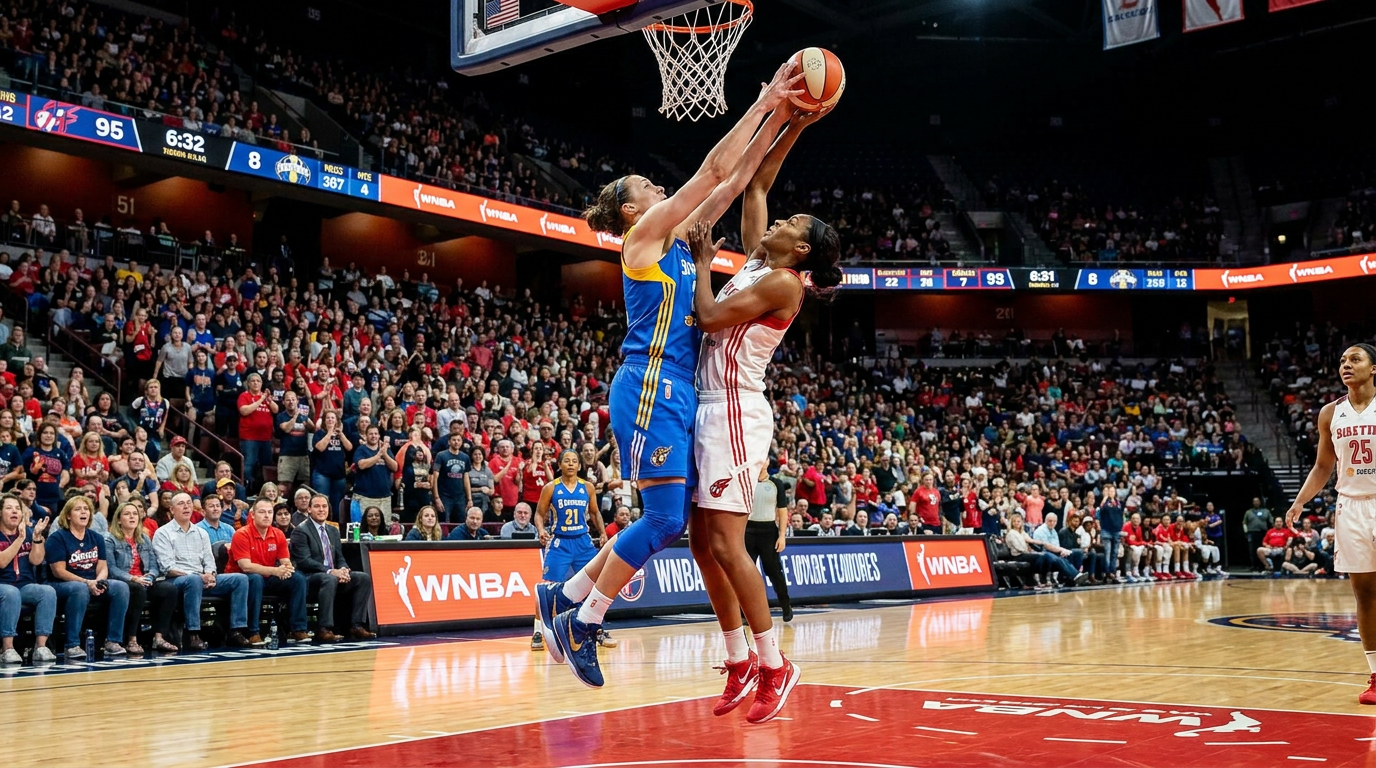
WNBA 2026 Standings: Aces and Liberty Surge as Expansion Teams Make Early Playoff Push
5 sources
NWSL Transfers
Bay FC Acquires 19-Year-Old Star Kennedy Fuller in $520,000 Transfer
7 sources

Storyline
Historic Hat-Trick Leads Argentina to 3-0 World Cup Opening Win Over Algeria
8 sources

Every angle. Every day.
Get sports stories with full source coverage and perspective breakdowns delivered to your inbox.