
USMNT 2026 World Cup Preview: Strengths, Tactical Shifts, and the Path Through Group D
As the 2026 World Cup unfolds on home soil, the United States Men's National Team faces immense pressure to turn its most talented generation into a legitimate global contender.
By Factlen Editorial Team
- Optimistic US Supporters
- Believe the golden generation and home-field advantage will lead to a historic deep run.
- Tactical Skeptics
- Point to defensive frailties and a high-risk pressing system as a recipe for an early knockout exit.
- Neutral Analysts
- View the USMNT as a solid knockout-stage team that remains a step below the global elite.
What's not represented
- · The perspective of Group D opponents (Paraguay, Australia, Turkiye) on facing the host nation.
- · Views from domestic MLS executives on how a deep run impacts the local league's growth.
Why this matters
Hosting the expanded 48-team World Cup offers the United States a once-in-a-generation opportunity to cement soccer's place in the American sporting landscape. A deep run by this squad could fundamentally shift how the global game is perceived domestically for decades to come.
Key points
- The USMNT enters the 2026 World Cup on home soil with its most talented generation of players to date.
- Manager Mauricio Pochettino has implemented a high-intensity, attack-minded tactical system.
- Christian Pulisic remains the focal point of the American attack, supported by Folarin Balogun and Tim Weah.
- Defensive vulnerabilities, particularly at center-back, remain the team's biggest concern heading into the knockout stages.
- The United States is favored to advance from Group D, which includes Paraguay, Australia, and Turkiye.
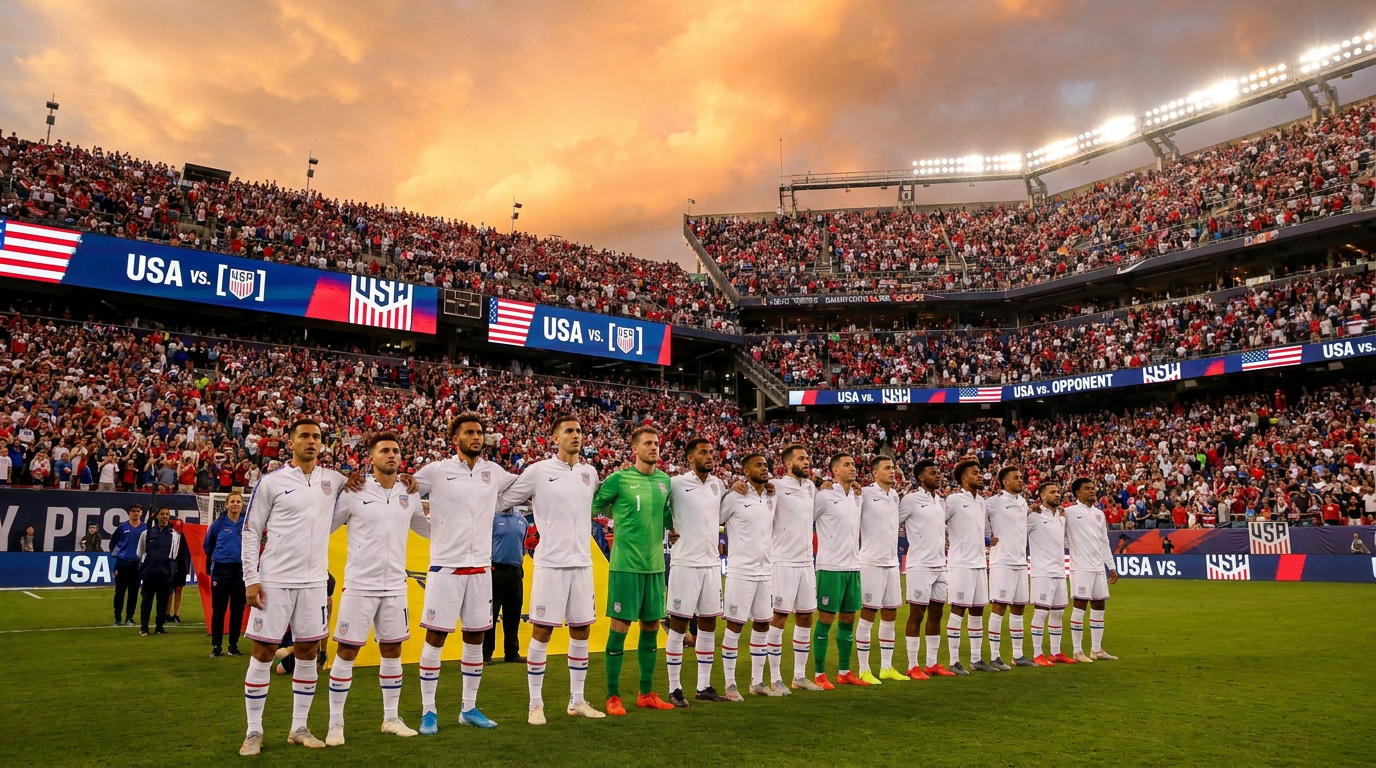
The 2026 FIFA World Cup has officially arrived on North American shores, bringing with it the weight of unprecedented expectations for the United States Men's National Team. Competing as a primary co-host in the largest tournament in soccer history—now expanded to a sprawling 48-team format—the USMNT is no longer satisfied with the historical baseline of merely participating and escaping the group stage. Armed with what is universally considered the most talented, European-tested player pool in the program's history, the squad is aiming for a deep, transformative run that could redefine the sport's domestic standing.[1]
Leading this ambitious charge is manager Mauricio Pochettino, whose high-profile appointment signaled a clear statement of intent from U.S. Soccer executives. The Argentine tactician, renowned for building high-intensity pressing systems at elite European clubs like Tottenham Hotspur and Paris Saint-Germain, has been tasked with bridging the persistent gap between the United States and the traditional global heavyweights. His mandate extends beyond simply grinding out results; Pochettino is expected to establish a proactive, fearless identity on the pitch, ensuring the team dictates play rather than merely reacting to superior opponents on the world's biggest stage.[1][3]
The USMNT's campaign is anchored in Group D, a competitive but ultimately navigable quartet featuring Paraguay, Australia, and Turkiye. With their crucial group stage matches split between the state-of-the-art SoFi Stadium in Los Angeles and the notoriously loud Lumen Field in Seattle, the Americans benefit from distinct, raucous home-soil advantages. However, the immense pressure of performing in front of expectant domestic crowds adds a complex psychological layer that this relatively young core must navigate carefully, balancing the adrenaline of home support with the tactical discipline required in tournament football.[1][5]

Tactically, Pochettino has implemented a fluid, attack-minded approach that seeks to maximize the squad's unique athletic profile and transitional speed. In possession, the team frequently shifts into an expansive 3-4-2-1 shape, relying heavily on advancing fullbacks like Antonee Robinson and Sergiño Dest to provide width and stretch opposition defenses. Out of possession, the formation quickly reverts to a more structured 4-2-3-1, utilizing aggressive, man-oriented pressing triggers to force turnovers high up the pitch and launch rapid counter-attacks before the opponent can set their defensive block.[2]
The undisputed linchpin of this offensive system is captain Christian Pulisic. Coming off a stellar, career-reviving domestic campaign with AC Milan in Italy's Serie A, Pulisic remains the undeniable focal point and creative engine of the American attack. Operating primarily as an inverted winger on the left flank, his elite ability to drop into pockets of space, receive the ball on the half-turn, and drive past retreating defenders serves as the primary catalyst for the USMNT's transitional offense and final-third chance creation.[1][2]
Supporting Pulisic is a dynamic, if occasionally inconsistent, attacking corps that possesses the raw speed to terrify opposing backlines. Folarin Balogun has firmly established himself as the preferred central striker, offering a vital blend of technical proficiency, holdup play, and clinical finishing that the national team program has long lacked. On the opposite flank, Tim Weah provides blistering pace and directness, constantly threatening to stretch opposition defenses vertically and creating valuable central channels for Pulisic and Balogun to exploit.[1][7]
Supporting Pulisic is a dynamic, if occasionally inconsistent, attacking corps that possesses the raw speed to terrify opposing backlines.
In the center of the park, Weston McKennie remains the emotional and physical heartbeat of the team. Heading into his second World Cup after delivering consistent, high-level performances for Juventus, McKennie's relentless box-to-box engine and ability to break lines with progressive passing are crucial to making Pochettino's demanding system function. Alongside him, Tyler Adams operates as the indispensable defensive shield, dropping deep to protect the backline, break up opposition counters, and orchestrate the initial phases of buildup play from the defensive third.[2][7]
However, the USMNT's aggressive tactical setup is certainly not without its glaring vulnerabilities. The high-octane pressing style carries inherent structural risks, particularly against technically secure opponents who are capable of quickly bypassing the first line of pressure and exploiting the vast spaces left behind by overlapping fullbacks. This specific frailty was starkly exposed during the March international window, where the United States conceded a concerning seven combined goals in sobering, reality-check defeats to European powers Belgium and Portugal. These defensive lapses sounded alarm bells among analysts and supporters alike, highlighting the fine line between proactive attacking and defensive naivety.[1][2]

The center-back pairing remains the most heavily scrutinized and debated area of the pitch as the tournament progresses. Chris Richards is widely expected to anchor the defense, but his intermittent fitness issues and the ongoing search for a consistently reliable partner have been persistent concerns for the coaching staff. Analysts have openly debated whether Pochettino should deploy a permanent back three to provide additional defensive cover, especially when the team inevitably faces elite, world-class attacking nations in the unforgiving knockout rounds.[3][4]
The goalkeeping situation also presents a fascinating internal battle that could shape the team's defensive resilience. Matt Turner brings vital tournament experience and shot-stopping pedigree from the 2022 World Cup in Qatar, but Matt Freese's exceptional domestic form over the past year has pushed him into serious contention for the starting spot. Pochettino's ultimate choice between the posts will not only dictate the team's distribution from the back but will also set the definitive defensive tone for the remainder of the tournament.[4]
Looking at the broader Group D landscape, the United States is favored to advance, but the path is fraught with distinct stylistic challenges. Paraguay, revitalized under the pragmatic management of Gustavo Alfaro, boasts a rugged, defensively sound structure that recently frustrated several South American giants during the grueling qualification cycle. Meanwhile, Australia brings a highly physical, direct style of play, and Turkiye—who the U.S. faces in a pivotal clash on June 25—is widely viewed by oddsmakers as the primary threat to steal the top spot in the group.[6][7]

Winning Group D is absolutely paramount for the Americans' broader knockout stage aspirations. Securing the top seed would likely offer a significantly more favorable matchup in the newly introduced Round of 32, keeping them safely away from tournament heavyweights like France, Spain, or Germany in the early elimination phases. Conversely, stumbling to a second-place finish could immediately set up a daunting, potentially tournament-ending Round of 16 clash against a European powerhouse like England or Belgium, drastically reducing their margin for error.[5]
Ultimately, the 2026 World Cup represents a defining, legacy-cementing moment for this specific generation of American players. They possess the individual talent, the modern tactical framework, and the unparalleled home-field environment necessary to make a historic, captivating run. The defining question that will determine their fate is whether they can maintain strict defensive discipline and emotional composure when the margins inevitably shrink, the pressure mounts, and the stakes reach their absolute highest on the global stage. If they can find that balance, the USMNT has the potential to turn a summer of high expectations into a landmark achievement for American soccer.[1][4]
How we got here
December 2022
The USMNT exits the 2022 World Cup in the Round of 16 after a 3-1 defeat to the Netherlands.
August 2024
Mauricio Pochettino is appointed as the new head coach, bringing a high-profile European pedigree to the program.
December 2025
The 2026 World Cup draw places the United States in Group D alongside Paraguay, Australia, and Turkiye.
March 2026
Pre-tournament friendlies expose defensive vulnerabilities, including a 5-2 loss to Belgium.
June 12, 2026
The USMNT officially opens their 2026 World Cup campaign against Paraguay at SoFi Stadium.
Viewpoints in depth
Optimistic US Supporters
Believe the golden generation and home-field advantage will lead to a historic deep run.
This camp points to the sheer volume of USMNT players featuring in Europe's top five leagues as proof that the talent gap has closed. They argue that Mauricio Pochettino's tactical acumen, combined with the emotional lift of playing in front of sold-out domestic crowds, provides the perfect environment for a semi-final push. For these supporters, the attacking trio of Pulisic, Balogun, and Weah is potent enough to outscore any defensive shortcomings.
Tactical Skeptics
Point to defensive frailties and a high-risk pressing system as a recipe for an early knockout exit.
Skeptics highlight the team's alarming defensive record in recent pre-tournament friendlies, noting that conceding heavily to European sides like Belgium exposes a structural flaw. They argue that Pochettino's reliance on overlapping fullbacks leaves the center-backs isolated against elite transition attacks. From this perspective, the USMNT will comfortably navigate the group stage but will be ruthlessly punished by the first top-tier nation they face in the knockout rounds.
Neutral Analysts
View the USMNT as a solid Round of 16 or Quarterfinal team that remains a step below the global elite.
International observers acknowledge the undeniable progress of the American player pool but caution against overstating their status. They view the USMNT as a dangerous dark horse capable of upsetting a traditional power on the right day, yet lacking the top-to-bottom squad depth of a France or Argentina. Neutral analysts project a successful tournament that likely ends in a hard-fought Round of 16 or Quarterfinal exit, representing par for the course for a rising program.
What we don't know
- Whether Chris Richards and the central defense can hold up against elite, world-class strikers in the knockout rounds.
- Who will definitively emerge as the starting goalkeeper between Matt Turner and Matt Freese as the tournament progresses.
- How the young squad will handle the immense psychological pressure of playing a World Cup on home soil if they fall behind early in a match.
Key terms
- Inverted Winger
- An attacking player positioned on the side of the field opposite to their dominant foot, allowing them to cut inside toward the center of the pitch to shoot or pass.
- Double Pivot
- A tactical setup featuring two defensive midfielders who sit in front of the defensive line to break up opposition attacks and initiate ball movement.
- Round of 32
- The newly introduced first knockout stage of the expanded 48-team World Cup, replacing the Round of 16 as the immediate step after the group stage.
Frequently asked
Who is in the USMNT's World Cup group?
The United States is in Group D, competing against Paraguay, Australia, and Turkiye.
Where is the USMNT playing their group stage matches?
The team is splitting their group stage games between SoFi Stadium in Los Angeles and Lumen Field in Seattle.
How many teams advance from the group stage?
In the new 48-team format, the top two teams from each of the 12 groups, plus the eight best third-place teams, advance to the Round of 32.
Who is the head coach of the USMNT?
Mauricio Pochettino, the former manager of Tottenham Hotspur and Paris Saint-Germain, leads the team.
Sources
Source coverage
7 outlets
3 viewpoints surfaced







[1]Sports IllustratedOptimistic US Supporters
USMNT 2026 World Cup Preview: Roster, Schedule and Expectations
Read on Sports Illustrated →[2]World Soccer TalkTactical Skeptics
United States 2026 World Cup Team Preview and Tactics
Read on World Soccer Talk →[3]CBS Sports GolazoTactical Skeptics
PROJECTED World Cup Roster & USMNT Tactics
Read on CBS Sports Golazo →[4]MLSsoccer.comOptimistic US Supporters
Predicting the USMNT's 2026 World Cup roster
Read on MLSsoccer.com →[5]FOX SportsNeutral Analysts
2026 World Cup Bracket Projections and Group D Outlook
Read on FOX Sports →[6]GoalNeutral Analysts
2026 World Cup Power Rankings: Every Team Ranked
Read on Goal →[7]PrizePicksNeutral Analysts
Team USA Projected Starting Lineup for World Cup 2026
Read on PrizePicks →
More in sports
See all 12 stories →Standings
San Diego Wave Seize Top Spot in Historically Tight NWSL Standings at Summer Break
8 sources
Injury
Mid-June Basketball Injury Report: Stars Overcome Setbacks for the NBA Finals
6 sources
Standings
WNBA 2026 Standings: Aces and Liberty Surge as Expansion Teams Make Early Playoff Push
5 sources
NWSL Transfers
Bay FC Acquires 19-Year-Old Star Kennedy Fuller in $520,000 Transfer
7 sources
Every angle. Every day.
Get sports stories with full source coverage and perspective breakdowns delivered to your inbox.