
Autonomous AI Agents Match Doctors in End-to-End Patient Management
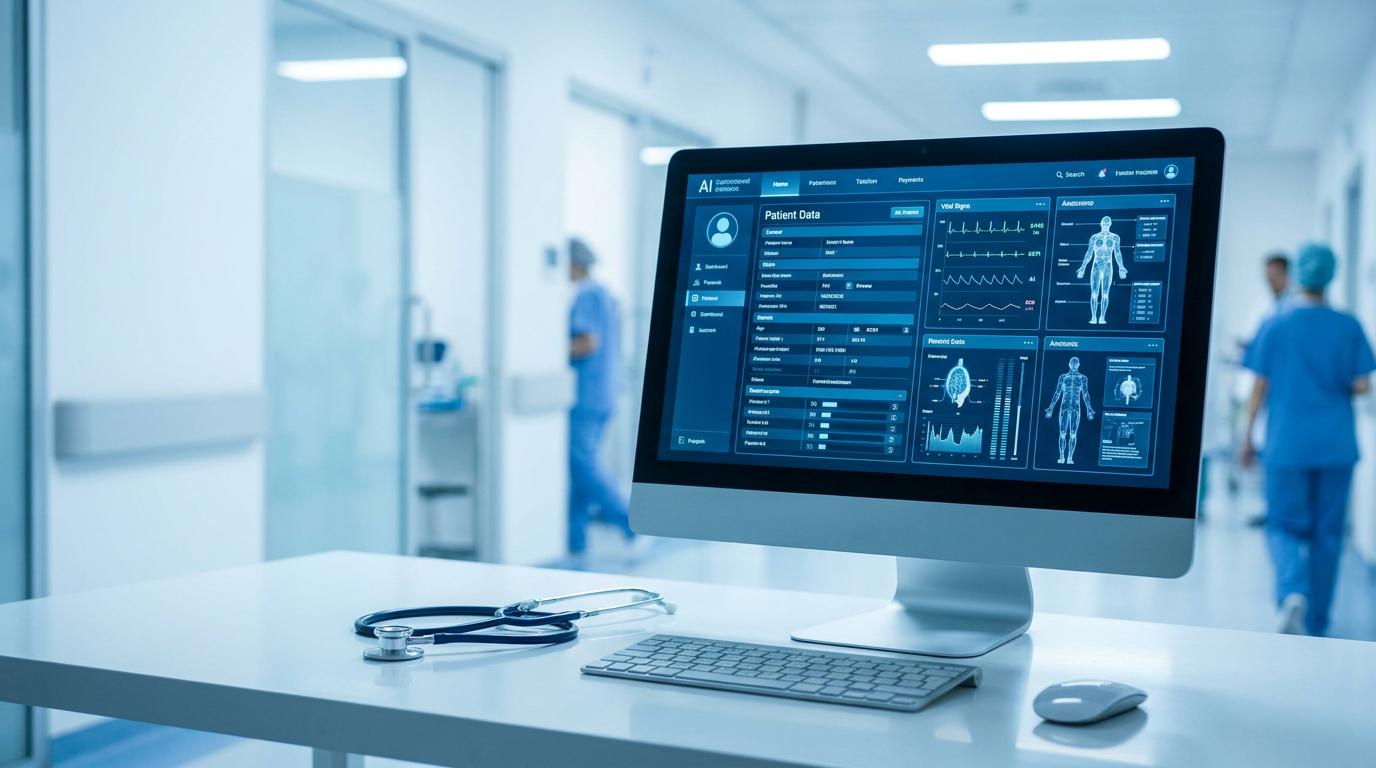
Two landmark studies demonstrate that new artificial intelligence agents can autonomously execute clinical workflows, ordering tests and prescribing medications with near-perfect guideline adherence in simulated environments.
By Factlen Editorial Team
- AI Developers & Researchers
- Argue that agentic AI can drastically reduce clinical errors, improve guideline adherence, and automate administrative workflows to solve healthcare bottlenecks.
- Medical Practitioners & Evaluators
- Emphasize that while the technical benchmarks are impressive, real medicine relies on non-verbal cues, physical exams, and messy data that text-based simulations fail to capture.
- Healthcare Systems Analysts
- View these autonomous tools as a necessary evolution to combat physician burnout, provided they are integrated safely as co-pilots rather than independent decision-makers.
What's not represented
- · Patients / Patient Advocacy Groups
- · Medical Malpractice Lawyers
- · Nurses and Allied Health Professionals
Why this matters
For decades, medical AI has been trapped in the realm of theory, capable of answering questions but unable to take action. The arrival of autonomous agents that can independently order tests, prescribe drugs, and manage care plans represents a fundamental shift in healthcare delivery, offering a powerful new tool to reduce medical errors and alleviate the administrative burnout crippling global health systems.
Key points
- Two new AI systems, MIRA and AMIE, demonstrate the ability to autonomously manage patient care workflows.
- MIRA achieved 87.8% diagnostic accuracy in emergency simulations, outperforming human doctors at 78.1%.
- AMIE achieved 100% alignment with clinical guidelines during multi-visit longitudinal care simulations.
- Both systems can independently order lab tests, prescribe medications, and schedule procedures within simulated hospital software.
- Medical evaluators caution that real-world hospital data is far messier and more multimodal than the clean text used in these simulations.
- Researchers envision these agents as clinical co-pilots to reduce administrative burnout, not as replacements for human physicians.
For the past two years, artificial intelligence in medicine has functioned largely as a highly educated sounding board. Physicians could ask large language models for differential diagnoses or use them to draft patient notes, but the systems remained passive participants that waited for human prompts. That paradigm shifted fundamentally on June 17, 2026, with the publication of twin landmark studies demonstrating the viability of autonomous medical agents. These systems do not merely answer questions; they actively manage patient care, executing complex clinical workflows from the moment a patient arrives until their final follow-up.[7]
The transition from conversational AI to agentic AI represents a massive leap in computational capability and clinical utility. While previous models proved they could pass medical board exams and reason through isolated clinical vignettes, they lacked the architecture to take action. The new generation of agents is designed to operate within the digital infrastructure of a hospital. They can independently query a patient's history, order laboratory tests, interpret the results, prescribe medications, and schedule surgical procedures, effectively acting as an end-to-end clinical co-pilot rather than a static reference tool.[4][5]
The first of these systems, known as MIRA (Medical Intelligence for Reasoning and Action), was developed by researchers at the Technical University of Dresden and the University of Heidelberg. Designed specifically for the high-stakes environment of the emergency department, MIRA operates within a secure, simulated electronic health record system. The researchers equipped the agent with a toolkit of eleven clinical instruments and access to more than 85,000 distinct action options, allowing it to navigate the same complex decision trees that human doctors face daily.[1][3]
To evaluate MIRA's efficacy, researchers deployed the agent in a retrospective simulation involving 500 real-world emergency department cases. The AI was tasked with managing these cases from intake to triage, and its decisions were directly compared against those of four board-certified human physicians. The results were striking: MIRA achieved an overall diagnostic accuracy of 87.8%, significantly outperforming the human physicians, who averaged 78.1%. In specific acute conditions, the gap was even wider; the agent diagnosed appendicitis with 100% accuracy, compared to the doctors' 88%.[1][5]

Beyond mere diagnosis, MIRA's ability to execute therapeutic actions showcased the true potential of agentic AI. The system surpassed board-certified physicians in correctly ordering necessary procedures, such as laparoscopic appendectomies, achieving a 53.5% success rate versus the humans' 38.3%. Furthermore, the agent demonstrated an extraordinary level of safety and precision in pharmacology. Out of 468 medications ordered by MIRA during the simulation, 99.8% were entirely correct regarding indication, allergy safety, drug interactions, and kidney-adjusted dosing.[1][5]
Independent medical experts evaluating the study noted that MIRA's most disruptive breakthrough is not its slight edge in diagnostic accuracy, but its capacity to translate medical reasoning into structured, standardized clinical actions. By automatically generating the correct FHIR standards and ICD-10 billing codes for every test and prescription, the system bridges the gap between theoretical AI reasoning and the rigid, heavily regulated administrative reality of modern hospital operations.[4]
While MIRA focused on the acute environment of the emergency room, a second system developed by Google DeepMind tackled the complexities of longitudinal care. The Articulate Medical Intelligence Explorer, or AMIE, is a conversational agent optimized for continuous disease management across multiple patient visits. Chronic illness and complex diagnostics often require doctors to adapt their treatment plans as new symptoms emerge and test results return over weeks or months, a sequential reasoning challenge that AMIE was specifically engineered to handle.[2][6]
While MIRA focused on the acute environment of the emergency room, a second system developed by Google DeepMind tackled the complexities of longitudinal care.
Google researchers evaluated AMIE using a virtual Objective Structured Clinical Examination (OSCE), the gold standard for assessing clinical competence in medical education. The study involved 100 multi-visit case scenarios spanning five different medical specialties. Patient-actors interacted with both AMIE and a control group of 21 human primary care physicians over a series of three simulated appointments, allowing independent specialist physicians to blindly grade the management reasoning and bedside manner of both the AI and the human doctors.[2][6]
The evaluation revealed that AMIE was non-inferior to the primary care physicians in overall management reasoning, and it substantially outperformed them in several critical metrics. By the third outpatient visit, specialist graders rated AMIE's management plan as superior in 98% of cases, compared to 81% for the human doctors. Most notably, AMIE achieved a 100% alignment with established clinical practice guidelines, whereas human physicians aligned with guidelines only 86% of the time, highlighting the AI's advantage in perfectly recalling vast repositories of medical protocols.[2][5]

Evaluating the strength of this evidence reveals clear areas where autonomous agents currently hold a definitive advantage over human practitioners. AI systems do not suffer from cognitive fatigue, sleep deprivation, or the time constraints that plague modern healthcare workers. Their ability to instantly cross-reference a patient's symptoms against thousands of pages of national drug formularies and clinical guidelines allows them to consistently deliver highly precise, evidence-based care plans without the variability inherent in human performance.[5][7]
However, the evidence pack also exposes significant limitations and uncertainties that must be addressed before these systems can be deployed in real hospitals. Both the MIRA and AMIE studies relied heavily on text-based simulations. In reality, the practice of medicine is profoundly multimodal. Human doctors rely on a wealth of non-verbal cues—the pallor of a patient's skin, the sound of their breathing, the physical resistance of an abdomen during palpation—none of which can be fully captured in a text-only chat interface or a transcribed medical record.[4][5]
Furthermore, the data used to test these agents was inherently clean. The retrospective emergency cases and the scripted OSCE scenarios provided the AI with complete, logically structured information. Real-world hospital environments are notoriously messy, characterized by incomplete patient histories, conflicting accounts from family members, and laboratory errors. It remains entirely unknown how an autonomous agent like MIRA would perform when forced to navigate the chaotic, ambiguous data landscape of a live trauma center.[4]

Medical evaluators also caution against conflating retrospective simulation with real-time clinical deployment. While MIRA successfully navigated a simulated electronic health record, integrating an autonomous agent into the live, proprietary software systems of a functioning hospital introduces immense technical and security risks. A software bug or a hallucinated reasoning step in a live environment could result in an inappropriate medication being dispensed to a real patient, a risk that retrospective studies inherently bypass.[3][4]
This transition from simulation to reality will require unprecedented regulatory frameworks. Healthcare administrators and legal experts must define the parameters of liability when an autonomous agent makes a clinical error. Researchers involved in the development of these systems universally agree that agents must be deployed with strict human-in-the-loop safeguards, ensuring that every AI-generated prescription, admission, or surgical order is reviewed and authorized by a licensed physician before execution.[3][7]
Despite these hurdles, the successful demonstration of autonomous medical agents marks a profoundly uplifting milestone for global public health. By proving that AI can safely and accurately handle the heavy lifting of clinical workflows, these systems offer a tangible solution to the administrative burnout and staffing shortages crippling healthcare systems worldwide. Ultimately, the goal is not to replace human doctors, but to provide them with tireless clinical co-pilots, freeing them to focus on the empathy, judgment, and human connection that remain the irreplaceable core of medicine.[3][4]
How we got here
Early 2024
Medical AI models demonstrate the ability to pass medical board licensing exams, acting primarily as advanced encyclopedias.
January 2025
Google introduces the first iteration of AMIE, proving AI can conduct empathetic diagnostic conversations with simulated patients.
April 2026
AI models demonstrate advanced clinical reasoning in controlled, single-interaction environments, matching human diagnostic accuracy.
June 17, 2026
Nature publishes twin studies on MIRA and AMIE, marking the shift from conversational AI to autonomous agents capable of end-to-end patient management.
Viewpoints in depth
AI Developers & Researchers
Focus on the technical breakthrough of agentic workflows and perfect guideline adherence.
For the computer scientists and researchers building these systems, the transition from conversational models to autonomous agents is the holy grail of medical AI. They argue that human doctors, while empathetic, are fundamentally limited by cognitive fatigue and the sheer impossibility of memorizing thousands of constantly updating clinical guidelines. By proving that agents like MIRA and AMIE can flawlessly execute complex workflows and achieve near-perfect medication safety in simulated environments, developers believe they have created a tool that will systematically eliminate preventable medical errors and standardize the quality of care globally.
Medical Practitioners & Evaluators
Highlight the limitations of text-based simulations and the irreplaceable nature of human clinical judgment.
Practicing physicians and independent medical evaluators offer a more cautious perspective, pointing out the massive gulf between a simulated electronic health record and a live trauma center. They emphasize that medicine is a profoundly physical and sensory discipline; a doctor's intuition is often guided by the smell of an infection, the specific tension of a patient's pulse, or the subtle hesitation in a patient's voice. Because current AI agents are evaluated on 'clean', text-only data, skeptics argue that these impressive benchmark scores represent an artificial ceiling that will inevitably drop when the AI is forced to navigate the messy, conflicting, and multimodal reality of human illness.
Healthcare Systems Analysts
View autonomous agents as a structural solution to administrative burnout and hospital inefficiency.
From a systems and administrative perspective, the true value of autonomous medical agents lies in their ability to execute the grueling administrative workflows that currently consume up to half of a physician's day. Analysts argue that by allowing an AI to autonomously generate billing codes, cross-reference drug interactions, and schedule follow-up procedures, hospitals can drastically reduce physician burnout and increase patient throughput. However, they stress that these systems must be implemented strictly as 'co-pilots' with robust human-in-the-loop oversight, as the legal and regulatory frameworks surrounding AI medical liability remain entirely unresolved.
What we don't know
- How these autonomous agents will perform when confronted with the messy, incomplete, and multimodal data of a live hospital environment.
- Who will bear the legal liability if an autonomous agent recommends an incorrect treatment that harms a patient.
- Whether the integration of AI agents will genuinely increase the time doctors spend with patients, or simply increase the volume of patients a doctor is expected to see.
Key terms
- Autonomous AI Agent
- An artificial intelligence system capable of planning and executing a sequence of actions to achieve a goal without continuous human prompting.
- Electronic Health Record (EHR)
- The digital version of a patient's paper chart, used by hospitals to track medical history, diagnoses, and treatments.
- Objective Structured Clinical Examination (OSCE)
- A standard method used in medical education to test clinical skill performance and competence in a simulated, controlled environment.
- Clinical Guidelines
- Systematically developed statements and protocols designed to assist practitioner and patient decisions about appropriate healthcare for specific clinical circumstances.
- FHIR Standards
- Fast Healthcare Interoperability Resources, a global standard for exchanging healthcare information electronically.
Frequently asked
What is an autonomous medical AI agent?
Unlike a chatbot that simply answers questions, an autonomous agent can independently plan and execute a sequence of actions. In medicine, this means the AI can query a patient's history, order lab tests, and prescribe medications within a hospital's software system.
Will these AI systems replace human doctors?
No. Researchers and developers emphasize that these agents are designed to function as 'clinical co-pilots.' They handle routine administrative tasks and data analysis, but a licensed human physician must review and authorize their decisions.
Have MIRA or AMIE been tested on real patients in a hospital?
Not yet. Both systems achieved their impressive results in highly realistic but simulated environments, using either historical patient records or actors trained to simulate specific diseases.
Why did the AI score higher than board-certified physicians?
The AI models have perfect, instant recall of thousands of clinical guidelines and drug formularies. They also do not suffer from sleep deprivation or time constraints, allowing them to strictly adhere to best practices without fatigue.
Sources
Source coverage
7 outlets
3 viewpoints surfaced






[1]NatureAI Developers & Researchers
Towards autonomous medical artificial intelligence agents
Read on Nature →Towards Conversational AI for Disease Management
Read on Nature →[3]TU DresdenAI Developers & Researchers
MIRA als klinischer Co-Pilot für Routineaufgaben
Read on TU Dresden →[4]Science Media CentreMedical Practitioners & Evaluators
Expert reaction to presentation of two new medical AI models for patient management
Read on Science Media Centre →[5]Ground TruthsMedical Practitioners & Evaluators
Expansion of Capabilities With Two New Medical AI Models
Read on Ground Truths →[6]Google ResearchAI Developers & Researchers
Towards Conversational AI for Disease Management
Read on Google Research →[7]Factlen Editorial TeamHealthcare Systems Analysts
Synthesis by Factlen editorial team
Read on Factlen Editorial Team →


Every angle. Every day.
Get science stories with full source coverage and perspective breakdowns delivered to your inbox.