
The Sodium-Ion Breakthrough: How Salt is Making Electric Vehicles Cheaper and Cold-Proof
A new generation of electric vehicle batteries powered by abundant sodium is reaching mass production in 2026, promising to slash costs, eliminate reliance on scarce minerals, and solve the EV cold-weather problem.
By Factlen Editorial Team
- Battery Manufacturers
- Prioritizing supply chain independence and cost reduction to capture the entry-level EV market.
- Sustainability Advocates
- Focusing on the ethical and environmental wins of a cobalt-free, lithium-free chemistry.
- Cold-Climate Consumers
- Valuing winter reliability and fast charging in freezing temperatures over maximum theoretical range.
- Premium EV Automakers
- Viewing sodium-ion as insufficient for high-performance vehicles due to its lower energy density.
What's not represented
- · Lithium mining communities facing reduced future demand
- · Independent auto mechanics adapting to new battery chemistries
Why this matters
Sodium-ion batteries could democratize EV ownership by driving sticker prices down by thousands of dollars, while their immunity to freezing temperatures removes a major hurdle for drivers in colder climates.
Key points
- Sodium-ion batteries are hitting mass production in 2026, led by CATL's Naxtra cells.
- The chemistry uses abundant salt instead of scarce lithium, cutting pack costs to near $100/kWh.
- Sodium cells retain 90% of their capacity at -40°C, solving the EV winter range penalty.
- Ultra-fast 4C charging allows the batteries to recharge from 10% to 80% in just 11 minutes.
- Lower energy density means the technology is best suited for affordable city cars rather than long-range luxury vehicles.
For the past decade, the electric vehicle revolution has been entirely dependent on a single, temperamental metal: lithium. It has powered everything from smartphones to luxury sedans, but its scarcity and cost have kept electric vehicles out of reach for millions of potential buyers. However, in 2026, the automotive industry is undergoing a quiet but profound chemistry shift that promises to rewrite the economics of driving. Sodium-ion batteries, long considered a laboratory curiosity with too many engineering hurdles to overcome, are finally hitting mass production. This breakthrough represents a fundamental decoupling from the traditional critical-mineral supply chain, offering a pathway to truly affordable, mass-market electric mobility that does not rely on the geopolitical complexities of lithium extraction.[3][5]
The vanguard of this transition is CATL, the world's largest battery manufacturer, which has officially transitioned its "Naxtra" sodium-ion cells from prototype testing to gigawatt-hour-level industrial scale. After years of overcoming complex engineering challenges—such as extreme water control and gas generation within the cell—the company has achieved a stable, mass-producible battery. By the end of this year, the first mass-market passenger vehicles powered by salt, rather than lithium, will arrive at dealerships. The flagship model leading this charge is the Changan Nevo A06, a sleek passenger sedan equipped with CATL's new cells, marking a watershed moment for automotive supply chains and signaling that sodium is ready for the global stage.[1][2]
To understand why this chemical shift is so monumental, it helps to look inside the battery cell itself. Both traditional lithium-ion and the new sodium-ion batteries operate on what chemists call the "rocking chair" principle. During charging and discharging, charged ions shuttle back and forth through a liquid electrolyte, moving between a positive cathode and a negative anode. When you plug the car in, the ions are forced into the anode, storing energy; when you press the accelerator, they flow back to the cathode, releasing that energy to power the electric motors. The fundamental architecture of the battery remains largely the same, which is a massive advantage for manufacturers who want to use existing assembly lines.[6]
The critical difference lies in the ion itself. Sodium sits directly below lithium on the periodic table of elements, meaning it shares very similar chemical properties and behaviors. However, sodium ions are physically larger and significantly heavier than lithium ions. For decades, this size difference was the primary roadblock to commercialization; the larger sodium atoms would physically damage the battery's electrode materials as they forced their way in and out during charging cycles, causing the battery to degrade rapidly and fail after only a few hundred uses.[3]

Battery engineers have spent the last several years solving this exact puzzle, and their success is what makes the 2026 rollout possible. Researchers developed highly specialized "hard carbon" anodes and novel cathode structures featuring expanded crystalline frameworks that can comfortably accommodate the larger sodium ions without structural degradation. The result is a stable, durable, and mass-producible cell that bypasses the need for critical minerals entirely, offering a lifespan that rivals, and in some cases exceeds, standard lithium-ion packs used in today's entry-level vehicles.[1][3]
The primary driver accelerating this shift from the laboratory to the highway is basic economics. Lithium is relatively scarce, notoriously expensive to mine, and subject to wild price fluctuations driven by surging global demand. Sodium, by stark contrast, is the sixth most abundant element on Earth. It can be easily and cheaply extracted from rock salt and seawater, meaning the raw material supply is effectively infinite and geographically distributed, insulating automakers from localized supply chain shocks and price spikes.[2][5]
Furthermore, the chemical composition of sodium-ion cells allows manufacturers to completely eliminate cobalt and nickel from the battery's cathode. These two expensive heavy metals have long plagued the electric vehicle industry with severe supply chain bottlenecks, volatile pricing, and well-documented ethical concerns regarding mining practices in developing nations. By stripping these ingredients out of the recipe, manufacturers expect battery pack costs to approach the coveted $100 per kilowatt-hour threshold, a milestone that makes entry-level electric vehicles significantly cheaper to produce than their gasoline-powered counterparts.[4][5]
Furthermore, the chemical composition of sodium-ion cells allows manufacturers to completely eliminate cobalt and nickel from the battery's cathode.
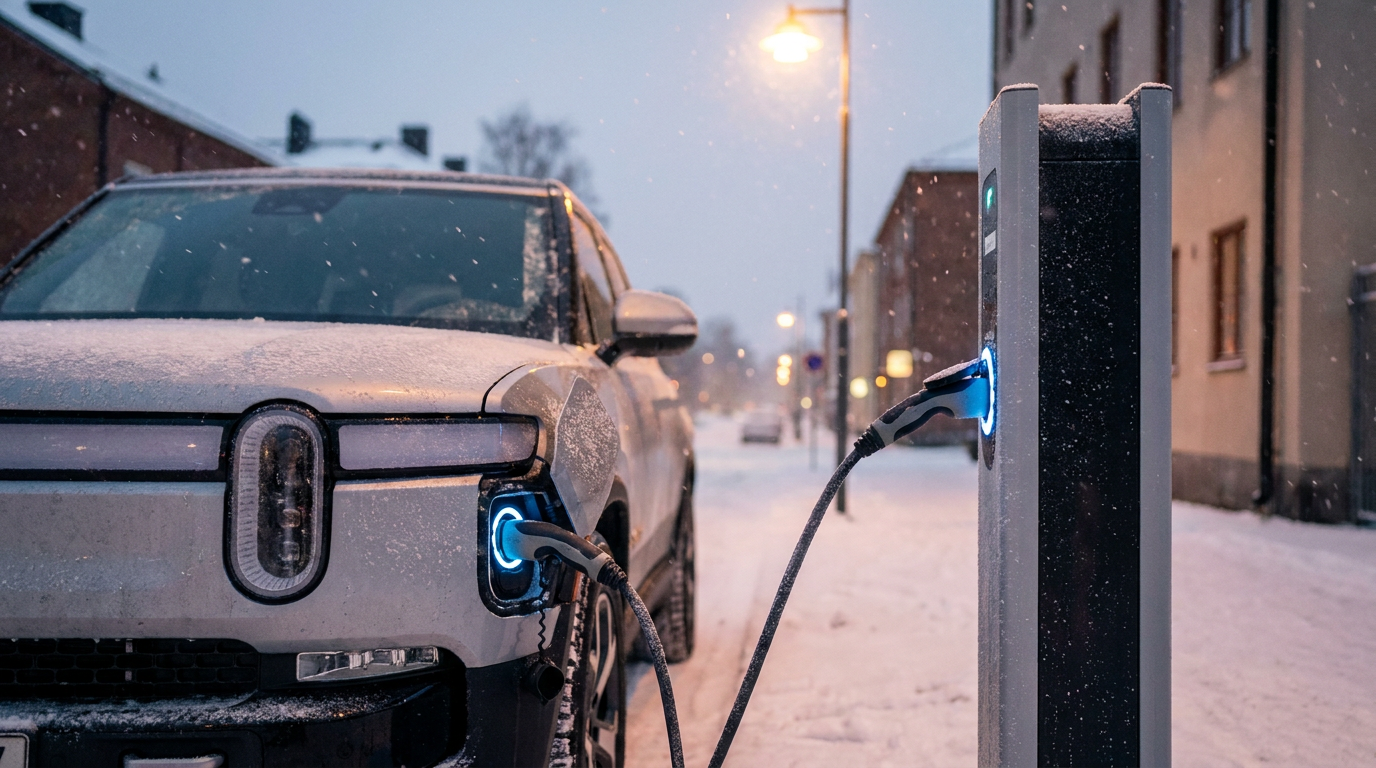
But sodium's most surprising and immediately impactful advantage isn't its price tag; it is its extraordinary resilience in freezing temperatures. Traditional lithium-ion batteries become notoriously sluggish in the cold. The liquid electrolyte thickens, slowing down the movement of ions, which leads to drastically slower charging times, reduced power output, and severe range anxiety for drivers navigating harsh northern winters. For years, this cold-weather penalty has been one of the most persistent arguments against electric vehicle adoption in colder climates.[4]
Sodium-ion cells completely rewrite the winter driving playbook. Because of their unique electrochemical properties, these batteries thrive in environments where lithium struggles. CATL's new Naxtra batteries retain an astonishing 90 percent of their usable capacity at a staggering -40 degrees Celsius. Even more impressively, at -30 degrees Celsius, their discharge power is nearly three times higher than that of an equivalent lithium iron phosphate (LFP) battery, ensuring the vehicle feels responsive and powerful even in a blizzard.[1][4]

For drivers living in places like Scandinavia, Canada, or the northern United States, this technological leap is transformative. It means an electric vehicle can sit outside overnight in sub-zero temperatures, start immediately without requiring energy-draining battery preheating systems, and still accept a rapid charge when the battery pack is frozen solid. By neutralizing the cold-weather range penalty, sodium-ion technology opens up massive new geographic markets that had previously been hesitant to embrace electrification.[4]
Beyond winter performance, the larger sodium ions also move differently through the battery's internal architecture, which translates to exceptionally fast charging capabilities. Both CATL and rival manufacturer BAIC Group have successfully demonstrated sodium-ion cells capable of sustaining "4C" ultra-fast charging rates. In battery terminology, a 1C rate charges a battery in one hour; a 4C rate means the battery can theoretically accept a full charge in just 15 minutes without suffering thermal damage.[1][3]
In practical, real-world terms, this ultra-fast charging capability allows a sodium-ion electric vehicle to recharge from 10 percent to 80 percent capacity in approximately 11 minutes. This blistering performance rivals the time it takes a driver to pull into a gas station, fill a traditional fuel tank, and buy a coffee. By virtually eliminating the long dwell times associated with public EV charging, sodium batteries bridge the convenience gap for millions of urban consumers who live in apartments and cannot charge their vehicles overnight at home.[3]
However, the technology is not a silver bullet, and it comes with inherent physical compromises. Because sodium atoms are heavier and larger than lithium atoms, sodium-ion batteries inherently store less electrical energy per kilogram of weight—a critical metric known in the industry as energy density. If you put a sodium battery and a lithium battery of the exact same physical size side-by-side, the lithium battery will always hold more power and deliver a longer driving range.[2][4]

Currently, the best mass-produced sodium cells achieve an energy density of roughly 175 watt-hours per kilogram (Wh/kg). While this represents a massive engineering improvement over early laboratory prototypes, it still trails behind the premium lithium-ion batteries used in luxury vehicles, which routinely exceed 250 Wh/kg. Automakers must therefore choose between accepting a shorter driving range or installing a physically larger, heavier battery pack to compensate for the lower energy density.[1][3]
As a result of this weight penalty, sodium-ion batteries are not destined to power long-range luxury cruisers, heavy-duty electric pickup trucks, or high-performance sports cars anytime soon. Instead, they are perfectly positioned to dominate the massive global market for affordable city cars, daily commuters, and short-range commercial delivery vehicles. For these applications, a reliable 400-kilometer (250-mile) range is more than sufficient for daily use, and the lower sticker price is the primary driving factor for consumers.[3][4]
The rapid industrialization of sodium-ion technology in 2026 represents a critical diversification of the global energy transition. By decoupling the growth of the electric vehicle market from the constrained lithium supply chain, automakers can scale production faster, more cheaply, and more sustainably. As manufacturing bottlenecks continue to ease and massive economies of scale take hold, industry analysts project that global shipments of sodium-ion batteries could exceed 1,000 gigawatt-hours within the next four years, officially ushering in the era of the truly affordable, cold-proof electric car.[2][3]
How we got here
2021
CATL unveils its first-generation sodium-ion battery prototype, proving the chemistry's viability.
Late 2023
Early pilot projects begin testing sodium-ion cells in small, low-speed electric scooters and micro-cars.
February 2026
CATL and Changan unveil the Nevo A06, the world's first mass-produced passenger EV designed for sodium-ion power.
April 2026
CATL confirms its Naxtra sodium-ion batteries have overcome engineering bottlenecks and reached GWh-level industrialization.
Late 2026
The first commercial passenger EVs equipped with sodium-ion batteries arrive at dealerships.
Viewpoints in depth
Battery Manufacturers' view
Prioritizing supply chain independence and cost reduction.
Companies like CATL and BYD see sodium as a strategic hedge against volatile lithium prices. By utilizing a material that is universally abundant, they can stabilize their manufacturing costs and rapidly scale production for the massive entry-level vehicle segment, even if it means sacrificing top-end range.
Sustainability Advocates' view
Focusing on the ethical and environmental wins of cobalt-free chemistry.
Environmental groups highlight that traditional lithium-ion batteries rely heavily on cobalt and nickel, metals often linked to severe ecological damage and human rights abuses in mining regions. Sodium-ion's ability to bypass these critical minerals entirely makes the green energy transition significantly more equitable and sustainable.
Cold-Climate Drivers' view
Valuing winter reliability over maximum theoretical range.
For EV owners in regions with harsh winters, the severe drop in lithium-ion performance has been a major pain point. The ability of sodium-ion cells to retain 90% of their capacity at -40°C and accept ultra-fast charges while frozen transforms the EV from a fair-weather vehicle into a reliable year-round workhorse.
What we don't know
- How quickly public charging infrastructure will be upgraded to fully support the 11-minute ultra-fast charging speeds these batteries can accept.
- Whether Western automakers will adopt sodium-ion technology as rapidly as Chinese manufacturers have, or if they will hold out for solid-state lithium breakthroughs.
Key terms
- Sodium-ion (Na-ion)
- A type of rechargeable battery chemistry that relies on the movement of sodium ions between electrodes, using abundant salt rather than scarce lithium.
- Energy density
- The amount of energy a battery can store relative to its weight, typically measured in watt-hours per kilogram (Wh/kg).
- Lithium iron phosphate (LFP)
- A popular, durable lithium-ion battery chemistry currently dominating the standard-range EV market, which sodium-ion aims to undercut in price.
- Cathode and Anode
- The positive and negative electrodes inside a battery cell where ions are stored and released to create an electrical current.
- 4C charging
- An ultra-fast charging rate where a battery can theoretically be fully charged in one-quarter of an hour (15 minutes or less).
Frequently asked
What is a sodium-ion battery?
It is a rechargeable battery that uses sodium ions, rather than lithium ions, to store and release electrical energy.
Are sodium-ion EVs cheaper than lithium ones?
Yes. Because sodium is vastly more abundant and cheaper to source than lithium, battery pack costs are expected to drop significantly, making entry-level EVs more affordable.
How far can a sodium-ion EV drive on a single charge?
Current mass-produced models offer a range of roughly 400 to 450 kilometers (250 to 280 miles), making them ideal for daily commuting and city driving.
Do sodium batteries work better in the winter?
Significantly better. They can retain up to 90 percent of their capacity at -40°C and charge rapidly even when frozen solid, eliminating cold-weather range anxiety.
Will sodium replace lithium entirely?
No. Because lithium batteries can store more energy per kilogram, they will remain the standard for long-range and high-performance luxury vehicles.
Sources
Source coverage
6 outlets
4 viewpoints surfaced






[1]ElectrekBattery Manufacturers
CATL is launching sodium-ion batteries in EVs in 2026, aiming for 370+ miles range
Read on Electrek →[2]EV CentralBattery Manufacturers
CATL accelerates sodium-ion battery development, announces new battery with 600km range will enter production this year
Read on EV Central →[3]Latam MobilityCold-Climate Consumers
Sodium-Ion Batteries: The Affordable EV Revolution
Read on Latam Mobility →[4]EleportSustainability Advocates
Sodium-Ion batteries go mainstream
Read on Eleport →[5]EVTech NewsSustainability Advocates
Sodium-Ion Batteries: The Affordable EV Revolution
Read on EVTech News →[6]Charged EVsPremium EV Automakers
CATL's next-generation EV battery research focuses on lithium-air technology
Read on Charged EVs →

More in technology
See all 5 stories →AI Reliability
The Mathematical Cure for AI Hallucinations: How Formal Verification is Making Neural Networks Trustworthy
7 sources
Digital Detox
The 'Slowtech' Revolution: Why Millions Are Downgrading Their Smartphones to Reclaim Their Time
6 sources

Digital Minimalism
The Slowtech Revolution: Why Consumers Are Paying $600 for Phones That Do Less
8 sources

Every angle. Every day.
Get technology stories with full source coverage and perspective breakdowns delivered to your inbox.