
Do At-Home Red Light Therapy Masks Actually Work? The Clinical Evidence, Reviewed
Consumer red light therapy devices promise clinic-level skin rejuvenation and acne reduction from the couch. A review of recent dermatological trials reveals genuine biological benefits, though results are significantly more modest than marketing claims suggest.
By Factlen Editorial Team
- Clinical Dermatologists
- Argue that while the biological mechanism is sound, consumer devices lack the power of in-office treatments and require long-term consistency.
- Evidence-Based Skeptics
- Highlight that the commercial explosion of devices has outpaced rigorous, independent clinical trials, pointing to industry funding bias.
- Wellness & Longevity Advocates
- View photobiomodulation as a safe, accessible, and foundational tool for cellular health, acne management, and proactive aging.
What's not represented
- · Aestheticians who perform in-office treatments
- · Regulatory bodies evaluating consumer device safety
Why this matters
With LED masks and panels costing between $300 and $2,000, understanding the gap between clinical reality and social media hype can save consumers money and prevent unrealistic expectations.
Key points
- Red light therapy (photobiomodulation) stimulates cellular energy production, increasing collagen and reducing inflammation.
- Clinical trials show consistent use over 12 weeks can modestly improve skin firmness and reduce fine lines.
- Combined red and blue light therapy is proven to reduce inflammatory acne by up to 45% over two months.
- Consumer devices emit significantly less power than in-office medical lasers, meaning results take longer to appear.
- Many studies supporting specific devices are industry-funded, highlighting a need for more independent research.
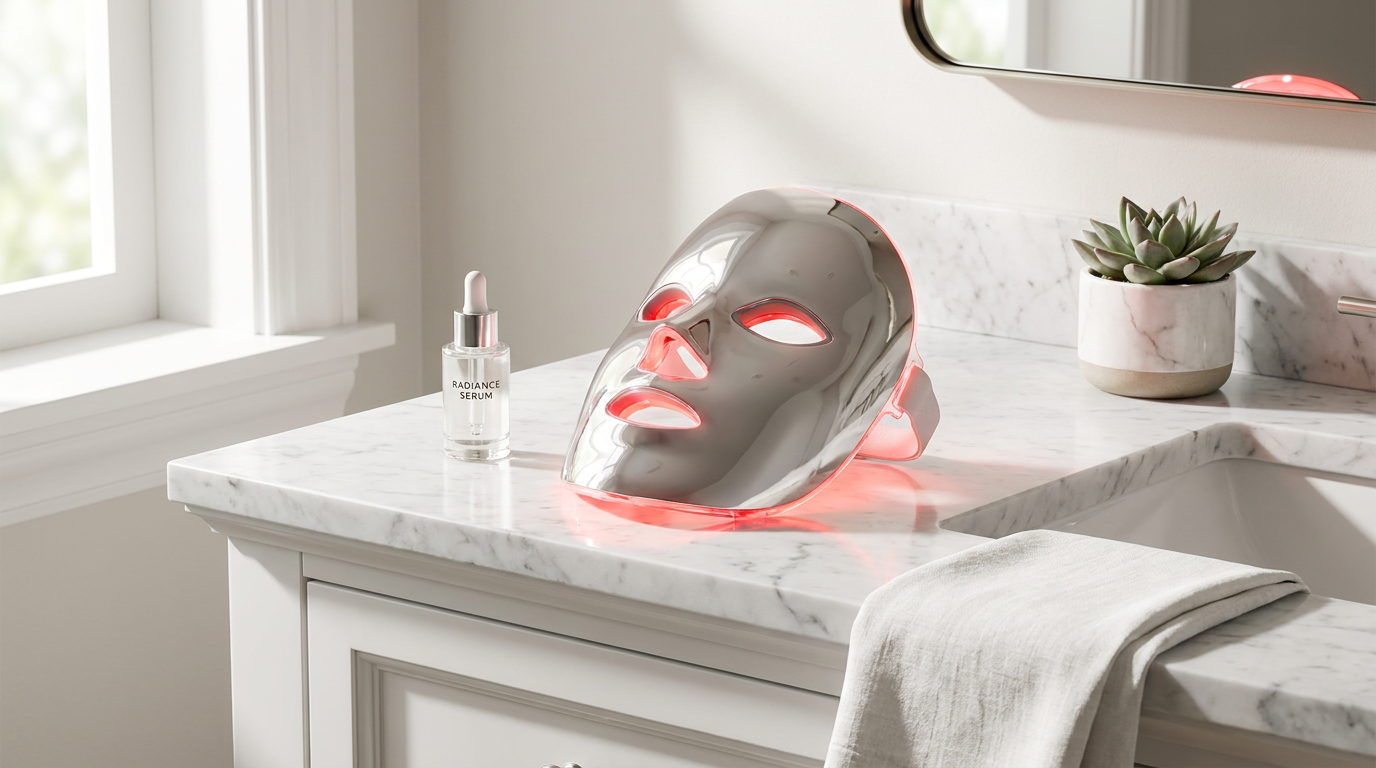
The market for consumer red light therapy devices—ranging from $300 flexible silicone masks to $2,000 full-body panels—has exploded over the past three years. Promising clinic-level skin rejuvenation, acne reduction, and accelerated healing from the comfort of a living room couch, these glowing devices have become a ubiquitous staple of modern wellness culture. But as their popularity drastically outpaces public understanding of the underlying science, dermatologists and clinical researchers are working to separate biological reality from aggressive marketing hype. The central question is no longer whether light therapy works in a laboratory, but whether the consumer devices sold online actually deliver a therapeutic dose.[2][5]
The biological mechanism behind the trend is well-documented. Red light therapy, clinically known as photobiomodulation (PBM), is not based on thermal heat or damaging ultraviolet radiation. Instead, it utilizes highly specific wavelengths of visible red light (typically between 630 and 660 nanometers) and invisible near-infrared light (810 to 850 nanometers) to penetrate the outer layers of the skin. When these targeted photons reach the cells, they are absorbed by the mitochondria—specifically by a photoreceptive enzyme called cytochrome c oxidase. This absorption directly boosts the production of adenosine triphosphate (ATP), the primary energy currency of the cell, triggering a widespread cascade of anti-inflammatory and regenerative cellular responses.[1][3][5]
Claim 1: Anti-aging and wrinkle reduction. The strongest dermatological evidence for consumer photobiomodulation devices centers on reversing the visible signs of skin aging. A comprehensive 2021 review published in the Aesthetic Surgery Journal concluded that a "reasonable body of clinical trial evidence" supports the use of low-energy red and near-infrared light for facial skin rejuvenation. By stimulating the activity of fibroblasts—the cells responsible for maintaining the structural integrity of connective tissue—the therapy increases the production of type 1 and type 3 collagen, while simultaneously preventing the rapid degradation of existing elastin fibers.[1][3]

However, the results are decidedly subtle and require immense patience. Clinical trials consistently demonstrate that rigorous use—typically three to five times a week for 10 to 20 minutes per session—can yield measurable, instrument-confirmed improvements in skin firmness and a reduction in the depth of fine lines after 12 full weeks. Dr. Rachel Reynolds, interim chair of dermatology at Harvard-affiliated Beth Israel Deaconess Medical Center, notes that while the medical literature legitimately supports these anti-aging benefits, consumer devices deliver results that are far more gradual and less dramatic than high-powered, in-office laser treatments.[2][4]
Claim 2: Acne reduction and bacterial control. For the treatment of acne vulgaris, the clinical evidence points to a combination approach utilizing both red and blue light. While red light calms the aggressive inflammatory response associated with painful cystic breakouts, blue light (operating at around 415 nanometers) specifically targets and destroys Cutibacterium acnes, the underlying bacteria responsible for acne formation. A rigorous 2025 meta-analysis published in JAMA Dermatology reviewed multiple controlled trials and found that at-home LED devices successfully reduced inflammatory acne lesions by approximately 45% over a four-to-eight-week period.[3][4][7]
For the treatment of acne vulgaris, the clinical evidence points to a combination approach utilizing both red and blue light.
It is crucial for consumers to note that light therapy is primarily effective for inflammatory acne—the red, swollen pimples that sit on the surface—rather than non-inflammatory comedones like deep blackheads or closed whiteheads. Dermatologists frequently recommend LED masks as a supportive adjunct therapy, meaning they work best when seamlessly combined with foundational topical treatments like prescription retinoids or over-the-counter salicylic acid, rather than serving as a standalone miracle cure for severe breakouts.[4][7]

Claim 3: Wound healing and procedure recovery. Beyond cosmetic enhancement, photobiomodulation has a remarkably well-documented history in accelerating tissue repair. Originally researched and funded by NASA in the 1980s to promote wound healing for astronauts in zero-gravity environments, red light therapy is now routinely deployed by dermatologists immediately following invasive aesthetic procedures like chemical peels, laser resurfacing, or microneedling. By enhancing local microcirculation and actively modulating oxidative stress, the targeted light significantly reduces post-procedure erythema (redness) and can cut overall healing time by up to half.[3][6]
The Catch: Power density and the "At-Home" gap. The primary caveat in this evidence pack is the vast, often unstated difference in power output—known clinically as fluence—between professional medical devices and consumer-grade masks. Clinical studies demonstrating profound results are almost exclusively conducted using high-powered, medical-grade LED arrays or low-level lasers. Consumer masks, constrained by strict safety regulations, manufacturing costs, and battery power limitations, emit only a fraction of that energy. Consequently, while the biological mechanism remains identical, the magnitude of the physiological effect is heavily diminished.[1][4][6]
"Some clinical studies have shown that LED face masks can benefit the skin, but the results vary, and long-term studies are lacking," explains Dr. Elika Hoss, a board-certified dermatologist at the Mayo Clinic. The glaring lack of standardized dosing protocols—dictating exactly how long, how often, and at what specific power level a device should be used—makes it incredibly difficult for the average consumer to guarantee they are actually receiving a therapeutic dose rather than just a warm glow.[2][4][6]
Safety and transparent uncertainty. As a completely non-invasive treatment modality, photobiomodulation boasts an exceptionally strong safety profile. Unlike ultraviolet light from tanning beds or the sun, it does not damage cellular DNA or increase the risk of developing skin cancer. The most significant safety concern involves ocular health; direct, prolonged exposure to high-intensity LEDs can cause severe eye strain or potential retinal damage, making the use of opaque protective goggles absolutely mandatory during treatment, especially when utilizing high-powered, full-body panels.[2][3][6][7]

Furthermore, independent researchers caution that the consumer device market is currently rife with methodological flaws. Many of the clinical studies supporting specific, high-priced devices are directly industry-funded, featuring small patient cohorts that introduce a high potential for bias and skewed results. While the underlying foundational science of photobiomodulation is entirely sound, the actual efficacy of any individual $300 flexible mask purchased from an online retailer remains highly variable and largely unverified by third parties.[1][5][6]
The final verdict. For consumers seeking a non-invasive, painless, and safe addition to their daily skincare routine, red light therapy devices offer scientifically grounded, biologically proven benefits for collagen production and inflammation reduction. However, they are decidedly not miracle cures that will replace a facelift or prescription medication. Success requires purchasing a device with verified wavelengths, committing to rigorous consistency over several months, and accepting the reality that at-home LED therapy is a long-term marathon, not a quick-fix sprint.[1][2][4][7]
Viewpoints in depth
The Clinical Dermatology View
Dermatologists acknowledge the science but temper expectations regarding consumer devices.
Medical professionals emphasize that photobiomodulation is a legitimate biological process, not a placebo. However, they draw a sharp distinction between the high-fluence lasers used in clinics and the low-power LEDs sold to consumers. They advocate for using these devices as adjuncts to proven topical treatments like retinoids, rather than replacements for medical care.
The Skeptical Researcher View
Researchers warn that commercial hype has outpaced independent, high-quality clinical data.
Evidence-based reviewers point out a significant flaw in the current literature: many of the studies demonstrating dramatic results are funded by the device manufacturers themselves. They highlight small sample sizes and a lack of standardized dosing protocols, arguing that until large-scale, independent trials are conducted, consumers are essentially participating in an unregulated, expensive experiment.
The Wellness Advocate View
Proponents see at-home light therapy as a democratization of cellular health and recovery.
For longevity and wellness advocates, the appeal lies in the safety profile and cumulative benefits. Because red light therapy carries zero risk of UV damage or chemical burns, they argue that the barrier to entry should be low. They focus on the systemic benefits of mitochondrial stimulation, viewing daily LED sessions as a foundational habit akin to taking vitamins or wearing sunscreen.
What we don't know
- The optimal standardized 'dose' (duration, frequency, and power density) for specific skin conditions remains undefined.
- Whether the long-term daily use of consumer LED masks over several years yields compounding benefits or diminishing returns.
- The exact degree to which industry funding has inflated the reported efficacy rates of popular consumer devices.
Key terms
- Photobiomodulation (PBM)
- The scientific term for light therapy, referring to the use of specific wavelengths of light to stimulate cellular function and healing.
- Cytochrome c oxidase
- An enzyme located in the mitochondria that absorbs red and near-infrared light, triggering an increase in cellular energy production.
- Near-infrared (NIR) light
- Invisible light wavelengths (typically 810–850 nm) that penetrate deeper into the skin and tissue than visible red light, targeting deep collagen and muscle.
- Fluence
- A measurement of the energy delivered per unit area (often expressed in Joules per square centimeter), which determines the power and effectiveness of a light therapy device.
Frequently asked
Can I overuse a red light therapy mask?
Yes. While it does not burn the skin like UV light, overexposure can lead to temporary redness, irritation, and diminishing returns as cellular receptors become saturated. Most clinical protocols recommend 10 to 20 minutes, three to five times a week.
Do I need to wear eye protection?
Yes. While red light is generally safe, direct and prolonged exposure to high-intensity LEDs can cause eye strain or potential retinal damage. Opaque goggles or built-in eye shields are strongly recommended.
How long does it take to see results?
Results are gradual. While some users report a temporary 'glow' immediately due to increased circulation, structural changes like increased collagen density and reduced fine lines typically take 8 to 12 weeks of consistent use.
Does red light therapy work for all types of acne?
No. It is primarily effective for inflammatory acne (red, swollen pimples) because it reduces inflammation, especially when combined with blue light to kill bacteria. It is not effective for non-inflammatory blackheads or whiteheads.
Sources
Source coverage
7 outlets
3 viewpoints surfaced







[1]Aesthetic Surgery JournalEvidence-Based Skeptics
Low-Level Light Therapy for Skin Rejuvenation: Clinical Evidence
Read on Aesthetic Surgery Journal →[2]Harvard Health PublishingClinical Dermatologists
Is red light therapy all hype?
Read on Harvard Health Publishing →[3]MDPI PharmaceuticalsWellness & Longevity Advocates
Photobiomodulation in Dermatology: A Review
Read on MDPI Pharmaceuticals →[4]Mayo ClinicClinical Dermatologists
What Do LED Face Masks Do?
Read on Mayo Clinic →[5]ZOE Science & NutritionEvidence-Based Skeptics
Red light therapy: Miracle cure or marketing hype?
Read on ZOE Science & Nutrition →[6]Cureus Journal of Medical ScienceWellness & Longevity Advocates
Photobiomodulation: Mechanisms and FDA Clearances
Read on Cureus Journal of Medical Science →[7]Factlen Editorial TeamWellness & Longevity Advocates
Synthesis by Factlen editorial team
Read on Factlen Editorial Team →

More in shopping
See all 5 stories →Motorcycle Tech
The End of the Clutch Lever: How Automated Transmissions Are Reshaping Motorcycles in 2026
8 sources
Sustainable Materials
Next-Gen Bio-Leather vs. Traditional Hide vs. Synthetics: The 2026 Material Guide
7 sources

Summer Sales
Retailers Move Summer Deal Wars to June as Amazon, Target, and Walmart Announce Overlapping Sales
7 sources

Every angle. Every day.
Get shopping stories with full source coverage and perspective breakdowns delivered to your inbox.