
Next-Gen Bio-Leather vs. Traditional Hide vs. Synthetics: The 2026 Material Guide
As the sustainable fashion market expands, consumers face a complex choice between highly durable animal hides, accessible plastic synthetics, and a new wave of lab-grown bio-materials.
By Factlen Editorial Team
- Bio-Material Innovators
- Advocates focused on scaling 100% plastic-free, low-carbon alternatives to decouple fashion from both animals and fossil fuels.
- Traditional Leather Advocates
- Consumers and artisans who argue that the multi-decade lifespan of real leather makes it more sustainable than short-lived plastics.
- Pragmatic Consumers
- Shoppers frustrated by industry greenwashing who demand transparency regarding the hidden plastics in 'vegan' products.
What's not represented
- · Garment Factory Workers
- · Cattle Farmers
Why this matters
As the sustainable fashion market doubles in size, consumers are navigating a minefield of 'greenwashed' materials. Understanding the hidden plastics in vegan leather and the true footprint of animal hides is essential for making purchases that actually align with your environmental values.
Key points
- Most affordable 'vegan leather' is made from non-biodegradable polyurethane (PU) plastic.
- Traditional animal leather offers unmatched durability but carries a massive carbon and water footprint.
- Fruit-based leathers (apple, cactus) often still contain 30% to 50% plastic binders.
- Next-gen materials like mycelium and Mirum are 100% plastic-free but remain expensive to scale.
- Consumers must weigh the longevity of animal hide against the cruelty-free, low-carbon promise of lab-grown alternatives.
The fashion industry is currently undergoing a massive material transition, driven by consumers demanding ethical and sustainable alternatives to animal products. For years, the term 'vegan leather' was championed as the ultimate guilt-free solution for footwear, handbags, and outerwear. However, as material science has advanced and supply chains have become more transparent, a stark reality has emerged: the vast majority of vegan leather on the market is simply plastic. This revelation has fractured the industry into three distinct material camps, each vying to become the standard for the future of apparel.[3][4]
Navigating this landscape requires looking past marketing buzzwords to understand the chemical reality of what we wear. The three primary contenders in 2026 are traditional animal leather, synthetic plastic leathers, and a rapidly emerging class of next-generation bio-leathers. Each material carries its own complex web of environmental, ethical, and practical trade-offs. To make an informed decision, consumers must weigh carbon emissions against physical durability, and animal welfare against end-of-life biodegradability.[7]
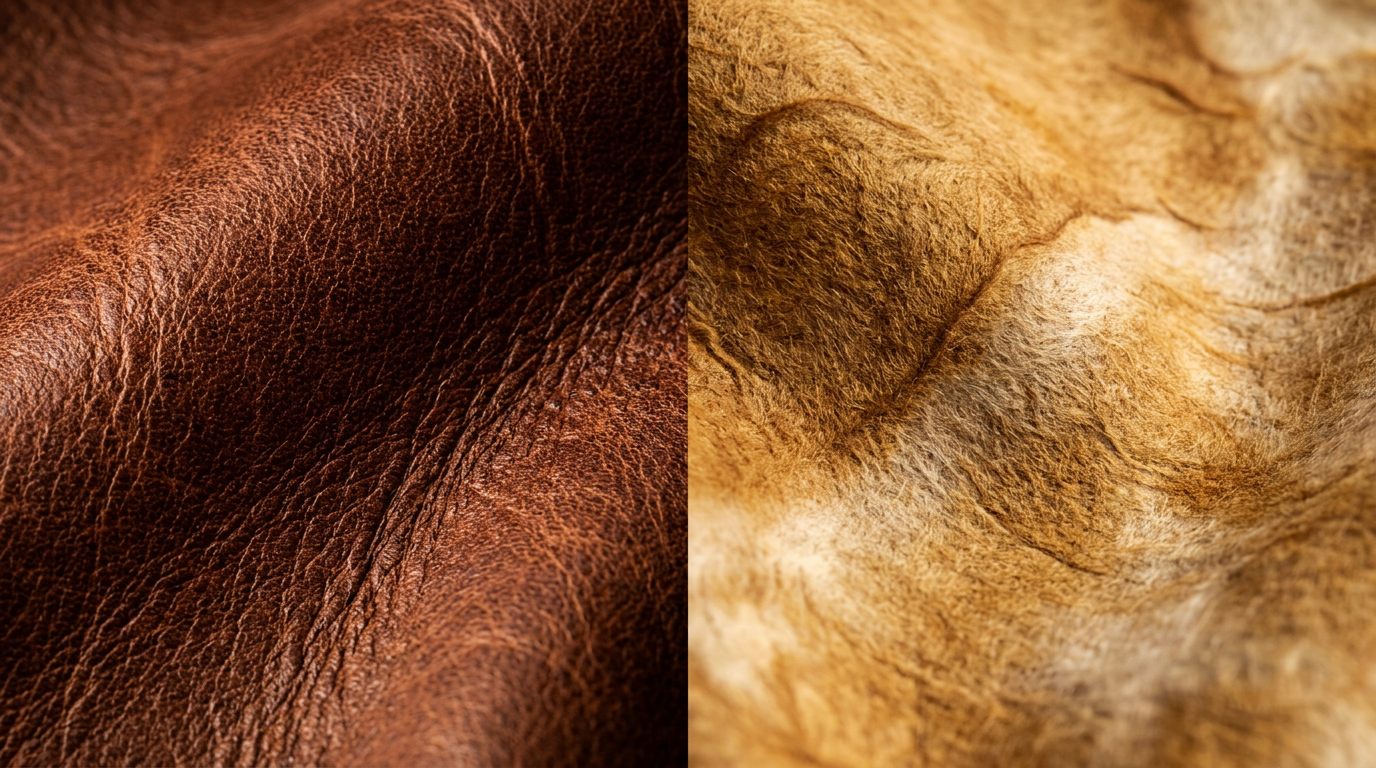
When evaluating traditional animal leather, the primary argument in its favor rests heavily on unmatched physical durability and heritage. A well-crafted, properly conditioned leather jacket or pair of boots can easily withstand decades of heavy abrasion and flexing. Unlike synthetic alternatives that degrade over time, high-quality animal hide develops a unique patina and molds to the wearer. Proponents argue that true sustainability means buying one item that lasts a lifetime rather than replacing a cheaper alternative every three years.[2][3]
The argument against traditional leather, however, centers on its massive and undeniable environmental toll. Cattle rearing requires vast expanses of land and water, contributing heavily to deforestation and emitting significant volumes of methane—a potent greenhouse gas. Furthermore, the conventional chromium-tanning process used to preserve the hides relies on toxic chemicals that frequently pollute waterways in developing nations, posing severe health risks to factory workers and local ecosystems.[1][5]

The evidence regarding traditional leather presents a challenging lifecycle equation. Studies consistently show that animal hide has the highest initial carbon footprint per square meter of any fashion material. Yet, because a vegetable-tanned leather bag can genuinely biodegrade at the end of its multi-decade lifespan, its long-term environmental amortization sometimes outperforms plastics that break down into toxic micro-particles after just a few seasons of use.[1][2]
For synthetic leather—commonly known as polyurethane (PU) or polyvinyl chloride (PVC)—the argument for its use centers on accessibility, versatility, and strict animal welfare. These materials are incredibly cheap to manufacture at scale, allowing fast-fashion brands to offer cruelty-free aesthetics to budget-conscious consumers. Modern high-grade PU can also be engineered to closely mimic the pore structure and flexibility of real calfskin, making it a highly convincing visual substitute.[1][4]
The argument against synthetic leather is rooted in its petroleum origins and poor physical longevity. Because these materials are essentially layers of plastic bonded to a fabric backing, they inevitably crack, peel, and flake at stress points after a few years of regular use. More alarmingly, as these garments wear down, they shed toxic microplastics into the environment, contaminating water supplies and entering the marine food chain.[3][5]
The argument against synthetic leather is rooted in its petroleum origins and poor physical longevity.
The evidence against synthetics is increasingly definitive in the context of circular fashion. While producing a square meter of PU emits fewer greenhouse gases than raising a cow, the material is entirely non-biodegradable. Every synthetic leather jacket or wallet ever produced will eventually sit in a landfill for centuries. Furthermore, the composite nature of the material makes it virtually impossible to recycle, cementing its status as a linear, dead-end product.[1][5]

Turning to next-generation bio-leathers, the argument for these materials is the promise of decoupling luxury from both animal agriculture and fossil fuels. Innovators are utilizing agricultural waste and biological processes to grow entirely new textiles. Mycelium leather, cultivated from the root structure of fungi, can be grown in controlled indoor environments in a matter of weeks. Other breakthroughs, like Mirum, utilize natural rubber, plant oils, and minerals to create a durable, plastic-free material that can be safely composted.[1][2]
The argument against the current bio-leather market highlights the pervasive issue of 'hidden plastics' and prohibitive costs. Many highly publicized fruit-based alternatives—such as apple, cactus, and grape leathers—are actually composite materials. To achieve the necessary flexibility and weather resistance, the pulverized plant waste is frequently mixed with up to 50 percent polyurethane. Critics argue this creates a 'worst of both worlds' scenario: a product marketed as natural that still cannot biodegrade.[3][4]
The evidence in the bio-leather sector reveals a market split between genuine innovation and clever greenwashing. True plastic-free materials like pure mycelium and Mirum boast carbon footprints up to 90 percent lower than animal leather and require a fraction of the water. However, these pure materials remain incredibly difficult to scale. Currently, they are largely restricted to high-end luxury capsule collections from brands like Hermès and Stella McCartney, carrying price tags that exclude the average consumer.[2][6]
Ultimately, choosing the right material requires aligning personal values with practical use cases. Traditional leather fits well when a consumer is purchasing high-wear, heritage items like heavy footwear, motorcycle jackets, or workwear intended to last a lifetime. It is the optimal choice for those who prioritize extreme durability and natural aging. However, it does not fit when the buyer's primary concerns are cruelty-free production, immediate carbon footprint reduction, or budget constraints.[7]

Synthetic PU leather fits well when budget limitations are strict, or for trend-driven, low-impact accessories that will not face daily abrasion. It provides an accessible entry point for consumers who strictly avoid animal products but cannot afford luxury bio-materials. It does not fit when longevity, breathability, or end-of-life environmental impact are priorities, as the material will inevitably degrade and contribute to plastic pollution.[7]
Next-generation bio-leathers fit well when consumers want premium, cruelty-free alternatives and are willing to pay an 'innovation premium' to support genuine sustainability. Materials like Mirum and pure mycelium are perfect for everyday luxury bags, wallets, and light footwear. They do not fit when the buyer expects the proven, multi-decade abrasion resistance of traditional animal hide, as these novel materials are still undergoing long-term real-world stress testing.[7]
As the industry moves deeper into 2026, the binary choice between 'real' and 'vegan' is being replaced by a demand for total material transparency. Consumers are increasingly reading labels not just to ensure an animal wasn't harmed, but to verify that a fossil fuel wasn't used in its place. The brands that will dominate the next decade of fashion are those that can successfully scale plastic-free bio-materials without compromising on the tactile luxury that consumers expect.[7]
The ultimate goal of this material revolution is circularity—creating garments that come from the earth and can safely return to it. While traditional leather achieves this at a high initial environmental cost, and synthetics fail entirely, the next generation of lab-grown and plant-based textiles represents the most hopeful path forward. As production scales and costs inevitably fall, the fashion industry inches closer to a future where style no longer requires a compromise between ethics and the environment.[7]
How we got here
1960s
Polyurethane (PU) and PVC 'pleather' gain mass-market adoption as cheap, cruelty-free alternatives to animal hide.
2010s
First-generation bio-leathers like Piñatex (pineapple) and AppleSkin launch, though they still rely on plastic binders.
2021
Luxury brands like Hermès and Stella McCartney debut exclusive capsule collections using lab-grown mycelium.
2026
Next-generation materials like Mirum achieve 100% plastic-free composition, pushing the industry toward genuine circularity.
Viewpoints in depth
Bio-Material Innovators
Advocates focused on scaling 100% plastic-free, low-carbon alternatives.
This camp believes that the future of fashion must be entirely decoupled from both animal agriculture and fossil fuels. They argue that while early 'vegan leathers' were flawed due to their reliance on polyurethane, the new wave of lab-grown mycelium and natural-rubber composites proves that luxury aesthetics do not require environmental compromise. Their primary focus is driving down the cost of these innovations so they can replace plastic synthetics in the mass market.
Traditional Leather Advocates
Consumers and artisans who argue that longevity is the ultimate form of sustainability.
Proponents of traditional leather argue that lifecycle analyses often unfairly penalize animal hides by focusing only on the initial carbon footprint. They point out that a well-made leather jacket can be worn for fifty years, repaired, and eventually biodegraded. In contrast, they view the push for synthetic and composite 'vegan' leathers as a fast-fashion trap that ultimately results in non-recyclable garments shedding microplastics into the environment after just a few years of use.
Pragmatic Consumers
Shoppers frustrated by industry greenwashing who demand material transparency.
This perspective is defined by a growing skepticism toward fashion marketing. These consumers support the transition away from animal products but feel misled by brands that market 'apple leather' or 'cactus leather' without disclosing the heavy use of plastic binders. They demand strict labeling laws that clearly state the percentage of petroleum-based polyurethane in any product claiming to be a sustainable, plant-based alternative.
What we don't know
- Whether pure mycelium leather can truly match the multi-decade abrasion resistance of traditional animal hide in real-world conditions.
- How quickly the cost of 100% plastic-free bio-leathers will fall to compete with cheap polyurethane in the mass market.
Key terms
- Mycelium
- The vegetative, root-like structure of fungi, which can be grown in labs to create dense, leather-like mats.
- Polyurethane (PU)
- A synthetic plastic polymer commonly used to coat fabrics to create traditional, non-biodegradable 'vegan leather'.
- Mirum
- A patented, 100% plastic-free material made from natural rubber, plant oils, and minerals that mimics leather.
- Chromium Tanning
- A chemical process used to treat and preserve animal hides, known for producing toxic wastewater if not strictly managed.
Frequently asked
Is apple or cactus leather completely plastic-free?
No. Most fruit-based leathers currently on the market require a polyurethane (PU) binder—often making up 30% to 50% of the material—to achieve flexibility and durability.
Does vegan leather last as long as real animal leather?
Currently, no. Synthetic PU leather inevitably cracks and peels over time. While next-gen materials like mycelium are highly durable, traditional animal hide still offers unmatched multi-decade longevity.
Can mycelium mushroom leather be composted?
Yes. Pure mycelium leather is an organic material that is 100% biodegradable and can be safely composted at the end of its lifecycle, provided it hasn't been coated in synthetic plastics.
Why is real leather considered unsustainable if it biodegrades?
The environmental toll of traditional leather comes from its production. Rearing cattle requires massive amounts of land and water, emits high levels of methane, and the chromium-tanning process often pollutes local waterways.
Sources
Source coverage
7 outlets
3 viewpoints surfaced







[1]TechScienceBio-Material Innovators
Environmental Impact and Durability of Mycelium vs. Synthetic Leathers
Read on TechScience →[2]NAE VeganBio-Material Innovators
The Truth About Vegan Leather Durability and Plastic Content
Read on NAE Vegan →[3]RedditTraditional Leather Advocates
Consumer discussions on the longevity of plant-based vs. traditional leather
Read on Reddit →[4]Will's Vegan StorePragmatic Consumers
A Comprehensive Guide to Bio-Leather, Apple Leather, and PU
Read on Will's Vegan Store →[5]Bow SeatPragmatic Consumers
Mycelium Leather: A Solution to Microplastic Pollution in Fashion
Read on Bow Seat →[6]Apparel ResourcesBio-Material Innovators
From Banana Stems to Pineapple Leaves: Alternative Materials Reshaping Fashion
Read on Apparel Resources →[7]Factlen Editorial TeamPragmatic Consumers
Synthesis by Factlen editorial team
Read on Factlen Editorial Team →

Every angle. Every day.
Get shopping stories with full source coverage and perspective breakdowns delivered to your inbox.