
Are Passkeys Actually Safer Than Passwords? The Evidence on Phishing Resistance
As major tech platforms and government agencies push to eliminate passwords, new data reveals that passkeys drastically reduce phishing vulnerabilities while speeding up login times—though legacy fallbacks remain a critical weak point.
By Factlen Editorial Team
- Security Practitioners
- Focus on the cryptographic elimination of shared secrets and the neutralization of automated phishing campaigns.
- Usability Researchers
- Emphasize the friction of cross-platform syncing, the confusion of recovery methods, and the need for standardized user experiences.
- Enterprise IT Leaders
- Prioritize rapid deployment to reduce helpdesk costs associated with password resets while managing the risks of legacy fallbacks.
What's not represented
- · Consumers without modern smartphones
- · Privacy advocates concerned about biometric reliance
Why this matters
Passwords are the root cause of the vast majority of data breaches and identity theft. Understanding how passkeys work—and why they are fundamentally immune to traditional phishing—helps users secure their most sensitive accounts while eliminating the friction of complex password requirements.
Key points
- Passkeys use asymmetric cryptography to eliminate the need for shared secrets like passwords.
- Because passkeys are cryptographically bound to specific domains, they are immune to traditional phishing.
- Microsoft data shows passkeys succeed on 95% of login attempts, compared to 30% for passwords.
- AiTM phishing attacks, which bypass SMS and push notifications, have surged 146% year-over-year.
- Accounts remain vulnerable if legacy passwords or SMS recovery options are left active as fallbacks.
The scale of the digital identity crisis is staggering. Microsoft telemetry currently monitors over 7,000 password attacks every second, a rate that has doubled in just two years. The vast majority of data breaches involve human error, primarily through forgotten, reused, or stolen credentials. For decades, the cybersecurity industry relied on increasingly complex password requirements to stem the tide, but this approach only increased user friction without solving the underlying vulnerability of shared secrets.[1][6]
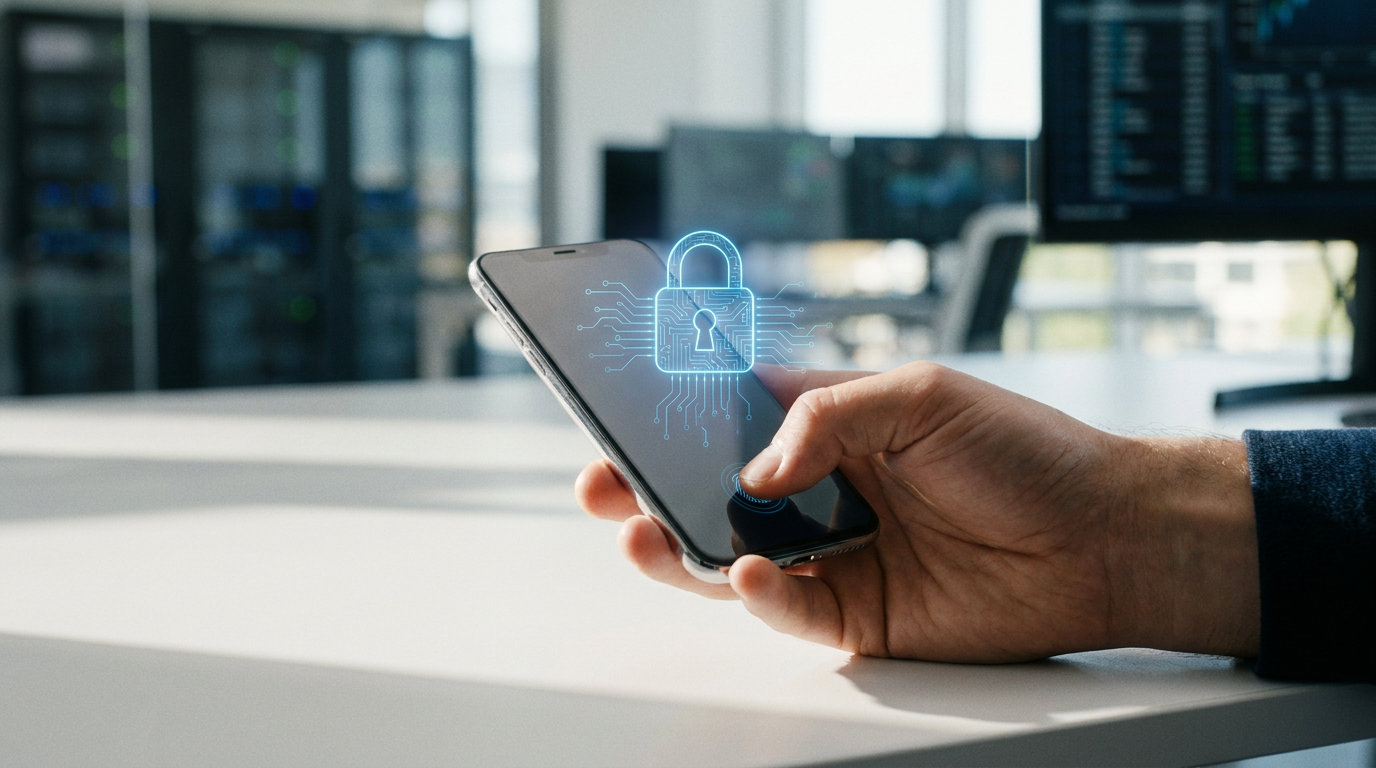
The industry's definitive response is the passkey, an authentication method built on the FIDO2 standard. Instead of a password that must be memorized and transmitted over the internet, a passkey relies on asymmetric cryptography. When a user registers for a service, their device generates a unique cryptographic key pair: a public key stored on the company's server, and a private key that never leaves the user's device. To log in, the user simply unlocks their device using a biometric scan or PIN, which signs a cryptographic challenge.[3][6]
The primary claim driving passkey adoption is that they eliminate traditional phishing. The evidence strongly supports this. Under the WebAuthn protocol, the cryptographic challenge is strictly bound to the actual domain of the website requesting it. If a user is tricked into visiting a lookalike phishing site, the browser recognizes the domain mismatch and refuses to complete the cryptographic signature. The phishing site cannot steal the credential because the user's device will not hand it over.[3][4]
This structural immunity is why the Cybersecurity and Infrastructure Security Agency (CISA) has aggressively pushed for passkey adoption. In its recent "Secure by Demand" guidance, CISA urged software buyers to mandate FIDO-based phishing-resistant authentication from their vendors. The agency noted that adversary-in-the-middle (AiTM) phishing attacks have surged 146% year-over-year, making legacy defenses increasingly obsolete.[2][6]

AiTM attacks are particularly devastating because they bypass traditional multi-factor authentication (MFA). In these attacks, a user enters their password and their SMS code into a fake site, and the attacker immediately forwards those inputs to the real site, stealing the resulting session token. Because passkeys do not rely on interceptable codes, they neutralize AiTM attacks entirely.[2][6]
Beyond security, the secondary claim is that passkeys dramatically improve the user experience. Traditional security measures often force a trade-off between safety and convenience, but passkeys appear to deliver both. By replacing the cognitive load of remembering passwords with a simple biometric tap, the login process becomes nearly frictionless.[3][5]
The empirical data on usability is striking. Microsoft's telemetry across hundreds of millions of consumer accounts reveals a 95% login success rate with passkeys, compared to a dismal 30% success rate for traditional passwords. Users are no longer getting locked out due to typos or forgotten credentials.[1]
Users are no longer getting locked out due to typos or forgotten credentials.
Furthermore, Microsoft reports that passkey sign-ins are 14 times faster than traditional password-plus-code MFA flows. This speed improvement translates directly into reduced helpdesk costs for enterprises, as password resets have historically consumed a massive portion of IT support budgets.[1][6]

Driven by these dual benefits, enterprise adoption is reaching a tipping point. Recent industry surveys indicate that nearly 87% of enterprises have either deployed or are actively deploying passkeys. Major tech platforms are forcing the issue; Microsoft recently began auto-enabling passkey profiles across its enterprise environments to accelerate the transition.[1][6]
However, the transition is not without significant vulnerabilities, chief among them being the "Fallback Gap." While the passkey itself is cryptographically secure, an account is only as safe as its weakest recovery method. If an organization deploys passkeys but leaves a legacy password or SMS recovery option attached to the account, the security gains are effectively nullified.[1]
Microsoft security researchers warn of the danger of "dormant credentials." Users often keep a password attached to their account "just in case" they lose their passkey device. Because the user never uses the password, they may not notice if it is compromised in a breach. Attackers specifically target these dormant legacy methods to bypass the passkey entirely.[1][6]
Another area of transparent uncertainty lies in user experience inconsistencies across different platforms. Academic research highlights that while the underlying cryptography is sound, real-world implementations can be confusing for the average consumer. Poor developer decisions regarding how authenticators are attached and recovered create unpredictable user journeys.[5]

Researchers note that the lack of a standardized recovery model in the original FIDO2 design has led to fragmented solutions. When a user switches between Apple's iOS ecosystem, Google's Android, and Microsoft's Windows, the way passkeys are stored, synced, and recovered can vary wildly, leading to user frustration and potential lockouts.[4][5]
This fragmentation is most evident in the distinction between "device-bound" and "synced" passkeys. Device-bound keys, such as physical YubiKeys, offer the highest level of security because the private key cannot be extracted. However, if the physical key is lost, the user loses access unless they have registered a backup.[3][4]
To solve the recovery problem for consumers, Apple, Google, and password managers introduced synced passkeys. These systems back up the private key to the cloud (e.g., iCloud Keychain) using end-to-end encryption, allowing the passkey to seamlessly populate on a user's new phone. While highly secure, this introduces a reliance on the platform provider's cloud architecture.[4][6]
Despite these implementation hurdles, the evidence overwhelmingly supports the transition to passkeys as a massive upgrade in both security and usability. The technology successfully eliminates the root cause of most data breaches while making the internet easier to navigate.[3][6]
The primary challenge moving forward is no longer proving that passkeys work, but executing the operational discipline required to fully deprecate legacy passwords. Until organizations possess the confidence to sever SMS and password fallbacks entirely, the passwordless future will remain only partially realized.[1][6]
How we got here
March 2019
The WebAuthn specification officially becomes a W3C Recommendation, laying the groundwork for passkeys.
May 2022
Apple, Google, and Microsoft announce expanded, unified support for the FIDO standard across their platforms.
October 2023
Google makes passkeys the default authentication method for all personal accounts.
August 2024
CISA releases 'Secure by Demand' guidance urging software buyers to require FIDO-based authentication.
March 2026
Microsoft begins auto-enabling passkey profiles across its enterprise environments to force migration.
Viewpoints in depth
Security Practitioners
Focus on the cryptographic elimination of shared secrets and the neutralization of automated phishing campaigns.
For cybersecurity professionals and government agencies like CISA, the value of passkeys lies in their structural immunity to human error. Traditional multi-factor authentication (MFA) relies on the user to verify that a site is legitimate before entering an SMS code or approving a push notification. Passkeys remove the human from the verification loop entirely. Because the WebAuthn protocol cryptographically binds the authentication challenge to the specific domain, a passkey simply will not function on a lookalike phishing site. This mathematical certainty is viewed as the only viable defense against the exponential rise of AI-driven, Adversary-in-the-Middle (AiTM) phishing kits.
Usability Researchers
Emphasize the friction of cross-platform syncing, the confusion of recovery methods, and the need for standardized user experiences.
While acknowledging the security benefits, academic researchers and UX designers point out that the passkey ecosystem remains fragmented. The distinction between a device-bound key (which cannot be backed up) and a synced key (which lives in a cloud keychain) is rarely explained clearly to end-users. Furthermore, when a user attempts to log into a Windows PC using a passkey stored on an Apple iPhone, the cross-device authentication process (often involving scanning a QR code via Bluetooth) can feel clunky and unintuitive. Researchers argue that until the major tech platforms standardize the recovery and cross-device experience, widespread consumer adoption will face unnecessary friction.
Enterprise IT Leaders
Prioritize rapid deployment to reduce helpdesk costs associated with password resets while managing the risks of legacy fallbacks.
For corporate IT departments, passkeys represent a massive cost-saving measure. Password resets and account lockouts historically consume a disproportionate amount of helpdesk resources. By transitioning to a system with a 95% login success rate, enterprises can reclaim millions of dollars in lost productivity. However, IT leaders are acutely aware of the 'Fallback Gap.' Deploying passkeys is only half the battle; the real challenge is managing the organizational pushback when IT finally disables the legacy password and SMS recovery options, which are the exact vectors attackers target to bypass the new security measures.
What we don't know
- How quickly smaller, independent websites and legacy enterprise software will adopt the FIDO2 standard.
- Whether the reliance on Apple and Google's cloud keychains for synced passkeys will introduce new, unforeseen systemic vulnerabilities.
- How organizations will handle account recovery for users who lose all their devices and have no legacy fallback options.
Key terms
- FIDO2
- An open authentication standard developed by the FIDO Alliance that enables passwordless, phishing-resistant logins.
- WebAuthn
- The web API standard that allows browsers to communicate with a device's passkey to authenticate a user.
- Asymmetric Cryptography
- A security system that uses a pair of keys: a public key stored on a server and a private key kept secret on the user's device.
- Adversary-in-the-Middle (AiTM)
- A sophisticated phishing attack where a hacker intercepts the communication between a user and a legitimate website to steal session tokens.
- Synced Passkey
- A passkey that is securely backed up and synchronized across multiple devices using a cloud provider's end-to-end encrypted keychain.
Frequently asked
What exactly is a passkey?
A passkey is a digital credential tied to your device that uses public key cryptography to log you into accounts without a password. You unlock it using your device's biometric scanner or PIN.
What happens if I lose my phone?
Most consumer passkeys are 'synced passkeys' backed up to cloud services like Apple iCloud Keychain or Google Password Manager. If you get a new device and sign into your cloud account, your passkeys are restored.
Can a passkey be stolen in a data breach?
No. The private key never leaves your device. The server only holds a public key, which is useless to hackers on its own.
Why do some sites still require passwords?
Adoption takes time. While major platforms like Google, Apple, and Microsoft support passkeys, many smaller websites have not yet updated their authentication infrastructure to the FIDO2 standard.
Sources
Source coverage
6 outlets
3 viewpoints surfaced






[1]Microsoft SecuritySecurity Practitioners
Passkeys stop phishing—but weak fallbacks and recovery still get exploited
Read on Microsoft Security →[2]Cybersecurity and Infrastructure Security Agency (CISA)Security Practitioners
Secure by Demand Guide: How Software Customers Can Drive a Secure Technology Ecosystem
Read on Cybersecurity and Infrastructure Security Agency (CISA) →[3]FIDO AllianceEnterprise IT Leaders
Passkeys: A Passwordless Future
Read on FIDO Alliance →[4]MDPI JournalUsability Researchers
Passkeys and GDPR Compliance: Architecture and Security
Read on MDPI Journal →[5]ResearchGateUsability Researchers
Passkeys, based on the FIDO2/WebAuthn standards: Empirical Evidence
Read on ResearchGate →[6]Factlen Editorial TeamEnterprise IT Leaders
Synthesis by Factlen editorial team
Read on Factlen Editorial Team →
More in technology
See all 6 stories →AI Reliability
The Mathematical Cure for AI Hallucinations: How Formal Verification is Making Neural Networks Trustworthy
7 sources

Digital Detox
The 'Slowtech' Revolution: Why Millions Are Downgrading Their Smartphones to Reclaim Their Time
6 sources

Digital Minimalism
The Slowtech Revolution: Why Consumers Are Paying $600 for Phones That Do Less
8 sources

Battery Tech
The Sodium-Ion Breakthrough: How Salt is Making Electric Vehicles Cheaper and Cold-Proof
6 sources

Every angle. Every day.
Get technology stories with full source coverage and perspective breakdowns delivered to your inbox.