
Arctic Ocean Crosses Irreversible Chemical Tipping Point, Starving Marine Food Web
Decades of sea ice loss have triggered a permanent chemical shift in the Arctic Ocean, depleting vital nutrients and threatening both global fisheries and the ocean's ability to store carbon.
By Factlen Editorial Team
- Marine Biogeochemists
- Focus on the chemical mechanisms of denitrification and nutrient cycling.
- Ecologists & Fisheries
- Focus on the collapse of the food web and the consequences for marine life.
- Climate System Analysts
- Focus on the irreversibility of the tipping point and the weakening of the global carbon sink.
What's not represented
- · Inuit and Indigenous Arctic Communities
- · North Atlantic Commercial Fisheries
Why this matters
The assumption that a melting Arctic would yield a more productive, life-filled ocean has been proven false. A permanent chemical shift is now starving the base of the marine food chain, threatening global fish stocks, indigenous communities, and the ocean's ability to absorb carbon dioxide.
Key points
- The Arctic Ocean has crossed an irreversible chemical tipping point, shifting from a light-limited to a nitrate-starved ecosystem.
- Melting sea ice has triggered 'benthic denitrification,' a process where microbes permanently remove vital nitrate from the water.
- The lack of nitrate favors smaller, less nutritious plankton, severely reducing the energy available for fish, seals, and polar bears.
- The shift weakens the biological carbon pump, reducing the Arctic Ocean's capacity to absorb and store atmospheric carbon dioxide.
- Scientists warn the nutrient famine will likely flow southward, threatening the massive commercial fisheries of the North Atlantic.
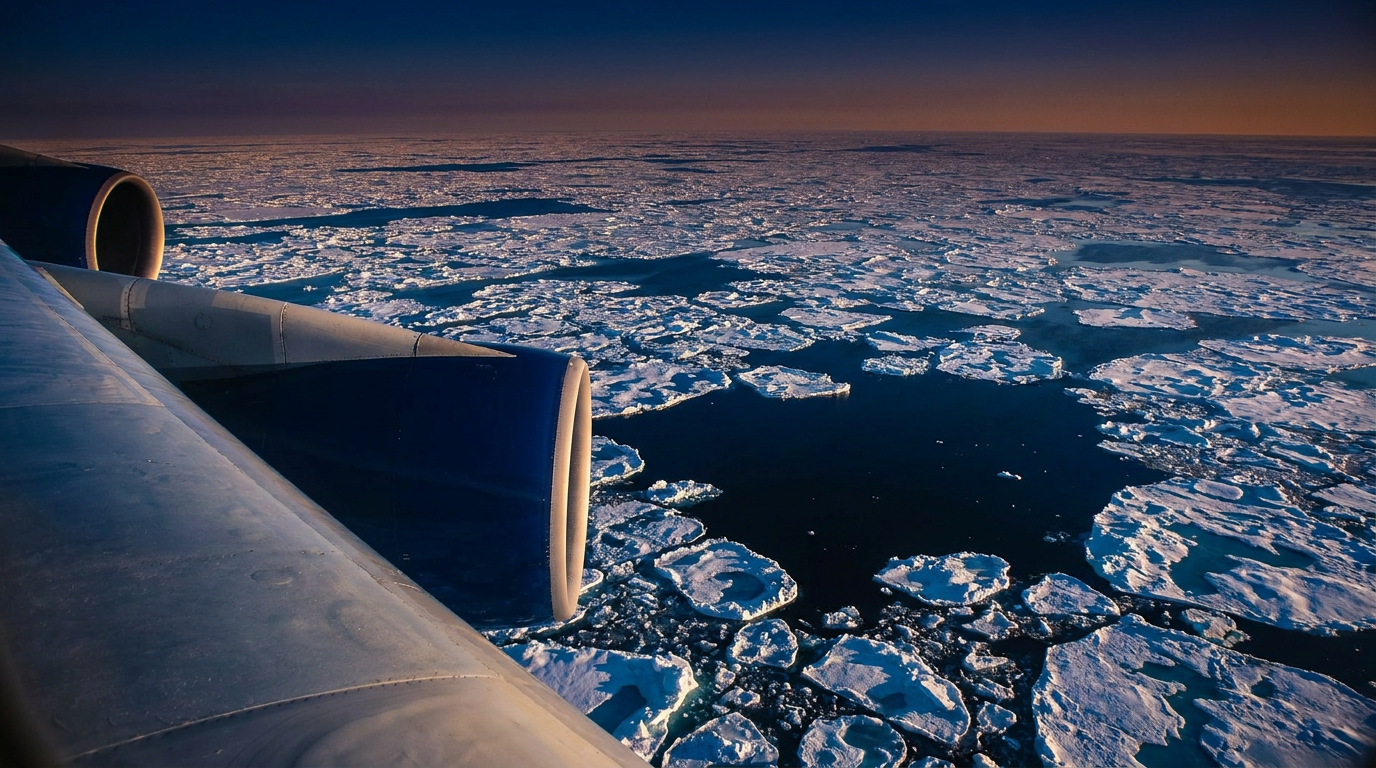
The Arctic Ocean has crossed a fundamental, irreversible chemical tipping point, fundamentally altering the foundation of its food web. For decades, scientists assumed that melting sea ice would allow more sunlight into the water, sparking a boom in marine life.[2][3]
Instead, a landmark two-decade analysis reveals the exact opposite is happening. The Arctic has shifted from an ecosystem limited by sunlight to one starved of nitrate—a crucial fertilizer required for marine life to survive.[1][4]
This regime shift, which researchers believe was crossed around 2009, is already forcing a biological reorganization. It threatens to shrink the entire Arctic food chain, from microscopic plankton to commercial fish stocks, seabirds, and marine mammals.[2][3]
To understand this collapse, researchers had to map the complex chemical mechanism driving it: a process known as benthic denitrification.[1][6]

The Arctic Ocean is geographically unique because nearly half of its surface area lies over shallow continental shelves.[4]
When sea ice disappears, the increased sunlight triggers massive, temporary blooms of phytoplankton in these shallow waters.[3]
As these short-lived algae blooms die, their organic matter sinks to the shallow seafloor, where it is broken down by bacteria. This rapid decomposition severely depletes the oxygen in the sediment.[1][3]
In these newly oxygen-poor environments, marine microbes are forced to consume nitrate instead of oxygen. They convert the nitrate into inert nitrogen gas, which bubbles out of the ocean and is permanently removed from the marine ecosystem.[1][4]
The evidence for this shift is anchored in 20 years of oceanographic data collected from the Fram Strait, the primary marine bottleneck where Arctic waters drain into the North Atlantic.[1][4]
Prior to 2009, average nitrate concentrations in the Polar Surface Water flowing through the Fram Strait were measured at 3.1 micromoles. After 2009, that average plummeted to 1.7 micromoles, with baseline values now regularly approaching zero.[1][6]

Prior to 2009, average nitrate concentrations in the Polar Surface Water flowing through the Fram Strait were measured at 3.1 micromoles.
Investigators estimate that just two regions—the Chukchi Sea and the East Siberian shelf—are now removing approximately 12 teragrams of nitrogen annually, offsetting a massive portion of the nutrients entering the Arctic from the Pacific Ocean.[1]
The ecological consequences of this nutrient famine are severe. When nitrate levels drop, the large, energy-rich plankton species (like diatoms) that historically anchored the Arctic food web can no longer survive.[1][2]
In their place, smaller pico- and nanoplankton are gaining a competitive advantage. While these microscopic cells can survive in nutrient-starved water, they transfer far less energy up the food chain.[1][4]
This "shrinkage" at the base of the food web means less overall caloric energy is available for the fish, seals, and polar bears that rely on a robust plankton foundation, directly impacting human communities like the Inuit who depend on these ecosystems.[2][3]

Beyond the immediate food web, the shift to smaller plankton threatens the Arctic Ocean's role as a vital global carbon sink.[1][5]
Large diatoms are heavy; when they die, they sink rapidly to the deep ocean, sequestering the carbon dioxide they absorbed during photosynthesis. This mechanism is known as the biological carbon pump.[1][6]
The smaller plankton species now dominating the Arctic are too light to sink efficiently. They decompose near the surface, releasing their stored carbon back into the atmosphere and weakening the ocean's climate-regulating capacity.[1][4]
The irreversibility of this shift presents a grim reality for climate modelers. Because the Arctic nutrient system responds over long timescales, even a temporary, short-term recovery of sea ice would not rapidly replenish the lost nitrate inventories.[3][6]

How we got here
1998
Researchers begin a continuous 20-year collection of oceanographic data in the Fram Strait to monitor Arctic water outflows.
2009
The Arctic Ocean crosses a chemical tipping point, marked by a sharp, sustained drop in nitrate concentrations.
May 2026
A landmark study in Communications Earth & Environment reveals the irreversible shift from a light-limited to a nitrate-limited ecosystem.
June 2026
Widespread scientific consensus forms around the dire implications for global fisheries and the ocean's carbon-storing capacity.
Viewpoints in depth
Marine Biogeochemists
Focus on the chemical mechanisms of denitrification and nutrient cycling.
Biogeochemists emphasize that the Arctic's unique geography—where half the ocean lies over shallow continental shelves—makes it uniquely vulnerable to benthic denitrification. They argue that the focus on surface ice melt has historically obscured the more insidious sub-surface chemical changes. By tracking the exact micromolar drop in nitrate, this camp provides the quantitative proof that the ocean has fundamentally transitioned from a light-limited system to a nutrient-starved one.
Ecologists & Fisheries
Focus on the collapse of the food web and the consequences for marine life.
For marine ecologists, the primary concern is the 'shrinkage' of the food web. They point out that while smaller nanoplankton can survive in nitrate-depleted waters, they do not provide the caloric density required to sustain large fish, seals, and polar bears. This camp warns that the nutrient famine will not stay confined to the Arctic; as depleted waters flow south, they threaten to undermine the massive, commercially vital fisheries of the North Atlantic.
Climate System Analysts
Focus on the irreversibility of the tipping point and the weakening of the global carbon sink.
Climate modelers and system analysts view this regime shift through the lens of global carbon sequestration. They highlight that the loss of heavy, fast-sinking diatoms weakens the biological carbon pump, leaving more carbon dioxide in the atmosphere. Furthermore, they stress the irreversibility of the tipping point: because the Arctic nutrient system operates on vast timescales, even a theoretical stabilization of sea ice would not quickly restore the lost nitrate, locking in these climate consequences for generations.
What we don't know
- How the outflow of nitrate-depleted water will impact the massive commercial fisheries in the North Atlantic.
- The exact scale by which the biological carbon pump will weaken as smaller plankton replace larger diatoms.
- Whether any localized regions of the Arctic might retain enough nitrate to serve as refuges for larger marine life.
Key terms
- Benthic denitrification
- A process where microbes in seafloor sediments convert usable nitrate into nitrogen gas, removing it from the food web.
- Phytoplankton
- Microscopic, plant-like organisms that form the base of the marine food chain and produce much of the ocean's oxygen.
- Fram Strait
- A critical ocean passage between Greenland and Svalbard where Arctic waters flow southward into the North Atlantic.
- Biological carbon pump
- The ocean's mechanism for sequestering carbon, driven by dead organic matter (like large plankton) sinking to the deep sea.
- Diatoms
- A type of large, energy-rich phytoplankton that historically anchored the Arctic food web and efficiently transferred carbon to the deep ocean.
Frequently asked
What is benthic denitrification?
It is a microbial process where bacteria in oxygen-poor seafloor sediments consume nitrate and convert it into inert nitrogen gas, permanently removing it from the marine ecosystem.
Why did scientists previously think melting ice would increase marine life?
Initial models assumed that less sea ice would allow more sunlight to penetrate the water, sparking massive phytoplankton blooms and creating a more productive, life-filled ocean.
Can this chemical tipping point be reversed?
Researchers consider the shift irreversible under current climate conditions. The Arctic nutrient system responds over very long timescales, meaning even a temporary return of sea ice would not quickly replenish the lost nitrate.
How does this affect the global climate?
The shift favors smaller plankton that do not sink efficiently when they die. This weakens the ocean's 'biological carbon pump,' reducing its capacity to absorb and store carbon dioxide from the atmosphere.
Sources
Source coverage
6 outlets
3 viewpoints surfaced






[1]Communications Earth & EnvironmentMarine Biogeochemists
Sea ice loss drives a regime shift in Arctic Ocean nitrogen biogeochemistry
Read on Communications Earth & Environment →[2]New ScientistEcologists & Fisheries
Arctic Ocean reaches tipping point that could be dire for marine life
Read on New Scientist →[3]Live ScienceEcologists & Fisheries
Arctic Ocean crosses 'irreversible' tipping point, wreaking havoc on food web
Read on Live Science →[4]University of EdinburghMarine Biogeochemists
Arctic Ocean passes 'irreversible' chemical tipping point
Read on University of Edinburgh →[5]National Snow and Ice Data CenterClimate System Analysts
Arctic Sea Ice News and Analysis
Read on National Snow and Ice Data Center →[6]Factlen Editorial TeamClimate System Analysts
Synthesis by Factlen editorial team
Read on Factlen Editorial Team →
Every angle. Every day.
Get science stories with full source coverage and perspective breakdowns delivered to your inbox.