
The 'Master' Proteins That Mask Deadly Mutations — And How They Could Inspire New Drugs
Scientists are uncovering how a specialized class of chaperone proteins buffers the effects of harmful genetic mutations, keeping cells healthy despite DNA errors. This discovery opens a new frontier for drug development, offering potential ways to either reinforce this buffering in genetic diseases or disable it to destroy cancer cells.
By Factlen Editorial Team
- Oncology Researchers
- View master proteins as a critical vulnerability in cancer, aiming to inhibit chaperones to destroy heavily mutated tumors.
- Evolutionary Biologists
- Focus on how genetic buffering hides cryptic variation and allows species to accumulate genetic diversity over time.
- Genetic Disease Specialists
- Seek to enhance chaperone activity to rescue misfolded proteins and treat inherited disorders without altering DNA.
What's not represented
- · Patients with rare genetic diseases
- · Pharmacologists designing targeted degraders
Why this matters
Understanding how our bodies naturally hide lethal genetic mutations opens a massive new frontier in medicine. By learning to control these 'master' proteins, scientists could develop therapies that force cancer cells to self-destruct or help patients with rare genetic diseases live symptom-free without requiring DNA editing.
Key points
- The human genome contains numerous potentially lethal mutations that are naturally suppressed by the body.
- "Master" proteins, known as chaperones, mask these flaws by physically forcing misfolded mutant proteins into their correct shapes.
- This buffering system hides genetic variation from natural selection, allowing diversity to accumulate silently.
- Environmental stress can overwhelm the chaperone network, suddenly unmasking hidden genetic diseases.
- Cancer cells rely heavily on chaperones to survive their high mutation rates, making them vulnerable to chaperone-inhibiting drugs.
- Researchers are mapping these protein networks to design precision therapies for both cancer and rare genetic disorders.
The human genome is a landscape of microscopic errors. Every person carries dozens of genetic mutations that, on paper, should be debilitating or even lethal. Yet, the vast majority of these genetic misspellings never manifest into disease. For decades, biologists have sought to understand how cells survive this constant barrage of DNA damage. The answer, it turns out, lies in a specialized cellular defense mechanism known as "genetic buffering," which acts as a biological shock absorber.[1][6]
At the heart of this buffering system are "master" proteins, primarily a class of molecules known as chaperones. As detailed in a June 2026 analysis in Nature, these master proteins possess the remarkable ability to mask the physical effects of potentially harmful gene mutations. They do not fix the underlying DNA; instead, they manage the fallout, ensuring that the flawed instructions do not derail the cell's machinery.[1][5]
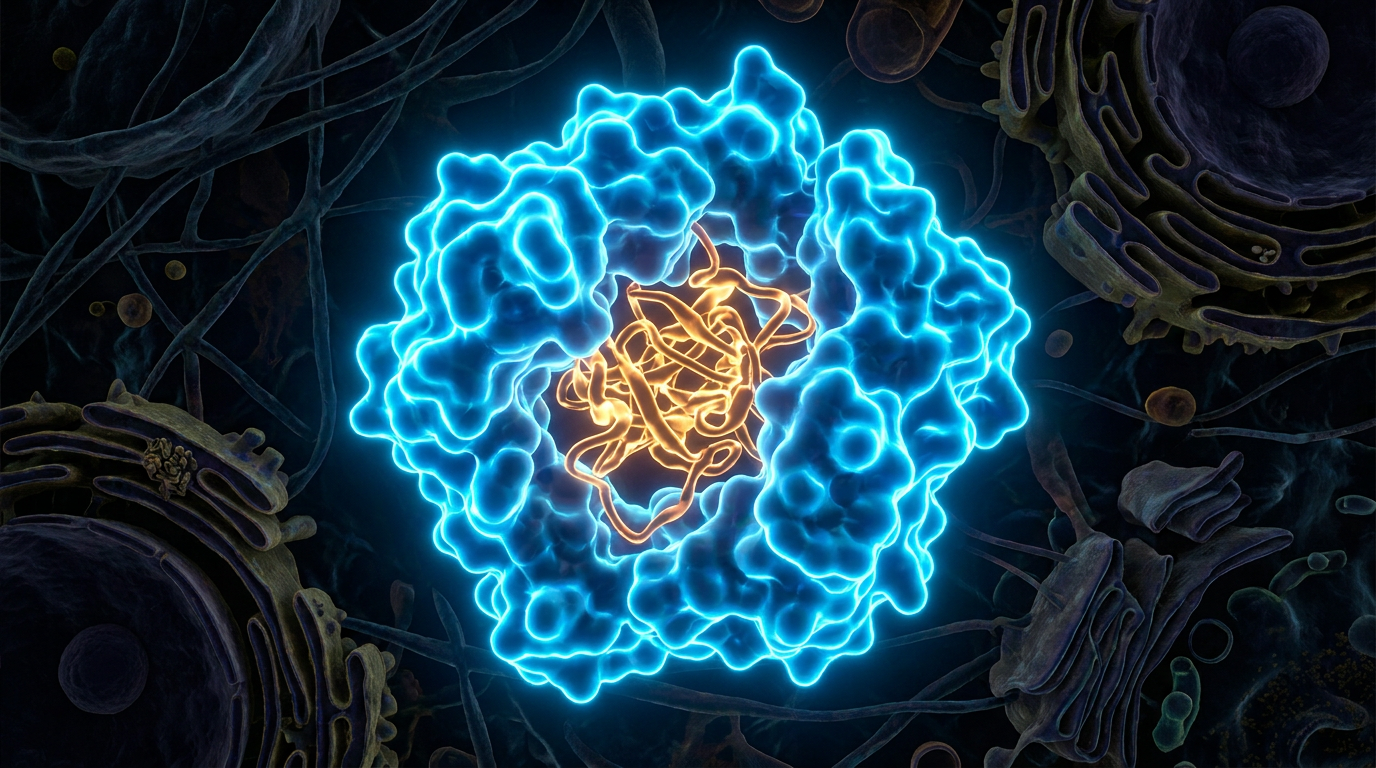
To understand how this works, one must look at the translation of genes into proteins. A genetic mutation typically results in a protein that is misfolded—a tangled molecular shape that cannot perform its intended job and may even become toxic. Chaperone proteins, such as the highly studied Heat Shock Protein 90 (HSP90), act as molecular mechanics. They physically bind to these misfolded mutant proteins and force them into the correct three-dimensional conformation, restoring their function.[2][3]

This phenomenon has profound implications for human evolution and the concept of "cryptic genetic variation." Because master proteins hide the detrimental effects of mutations, those genetic flaws are shielded from the purging forces of natural selection. They accumulate silently in the population over generations. It is a biological gamble: the cell tolerates a hidden reservoir of genetic diversity, kept in check only by the tireless work of chaperone networks.[3][4]
However, this buffering system has a breaking point. Master proteins are a finite resource, and they are highly sensitive to environmental stress. When a cell is subjected to extreme heat, starvation, or chemical toxins, the chaperones are diverted away from their mutant-babysitting duties to deal with the immediate crisis. Without their chaperones, the misfolded mutant proteins suddenly collapse, and the hidden genetic flaws are unmasked all at once.[2][3]
This stress-induced unmasking explains why certain genetic diseases exhibit "variable expressivity"—meaning two people with the exact same mutation might have vastly different disease severities. A patient with a robust, unburdened chaperone network might remain entirely asymptomatic, while a patient whose chaperones are overwhelmed by environmental stress or illness may suffer severe symptoms.[3][6]
The Nature report highlights how researchers are now mapping exactly which mutations are buffered by which master proteins. By analyzing massive proteomic datasets, scientists have identified over 1,500 disease-causing human mutations that are actively suppressed by HSP90 and its partner protein, HSP70. This comprehensive mapping is shifting genetic buffering from an evolutionary curiosity into a tangible target for pharmacology.[1][3]
The Nature report highlights how researchers are now mapping exactly which mutations are buffered by which master proteins.
The most immediate clinical application of this mapping lies in the treatment of rare genetic disorders. In conditions like Fanconi anemia or cystic fibrosis, the disease is driven by specific, misfolded proteins. If researchers can develop drugs that selectively boost the activity of master chaperones, they could theoretically enhance the cell's natural buffering capacity. This would help the mutant proteins fold correctly, effectively treating the disease without needing to edit the patient's DNA.[3][5]
Conversely, the oncology field is looking at master proteins from the exact opposite angle: as a vulnerability to be exploited. Cancer cells are defined by their genetic chaos. They harbor thousands of mutations that drive their rapid growth but also render their internal proteins highly unstable. To survive their own mutated state, tumors become entirely addicted to chaperone proteins.[1][4]

This "chaperone addiction" presents a unique therapeutic window. If a drug can inhibit the function of HSP90, healthy cells—which have relatively stable genomes—will experience mild stress but generally survive. Cancer cells, however, are stripped of their buffering capacity. Without master proteins to prop up their mutated architecture, the tumor cells collapse under the weight of their own genetic instability and trigger programmed cell death.[3][6]
Despite the promise, manipulating master proteins is fraught with clinical challenges. Chaperones are deeply embedded in almost every critical cellular pathway. Broadly inhibiting them to starve a tumor often results in severe toxicity to the liver and nervous system, a hurdle that has stalled several early-generation HSP90 inhibitors in clinical trials. The therapeutic margin between killing a cancer cell and poisoning a healthy one remains razor-thin.[3][6]
Furthermore, the evidence surrounding chaperone enhancement for genetic diseases carries transparent uncertainty. While boosting master proteins might help fold a defective protein in cystic fibrosis, chaperones are indiscriminate. Artificially elevating their activity could inadvertently stabilize hidden oncogenes, potentially increasing the patient's long-term risk of developing cancer. The biological trade-offs are steep.[1][4]

To navigate these risks, the next generation of drug discovery is moving away from blunt inhibitors and toward "molecular glues" and targeted degraders. Instead of shutting down the entire HSP90 factory, researchers are designing molecules that only disrupt the chaperone's interaction with specific, disease-causing mutant proteins. This precision approach aims to unmask the vulnerabilities of a tumor without triggering systemic toxicity.[1][5]
The realization that our health relies on a hidden layer of protein mechanics fundamentally changes how we view genetics. DNA is not an absolute destiny; it is a rough draft that is constantly edited, folded, and buffered by master proteins. As science learns to control this buffering, the ability to selectively hide or reveal our deepest genetic flaws could become one of the most powerful tools in modern medicine.[1][6]
How we got here
1998
Researchers first demonstrate that the chaperone protein HSP90 buffers genetic variation in fruit flies, introducing the concept of cryptic genetic variation.
2005
Studies reveal that cancer cells and drug-resistant fungi rely heavily on HSP90 to survive their own rapid mutation rates.
2017
Large-scale genomic analysis identifies over 1,500 human disease mutations that are actively masked by chaperone networks.
June 2026
A landmark Nature report details how 'master' proteins buffer deadly mutations, accelerating the push for chaperone-targeted drugs.
Viewpoints in depth
Evolutionary Biologists
Focus on how genetic buffering hides cryptic variation and allows species to accumulate genetic diversity over time.
For evolutionary biologists, master proteins explain how species safely stockpile genetic diversity. By buffering mutations, chaperones allow populations to carry hidden 'cryptic' traits that only emerge when environmental stress forces the chaperones to abandon their posts. This mechanism potentially provides new traits just when a species needs to adapt to a rapidly changing environment, acting as an evolutionary safety net.
Oncology Researchers
View master proteins as a critical vulnerability in cancer, aiming to inhibit chaperones to destroy heavily mutated tumors.
Cancer researchers see chaperone addiction as a tumor's Achilles' heel. Because cancer cells mutate so rapidly, their internal proteins are highly unstable and require constant babysitting by master proteins. Oncologists argue that carefully calibrated drugs that block these chaperones will strip away this life support, causing the tumor to collapse under its own genetic instability without the need for traditional, highly toxic chemotherapy.
Genetic Disease Specialists
Seek to enhance chaperone activity to rescue misfolded proteins and treat inherited disorders without altering DNA.
Medical geneticists are focused on the opposite approach: enhancement. For diseases like cystic fibrosis, where a single misfolded protein causes devastating symptoms, specialists believe that boosting the local activity of master proteins could force the defective proteins into the correct shape. This would effectively cure the disease at the protein level, bypassing the complex and risky process of editing the patient's underlying DNA.
What we don't know
- Whether artificially boosting chaperone activity to treat genetic diseases might inadvertently stabilize hidden cancer-causing proteins.
- How to perfectly calibrate chaperone-inhibiting drugs to kill tumor cells without causing severe toxicity to the liver and nervous system.
- The full catalog of which specific human mutations are buffered by which exact master proteins across different tissue types.
Key terms
- Genetic Buffering
- The ability of a biological system to maintain normal function despite the presence of genetic mutations.
- Chaperone Protein
- A type of protein that assists in the correct folding and assembly of other macromolecular structures.
- HSP90
- Heat Shock Protein 90, a highly abundant chaperone protein that plays a central role in genetic buffering.
- Cryptic Genetic Variation
- Genetic mutations that are hidden under normal conditions but can affect physical traits when the environment changes.
- Proteome
- The entire set of proteins that is, or can be, expressed by a genome, cell, tissue, or organism at a certain time.
Frequently asked
What is genetic buffering?
It is a biological mechanism where certain "master" proteins mask the effects of harmful DNA mutations, allowing the cell to function normally despite genetic errors.
What are chaperone proteins?
Chaperones are specialized proteins, like HSP90, that physically assist other proteins in folding into their correct three-dimensional shapes.
How could this treat cancer?
Cancer cells carry many mutations and rely heavily on chaperones to survive. Blocking these chaperones can cause the cancer cells to collapse under the weight of their own mutations.
Can buffering be overwhelmed?
Yes. Severe environmental stress, such as extreme heat or starvation, can exhaust the cell's chaperone supply, suddenly exposing the hidden mutations.
Sources
Source coverage
6 outlets
3 viewpoints surfaced




[1]NatureGenetic Disease Specialists
These 'master' proteins protect us from deadly mutations — and could inspire new drugs
Read on Nature →[2]Cell SystemsEvolutionary Biologists
HSP90 and the Hidden Genetic Variation
Read on Cell Systems →[3]National Institutes of HealthOncology Researchers
HSP90 Shapes the Consequences of Human Genetic Variation
Read on National Institutes of Health →[4]bioRxivEvolutionary Biologists
Characteristics and functions of genetic buffers in cellular networks
Read on bioRxiv →[5]Scientific AmericanGenetic Disease Specialists
How 'Master' Proteins Hide Our Deadliest Genetic Flaws
Read on Scientific American →[6]Factlen Editorial TeamOncology Researchers
Synthesis by Factlen editorial team
Read on Factlen Editorial Team →
Every angle. Every day.
Get science stories with full source coverage and perspective breakdowns delivered to your inbox.