
The Rise of Astrotourism: How the Search for Dark Skies is Transforming Travel
As light pollution erases the stars for billions of people, a booming travel trend known as astrotourism is turning pristine night skies into a multi-billion-dollar economic engine.
By Factlen Editorial Team
- Conservationists & Astronomers
- Focus on the ecological and scientific necessity of preserving the night sky to protect nocturnal wildlife and human heritage.
- Tourism & Hospitality Industry
- View dark skies as a premium, highly marketable natural asset that solves the industry's seasonality problem by driving off-season winter bookings.
- Local Municipalities
- Balance the massive economic windfall of astrotourism against the upfront capital costs of retrofitting infrastructure and enforcing strict zoning laws.
What's not represented
- · Indigenous communities whose traditional sky-lore and navigation practices are threatened by light pollution.
- · Commercial lighting manufacturers adapting to new dark-sky compliance regulations.
Why this matters
With light pollution growing by nearly 10% annually, true darkness is becoming a scarce resource. Astrotourism provides a powerful financial incentive for communities to turn off the lights, proving that ecological conservation can be highly profitable.
Key points
- Global light pollution is growing by 9.6% annually, erasing the night sky for billions of people.
- Astrotourism has emerged as a multi-billion-dollar travel trend, with 62% of travelers seeking dark-sky destinations.
- DarkSky International certifies destinations that implement strict lighting codes, including shielding and warm-color temperatures.
- The economic windfall of astrotourism provides communities with a financial incentive to retrofit their lighting infrastructure.
For most of human history, the night sky was a universal inheritance—a glittering canopy that guided navigators, inspired mythologies, and grounded our sense of scale. Today, it is rapidly disappearing. Driven by urbanization and the global transition to cheap, bright LED lighting, artificial light pollution is growing by an estimated 9.6 percent annually, effectively doubling every seven years. The result is a phenomenon known as skyglow, an ambient haze that has erased the stars for billions of people. Currently, 99 percent of the population in the United States and Europe lives under light-polluted skies, and four out of five North Americans can no longer see the Milky Way from their own backyards.[2]
But as natural darkness becomes increasingly scarce, it has also become increasingly valuable. A booming travel movement known as astrotourism is turning the search for pristine night skies into one of the fastest-growing sectors in the global hospitality industry. Rather than traveling for beaches or historical landmarks, a new wave of vacationers is planning trips entirely around celestial phenomena, meteor showers, and the simple, profound experience of standing under a truly dark sky. According to recent travel industry data, 62 percent of travelers now express a specific interest in visiting darker-sky destinations.[1]
What began as a niche hobby for amateur astronomers hauling heavy telescopes into the wilderness has evolved into a mainstream, multi-billion-dollar luxury market. High-end resorts from the Atacama Desert in Chile to remote lodges in Virginia are leaning into noctourism. Properties are installing permanent private observatories, hiring resident astronomers to guide guests through the constellations, and designing suites with glass ceilings so visitors can stargaze from their beds. The night sky is no longer just a backdrop; it is the primary amenity.[1]
To understand what these travelers are chasing, one must understand how darkness is measured. Astronomers rely on the Bortle Scale, a nine-level numeric system created in 2001 by amateur astronomer John E. Bortle to quantify the brightness of the night sky. The scale provides a standardized way to compare the observability of celestial objects across different locations, cutting through the subjective descriptions of what constitutes a dark sky.[5]

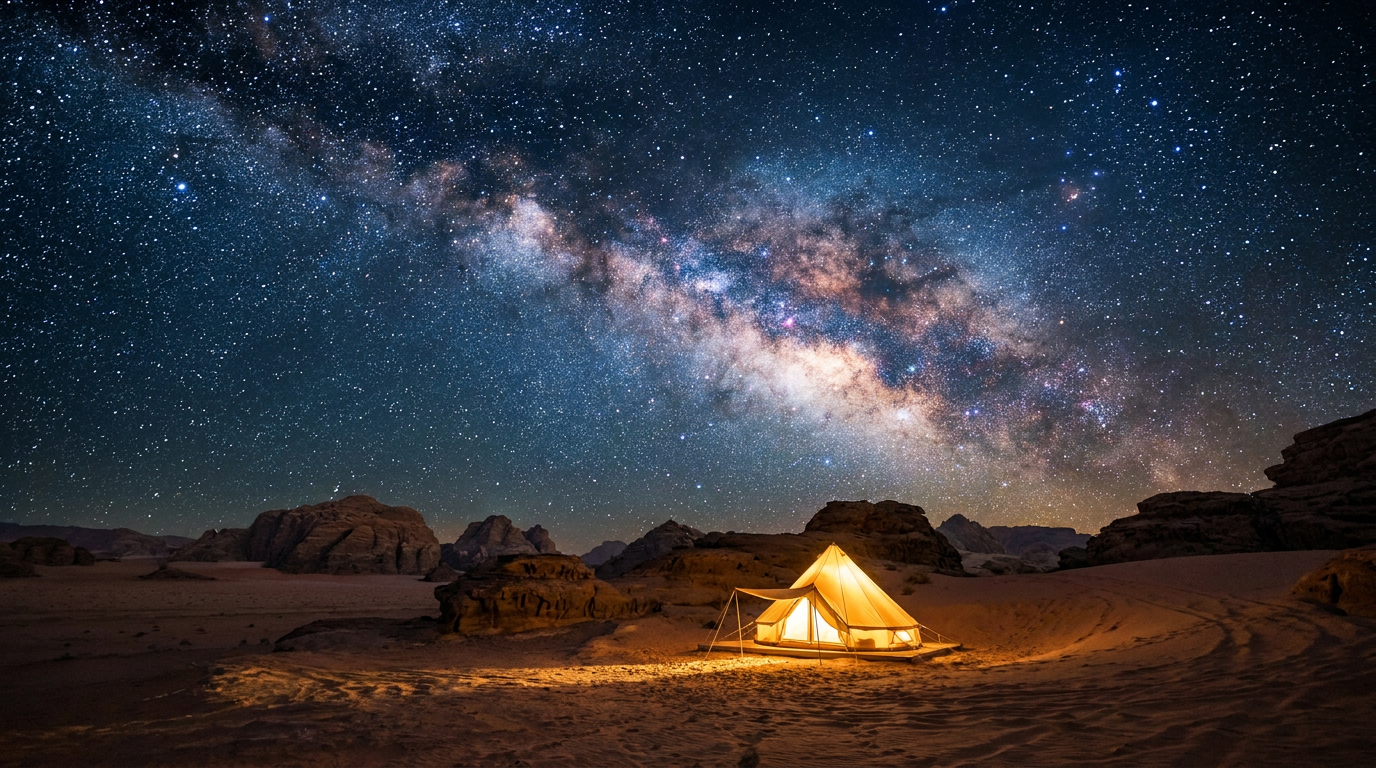
At the bottom of the scale is Class 9, typical of an inner-city sky where the ambient light is so intense that only the moon and a handful of the brightest planets are visible. Most suburban residents live under Class 5 or 6 skies, where only a faint hint of the Milky Way might be visible directly overhead on a perfectly clear night. Astrotourists, however, are hunting for Class 1 and Class 2 skies. In a Class 1 environment, the sky is so pristine that the Milky Way appears highly structured and complex, and it is actually bright enough to cast faint shadows on the ground.[5]
Finding a Class 1 sky requires more than just driving away from a city; it requires active, coordinated conservation. To help travelers find these rare environments, an organization called DarkSky International manages a rigorous certification program. Modeled after the UNESCO World Heritage system, the International Dark Sky Places program certifies communities, parks, reserves, and sanctuaries that have proven their commitment to preserving the nocturnal environment.[3]
Achieving Dark Sky certification is a grueling process that can take years. A destination cannot simply rely on its geographic isolation. To earn the badge, a park or municipality must implement comprehensive lighting policies, conduct regular sky-quality monitoring using specialized photometers, and commit to ongoing public education about the importance of the night sky. The certification is not awarded in perpetuity; it is subject to regular review and can be revoked if a destination allows new development with non-compliant lighting.[3]
Achieving Dark Sky certification is a grueling process that can take years.
The core mechanism of this conservation effort lies in strict municipal lighting codes. To stop light from spilling into the atmosphere, communities must retrofit their infrastructure. This means installing physical shields on streetlights and commercial fixtures to ensure that illumination is directed strictly downward, exactly where it is needed for human safety, rather than scattering upward into the clouds.[3]

Color temperature is equally critical. DarkSky guidelines mandate the use of warm-colored lights, typically capped at 3000 Kelvin. Modern, harsh white LEDs emit a high volume of blue light, which scatters much more easily in the earth's atmosphere than warmer amber tones, drastically increasing skyglow. Furthermore, blue-rich light is known to severely disrupt the circadian rhythms of both humans and nocturnal wildlife. By mandating warmer, shielded, and dimmable lights, communities can maintain safe streets while keeping the sky pitch black.[3]
Historically, convincing local governments to spend municipal funds on retrofitting streetlights to save the stars was a difficult political sell. Astrotourism has completely changed that calculus by providing a massive economic incentive. Protecting the night sky is no longer just an environmental crusade; it is a highly lucrative economic development strategy. Communities adjacent to certified Dark Sky Parks are seeing a surge in overnight stays, restaurant bookings, and retail spending.[4][6]
The financial impact is staggering. A comprehensive economic study focusing on the Colorado Plateau—a region spanning parts of Utah, Arizona, Colorado, and New Mexico that boasts a high concentration of Dark Sky Parks—projected that astrotourists will spend $5.8 billion in the area over a ten-year period. Researchers calculated that this influx of non-local spending would generate $2.4 billion in higher wages and create more than 10,000 additional jobs each year for the region's gateway communities.[4][6]

Crucially, astrotourism solves one of the hospitality industry's most persistent challenges: seasonality. Traditional nature tourism peaks heavily in the summer months, leaving rural communities economically starved during the winter. However, the crisp, dry air and longer nights of the non-summer months often provide the clearest and most spectacular stargazing conditions. By promoting dark skies, destinations are successfully drawing visitors year-round, stabilizing local economies and making more efficient use of tourism infrastructure.[4][6]
While the economic windfall is driving the trend, the ecological benefits of these lighting retrofits are profound. Nearly half of all animal species are nocturnal, and artificial light wreaks havoc on their ecosystems. Unshielded coastal lights disorient newly hatched sea turtles, leading them away from the ocean. Skyglow confuses millions of migrating birds, causing fatal collisions with buildings, and disrupts the mating patterns of vital insect populations like fireflies and moths. By dimming the lights for tourists, communities are inadvertently restoring critical habitats.[2][3]
As the movement accelerates, the global nighttime tourism market, currently valued at roughly $10 billion, is projected to double by 2035. Forward-thinking destinations are racing to secure their Dark Sky certifications, recognizing that an official designation serves as a powerful marketing tool. From the rugged highlands of Scotland to the remote deserts of the American Southwest, local tourism boards are rebranding their darkest, most isolated regions as premium celestial destinations.[1][2]

Yet, the rapid commercialization of the night sky raises questions about accessibility. As global light pollution continues its relentless 9.6 percent annual climb, truly dark skies are becoming a scarce resource. There is a growing concern among conservationists that experiencing the Milky Way could soon transition from a universal human right into an exclusive luxury, available only to those with the means to travel to remote, high-end eco-resorts.[2][7]
Despite these challenges, the rise of astrotourism represents a rare, uplifting alignment of commerce and conservation. It proves that environmental protection does not always require economic sacrifice. By placing a tangible, multi-billion-dollar value on the stars, the travel industry has finally given municipalities a compelling reason to turn off the lights. In the process, they are not just saving the night sky for vacationers; they are preserving a fundamental piece of the human experience for generations to come.[7]
How we got here
2001
Amateur astronomer John E. Bortle publishes the Bortle Scale to quantify night sky brightness.
2001
The International Dark-Sky Association launches the Dark Sky Places certification program.
2007
Natural Bridges National Monument in Utah becomes the world's first certified International Dark Sky Park.
2019
Economic studies reveal astrotourism is projected to bring billions in revenue to the Colorado Plateau.
2026
Astrotourism emerges as a dominant global travel trend, with 62% of travelers seeking dark-sky destinations.
Viewpoints in depth
Conservationists & Astronomers
Advocates who view astrotourism primarily as a funding mechanism for ecological protection.
For conservationists, the loss of the night sky is an urgent ecological crisis. Unlike microplastics or carbon emissions, however, light pollution is entirely reversible—it disappears the moment a switch is flipped. This camp argues that unshielded lighting is devastating to nocturnal ecosystems, disorienting migrating birds and disrupting the mating cycles of insects. While they welcome the rise of astrotourism, they view the economic windfall strictly as a means to an end: a way to convince reluctant municipalities to fund the costly infrastructure retrofits required to protect wildlife and human heritage.
Tourism & Hospitality Industry
Operators capitalizing on the commercial demand for pristine natural environments.
The hospitality sector views the night sky as a highly marketable, premium natural asset. For decades, rural nature tourism has struggled with seasonality, heavily reliant on summer crowds while starving for revenue during the winter. Because the crisp, dry air of the non-summer months often provides the best stargazing conditions, astrotourism perfectly solves this off-season slump. Industry leaders are aggressively investing in permanent observatories, resident astronomers, and luxury stargazing amenities to capture the growing demographic of wellness and nature travelers.
Local Municipalities
Civic leaders balancing the economic benefits of tourism against the costs of infrastructure overhauls.
Local governments are caught between the lucrative promise of astrotourism and the practical realities of municipal budgets. While studies project billions of dollars in regional spending from dark-sky tourists, capturing that revenue requires significant upfront capital. Municipalities must fund the replacement of thousands of streetlights and navigate the political friction of enforcing strict new zoning laws on local businesses and residential properties. For these leaders, the decision to pursue Dark Sky certification is a complex cost-benefit analysis of long-term economic development versus immediate infrastructure expenditure.
What we don't know
- Whether the economic incentives of astrotourism will be enough to reverse the 9.6% annual growth in global light pollution.
- How the proliferation of low-earth orbit satellite constellations will impact the pristine quality of certified Dark Sky Places.
Key terms
- Astrotourism
- Travel focused on observing celestial phenomena and experiencing environments free from artificial light pollution.
- Bortle Scale
- A nine-level numeric scale that measures the night sky's brightness, with Class 1 being the darkest and Class 9 being an inner-city sky.
- Light Pollution
- The human-made alteration of outdoor light levels, primarily through excessive or misdirected artificial lighting.
- Skyglow
- The brightening of the night sky over inhabited areas, caused by artificial light scattering in the atmosphere.
- Color Temperature
- A measure of a light bulb's color appearance in Kelvins (K); lower numbers indicate warmer amber light, while higher numbers indicate harsh blue light.
Frequently asked
What makes a destination an official Dark Sky Place?
It must meet rigorous standards set by DarkSky International, including strict lighting policies, public education, and regular sky-quality monitoring.
Why is blue light considered worse for light pollution?
Blue-rich white light scatters more easily in the atmosphere, creating more skyglow, and severely disrupts the circadian rhythms of both humans and wildlife.
Can I see the Milky Way from a city?
No. The Milky Way is typically only visible in areas rated Class 4 or lower on the Bortle scale, requiring travel away from urban light domes.
How does astrotourism help the environment?
It provides a massive financial incentive for communities to retrofit their lighting, which reduces energy waste and protects nocturnal ecosystems.
Sources
Source coverage
7 outlets
3 viewpoints surfaced







[1]ForbesTourism & Hospitality Industry
The Rise Of Astrotourism: 25 Hotels Leading The Stargazing Trend
Read on Forbes →[2]Outside MagazineConservationists & Astronomers
Why Dark Sky Tourism and Astrotourism Are Growing
Read on Outside Magazine →[3]DarkSky InternationalConservationists & Astronomers
Apply for Dark Sky Place certification
Read on DarkSky International →[4]National Park ServiceLocal Municipalities
An Economic Value - Night Skies
Read on National Park Service →[5]WikipediaConservationists & Astronomers
Bortle scale
Read on Wikipedia →[6]Missouri State UniversityLocal Municipalities
Dark sky tourism: economic impacts on the Colorado Plateau Economy, USA
Read on Missouri State University →[7]Factlen Editorial TeamLocal Municipalities
Synthesis by Factlen editorial team
Read on Factlen Editorial Team →
Every angle. Every day.
Get travel stories with full source coverage and perspective breakdowns delivered to your inbox.