
The Science of Zone 2: Why Cyclists Are Riding Slower to Get Faster
Endurance athletes are abandoning the 'no pain, no gain' mindset, utilizing low-intensity Zone 2 training to build mitochondrial density and unlock peak performance.
By Factlen Editorial Team
- Sports Scientists & Physiologists
- Focuses on the cellular and metabolic adaptations triggered by strict adherence to low-intensity exercise.
- Elite Coaches & Trainers
- Views Zone 2 as the foundation of the polarized training model, allowing for massive volume without burnout.
- Amateur Cyclists & Enthusiasts
- Grapples with the psychological and practical hurdles of implementing slow rides into limited schedules.
- Factlen Synthesis
- Synthesizes the scientific consensus and practical application of endurance training.
What's not represented
- · Runners and rowers who apply similar polarized training models
- · Athletes relying purely on perceived exertion without heart rate monitors
Why this matters
Understanding Zone 2 training allows amateur athletes to break through frustrating fitness plateaus, improve their cardiovascular health, and enjoy cycling without the constant burnout of high-intensity suffering.
Key points
- Elite endurance athletes spend up to 80 percent of their training time in Zone 2, a low-intensity pace that feels suspiciously easy.
- Zone 2 training specifically targets slow-twitch muscle fibers, increasing mitochondrial density and capillary networks.
- Riding slowly trains the body to burn fat for fuel, preserving limited carbohydrate stores for high-intensity efforts.
- Many amateurs plateau because they spend too much time in the "grey zone"—riding too hard to build an aerobic base, but too easy to build top-end speed.
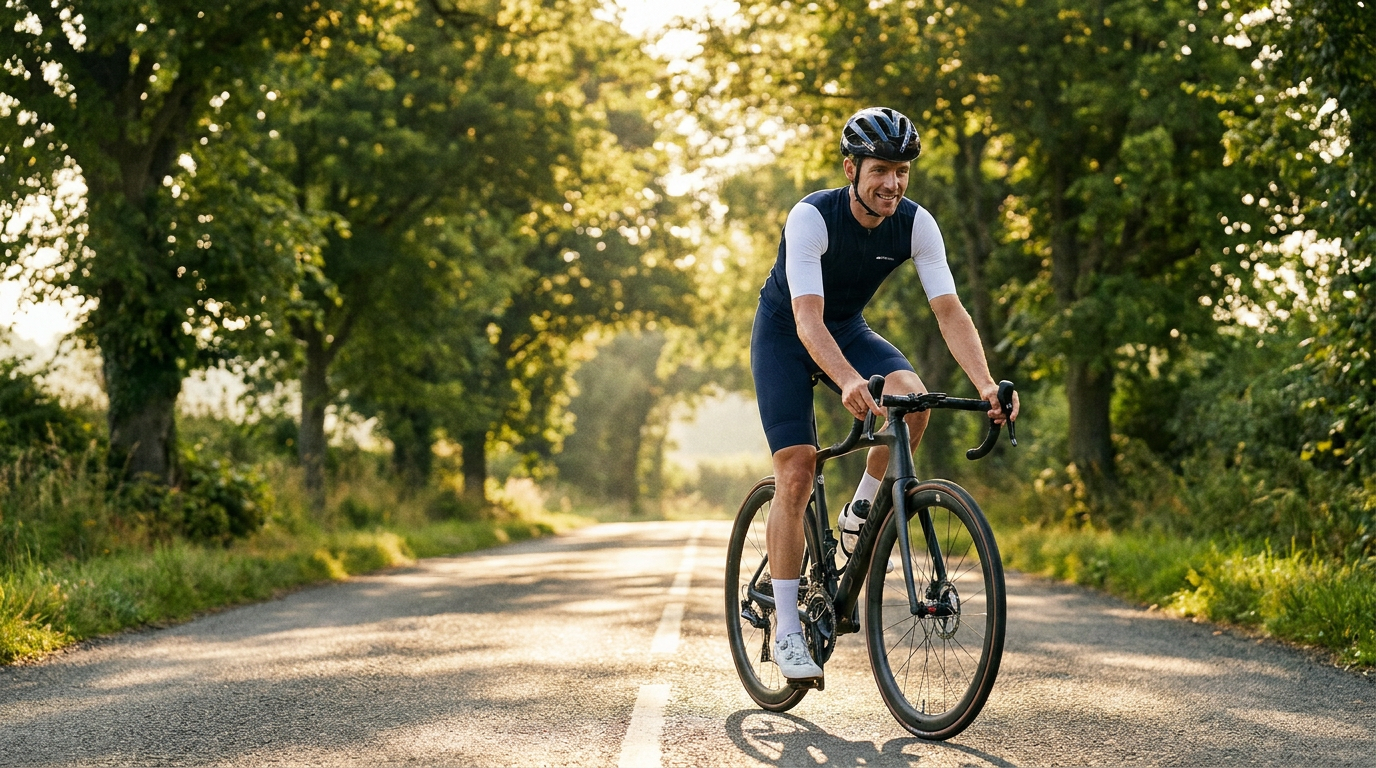
The amateur cyclist’s instinct is almost universal: to get faster, you have to push harder. Every ride becomes a subtle race against the clock, a battle to beat a previous average speed, or a desperate sprint to claim a local leaderboard segment. But across the professional peloton and the cutting edge of sports science, a radically different philosophy has taken hold. The secret to unlocking explosive speed and unbreakable endurance is not found in constant suffering. It is found in slowing down.[3][7]
This counterintuitive approach is centered around "Zone 2" training, a low-intensity methodology that has revolutionized endurance sports. Elite riders, including Tour de France champions and Olympic triathletes, spend up to 80 percent of their training hours riding at a conversational pace. By deliberately holding back, they are engineering profound physiological changes that cannot be achieved through high-intensity intervals alone. The amateur mindset of "no pain, no gain" is actively holding riders back from reaching their true potential.[1][3]
To understand the magic of Zone 2, we have to define the zones themselves. Most coaches divide cycling intensity into five to seven distinct zones based on heart rate or Functional Threshold Power (FTP). Zone 1 is active recovery, while Zones 4 and above represent intense, lung-burning efforts. Zone 2 sits comfortably in the middle-low end—roughly 55 to 75 percent of a rider's FTP, or 60 to 70 percent of their maximum heart rate. It is an intensity that feels entirely sustainable, designed to keep the body operating strictly within its aerobic limits without crossing over into anaerobic stress.[6][7]

For the data-averse, the simplest metric is the "talk test." If you can pedal and speak in full, unbroken sentences without gasping for air, you are in Zone 2. The moment you have to pause your sentence to take a breath, you have crossed the threshold into higher-intensity territory. It is a pace that feels almost suspiciously easy, leading many riders to mistakenly believe they aren't working hard enough to trigger fitness gains. The lack of burning muscles and heavy breathing tricks the mind into thinking the workout is a waste of time.[5][7]
But beneath the surface of that easy effort, the body is undergoing a massive cellular renovation. The primary target of Zone 2 training is the Type I muscle fibers, commonly known as slow-twitch fibers. These fibers are the endurance engines of the human body, capable of firing for hours without fatiguing, provided they are fueled correctly. When you isolate these slow-twitch fibers through prolonged, low-intensity riding, you stimulate the growth and efficiency of mitochondria—the microscopic powerhouses within your cells. Dr. Iñigo San Millán, a leading physiologist, notes that Zone 2 training effectively upgrades your cellular engine, allowing muscles to generate more energy with far less effort.[1][4]
But beneath the surface of that easy effort, the body is undergoing a massive cellular renovation.
This mitochondrial upgrade fundamentally changes how your body fuels itself. At high intensities, the body relies heavily on glycogen (stored carbohydrates) for quick energy. But glycogen stores are strictly limited; even fully fueled, a rider will deplete them in a couple of hours. Zone 2 training teaches the body to maximize fat oxidation, turning abundant fat stores into a primary fuel source. By burning fat efficiently at moderate speeds, cyclists preserve their precious glycogen for when they truly need it—like a steep climb, a breakaway attempt, or a sprint to the finish line.[1][4]

The benefits extend to how the body handles the byproducts of hard efforts. When you eventually do push into high-intensity zones, your fast-twitch muscle fibers produce lactate. If lactate builds up faster than the body can clear it, your muscles become acidic, and your legs feel like they are filled with lead. Surprisingly, the key to clearing that lactate lies in the slow-twitch fibers developed during easy rides. Highly trained slow-twitch fibers act as a sink, absorbing the lactate produced by their fast-twitch neighbors and converting it back into usable fuel.[1][4]
That internal plumbing system also includes the physical expansion of your cardiovascular network. Long, steady endurance rides trigger capillary biogenesis—the creation of new, tiny blood vessels within the muscle tissue. This expanded highway system delivers oxygen-rich blood directly to working muscles and carries away metabolic waste far more effectively than the vascular network of an untrained athlete. Without this vast capillary network, all the high-intensity interval training in the world will eventually hit a hard physiological ceiling, as the muscles simply cannot receive enough oxygen to sustain peak output.[4]
Despite these overwhelming benefits, the average amateur cyclist routinely falls into the "grey zone" trap. Instead of polarizing their training—keeping their easy days truly easy and their hard days incredibly hard—they spend the vast majority of their time in Zone 3, or "tempo" pace. This medium-hard intensity feels productive because it induces a sweat and a sense of effort, but it is a physiological no-man's-land. Riding constantly in the grey zone generates too much systemic fatigue to allow for proper recovery, yet it fails to provide the specific mitochondrial adaptations of Zone 2.[5][7]

Breaking out of this plateau requires profound psychological discipline. Riding in Zone 2 means checking your ego at the door. It means letting slower riders pass you on the bike path, ignoring the urge to chase a friend up a local climb, and accepting that your average speed will temporarily plummet. The workout is not about pushing your physical limits; it is about strictly adhering to a biological parameter. If your heart rate drifts too high on a climb, the physiological purpose of the ride is compromised.[5]
Time constraints do present a challenge for the amateur. The most profound adaptations from Zone 2 training begin to compound after 90 minutes of continuous riding, with elite coaches often prescribing sessions lasting three to five hours. For the time-crunched cyclist juggling a career and family, carving out a four-hour block is rarely feasible. However, sports scientists emphasize that consistency trumps duration. A 60-minute Zone 2 session still promotes blood flow, aids recovery, and contributes to the aerobic base over the span of a multi-month training block.[2][7]
The science of going slow is ultimately a lesson in delayed gratification. By investing hours at a conversational pace, cyclists are quietly building an immense, unbreakable physiological foundation. A recent consensus paper by 14 international sports scientists reaffirmed that true Zone 2 remains the gold standard for foundational endurance across all levels of the sport. It is the unglamorous, invisible work that makes the spectacular moments possible. When the time finally comes to shift into the big ring and push the pace, that deep aerobic foundation is exactly what allows the body to fly.[2][8]
Viewpoints in depth
Sports Scientists & Physiologists
This camp focuses on the cellular and metabolic adaptations triggered by strict adherence to low-intensity exercise.
For physiologists like Dr. Iñigo San Millán, Zone 2 is not just a pacing strategy; it is a strict biological parameter. They emphasize that riding slightly too hard shifts the body from utilizing slow-twitch muscle fibers to fast-twitch fibers, halting the specific mitochondrial growth and fat-oxidation benefits. To this camp, discipline is measured not by how much pain an athlete can endure, but by their ability to keep their heart rate strictly below the first lactate threshold, ensuring the body builds the 'plumbing' necessary to clear lactate during future high-intensity efforts.
Elite Coaches & Trainers
This group views Zone 2 as the foundation of the polarized training model, allowing for massive volume without burnout.
Coaches managing professional athletes focus on the systemic fatigue cost of training. They advocate for an 80/20 split: 80 percent of training time spent in Zone 2, and 20 percent spent in extremely high-intensity intervals. By keeping the easy days genuinely easy, athletes can accumulate massive aerobic volume without the central nervous system fatigue that ruins high-intensity sprint sessions. For coaches, Zone 2 is the ultimate tool for consistency, ensuring athletes can train day after day without injury, illness, or overtraining syndrome.
Amateur Cyclists & Enthusiasts
Everyday riders grapple with the psychological and practical hurdles of implementing slow rides into limited schedules.
For the amateur cyclist, Zone 2 presents a unique psychological challenge. Riding slowly requires checking one's ego, ignoring the urge to chase faster riders, and accepting lower average speeds on social platforms like Strava. Furthermore, time-crunched amateurs often struggle to fit the recommended three-to-four-hour endurance rides into a busy work week. Many in this camp are forced to experiment with 'Sweet Spot' training—a slightly harder intensity that attempts to mimic aerobic benefits in less time—though many eventually realize that avoiding the 'grey zone' of medium-intensity riding is the true key to breaking through fitness plateaus.
What we don't know
- The precise point at which 'Sweet Spot' training becomes a more efficient use of time than Zone 2 for amateur athletes who only have four hours a week to train.
- Whether the exact cellular adaptations seen in elite athletes riding 25 hours a week can be fully replicated by amateurs riding at the same intensity for much shorter durations.
Key terms
- Zone 2
- A low-to-moderate intensity aerobic training zone that builds endurance and mitochondrial density with minimal fatigue.
- Functional Threshold Power (FTP)
- The highest average power output a cyclist can sustain for one hour, measured in watts.
- Mitochondria
- The cellular powerhouses responsible for generating energy; their density and efficiency increase with endurance training.
- Type I Muscle Fibers
- Slow-twitch muscle fibers that are highly resistant to fatigue and rely on oxygen to produce energy.
- Fat Oxidation
- The metabolic process of breaking down fat molecules to produce energy, which is maximized during low-intensity exercise.
Frequently asked
How do I know if I am riding in Zone 2 without a power meter?
The easiest method is the "talk test." If you can hold a comfortable, continuous conversation without gasping for breath, you are likely in Zone 2.
Can I get faster by only riding in Zone 2?
While Zone 2 builds a massive aerobic base, you still need high-intensity intervals (roughly 20 percent of your training) to raise your top-end speed, power, and VO2 max.
Is a 45-minute Zone 2 ride worth doing?
Yes. While the most significant cellular adaptations compound during rides longer than 90 minutes, shorter sessions still improve blood flow, aid active recovery, and contribute to your overall aerobic base.
Why shouldn't I just ride at a medium, moderately hard pace?
Riding in the "grey zone" (Zone 3) generates too much fatigue to allow for proper recovery, while failing to provide the specific aerobic adaptations of Zone 2 or the top-end benefits of high-intensity intervals.
Sources
Source coverage
8 outlets
4 viewpoints surfaced








[1]TrainingPeaksSports Scientists & Physiologists
Zone 2 Training: Why It Works and How To Do It Right
Read on TrainingPeaks →[2]Fisiología del EjercicioSports Scientists & Physiologists
Consensus on Zone 2 Training: Perspectives from Sport Scientists
Read on Fisiología del Ejercicio →[3]Global Cycling NetworkElite Coaches & Trainers
Do You Need To Train Hard To Get Better As A Cyclist?
Read on Global Cycling Network →[4]StravaSports Scientists & Physiologists
The Science Behind Long, Slow Rides
Read on Strava →[5]Bicycling MagazineAmateur Cyclists & Enthusiasts
Zone 2 Training Is What Cyclists Need to Build Their Aerobic Base
Read on Bicycling Magazine →[6]TrainerRoadAmateur Cyclists & Enthusiasts
What is the Endurance Training Zone (Zone 2)?
Read on TrainerRoad →[7]Roadman CyclingElite Coaches & Trainers
Why Most Cyclists Get Zone 2 Wrong
Read on Roadman Cycling →[8]Factlen Editorial TeamFactlen Synthesis
Synthesis by Factlen editorial team
Read on Factlen Editorial Team →
More in sports
See all 5 stories →Dual-Sport Athletes
"I Could Never Pick One": Top-Ranked Recruit Ahmad Hudson Commits to Dual-Sport Future at LSU
6 sources
Dual-Sport Phenom
Top-Ranked Tight End Ahmad Hudson Commits to LSU as Dual-Sport Phenom
7 sources

NBA Finals
New York Knicks Win 2026 NBA Championship, Ending 53-Year Title Drought
7 sources

Every angle. Every day.
Get sports stories with full source coverage and perspective breakdowns delivered to your inbox.