
OLED vs. Mini-LED in 2026: Choosing the Right TV Panel for Your Living Room
As Tandem OLED and RGB Mini-LED technologies close historical gaps in brightness and contrast, the 2026 television market offers unprecedented picture quality. Choosing between the two now depends entirely on room lighting, screen size budget, and viewing habits.
By Factlen Editorial Team
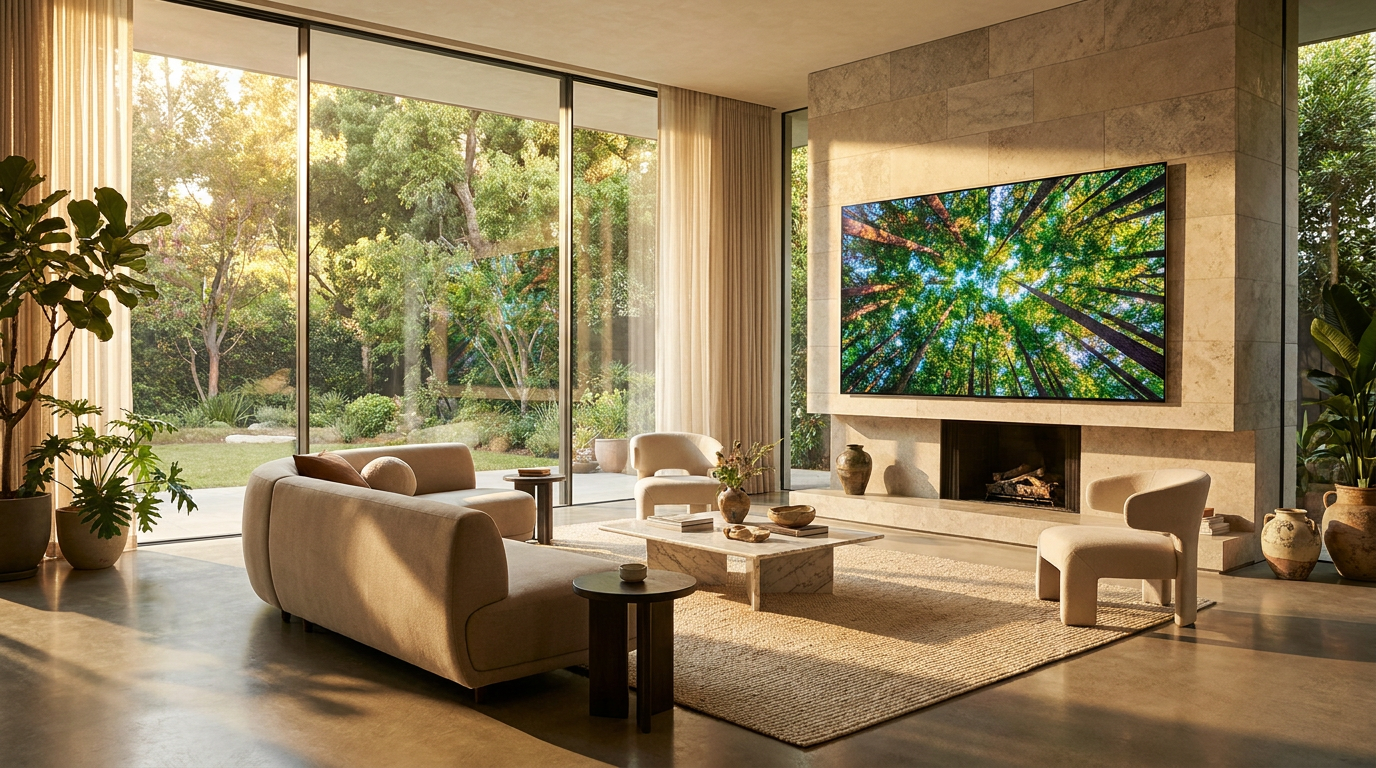
- Home Theater Purists
- Advocates for OLED technology who prioritize perfect black levels and cinematic accuracy.
- Bright Room Viewers
- Consumers and manufacturers who prioritize extreme brightness and large-screen value.
- Display Technologists
- Industry analysts focused on the rapid convergence of both panel technologies.
What's not represented
- · Projector Enthusiasts
- · Budget LED Buyers
Why this matters
A premium television is a multi-year investment that dictates how you experience movies, sports, and gaming. Understanding the exact trade-offs between OLED's perfect blacks and Mini-LED's extreme brightness ensures you don't overpay for features that your specific living room environment will wash out or underutilize.
Key points
- Tandem OLED technology has significantly boosted brightness, closing the historical gap with LCDs.
- Mini-LED remains the undisputed champion for bright, sunlit rooms due to extreme peak brightness.
- OLED provides perfect black levels and infinite contrast, making it ideal for dark home theaters.
- Mini-LED offers vastly superior value for buyers seeking massive screens 85 inches and larger.
The television landscape in 2026 has reached what display analysts are calling the "Great Convergence." For years, the buying advice was simple: buy an OLED for dark rooms and a Mini-LED for bright ones. While that foundational rule still holds weight, the technological gap between the two has narrowed dramatically.[7][8]
This year, manufacturers have introduced "Tandem OLED" and "RGB Mini-LED" architectures that directly attack each technology's historical weaknesses. OLEDs are getting significantly brighter, and Mini-LEDs are achieving tighter control over their dark zones, making both options spectacular centerpieces for a modern home.[5][7][8]
To make the right choice, buyers must weigh the evidence across four critical categories: contrast, peak brightness, longevity, and large-screen value. Neither technology is universally superior; instead, each represents a distinct set of engineering trade-offs tailored to different viewing environments.[1][5]
The case for OLED rests entirely on pixel-level precision. Because OLED stands for Organic Light-Emitting Diode, every single pixel on the screen generates its own light and can turn off completely independently of its neighbors.[2][4]

The evidence for this advantage is visible in high-contrast scenes, like a starfield in a sci-fi movie or a dark, moody thriller. An OLED panel delivers an infinite contrast ratio, meaning the black space between the stars emits zero light, creating a perfectly inky background with no light bleed.[1][4][5]
Against OLED, the traditional argument has been a lack of peak brightness. However, 2026's Tandem OLED panels stack multiple organic light-emitting layers, allowing them to push between 1,500 and 2,000 nits in small highlight windows. This closes the historical brightness gap significantly, though full-screen brightness still dims to protect the panel.[7][8]
The case for Mini-LED is built on sheer luminous power and environmental versatility. Instead of self-emissive pixels, Mini-LED relies on a traditional LCD panel illuminated by thousands of microscopic LED backlights divided into local dimming zones.[2][3][4]
The evidence for Mini-LED's superiority in bright environments is undeniable. Premium 2026 models can push 2,500 to 3,000 nits of peak brightness, acting as "light cannons" that easily punch through daytime sunlight and heavy window glare without washing out the image.[5][7][8]

Against Mini-LED, the primary drawback is "blooming" or "haloing." Because the backlight zones are larger than individual pixels, a bright object on a dark background—like white subtitles on a black cinematic letterbox—will often have a faint glow around it. While 2026 algorithms have minimized this, it cannot be entirely eliminated on an LCD panel.[1][2]
While 2026 algorithms have minimized this, it cannot be entirely eliminated on an LCD panel.
When comparing gaming performance, the evidence shows a near tie, though competitive players may lean slightly toward OLED. OLED panels offer near-instantaneous sub-millisecond response times, resulting in zero motion blur during fast-paced action.[2][5]
However, Mini-LEDs have adopted 144Hz and even 240Hz refresh rates, pairing them with extreme HDR brightness that makes explosions and daylight gaming environments look incredibly punchy. For most console gamers, either technology will feel flawlessly smooth.[5][8]
Longevity and durability present another major trade-off. The case against OLED often centers on "burn-in" anxiety—the risk that static elements like news tickers or video game interfaces might permanently degrade the organic compounds if left on screen for thousands of hours.[5][6]
The evidence suggests this fear is largely overstated for average users. Independent testing confirms modern OLED panels can last over 10,000 hours under strenuous conditions, and built-in pixel-refreshing algorithms actively prevent image retention.[2][6]
Still, Mini-LED wins the absolute durability argument. Because it uses inorganic LED backlights, the risk of permanent burn-in is zero. Manufacturers rate the industry-standard LED lifespan at 100,000 hours, making it the safer choice for households that leave the television running all day on news networks.[6][7]

Price scaling is the final, and often most decisive, battleground. At the standard 55-inch and 65-inch sizes, OLED and premium Mini-LED models are priced competitively, forcing buyers to choose purely based on room lighting.[1][5]
The evidence shifts dramatically at massive screen sizes. Manufacturing large OLED panels remains exceptionally expensive. If you are shopping for an 85-inch, 98-inch, or 115-inch television, Mini-LED offers vastly superior value, often costing a fraction of what a comparable OLED would demand.[1][5][8]
Ultimately, the OLED technology fits well when your primary viewing happens in the evening or in a light-controlled room. It is the definitive choice for home theater purists, cinephiles, and gamers who prioritize perfect black levels and infinite contrast over blinding highlights.[2][4][5]
Conversely, OLED does not fit well when placed in a sun-drenched living room with uncurtained windows, or in a household where the television serves as all-day background noise tuned to a single news channel.[1][5]

Mini-LED fits well when your living space is bright and open. It is the ideal technology for daytime sports viewing, casual family entertainment, and buyers who want a massive 85-inch or larger screen without paying an ultra-premium penalty.[3][4][5]
Mini-LED does not fit well when your seating arrangement forces viewers to sit at wide, off-center angles, as LCD panels lose color accuracy from the side. It is also less ideal for dedicated basement home theaters where its extreme brightness might cause eye strain and its minor blooming will be more noticeable in the dark.[2][5]
How we got here
Early 2010s
OLED technology enters the consumer market, establishing dominance in contrast and black levels.
2021
Mini-LED technology goes mainstream, offering a brighter alternative to traditional OLEDs.
2024
Manufacturers begin pushing Mini-LED zone counts into the thousands, drastically reducing blooming.
2026
Tandem OLED and RGB Mini-LED architectures launch, converging the performance of both technologies.
Viewpoints in depth
Home Theater Purists
Advocates for OLED technology who prioritize perfect black levels and cinematic accuracy.
For cinephiles and home theater enthusiasts, picture quality begins and ends with black levels. Because OLED panels can turn off individual pixels, they achieve an infinite contrast ratio that LCD-based screens cannot match. This camp argues that the slight loss in peak brightness is a worthwhile trade-off for eliminating the 'blooming' effect around bright objects, ensuring that moody, dark films look exactly as the director intended.
Bright Room Viewers
Consumers and manufacturers who prioritize extreme brightness and large-screen value.
This perspective argues that real-world living rooms are rarely pitch-black home theaters. With windows, lamps, and daytime viewing, a television needs sheer luminous power to punch through glare. Mini-LED advocates point out that 3,000-nit peak brightness makes HDR content pop spectacularly, and the technology's scalability allows families to afford massive 85-inch screens that would be cost-prohibitive in OLED.
Display Technologists
Industry analysts focused on the rapid convergence of both panel technologies.
Technologists note that the traditional 'OLED vs. Mini-LED' debate is becoming outdated as both technologies borrow from each other's strengths. With Tandem OLED panels pushing past 1,500 nits and RGB Mini-LEDs utilizing thousands of microscopic dimming zones to mimic pixel-level control, analysts argue that the gap in picture quality is narrower than ever. The focus is shifting toward longevity, power efficiency, and manufacturing yields.
What we don't know
- Whether Micro-LED technology will become affordable enough to replace both OLED and Mini-LED before the end of the decade.
- Exactly how the long-term degradation curve of the new Tandem OLED panels compares to traditional single-layer OLEDs over a 10-year span.
Key terms
- Tandem OLED
- A newer display architecture that stacks multiple organic light-emitting layers to increase overall brightness and lifespan.
- Local Dimming Zones
- Specific areas of a Mini-LED backlight that can independently dim or brighten to improve contrast on different parts of the screen.
- Nits
- A measurement of visible light intensity used to quantify how bright a television screen can get.
- Contrast Ratio
- The difference in light intensity between the brightest white and the darkest black a television can produce.
Frequently asked
Does OLED burn-in still happen in 2026?
While organic panels can still degrade over time, modern pixel-refreshing algorithms and Tandem OLED architectures have made burn-in highly unlikely for average viewing habits.
What is blooming or haloing on a TV?
Blooming occurs on Mini-LED TVs when the backlight zones illuminate a bright object, causing a faint glow to spill over into the surrounding dark areas of the screen.
Which TV is better for PlayStation 5 or Xbox?
Both are excellent. OLED offers slightly faster response times for competitive gaming, while Mini-LED provides punchier HDR brightness for visually spectacular single-player games.
Why are large OLED TVs so expensive?
Manufacturing flawless organic light-emitting panels at 85 inches or larger yields fewer usable screens per production run, keeping costs significantly higher than traditional LCD manufacturing.
Sources
Source coverage
8 outlets
3 viewpoints surfaced








[1]CNETHome Theater Purists
OLED vs. Mini-LED: Which TV technology is better?
Read on CNET →[2]RtingsHome Theater Purists
OLED vs Mini LED: Which Panel Technology Is Better?
Read on Rtings →[3]TCLBright Room Viewers
Is Mini LED TV Better than OLED? A Detailed Comparison
Read on TCL →[4]SamsungBright Room Viewers
Mini LED vs OLED: What's the difference?
Read on Samsung →[5]CurrysBright Room Viewers
OLED vs Mini LED: Key Differences
Read on Currys →[6]BGRDisplay Technologists
Do Mini LED TVs last longer than OLEDs?
Read on BGR →[7]KTCDisplay Technologists
Tandem OLED vs. Mini-LED: Choosing the Best HDR Panel in 2026
Read on KTC →[8]AlibabaDisplay Technologists
2026 OLED vs. Mini LED TV Market Insights
Read on Alibaba →

More in shopping
See all 6 stories →Sustainable Materials
Next-Gen Bio-Leather vs. Traditional Hide vs. Synthetics: The 2026 Material Guide
7 sources

Summer Sales
Retailers Move Summer Deal Wars to June as Amazon, Target, and Walmart Announce Overlapping Sales
7 sources

Skincare Tech
Do At-Home Red Light Therapy Masks Actually Work? The Clinical Evidence, Reviewed
7 sources
Retail Strategy
Amazon, Target, and Walmart Announce Overlapping June Mega-Sales, Moving 'Summer Black Friday' Earlier
7 sources

Every angle. Every day.
Get shopping stories with full source coverage and perspective breakdowns delivered to your inbox.