
U.S. and Iran Reach Preliminary Peace Agreement, Reopening Strait of Hormuz
The United States and Iran have signed a Memorandum of Understanding to establish a 60-day ceasefire and lift naval blockades. The framework aims to reopen the Strait of Hormuz to global shipping while deferring complex nuclear negotiations.
By Factlen Editorial Team
- U.S. Administration
- Views the deal as a historic victory that reopens global oil lanes without conceding to a nuclear-armed Iran.
- Iranian Leadership
- Frames the agreement as a successful defense of its sovereignty, securing vital sanctions relief and reconstruction funds.
- Israeli Government
- Expresses deep skepticism, refusing to halt operations in Lebanon and warning that Iran's proxy network remains intact.
- Global Energy Markets
- Relieved by the de-escalation and the reopening of the Strait of Hormuz, prioritizing economic stability.
What's not represented
- · Lebanese civilians caught in the ongoing crossfire between Israel and Hezbollah.
- · European shipping companies navigating the uncertainty of potential maritime fees in the Strait.
Why this matters
This agreement halts a major geopolitical conflict that severely disrupted global energy markets and threatened broader Middle Eastern stability. The reopening of the Strait of Hormuz is expected to immediately lower global oil prices, though unresolved tensions regarding Israel and Lebanon mean the region remains highly volatile.
Key points
- The U.S. and Iran signed an MOU establishing a 60-day ceasefire to end their recent war.
- The agreement lifts the U.S. naval blockade and reopens the Strait of Hormuz to commercial shipping.
- Negotiators will use the 60-day window to finalize limits on Iran's nuclear program and unfreeze sovereign assets.
- Israel has refused to join the ceasefire, vowing to continue its military operations against Hezbollah in Lebanon.
The United States and Iran have reached a preliminary peace agreement to end a devastating three-month war, establishing a 60-day ceasefire and paving the way for the immediate reopening of the Strait of Hormuz. The breakthrough, mediated heavily by Pakistan and Qatar, halts a conflict that had severely disrupted global energy markets and threatened to engulf the broader Middle East.[2][5][6]
The framework, formalized as a Memorandum of Understanding (MOU), was digitally signed by President Donald Trump and Iran's lead negotiator. An official in-person signing ceremony is scheduled for Friday, June 19, in Geneva, Switzerland, to be attended by U.S. Vice President JD Vance and Iranian officials. The initial pact focuses on unwinding the immediate military and economic blockades, deferring the most complex geopolitical disputes to a two-month window of intensive negotiations.[1][2][3][5]

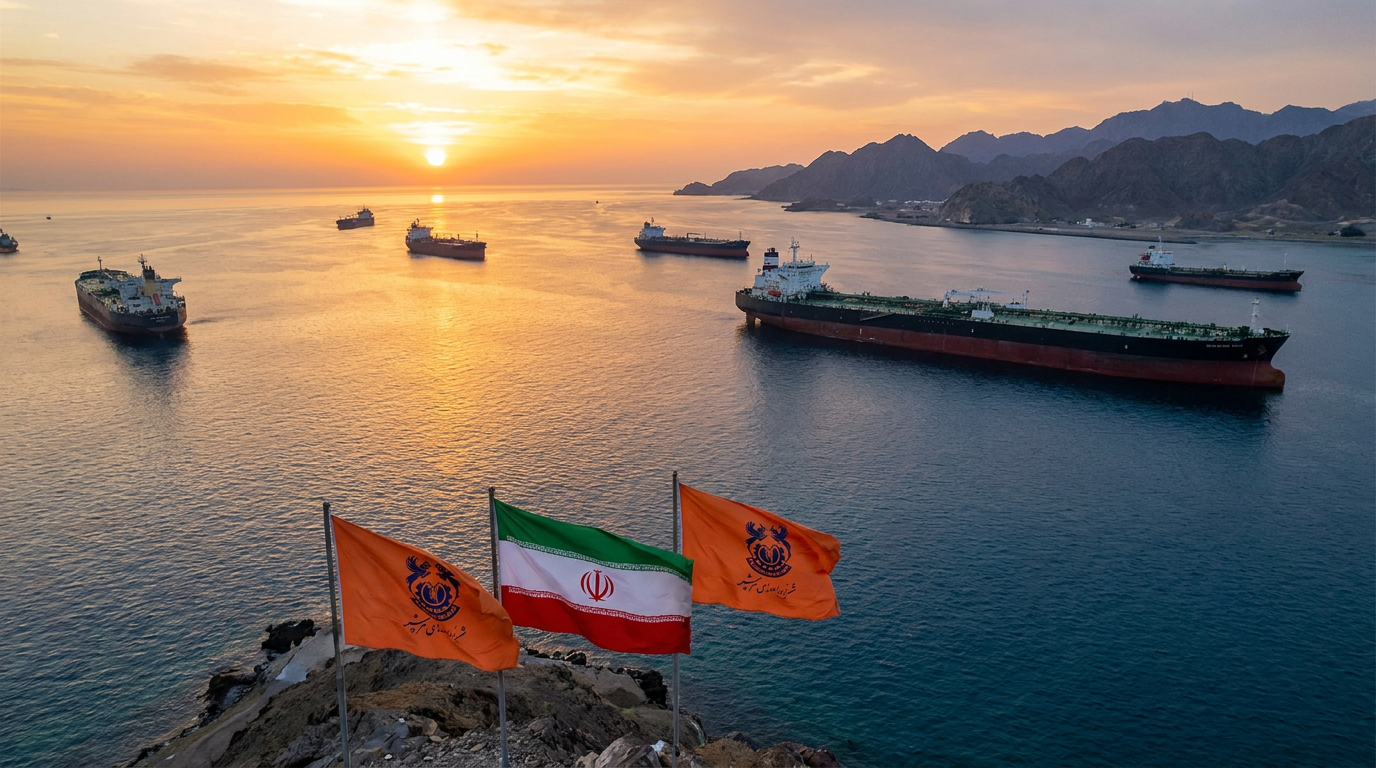
A central pillar of the agreement is the restoration of commercial shipping through the Strait of Hormuz, a critical maritime chokepoint that handles roughly one-fifth of the world's oil supply. Under the terms of the MOU, the United States will lift its naval blockade of Iranian ports, and Iran will cease its militarization of the waterway. President Trump announced that the strait would be "completely open" and toll-free by Friday, a move that immediately sent global oil prices plummeting and rallied stock markets.[2][3][5][6]
The 60-day ceasefire is designed to provide breathing room for negotiations regarding Iran's nuclear program, which was the ostensible catalyst for the war. President Trump has asserted that Iran has agreed to never acquire a nuclear weapon, claiming the new framework establishes "strong policing powers" that far exceed previous diplomatic efforts. During the upcoming talks, negotiators will address the status of Iran's highly enriched uranium stockpile and establish parameters for its civilian nuclear infrastructure.[1][2][4][7]

The 60-day ceasefire is designed to provide breathing room for negotiations regarding Iran's nuclear program, which was the ostensible catalyst for the war.
In exchange for these concessions, Iran is slated to receive significant economic relief. The MOU reportedly unfreezes billions of dollars in Iranian sovereign assets and initiates a phased lifting of U.S. sanctions, contingent on Tehran's compliance. Furthermore, regional and international partners are reportedly discussing the creation of a $300 billion Reconstruction and Development Fund to rebuild Iranian infrastructure damaged during the conflict, though U.S. officials have stressed that Washington will not directly pay war reparations.[3][4][5]
Despite the optimism surrounding the bilateral U.S.-Iran de-escalation, the deal's application to the broader region remains highly volatile. The MOU calls for a cessation of hostilities on all fronts, including in Lebanon, where Israel has been engaged in heavy fighting with the Iran-backed militant group Hezbollah. However, Israeli Prime Minister Benjamin Netanyahu has publicly rebuffed this aspect of the framework, stating that Israeli forces will not withdraw from Lebanese territory and do not consider themselves bound by the U.S.-brokered ceasefire.[2][4][5]

President Trump has aggressively defended the emerging deal against domestic and international critics, deliberately contrasting it with the 2015 Joint Comprehensive Plan of Action (JCPOA) negotiated by the Obama administration. Trump argued that his agreement is a "wall to no nuclear weapon" and dismissed concerns that the U.S. was conceding too much leverage by lifting the naval blockade before a final, comprehensive treaty is ratified.[2][7]
Foreign policy analysts and regional experts caution that the MOU is merely a fragile starting point. Significant loose ends remain, including whether Iran will attempt to impose "maritime service fees"—effectively tolls—on ships navigating the Strait of Hormuz, a move European leaders fiercely oppose. Furthermore, the agreement reportedly lacks explicit restrictions on Iran's ballistic missile program or its funding of proxy militias, raising fears that the underlying drivers of regional instability have simply been paused rather than resolved.[3][6]
How we got here
February 2026
The U.S.-Israel war with Iran begins, leading to the militarization and closure of the Strait of Hormuz.
April 2026
Initial attempts at a ceasefire are proposed by mediators but fail to hold long-term.
June 14, 2026
The U.S. and Iran digitally sign a Memorandum of Understanding for a 60-day ceasefire.
June 19, 2026
A formal in-person signing ceremony is scheduled to take place in Geneva, Switzerland.
Viewpoints in depth
U.S. Administration's view
The deal is a historic victory that secures global energy lanes and dismantles Iran's nuclear ambitions.
President Trump and his allies frame the MOU as a decisive win that achieves what previous administrations could not. By leveraging the economic and military pressure of the recent conflict, the administration argues it has forced Iran to abandon its pursuit of a nuclear weapon while successfully reopening the Strait of Hormuz to stabilize global markets. They view the 60-day window as a period to dictate terms from a position of strength.
Iranian Leadership's view
The agreement is a successful defense of sovereignty that secures vital economic relief.
For Tehran, the framework represents a survival mechanism that ends a devastating blockade while preserving the core of its civilian nuclear infrastructure. Iranian officials emphasize the unfreezing of sovereign assets and the potential for a massive international reconstruction fund as key victories. They maintain that their nuclear program was always peaceful and view the deal as the U.S. backing down from maximalist demands.
Israeli Government's view
The framework is dangerously incomplete and fails to address Iran's broader regional threats.
Israeli officials, led by Prime Minister Benjamin Netanyahu, are deeply skeptical of the U.S.-brokered truce. They argue that by focusing narrowly on the nuclear issue and the Strait of Hormuz, the deal leaves Iran's ballistic missile capabilities and its network of proxy militias—specifically Hezbollah in Lebanon—intact. Consequently, Israel has refused to halt its military operations in Lebanon, viewing the ceasefire as a strategic pause that merely allows Iran to regroup.
What we don't know
- Whether Iran will successfully implement 'maritime service fees' for ships passing through the Strait of Hormuz.
- The exact mechanisms and international contributors for the proposed $300 billion Reconstruction and Development Fund.
- How the ongoing conflict between Israel and Hezbollah in Lebanon will impact the broader U.S.-Iran ceasefire.
Key terms
- Memorandum of Understanding (MOU)
- A preliminary, non-binding agreement outlining the broad terms of a deal before a final, detailed treaty is drafted.
- Strait of Hormuz
- A narrow, strategically vital waterway between the Persian Gulf and the Gulf of Oman, through which roughly 20% of the world's oil passes.
- Highly Enriched Uranium
- Uranium that has been processed to a high concentration of the U-235 isotope, which can be used to create nuclear weapons.
- Sanctions Relief
- The removal or suspension of economic penalties imposed on a country, allowing it to resume international trade and access frozen assets.
Frequently asked
What is the immediate impact of the deal?
The agreement establishes a 60-day ceasefire and immediately reopens the Strait of Hormuz to commercial shipping by lifting the U.S. naval blockade.
Is Iran giving up its nuclear program?
President Trump claims Iran has agreed to never acquire a nuclear weapon, but the specific limits on their civilian nuclear infrastructure will be negotiated over the next 60 days.
Is Israel participating in the ceasefire?
No. Israeli Prime Minister Benjamin Netanyahu has stated that Israeli forces will not withdraw from Lebanon and are not bound by the U.S.-Iran agreement.
Will the U.S. pay reparations to Iran?
The U.S. has refused to pay direct war reparations, but reports indicate a $300 billion international reconstruction fund may be established by other nations.
Sources
Source coverage
7 outlets
4 viewpoints surfaced







[1]AxiosGlobal Energy Markets
What's in the Iran deal Trump says he's ready to sign
Read on Axios →[2]CBS NewsU.S. Administration
Iran peace deal to be signed Sunday and strait reopened immediately, Trump says
Read on CBS News →[3]The GuardianIranian Leadership
What's in – and what's not in – the US-Iran peace deal
Read on The Guardian →[4]Times of IsraelIsraeli Government
Multiple reports say agreement includes $300 billion fund for investment and reconstruction in Iran
Read on Times of Israel →[5]TimeIranian Leadership
President Donald Trump and Iran's lead negotiator digitally signed a preliminary agreement
Read on Time →[6]Atlantic CouncilGlobal Energy Markets
Experts react: The US and Iran just announced an interim peace deal
Read on Atlantic Council →[7]New York TimesU.S. Administration
Trump Angrily Defends Iran Deal, Belittling the One Obama Signed
Read on New York Times →
More in news politics
See all 5 stories →Information Integrity
AI and Crowdsourced Fact-Checking: What the Latest Evidence Shows
7 sources

Open-Source Moderation
Fact-Checking the Crowd: Does Open-Source Misinformation Correction Actually Work?
8 sources

US-Iran Deal
U.S. and Iran Reach Framework Peace Deal to Reopen Strait of Hormuz Amid $300 Billion Fund Controversy
8 sources
Every angle. Every day.
Get news politics stories with full source coverage and perspective breakdowns delivered to your inbox.