
How Empty Offices Are Becoming the Future of Downtown Housing
Adaptive reuse is transforming obsolete commercial buildings into vibrant residential communities, offering a sustainable solution to hollowed-out business districts.
By Factlen Editorial Team
- Urban Planners & Municipalities
- Viewing conversions as a vital lifeline for struggling downtowns and a way to restore the local tax base.
- Commercial Developers
- Balancing the high costs of structural conversion against long-term residential demand and available tax incentives.
- Real Estate Skeptics
- Cautioning that the physical constraints of office buildings mean the trend will not solve the macro housing crisis.
- Sustainability Advocates
- Championing adaptive reuse for its massive reduction in embodied carbon compared to new construction.
What's not represented
- · Affordable Housing Advocates
- · Local Small Businesses
Why this matters
As remote work permanently alters the corporate landscape, the transformation of empty offices into housing offers a dual solution: reviving hollowed-out downtowns and injecting highly sustainable, much-needed inventory into the global housing market.
Key points
- Over 81 million square feet of U.S. office space is currently slated for conversion, with 70% targeting multifamily housing.
- A flight to quality has left older Class B and C office buildings functionally obsolete, driving owners to seek alternative uses.
- Deep floor plates and centralized plumbing make conversions structurally difficult and often more expensive than ground-up construction.
- Cities are offering massive tax abatements and zoning waivers to incentivize developers to revitalize empty downtowns.
- Repurposing an existing building shell saves up to 75% of the embodied carbon emissions associated with new construction.
The post-pandemic dust has settled, and the verdict on remote work is clear: hybrid schedules are a permanent fixture of the modern economy. This structural shift has left central business districts across the globe grappling with millions of square feet of empty, echoing office space.
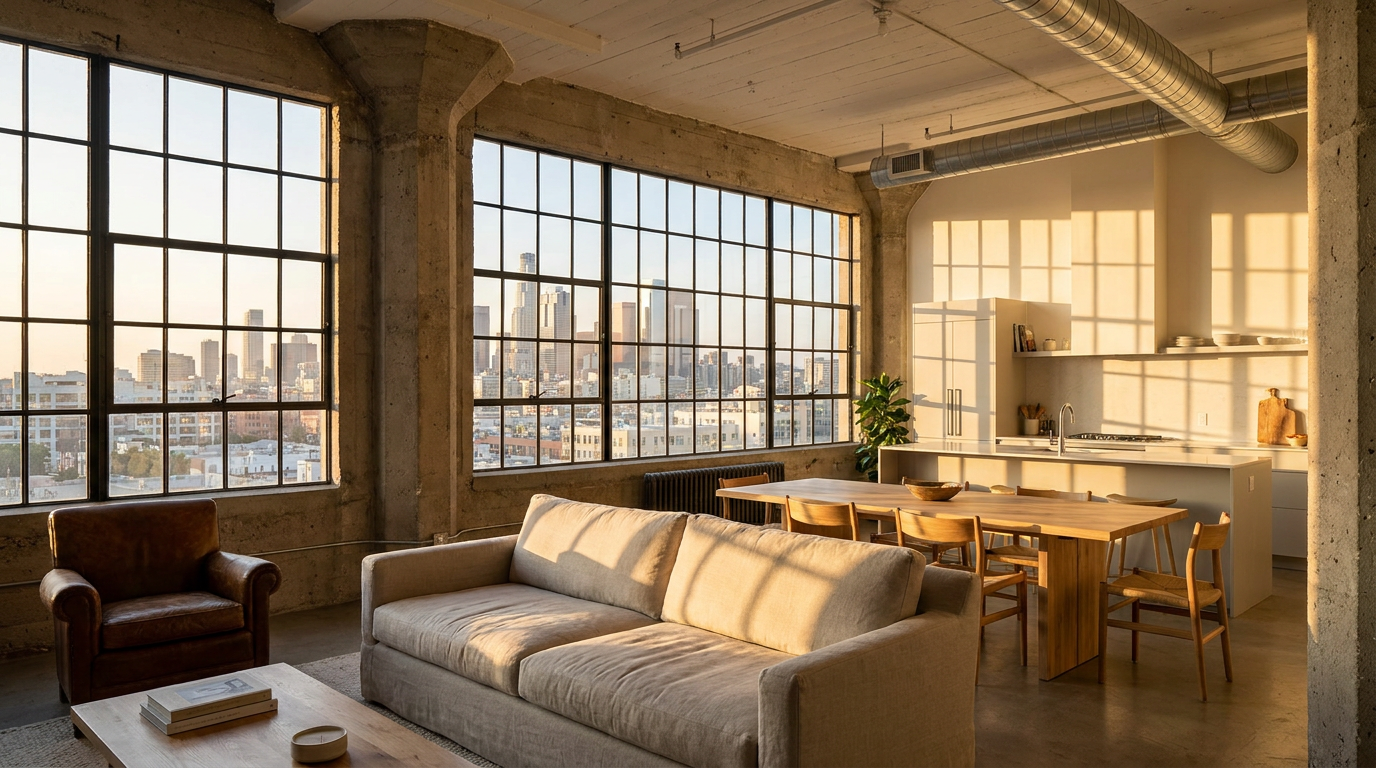
But an uplifting transformation is quietly reshaping global skylines. "Adaptive reuse"—specifically the conversion of obsolete office buildings into residential apartments—has accelerated from a niche architectural experiment into a primary real estate strategy.
The scale of the shift is unprecedented. According to real estate services firm CBRE, the United States conversion pipeline has swelled to 81 million square feet of planned and underway projects across 44 markets as of mid-2025 and into 2026.[1]
Industry tracking indicates that just over 70% of these active office conversion projects are being transformed directly into multifamily housing. Cities like New York, Washington D.C., and Cleveland are leading the charge, turning dormant commercial monoliths into vibrant neighborhoods.[2]

What is driving this architectural alchemy? It comes down to a stark divergence in real estate fundamentals. While the national office vacancy rate hovered near 19.4% in recent months, the multifamily housing sector remains incredibly tight, with vacancy rates sitting below 5%.[1][2]
Furthermore, a "flight to quality" among corporate tenants has left older, Class B and C office buildings functionally obsolete. Building owners are increasingly realizing that aging properties lacking modern amenities will simply never recover as competitive office assets.[3]
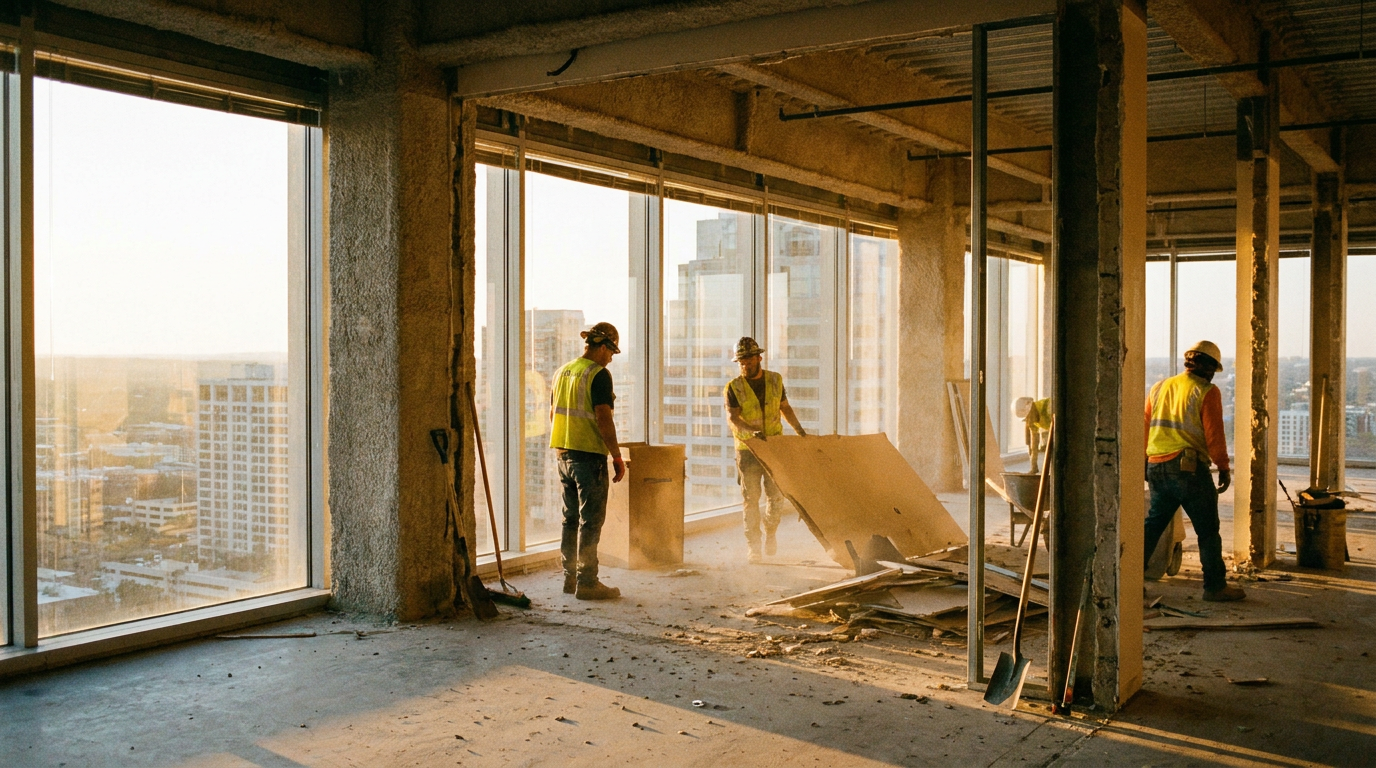
However, the mechanism of converting a cubicle farm into a livable community is highly complex. It requires what industry experts call "forensic investigation" to assess structural integrity, followed by massive overhauls of HVAC, electrical, and data systems.[7]
However, the mechanism of converting a cubicle farm into a livable community is highly complex.
The most notorious structural hurdle is the "floor plate." Commercial buildings constructed in the 1970s and 1980s were designed with massive, deep floor plans to maximize interior desk space, far away from exterior walls.[4]
This clashes directly with residential building codes, which typically require that no bedroom be more than 28 feet from a window line to ensure natural light and emergency egress.[4]

Plumbing presents another formidable engineering challenge. Office buildings were engineered with centralized utility cores—usually a single cluster of bathrooms near the elevators. Residential conversions require coring through thick concrete floors to install dense plumbing penetrations for dozens of individual kitchens and bathrooms per level.[4]
Because of these physical constraints, the financial math of adaptive reuse can be daunting. Analysts estimate that the average cost of acquiring and converting an existing office building is roughly $685 per square foot.[5]
Paradoxically, this is often more expensive than acquiring a completed multifamily property, which averages $600 per square foot. To bridge this financial gap and make projects viable, developers are increasingly relying on public-private partnerships.[5]

Municipalities are stepping in with aggressive policy support to save their downtowns. Boston launched a pilot program offering tax reductions of up to 75% for 25 years for downtown conversions, while Washington D.C. utilizes a 20-year tax abatement to revive its central business district.[6]
Beyond economics, the environmental benefits of adaptive reuse are profound. Architects frequently note that the greenest building is the one that already exists.[7]
By repurposing an existing structural shell rather than demolishing it and pouring new concrete, developers can save between 50% and 75% of the embodied carbon emissions compared to ground-up construction.[7]

Ultimately, while adaptive reuse is a powerful tool for urban revitalization, analysts caution against viewing it as a panacea for the global housing crisis. The estimated 75,000 to 100,000 units coming online will only make a dent in a national housing shortage measured in the millions.[1][4]
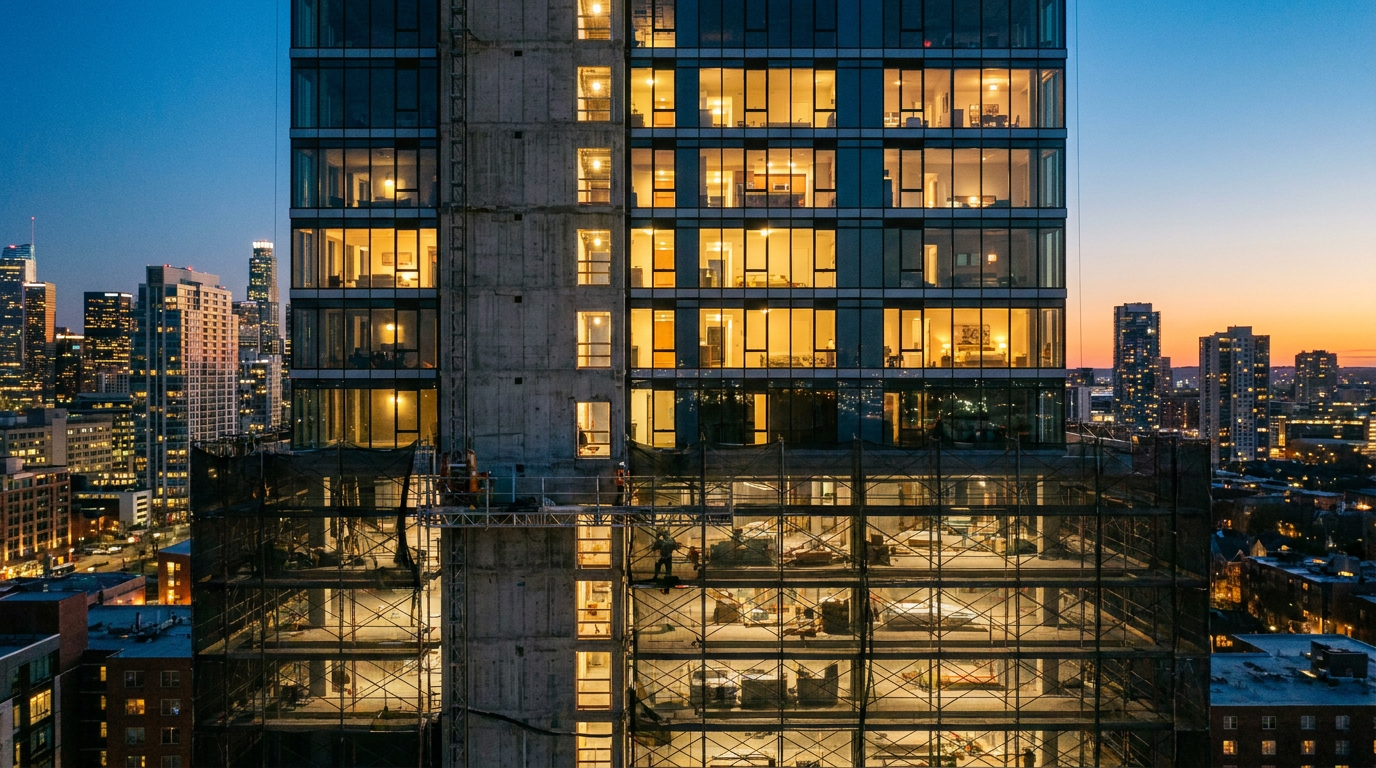
Yet, for the specific neighborhoods where these projects take root, the impact is undeniably transformative. By turning 9-to-5 business districts into 24-hour residential communities, cities are successfully rewriting the future of their downtowns and proving that obsolescence can be the ultimate catalyst for reinvention.[8]
How we got here
2020–2022
The shift to remote work empties central business districts, causing office vacancy rates to spike globally.
2023
Cities begin piloting tax incentives and zoning waivers to encourage developers to repurpose empty commercial buildings.
2024
A record 94 office-to-residential conversion projects are completed in the U.S., proving the model's viability at scale.
2025–2026
The conversion pipeline swells to over 80 million square feet as developers aggressively target obsolete Class B and C properties.
Viewpoints in depth
Urban Planners & Municipalities
Viewing conversions as a lifeline for struggling downtowns and a way to restore lost tax revenue.
City governments see adaptive reuse as the ultimate tool to replace lost commercial property tax revenue and restore foot traffic. By offering aggressive tax abatements and zoning waivers, they hope to transform 9-to-5 business districts into vibrant, 24-hour neighborhoods that attract new residents, retail, and nightlife, preventing an urban doom loop.
Commercial Developers
Balancing the high costs of conversion against long-term residential demand.
Developers recognize the strong fundamentals of the multifamily market, but they remain highly selective. They argue that without significant public subsidies or tax incentives, the sheer cost of retrofitting plumbing and structural elements makes many conversion projects financially unviable compared to simply acquiring existing residential properties.
Real Estate Skeptics
Cautioning that the trend is overhyped relative to the macro housing crisis.
Industry analysts point out that the physical constraints of deep floor plates and centralized utility cores mean only a fraction of empty offices are actually suitable for conversion. They argue that while the trend makes for great headlines, the tens of thousands of units produced will barely make a dent in a national housing shortage measured in the millions.
What we don't know
- Whether the newly created residential neighborhoods will attract enough retail and grocery infrastructure to sustain long-term livability.
- How long municipal tax incentives will remain in place before cities can no longer afford to subsidize the conversions.
- If future innovations in plumbing and HVAC retrofitting will eventually bring down the high cost per square foot of adaptive reuse.
Key terms
- Adaptive Reuse
- The process of repurposing an existing building for a use other than what it was originally designed for, such as turning an office into apartments.
- Floor Plate
- The total leasable square footage of a single floor in a commercial building, which dictates how interior space can be divided.
- Class B and C Office Space
- Older, outdated commercial buildings that lack modern amenities and command lower rents than premium, newly built Class A properties.
- Embodied Carbon
- The total greenhouse gas emissions generated during the manufacturing, transportation, and construction of building materials.
- Net Absorption
- The net change in occupied commercial space over a given period, indicating whether overall market demand is growing or shrinking.
Frequently asked
Why can't all empty offices become apartments?
Many older offices have massive, deep floor plans that make it impossible to give every bedroom a window, a strict requirement under most residential building codes.
Is it cheaper to convert an office than to build new?
Not always. Extensive structural changes, particularly retrofitting plumbing and HVAC systems, can make conversions more expensive per square foot than acquiring existing properties or building from scratch.
Will office conversions solve the housing crisis?
No. While conversions help revitalize specific downtown neighborhoods, the estimated tens of thousands of new units are only a fraction of the multi-million-unit national housing shortage.
Sources
Source coverage
8 outlets
4 viewpoints surfaced








[1]CBRECommercial Developers
Office Conversions and Demolitions Accelerate as Market Adjusts
Read on CBRE →[2]Facilities DiveCommercial Developers
Office conversions to multifamily housing lead the pipeline
Read on Facilities Dive →[3]JPMorgan ChaseUrban Planners & Municipalities
What to know about office-to-residential conversion
Read on JPMorgan Chase →[4]Hughes MarinoReal Estate Skeptics
The Office-to-Residential Shift: Demolition, Not Conversion
Read on Hughes Marino →[5]Morgan StanleyCommercial Developers
Can Office-to-Residential Conversions Solve the Housing Crisis?
Read on Morgan Stanley →[6]Center for American ProgressUrban Planners & Municipalities
The Potential of Office-to-Residential Conversions
Read on Center for American Progress →[7]Pyramid ContractingSustainability Advocates
Adaptive Reuse: A Primary Growth Strategy for Savvy Developers
Read on Pyramid Contracting →[8]Factlen Editorial TeamSustainability Advocates
Synthesis by Factlen editorial team
Read on Factlen Editorial Team →
Every angle. Every day.
Get real estate stories with full source coverage and perspective breakdowns delivered to your inbox.