
Buying a Turnkey Home vs. a Fixer-Upper: The 2026 Real Estate Math
With elevated interest rates and high construction costs in 2026, the classic debate between buying a move-in ready home and a fixer-upper has shifted. We break down the true costs, financing realities, and hidden risks of both paths.
By Factlen Editorial Team
- Turnkey Buyers
- Value certainty, immediate comfort, and preserving cash reserves by rolling costs into a 30-year mortgage.
- Value-Add Investors
- Seek discounted properties to force equity through strategic renovations, comfortable managing contractors and timelines.
- Market Economists
- Analyze the widening price gap driven by high construction costs and buyer fatigue in the 2026 interest rate environment.
What's not represented
- · First-Time Homebuyers Priced Out
- · Local Zoning Boards
Why this matters
For anyone entering the housing market, choosing between a finished home and a renovation project dictates not just your initial purchase price, but your liquid cash reserves, your mortgage structure, and your daily stress levels for years to come. Understanding the current premium on convenience versus the true cost of construction prevents catastrophic budget overruns.
Key points
- Turnkey homes are currently selling for a 3.2% premium as buyers prioritize immediate comfort and predictable costs.
- Fixer-uppers offer a steep 14% discount, providing an entry point for buyers priced out of competitive neighborhoods.
- Renovation budgets in 2026 routinely exceed initial estimates by 20% to 50% due to hidden damages and elevated labor costs.
- Financing a turnkey home preserves liquid cash by rolling the cost of updates into a 30-year mortgage, whereas renovations often require out-of-pocket cash or specialized loans.
The 2026 housing market presents a distinct and formidable challenge for prospective buyers: elevated interest rates hovering in the mid-six percent range and stubbornly high home prices have made every single dollar count. As buyers navigate this unforgiving financial landscape, the classic real estate debate has taken on new urgency and complexity. Should you purchase a move-in ready 'turnkey' home that offers immediate comfort, or hunt for a discounted 'fixer-upper' to build sweat equity over time? The answer is no longer as simple as choosing between convenience and hard work; it is a complex financial calculation.
Historically, the fixer-upper was the undisputed champion of the budget-conscious buyer, popularized by decades of home improvement television shows that made renovations look fast, cheap, and universally profitable. However, the underlying math has fundamentally shifted in recent years. Today, the decision requires weighing the immediate convenience and financial predictability of a finished product against the highly unpredictable realities of modern construction costs. Buyers must look beyond the initial purchase price and evaluate the total cost of ownership, including the price of capital, the cost of labor, and the emotional toll of living in a construction zone.
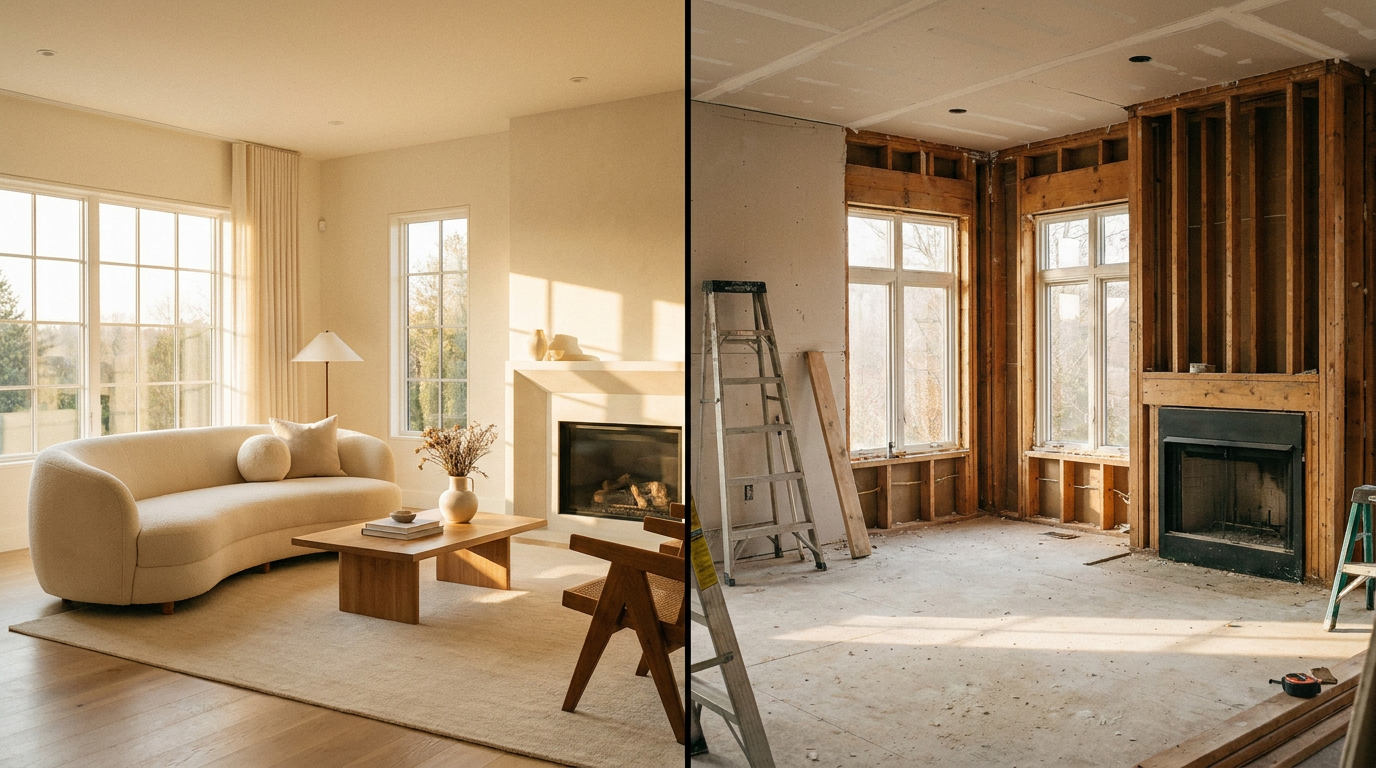
The primary appeal of a turnkey property lies in its absolute certainty and immediate utility. A turnkey home is fully updated, featuring modern finishes, functional mechanical systems, and no pressing need for repairs or structural interventions. Buyers can simply unpack their boxes, arrange their furniture, and begin their lives without ever needing to visit a hardware store or interview a general contractor. In a world where time is increasingly viewed as a premium asset, the ability to bypass the stress and disruption of a major home renovation is a highly sought-after luxury.
This undeniable convenience comes at a measurable and significant cost. According to recent market data analyzing home sales in 2026, turnkey homes are currently commanding a noticeable premium, selling for roughly 3.2 percent more than expected based on standard valuation models. In highly competitive neighborhoods with low inventory, that premium can easily stretch between 10 percent and 20 percent compared to similar homes that require cosmetic or structural work. Buyers are essentially paying a markup to reimburse the previous owner or developer for the time, risk, and capital they invested in completing the renovations.[1][2]

Yet, for many buyers navigating the 2026 landscape, that upfront premium is entirely justified by the mechanics of modern real estate financing. When you purchase a turnkey home, the cost of the pristine kitchen, the modernized bathrooms, and the brand-new roof is seamlessly rolled into a thirty-year mortgage. This allows the buyer to preserve their liquid cash reserves, avoiding the perilous need to drain their savings accounts to pay contractors out-of-pocket immediately after closing. In an era where buyers are already stretching their finances to cover down payments and closing costs, preserving liquidity is a powerful advantage.
On the opposite side of the real estate spectrum is the fixer-upper, which currently trades at a significant and tempting discount—often selling for 14 percent less than expected market value. For buyers who find themselves entirely priced out of their desired neighborhoods or school districts, this substantial discount offers a vital, and sometimes the only, entry point into homeownership. The lower initial purchase price reduces the required down payment and lowers the monthly mortgage obligation, providing a foothold in communities that would otherwise remain financially inaccessible.[1]
The core financial advantage of a fixer-upper is the opportunity to force equity into the property. By purchasing a home well below market value and executing strategic, high-impact improvements, a buyer can theoretically create a finished asset worth far more than their total combined investment of the purchase price and renovation costs. Furthermore, a fixer-upper allows for complete and total customization. Rather than settling for a developer's generic design choices, the buyer can ensure the final product perfectly matches their specific aesthetic preferences, lifestyle needs, and functional requirements.
The core financial advantage of a fixer-upper is the opportunity to force equity into the property.
However, the reality of executing a major home renovation in 2026 is fraught with profound financial risk and logistical hurdles. Persistent labor shortages across the skilled trades and elevated material costs mean that renovations are significantly more expensive than they were just a few years ago. Industry experts and seasoned contractors routinely warn that renovation budgets almost always exceed their initial estimates, with standard overruns landing anywhere between 20 percent and 50 percent. What appears to be a bargain on paper can quickly transform into a financial sinkhole if costs are not meticulously managed.[3]
The greatest and most unpredictable threat to any fixer-upper budget is the phenomenon known as 'scope creep.' Once walls are opened and floors are pulled up, contractors frequently discover outdated electrical wiring, hidden water damage, asbestos, or foundational issues that were entirely invisible during the initial home inspection. What begins as a simple cosmetic refresh of a kitchen or bathroom can rapidly escalate into a six-figure systemic overhaul, forcing the homeowner to divert funds away from visible improvements just to make the property safe and legally compliant.[3][6]
Financing a fixer-upper also introduces a layer of complexity that turnkey buyers entirely avoid. While standard conventional mortgages cover the initial purchase price of the home, buyers must either use their own cash for the renovations or secure specialized financing. Products such as an FHA 203(k) loan or a RenoFi loan allow buyers to borrow against the home's projected 'after-repair value.' However, these specialized renovation loans often involve slightly higher interest rates, require extensive paperwork, and mandate strict oversight by lenders and approved contractors, slowing down the entire process.[5]
When evaluating the potential return on investment for various renovations, buyers must critically temper their financial expectations. On average, homeowners recoup only about 74 cents for every dollar invested in a remodeling project upon resale. While certain highly visible and durable projects—such as refinishing original hardwood floors—can yield an impressive 147 percent return, major structural overhauls and luxury additions rarely pay for themselves dollar-for-dollar. The profit margin on a fixer-upper relies entirely on buying the property at a steep enough discount to absorb these inherent renovation inefficiencies.[4]

Ultimately, the choice between purchasing a turnkey home and taking on a fixer-upper depends entirely on a buyer's personal risk tolerance, available cash reserves, and lifestyle bandwidth. Neither path is universally superior in the 2026 market, but each strategy thrives under very specific financial and personal conditions. Making the right choice requires a brutally honest assessment of not just a buyer's bank account, but their patience, their relationships with local tradespeople, and their willingness to endure months of domestic disruption.[7]
A turnkey home proves to be the ideal choice for buyers who are relocating on a tight timeline, lack the substantial cash reserves required for unexpected repairs, or simply do not have the emotional bandwidth to manage a team of contractors while balancing their careers. It fits perfectly when the buyer's primary priority is absolute predictability, immediate domestic comfort, and the strategic preservation of liquid savings by financing the finished, polished product over a standard thirty-year mortgage term without the looming threat of surprise expenses.[7]
Conversely, the turnkey route does not fit well for buyers who desire highly personalized spaces or are strictly focused on maximizing their initial equity position from day one. In highly competitive and desirable real estate markets, the move-in ready premium can easily push these pristine homes far beyond a buyer's maximum mortgage approval range. Furthermore, buyers of turnkey properties are essentially forced to pay top dollar for someone else's specific design choices, which they may ultimately wish to change anyway, defeating the entire financial purpose of the premium.[7]

A fixer-upper fits exceptionally well for buyers who are equipped with strong, pre-existing contractor relationships, deep cash reserves, and the psychological patience to endure living inside an active construction zone for several months. When a buyer can accurately estimate repair costs before closing, negotiate a favorable purchase price, and successfully secure specialized renovation financing, purchasing a heavily discounted property remains one of the most effective and proven ways to build generational wealth through strategic, targeted property improvements that outpace natural market appreciation.[7]
However, a fixer-upper is a dangerous choice and does not fit when a buyer is relying entirely on a single optimistic estimate or lacks a substantial financial contingency fund to absorb the inevitable surprises found behind the drywall. For those expecting a major structural renovation to be a fast, stress-free process resembling a thirty-minute television montage, the hidden costs, permitting delays, and labor shortages of the 2026 construction landscape will quickly turn a perceived real estate bargain into an overwhelming financial and emotional burden.[7]
How we got here
Pre-2020
Fixer-uppers were widely popularized by home improvement shows, driving fierce competition for distressed properties.
2021–2023
Supply chain disruptions and labor shortages caused renovation costs to spike, complicating the math for value-add buyers.
2024–2025
Elevated interest rates made buyers more cautious about taking on secondary loans or draining cash reserves for repairs.
2026
The market clearly bifurcates, with turnkey homes commanding a 3.2% premium while fixer-uppers face steep discounts of up to 14%.
Viewpoints in depth
The Turnkey Buyer's view
Focuses on the exhaustion of the modern homebuyer and the value of financial predictability.
This perspective argues that after saving for a down payment and closing costs, buyers lack the liquid cash and emotional bandwidth to manage a six-month renovation. They prefer paying a 3.2% premium to finance the finished product over 30 years, viewing the extra cost as an insurance policy against contractor delays and catastrophic budget overruns.
The Value-Add Investor's view
Argues that the steep discount on fixer-uppers is exactly where generational wealth is built.
By purchasing below market value and executing targeted, high-ROI updates like refinishing floors or modernizing bathrooms, these buyers believe they can create instant equity that outpaces natural market appreciation. They view the turnkey premium as a lazy tax, preferring to endure the temporary chaos of construction to secure a superior financial position.
The Renovation Contractor's view
Warns about the harsh realities of 2026 construction and the inevitability of scope creep.
Contractors emphasize that with labor shortages and material costs still elevated, opening walls in older homes almost always reveals hidden issues like outdated wiring or water damage. They advise buyers that a fixer-upper is only a genuine deal if the buyer has a 20% to 50% contingency fund ready to deploy when the original plan inevitably changes.
What we don't know
- Whether the current 3.2% premium for turnkey homes will expand or contract if interest rates drop significantly later in the year.
- How long the current shortage of skilled construction labor will persist, which directly dictates the timeline and cost of future fixer-upper projects.
Key terms
- Turnkey Property
- A home that is completely move-in ready, requiring no immediate repairs or updates before occupying or renting.
- Fixer-Upper
- A property sold at a discount because it requires significant cosmetic, structural, or systemic repairs.
- Scope Creep
- The tendency for a renovation project to expand beyond its original plans, often due to hidden damage discovered after work begins.
- After-Repair Value (ARV)
- The estimated market value of a property once all planned renovations and repairs are completed.
- Return on Investment (ROI)
- A financial metric used to evaluate how much profit or value is generated by a specific renovation compared to its cost.
Frequently asked
Is it cheaper to buy a fixer-upper in 2026?
While the initial purchase price is typically 14% lower, unpredictable renovation costs and high labor rates can quickly erase those savings if the project requires structural work.
Can I finance renovations into my mortgage?
Yes, specialized loans like FHA 203(k) or RenoFi allow buyers to borrow based on the home's after-renovation value, though they often come with stricter requirements than standard mortgages.
Which renovations offer the best return on investment?
Cosmetic updates generally yield the highest ROI. Refinishing hardwood floors can recoup up to 147% of costs, while the average home update returns about 74 cents on the dollar.
Why are turnkey homes selling for a premium?
Buyers in 2026 are often cash-strapped after closing and prefer to roll the cost of a finished home into their long-term mortgage rather than paying out-of-pocket for immediate repairs.
Sources
Source coverage
7 outlets
3 viewpoints surfaced






[1]New American FundingMarket Economists
Turnkey homes sell for nearly 3% more than expected
Read on New American Funding →[2]AmeriSaveTurnkey Buyers
How Turnkey Homes Compare to Fixer-Uppers
Read on AmeriSave →[3]Vertex Realty GroupValue-Add Investors
Turnkey vs Fixer-Upper: Should You Buy New or Renovate?
Read on Vertex Realty Group →[4]HomeLightValue-Add Investors
Renovations that will increase home value in 2026
Read on HomeLight →[5]RealmValue-Add Investors
Should I Renovate or Move? Getting Started with Your Renovation
Read on Realm →[6]FastExpertTurnkey Buyers
Turnkey vs. Fixer-Upper: Which is Better?
Read on FastExpert →[7]Factlen Editorial TeamMarket Economists
Synthesis by Factlen editorial team
Read on Factlen Editorial Team →
Every angle. Every day.
Get real estate stories with full source coverage and perspective breakdowns delivered to your inbox.