
Why the Skyscrapers of the Future Are Being Built With Wood
Engineered mass timber is replacing steel and concrete in high-rise construction, offering a sustainable, fire-resistant alternative that stores carbon instead of emitting it.
By Dev Anand

In short
- Mass timber uses engineered wood panels, like CLT, to replace steel and concrete in large buildings.
- Because trees absorb CO2, mass timber buildings act as massive carbon sinks, storing carbon for centuries.
- Unlike traditional light-frame wood, thick mass timber chars predictably in a fire, maintaining its structural integrity.
For over a century, the recipe for a skyscraper has remained largely unchanged: pour the concrete, forge the steel, and build toward the clouds. But in downtown Milwaukee, a new 31-story tower called the Neutral Edison is rising without the traditional heavy reliance on those carbon-intensive materials. When completed in 2026, it will become the tallest mass timber building in the world, reaching 362 feet into the sky.[1]
The Edison is not an anomaly; it is the vanguard of a quiet revolution in global architecture. Across North America, Europe, and Asia, developers are increasingly turning to mass timber—a category of engineered wood products designed to match or exceed the structural integrity of steel and concrete. This shift is driven by a combination of climate urgency, aesthetic preference, and recent breakthroughs in building codes.[6]
To understand the appeal of mass timber, one must first look at the environmental toll of traditional construction. The production of steel and concrete accounts for roughly 9 percent of global greenhouse gas emissions from energy use. Cement manufacturing alone requires heating limestone to extreme temperatures, a process that releases massive amounts of carbon dioxide into the atmosphere.[2]
Mass timber flips this equation. Trees naturally absorb carbon dioxide as they grow. When harvested and turned into structural panels, that carbon remains locked inside the wood for the lifetime of the building—often centuries. Studies indicate that substituting traditional materials with cross-laminated timber (CLT) can lower the carbon emissions of large buildings by roughly 40 percent.[2][4]
The most common form of mass timber is Cross-Laminated Timber, or CLT. It is manufactured by taking standard lumber boards, stacking them in alternating perpendicular layers, and bonding them together with structural adhesives under immense pressure. This cross-hatching technique gives the resulting panels extraordinary rigidity in both directions, allowing them to serve as load-bearing walls, floors, and elevator cores.[4][6]
Despite its strength, CLT is roughly five times lighter than concrete. This weight reduction means buildings require smaller, less expensive foundations. It also transforms the construction site itself. Because mass timber panels are prefabricated in factories using precise digital models, they arrive on-site ready to be slotted together like a massive piece of flat-pack furniture.[4]
This prefabrication drastically accelerates construction timelines. Builders report that mass timber projects can be completed up to 20 percent faster than traditional concrete builds. The sites are also noticeably quieter and require fewer workers, as the process involves assembling precision-cut pieces rather than pouring and curing concrete or welding steel beams in mid-air.[4][6]
The most persistent question surrounding wooden skyscrapers is inevitably about fire safety. It is a counterintuitive concept: building a high-rise out of combustible material. However, structural engineers point out that mass timber behaves very differently from the light-frame wood used in single-family homes.[3][5]
When exposed to intense heat, a thick mass timber beam does not easily ignite. Instead, the outer layer chars. This char layer acts as a natural insulator, protecting the structural integrity of the wood inside and slowing the spread of the fire. In contrast, steel beams can warp, buckle, and fail suddenly when exposed to extreme temperatures. In rigorous testing, CLT structures have withstood over 90 minutes of direct fire without collapsing.[3][5]
Regulatory bodies have taken notice of these safety tests. The International Building Code (IBC), which forms the basis for local regulations across the United States, recently underwent a historic update. The 2021 and 2024 editions introduced new "Type IV" construction categories specifically designed to accommodate tall mass timber structures.[3][5]
Under the new IBC guidelines, developers can build up to 18 stories (Type IV-A) if the timber is fully encapsulated in fire-resistant materials like gypsum board. For mid-rise buildings up to 12 stories (Type IV-B), the 2024 code allows for 100 percent of the timber ceilings to remain exposed, allowing architects to showcase the natural warmth and aesthetic appeal of the wood.[3][5]
While the momentum is undeniable, the mass timber movement still faces hurdles. The supply chain for engineered wood is still developing, and in many regions, the upfront material costs can be higher than concrete. Furthermore, the environmental benefits are entirely dependent on sustainable forestry practices; if the increased demand for timber leads to deforestation or the destruction of old-growth forests, the carbon math quickly falls apart.[2][4]
To mitigate this, industry leaders emphasize the need for strict certification, ensuring that for every tree harvested, new ones are planted to continue the cycle of carbon sequestration. When managed correctly, the forest acts as a renewable factory, continuously pulling carbon from the air and packaging it into building materials.[2][4][6]
Looking ahead, the ambitions for mass timber are only growing. While Milwaukee currently holds the crown, developers in Sydney, Australia, are planning hybrid timber towers that push even higher. In Japan, Sumitomo Forestry has proposed the W350 project—a 70-story, 350-meter-tall timber skyscraper envisioned for completion in 2041.[1][6]
Ultimately, the rise of mass timber represents a profound shift in how we view the built environment. Rather than treating buildings as inevitable sources of pollution, architects and engineers are proving that our cities can be constructed in partnership with nature, turning the skylines of tomorrow into vast, beautiful carbon sinks.[2][6]
Key terms
- Mass Timber
- A category of framing styles characterized by the use of large solid wood panels for wall, floor, and roof construction.
- Cross-Laminated Timber (CLT)
- An engineered wood panel made by gluing layers of solid-sawn lumber together at alternating right angles for extreme strength.
- Glulam (Glued Laminated Timber)
- A structural timber product made by bonding layers of wood with the grain all running in the same direction, typically used for beams and columns.
- Embodied Carbon
- The total greenhouse gas emissions generated by the extraction, manufacturing, transportation, and assembly of building materials.
- Char Rate
- The predictable speed at which the outer layer of thick timber burns, creating an insulating barrier that protects the inner wood during a fire.
Frequently asked
Is mass timber a fire hazard?
No. Unlike the thin wood used in residential homes, thick mass timber beams char on the outside when exposed to fire. This char layer insulates the core of the wood, allowing it to maintain its structural strength for over 90 minutes in tests.
How does mass timber help the environment?
Trees absorb carbon dioxide as they grow. When used in mass timber, that carbon is locked inside the building rather than released. Furthermore, it replaces concrete and steel, which are highly carbon-intensive to produce.
Is mass timber as strong as concrete?
Yes. Engineered wood products like CLT have a strength-to-weight ratio comparable to concrete, despite being roughly five times lighter, making them highly effective for load-bearing walls and floors.
Will this lead to deforestation?
It can, if not managed properly. The environmental benefits of mass timber rely entirely on sustainable forestry, where trees are harvested responsibly and new ones are continuously planted to replace them.
Viewpoints in depth
Sustainable Architects & Developers
Advocates who view mass timber as a crucial tool for decarbonizing the construction industry.
For climate-conscious architects, mass timber is the holy grail of sustainable building. They point to the fact that the built environment is responsible for nearly 40 percent of global carbon emissions, with a massive chunk coming from the production of concrete and steel. By switching to engineered wood, developers can actively remove carbon from the atmosphere and store it in the walls of their buildings. Furthermore, they argue that the aesthetic warmth of exposed wood improves occupant well-being, and the speed of prefabricated construction offsets the currently higher material costs.
Structural & Fire Engineers
Technical experts focused on the safety, load-bearing capacity, and code compliance of engineered wood.
Engineers approach mass timber not just as an environmental solution, but as a high-performance material. Their primary focus has been proving that wooden skyscrapers are safe. Through extensive burn tests, they have demonstrated that thick mass timber components char at a predictable rate, creating an insulating layer that protects the structural core, unlike steel which can warp and fail abruptly in high heat. They emphasize that while the material is safe, it requires highly specialized moisture management during construction and precise acoustic detailing to prevent sound transmission between floors.
Conservationists
Environmental advocates who support timber construction but warn against the risks of over-harvesting.
While generally supportive of reducing concrete use, conservation groups caution that the mass timber boom must be tightly regulated. They argue that if the demand for CLT leads to the logging of old-growth forests or unsustainable clear-cutting, the carbon benefits are entirely negated. This camp insists that mass timber is only a climate solution if the wood is sourced from strictly certified, sustainably managed forests where new trees are continuously planted to replace those harvested, ensuring the forest ecosystem remains intact.
- Sustainable Architects & Developers
- View mass timber as a vital tool for decarbonizing construction and improving building aesthetics.
- Structural & Fire Engineers
- Focus on the technical performance, code compliance, and predictable fire resistance of engineered wood.
- Conservationists
- Support the reduction of concrete but warn that timber must be sourced from strictly certified, sustainable forests.
Perspectives this story doesn't cover
- Traditional steel and concrete manufacturers facing market disruption.
- Local logging communities and forestry workers impacted by increased timber demand.
Sources
Source coverage
6 outlets
3 viewpoints surfaced






- [1]The GuardianSustainable Architects & Developers
Milwaukee plans to build tallest timber building in the world
Read on The Guardian → - [2]MIT Environmental Solutions InitiativeConservationists
How does the climate impact of cross-laminated timber compare to steel or concrete?
Read on MIT Environmental Solutions Initiative → - [3]WoodWorksStructural & Fire Engineers
Status of Building Code Allowances for Tall Mass Timber in the IBC
Read on WoodWorks → - [4]American UniversityConservationists
Fact Sheet: Mass Timber Construction
Read on American University → - [5]International Code CouncilStructural & Fire Engineers
Mass Timber and the 2024 IBC
Read on International Code Council → - [6]Factlen Editorial TeamSustainable Architects & Developers
Synthesis by Factlen editorial team
Read on Factlen Editorial Team →
More in Home
See all →Mass Timber
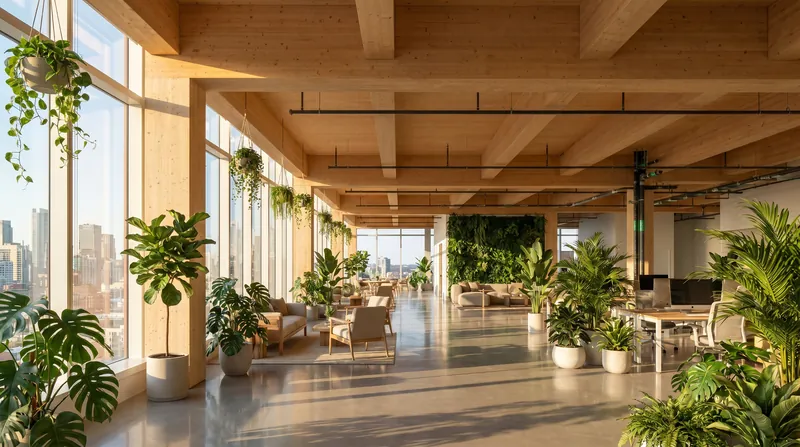
Charring vs. Melting: Why Cross-Laminated Timber Outlasts Steel in a 1,800-Degree House Fire
3 sources
Transit-Oriented Development
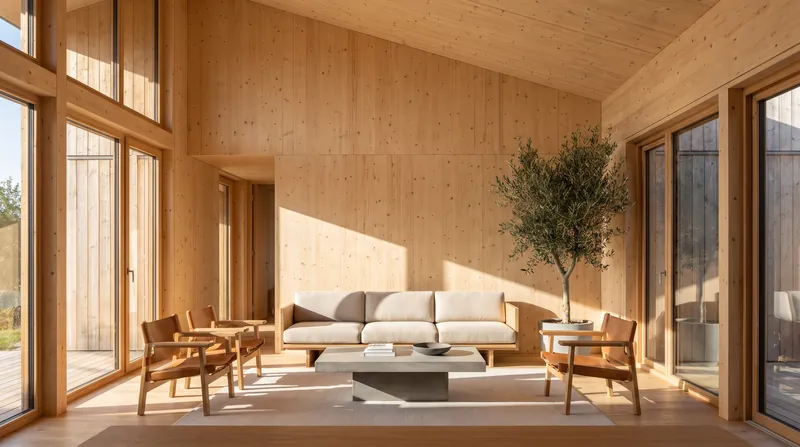
California's 'Abundant Homes Near Transit' Law Overrides Local Height and Density Limits in Eight Major Counties
2 sources
Building Codes
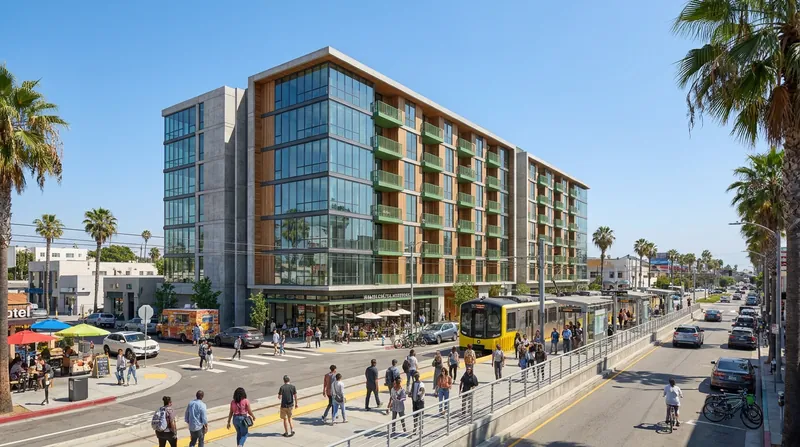
The 2021 IECC Explainer: The Math Behind the Federal Energy Code Mandate for New Homes
4 sources
Tornado Resilience
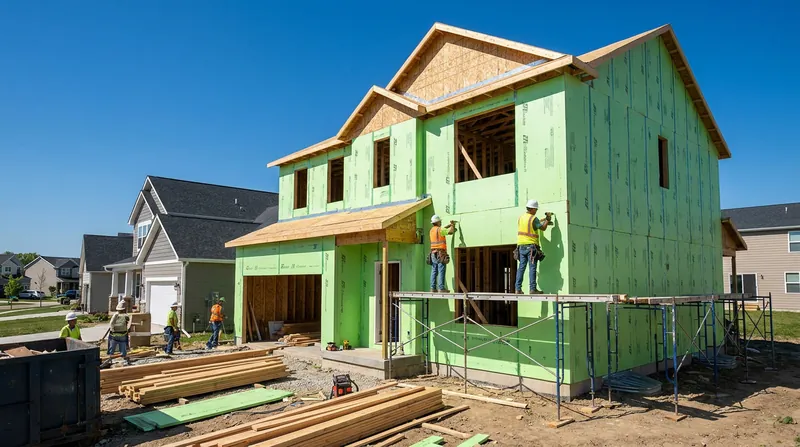
The First-Ever Tornado Code: How the New IBC Mandate is Rewriting Structural Engineering
2 sources
Comments
Every angle. Every day.
Get Home stories with full source coverage and perspective breakdowns, free every day.