
US Military Strike in Venezuela Kills Tren de Aragua Leader 'Niño Guerrero'
President Donald Trump announced that a coordinated U.S.-Venezuelan military strike killed Héctor Rusthenford Guerrero Flores, the head of the transnational crime syndicate Tren de Aragua. The operation highlights a dramatic shift in U.S.-Venezuela relations following the removal of Nicolás Maduro earlier this year.
By Factlen Editorial Team
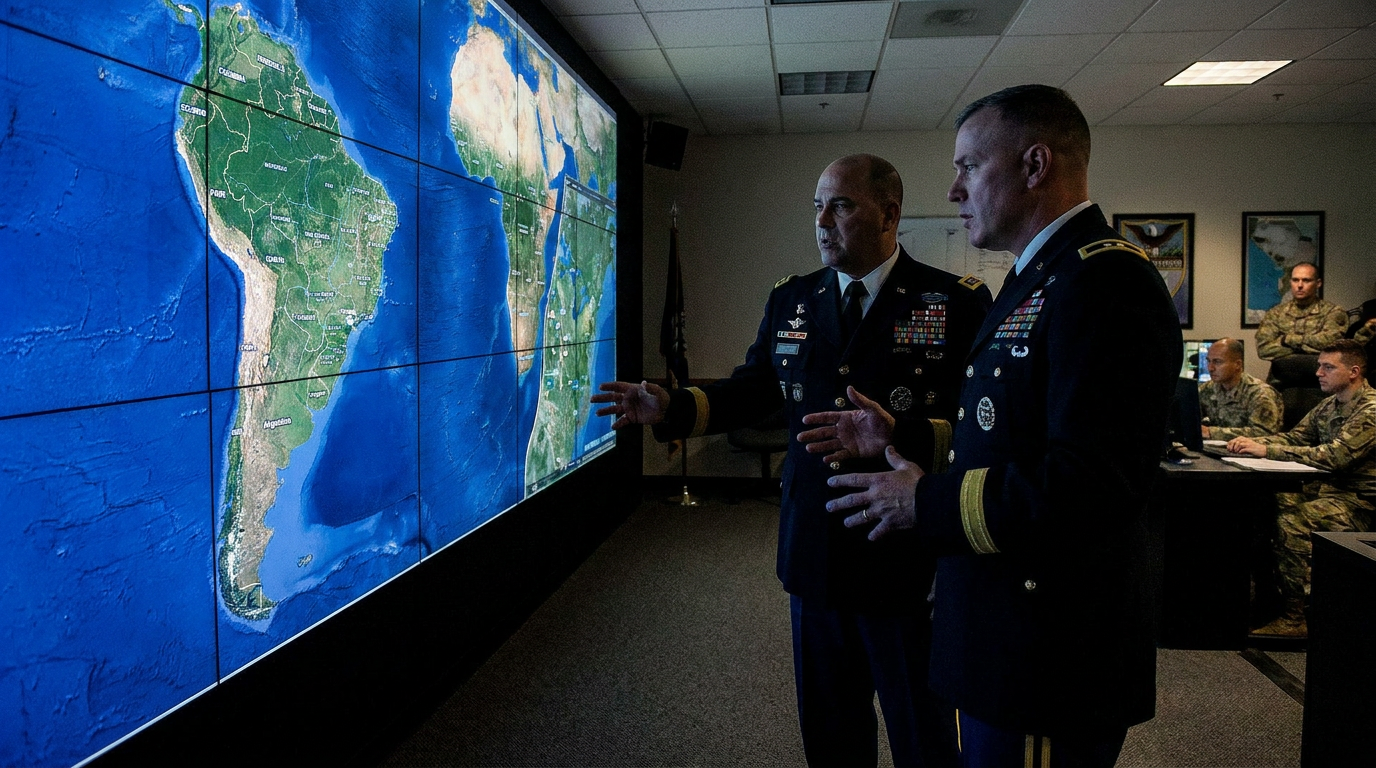
- U.S. Administration
- The strike was a necessary military action to eliminate a terrorist threat that exploited border weaknesses.
- Venezuelan Government
- Cooperating with the U.S. military is essential to reclaiming state sovereignty from armed gangs.
- Security Analysts
- Decapitation strikes often fail to dismantle decentralized criminal networks and can trigger violent succession wars.
- Domestic Critics
- The use of military missiles for law enforcement targets raises profound legal and human rights concerns.
What's not represented
- · Local residents in Bolívar state affected by the military strike and ongoing cartel violence.
- · Human rights organizations monitoring the use of military force in civilian areas.
Why this matters
The unprecedented joint military operation inside Venezuelan territory marks a major escalation in the U.S. war on transnational cartels. It also cements a stunning geopolitical realignment between Washington and Caracas following the U.S. capture of Nicolás Maduro earlier this year.
Key points
- The U.S. military conducted a lethal missile strike in Venezuela, killing Tren de Aragua leader Héctor 'Niño' Guerrero.
- The operation was coordinated with the Venezuelan government, highlighting a major shift in bilateral relations.
- The CIA provided ground intelligence, while the Joint Special Operations Command executed the strike.
- Tren de Aragua is a transnational criminal syndicate that the U.S. has designated as a terrorist organization.
- The strike follows the January 2026 U.S. capture of former Venezuelan President Nicolás Maduro.
President Donald Trump announced late Friday that a "swift and lethal kinetic strike" by the U.S. military successfully killed Héctor Rusthenford Guerrero Flores, the fugitive leader of the sprawling Venezuelan criminal syndicate Tren de Aragua. Guerrero, widely known by his alias "Niño Guerrero," was targeted in a coordinated operation that underscores a dramatic and highly militarized escalation in Washington's campaign against transnational cartels. In a post on his Truth Social platform, Trump declared that the gang's leadership would no longer find safe haven, sharing an unclassified aerial video that showed a projectile obliterating a small, green-roofed building. The announcement marks the culmination of a multi-year manhunt for one of the hemisphere's most wanted men.[2][3][6]
The operation was executed deep inside Venezuelan territory, a fact that highlights a staggering geopolitical realignment between Washington and Caracas. Defense Secretary Pete Hegseth confirmed that the strike hit a Tren de Aragua compound in the southeastern state of Bolívar earlier in the week. According to Hegseth, the mission was conducted in "full collaboration" with Venezuelan security forces. Venezuela's communications ministry swiftly corroborated the account, stating that Guerrero was "neutralized" during a combined operation aimed at dismantling organized crime structures in the mineral-rich region.[3][4][6]
The mechanics of the strike reflect a heavy reliance on elite U.S. military and intelligence assets. Defense officials, speaking on the condition of anonymity, revealed that the Central Intelligence Agency (CIA) provided the crucial ground intelligence that pinpointed Guerrero's location. The strike itself was carried out by the Joint Special Operations Command (JSOC) under the direction of U.S. Southern Command, utilizing a precision missile. The use of advanced military hardware to eliminate a criminal target in South America represents a significant blurring of the lines between traditional law enforcement and military counter-terrorism operations.[4]
Guerrero, 43, was the undisputed architect of Tren de Aragua, transforming it from a localized prison gang into a transnational criminal empire. Under his leadership, the syndicate expanded its operations far beyond Venezuela's borders, establishing lucrative networks dedicated to drug trafficking, extortion, kidnapping, and human smuggling. The group systematically embedded itself within the historic migration routes used by millions of Venezuelans fleeing the country's economic collapse, preying on vulnerable migrants while simultaneously using the exodus to seed operational cells across South America and into the United States.[3][5][8]

The syndicate's origins trace back to the notorious Tocorón Penitentiary in Venezuela's Aragua state. For years, Guerrero operated the prison as his personal fiefdom, directing international criminal enterprises from a facility where he reportedly lived "like a king." The prison complex functioned as a fortified headquarters, complete with a swimming pool, a zoo, and a nightclub, while corrupt officials turned a blind eye. Guerrero managed to escape Tocorón in September 2023, just days before a massive Venezuelan military raid finally reclaimed control of the facility, sparking an international manhunt.[3][8]
As Tren de Aragua's footprint grew, so did the attention of U.S. federal law enforcement. The U.S. government officially designated the syndicate as a foreign terrorist organization, a label that unlocked sweeping surveillance and military options. In late 2025, federal prosecutors in New York indicted Guerrero on a raft of charges, including racketeering conspiracy and providing material support to terrorists. Concurrently, the State Department placed a $5 million bounty on his head, and U.S. Attorney Jay Clayton—whom Trump recently nominated to serve as Director of National Intelligence—publicly blamed the gang for fueling violence and illicit drug markets across three continents.[2][3][6]
As Tren de Aragua's footprint grew, so did the attention of U.S.
The fact that U.S. forces operated freely inside Venezuela is the direct result of a stunning diplomatic and security pivot that occurred earlier this year. For over a decade, the United States and Venezuela were locked in bitter hostility, with Washington accusing the socialist government in Caracas of actively harboring cartels and narco-terrorists. That paradigm shattered in January 2026, when U.S. military forces executed a daring nighttime raid that captured Venezuelan strongman Nicolás Maduro, whisking him to New York to face federal drug trafficking charges.[3][5]
Following Maduro's abrupt removal, an interim government led by President Delcy Rodríguez assumed power in Caracas. The Trump administration immediately moved to normalize relations, lifting crippling economic sanctions and pivoting toward deep bilateral cooperation. This new alliance has focused heavily on joint oil extraction initiatives and the aggressive eradication of armed syndicates that challenge state authority. The Bolívar state strike serves as the most visible proof to date that the Rodríguez administration is willing to allow U.S. kinetic operations on its soil to restore domestic order.[3][5]
The location of the strike—Bolívar state—is highly strategic. The southeastern region, which borders Brazil and Guyana, is the epicenter of Venezuela's illegal gold mining industry. For years, Tren de Aragua and other armed factions have violently controlled these lucrative mining operations, extracting wealth with the tacit consent of corrupt local officials. By targeting Guerrero in Bolívar, the joint U.S.-Venezuelan operation struck at the financial heart of the syndicate's domestic revenue stream, signaling an intent to reclaim the lawless mining arc.[4][6]

Domestically, the strike serves as a major political victory for Trump, who has made the eradication of Tren de Aragua a central pillar of his second-term agenda. The president has frequently weaponized the gang's presence in the U.S. to criticize the border policies of his predecessor, Joe Biden. In his Friday announcement, Trump reiterated these attacks, claiming that previous border policies allowed a "foreign army" to enter the country with impunity. He specifically invoked the memories of Jocelyn Nungaray and Laken Reilly, two American citizens whose murders by undocumented immigrants became political flashpoints for conservatives demanding stricter immigration enforcement.[2]
Despite the tactical success of the operation, the strike raises profound legal and operational uncertainties. International law observers have questioned the precedent of using military missiles to execute civilian criminal suspects in the Western Hemisphere, even when the host nation consents. The operation mirrors the highly controversial "kingpin strategy" heavily utilized during the war on drugs, which relies on decapitation strikes to cripple criminal organizations. Critics argue that such military force blurs the boundaries of international law and risks normalizing extrajudicial killings in allied nations.[7]
Furthermore, security analysts caution that killing Guerrero is unlikely to dismantle Tren de Aragua entirely. Transnational syndicates often operate with decentralized cell structures, meaning that regional lieutenants possess the autonomy and resources to continue operations. The sudden power vacuum at the top of the organization could trigger a violent succession battle, potentially splintering the gang into smaller, more unpredictable factions that are harder for intelligence agencies to track.[5]

The Bolívar strike is not an isolated incident, but rather part of a broader, highly militarized U.S. offensive in the region. The Trump administration has recently authorized lethal strikes against suspected drug-smuggling boats in the Caribbean Sea, demonstrating a willingness to use deadly force against narcotics networks before they reach American shores. As U.S. Southern Command deepens its footprint in South America, the operation against Niño Guerrero sets a stark precedent for how Washington intends to police the hemisphere in the years to come.[2][3][7]
How we got here
2012
Héctor Guerrero Flores escapes from the Aragua Penitentiary Center, beginning his rise to power within the Venezuelan criminal underworld.
September 2023
Guerrero escapes from Tocorón prison just days before a massive Venezuelan military raid reclaims the facility.
December 2025
U.S. federal prosecutors indict Guerrero on racketeering and terrorism charges, and the State Department offers a $5 million bounty.
January 2026
U.S. forces capture Venezuelan President Nicolás Maduro, paving the way for a new, cooperative government in Caracas.
June 2026
The U.S. military conducts a lethal missile strike in Bolívar state, successfully killing Guerrero in coordination with Venezuelan forces.
Viewpoints in depth
The U.S. Administration's View
The strike was a necessary military action to eliminate a terrorist threat that exploited border weaknesses.
Trump administration officials argue that traditional law enforcement tools are insufficient to combat transnational syndicates like Tren de Aragua. By designating the gang as a terrorist organization, the administration unlocked the legal framework to use kinetic military force. Officials view the strike as a decisive victory that not only eliminates a major threat but also sends a deterrent message to other cartels operating in the hemisphere.
The Venezuelan Government's View
Cooperating with the U.S. military is essential to reclaiming state sovereignty from armed gangs.
For the new government in Caracas, the joint operation is a strategic move to restore domestic order and international legitimacy. Armed factions like Tren de Aragua have long controlled vast swaths of Venezuelan territory, particularly the illegal gold mines in Bolívar state. By allowing U.S. strikes on its soil, the Rodríguez administration is leveraging American military might to crush internal rivals while cementing its new economic and security alliance with Washington.
Security and Intelligence Analysts
Decapitation strikes often fail to dismantle decentralized criminal networks and can trigger violent succession wars.
While acknowledging the tactical success of the strike, security experts warn of the limitations of the 'kingpin strategy.' Tren de Aragua operates through a decentralized network of regional cells that manage their own illicit revenue streams. Analysts caution that eliminating Guerrero may simply fracture the organization, leading to violent turf wars among lower-level lieutenants vying for control, which could ultimately increase violence in the region.
What we don't know
- Whether the death of Héctor Guerrero Flores will cause Tren de Aragua to collapse, or if the syndicate will violently splinter under new leadership.
- The exact legal framework and rules of engagement governing U.S. military missile strikes against civilian criminal suspects in South America.
- How many other high-ranking cartel targets are currently being tracked by the CIA and U.S. Southern Command inside Venezuela.
Key terms
- Tren de Aragua
- A transnational criminal organization that originated in a Venezuelan prison and expanded its illicit operations across the Americas.
- Kinetic strike
- Military terminology for an attack involving active, explosive force, such as a missile or bomb, rather than cyber or electronic warfare.
- Joint Special Operations Command (JSOC)
- A specialized component of the U.S. military responsible for studying special operations requirements and conducting covert, high-stakes strikes.
- U.S. Southern Command (SOUTHCOM)
- The unified command responsible for all U.S. military operations and security cooperation in Central America, South America, and the Caribbean.
- Decapitation strategy
- A law enforcement and military tactic focused on capturing or killing the top leaders of a criminal or terrorist organization to cripple its operations.
Frequently asked
Who was Héctor 'Niño' Guerrero?
Guerrero was the 43-year-old founder and leader of Tren de Aragua. He directed the gang's international operations from a Venezuelan prison before escaping in 2023, and was wanted by the U.S. on racketeering and terrorism charges.
What is Tren de Aragua?
It is a transnational criminal syndicate that originated in a Venezuelan prison. The group expanded across the Americas, engaging in drug trafficking, extortion, and human smuggling, leading the U.S. to designate it a terrorist organization.
Why is the U.S. military operating in Venezuela?
Following the U.S. capture of former Venezuelan President Nicolás Maduro in January 2026, the new interim government in Caracas has actively partnered with Washington. This new alliance includes joint military operations to eradicate cartels.
How was the strike carried out?
The CIA provided ground intelligence to locate Guerrero in Venezuela's Bolívar state. The U.S. Joint Special Operations Command (JSOC) then executed a precision missile strike on his compound.
Sources
Source coverage
8 outlets
4 viewpoints surfaced








[1]Al JazeeraVenezuelan Government
Trump says US strike killed Tren de Aragua gang boss with Venezuela help
Read on Al Jazeera →[2]The GuardianDomestic Critics
Trump says leader of Venezuelan Tren de Aragua gang killed in US strike
Read on The Guardian →[3]CBS NewsU.S. Administration
Trump says U.S. killed Tren de Aragua leader in airstrike in Venezuela
Read on CBS News →[4]The Washington PostDomestic Critics
U.S. forces kill Venezuelan Tren de Aragua gang leader, Trump says
Read on The Washington Post →[5]Miami HeraldSecurity Analysts
U.S. strike in Venezuela kills Tren de Aragua leader Niño Guerrero
Read on Miami Herald →[6]Associated PressU.S. Administration
Trump says US military strike killed leader of Tren de Aragua gang with help from Venezuela
Read on Associated Press →[7]The Daily BeastDomestic Critics
Trigger-Happy Trump Announces Tren de Aragua Strike in Venezuela
Read on The Daily Beast →[8]WikipediaSecurity Analysts
Héctor Rusthenford Guerrero Flores
Read on Wikipedia →

More in news politics
See all 5 stories →Middle East Diplomacy
US and Iran Near Interim Agreement to Halt Hostilities: What the Deal Contains
0 sources
Union Contracts
House Passes Sweeping Labor Bill Mandating Strict Timelines for First Union Contracts
0 sources

US-Iran Deal
US and Iran on the Brink of Historic Interim Peace Agreement to End War
0 sources

Every angle. Every day.
Get news politics stories with full source coverage and perspective breakdowns delivered to your inbox.