
Trump Cancels Strikes, Claims U.S. and Iran Are on the Cusp of a Peace Deal
President Trump has halted planned military strikes against Iran, announcing that a ceasefire agreement to end the three-month war and reopen the Strait of Hormuz is imminent.
By Factlen Editorial Team
- U.S. Administration
- Seeking a diplomatic victory and economic stabilization ahead of midterms while maintaining a hardline stance on nuclear deterrence.
- Iranian Leadership
- Looking for sanctions relief and economic survival while preserving domestic strength and regional influence.
- Global Mediators & Analysts
- Focused on de-escalating the conflict to stabilize global energy markets and prevent a broader regional war.
- Israeli Defense Establishment
- Demanding absolute guarantees that Iran's nuclear program is dismantled and its proxy networks are neutralized.
What's not represented
- · U.S. Congressional Democrats
- · Iranian Civilians
- · European Energy Importers
Why this matters
A peace agreement would end a three-month conflict that has choked off 20% of the world's oil supply and driven up global inflation. For the U.S., stabilizing energy markets is a critical domestic priority ahead of the November midterm elections.
Key points
- President Trump canceled planned military strikes, citing an imminent peace deal with Iran.
- The proposed framework includes a 60-day ceasefire and the immediate reopening of the Strait of Hormuz.
- Iran would reportedly receive access to $24 billion in frozen assets in exchange for nuclear concessions.
- Iranian state media leaked draft terms, which Trump publicly dismissed as 'false information.'
- Mediators from Pakistan, Qatar, and Turkey are working to finalize the memorandum of understanding.
President Donald Trump has abruptly canceled a planned wave of military strikes against Iran, announcing that a comprehensive agreement to end the three-month-old war is imminent. The sudden diplomatic breakthrough marks a sharp pivot from days of escalating rhetoric, during which the United States threatened to systematically dismantle Iranian infrastructure. Instead, the administration is now signaling that a memorandum of understanding has been reached 'both in concept and great detail,' potentially bringing a halt to a conflict that has rattled global markets, disrupted international shipping, and reshaped Middle Eastern geopolitics.[1][2]
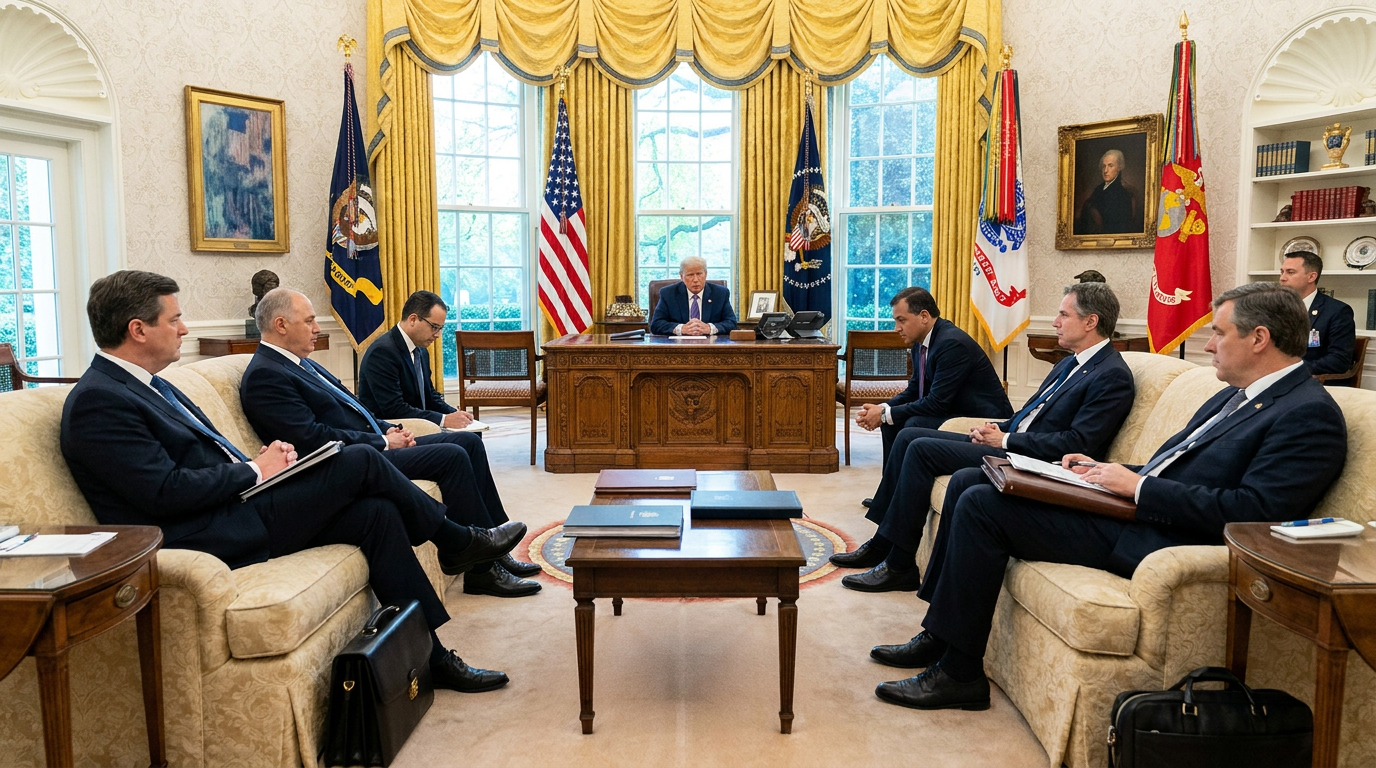
The immediate catalyst for the de-escalation appears to be a flurry of back-channel negotiations brokered by Pakistan, Qatar, and Turkey. Just hours before American bombers were scheduled to strike vital targets—including Iran's critical Kharg Island oil facility—mediators reported significant progress in securing Iranian concessions. Trump, who had publicly warned of 'very hard' strikes, reversed course, telling reporters in the Oval Office that the Iranian leadership had taken a 'pounding' and was finally ready to make a deal to end the hostilities.[2][4]
The emerging framework centers on a 60-day ceasefire extension designed to facilitate broader negotiations. According to diplomatic sources, the cornerstone of the immediate agreement requires Iran to safely reopen the Strait of Hormuz to international shipping without imposing tolls. In exchange, the United States would initiate a phased, performance-based unfreezing of Iranian financial assets and a gradual lifting of sanctions on petrochemical products. This two-month window would serve as a cooling-off period while diplomats tackle the far more complex issue of Iran's nuclear enrichment program.[3][4]

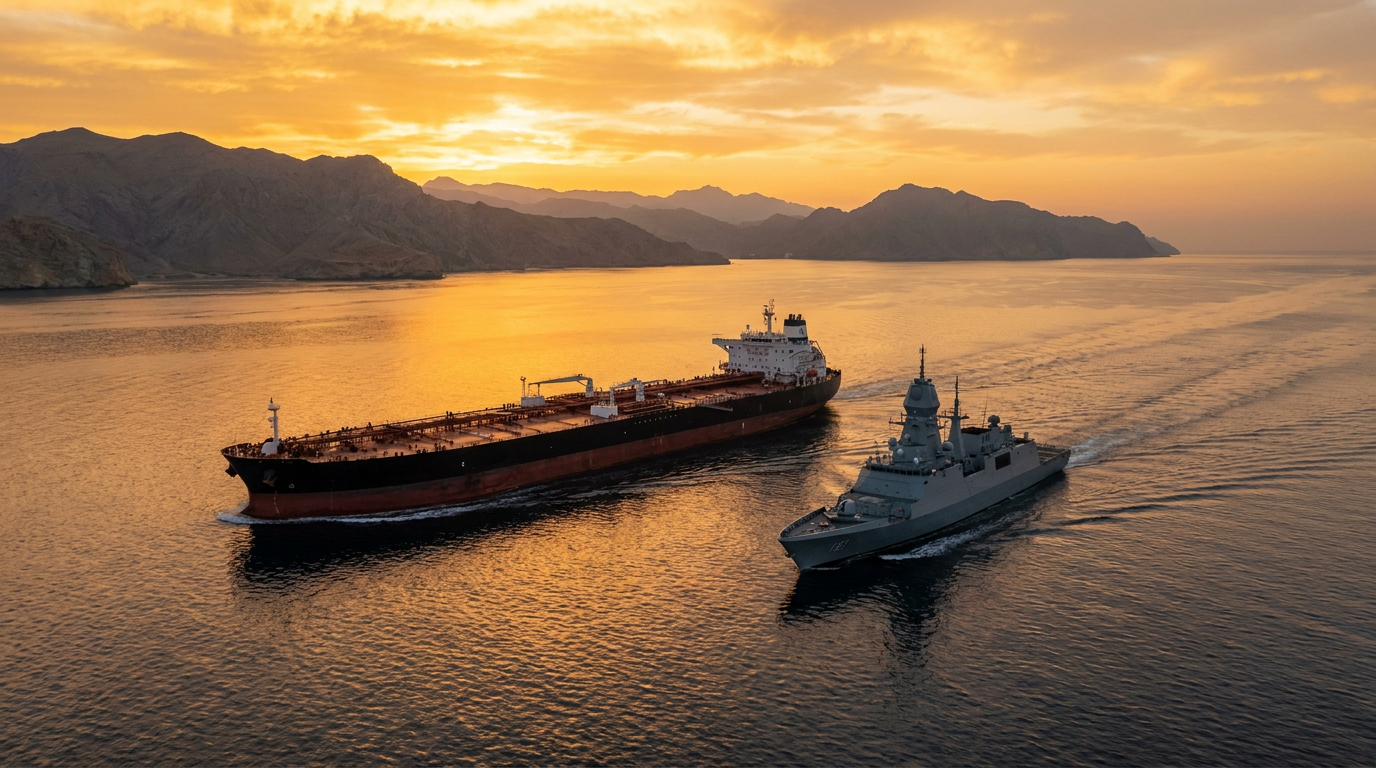
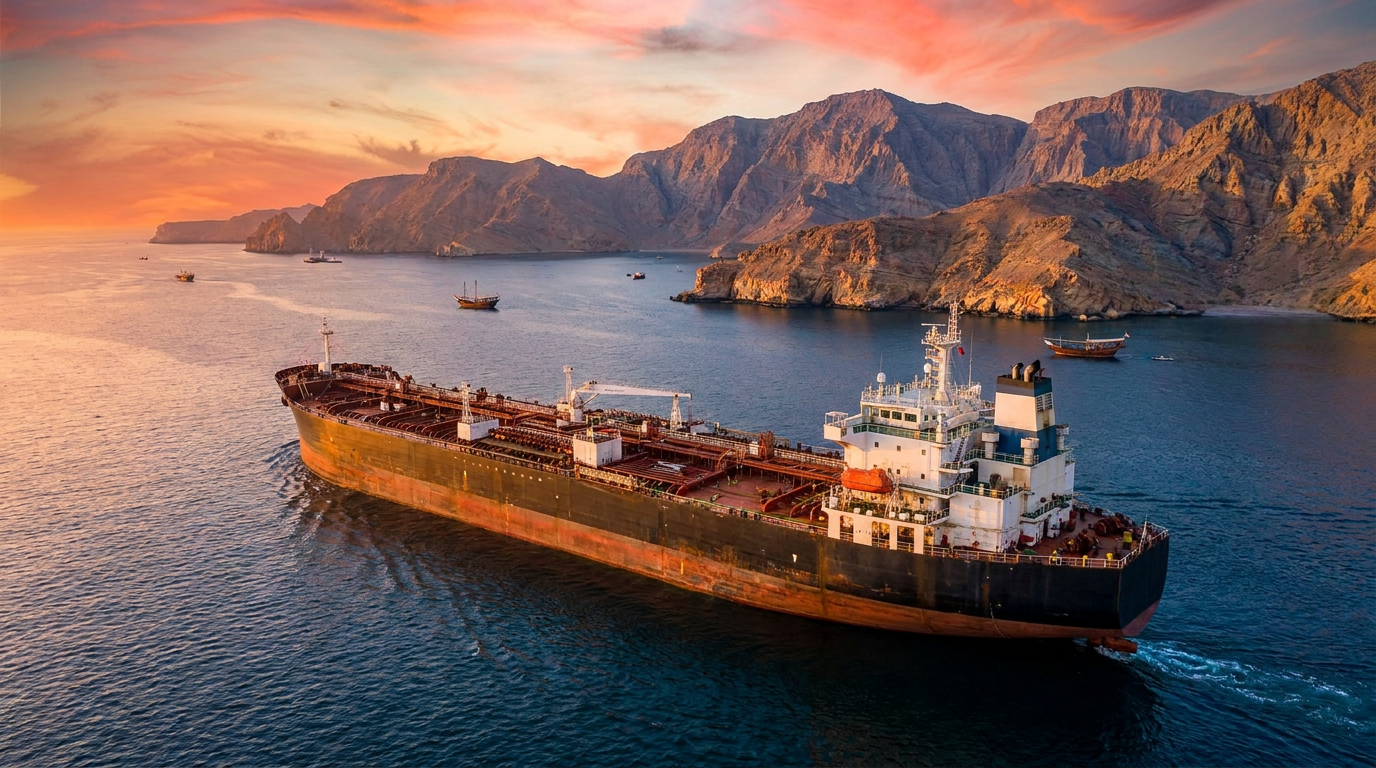
For the White House, the push for a diplomatic off-ramp is heavily influenced by domestic economic pressures. Since the war began in late February, the closure of the Strait of Hormuz—a maritime chokepoint that typically handles 20 percent of the world's crude oil—has sent energy markets into a tailspin. Global benchmark Brent crude has surged past $100 a barrel, driving the U.S. national average for gasoline above $4 a gallon. With the November midterm elections approaching, the administration faces mounting pressure to stabilize inflation and avoid a prolonged, unpopular overseas entanglement.[6][7]
The Iranian regime, meanwhile, is navigating its own existential crisis. While Tehran can claim a measure of victory simply by surviving the initial U.S. and Israeli military onslaught, the country's economy has been pushed to the brink of collapse by the blockade and relentless bombardments. Securing access to frozen capital and resuming oil exports are critical for the government's survival. However, Iranian officials must balance these economic imperatives against the optics of capitulating to American demands, leading to a complex domestic messaging strategy.[1][7]
The Iranian regime, meanwhile, is navigating its own existential crisis.
This tension erupted into public view when Iranian state media, including the semi-official Mehr News Agency, leaked what it claimed was a 14-point draft of the agreement. The Iranian broadcast asserted that the United States had agreed to release $24 billion in frozen assets, with half of that amount delivered upfront before further nuclear talks commence. The leak also claimed that Washington had committed to withdrawing its combat forces from the immediate vicinity of Iran and ending its intervention in the country's internal affairs.[4][5]

President Trump immediately pushed back against the Iranian narrative, taking to his Truth Social platform to dismiss the leaked terms as 'false information.' The president accused Tehran of negotiating in bad faith, insisting that the actual written agreement bears no resemblance to the Mehr report. According to U.S. officials, the sanctions relief will be strictly performance-based, meaning Iran will not receive any financial windfall until the International Atomic Energy Agency verifies its compliance with the initial ceasefire terms and maritime commitments.[2][5]
The most formidable hurdle remains Iran's nuclear ambitions. The current memorandum of understanding does not definitively dismantle the country's nuclear infrastructure; rather, it establishes a 60-day framework to negotiate the disposal of Iran's highly enriched uranium stockpile. The United States is demanding that all nuclear materials be destroyed or removed from the country, a condition Tehran has historically resisted. Whether the two sides can bridge this gap without the leverage of active military strikes remains the central question of the ongoing peace process.[3][4]

The diplomatic maneuvering is being closely monitored in Israel, which partnered with the U.S. to launch the initial operations in February. Israeli Defense Minister Israel Katz stated that Jerusalem expects the final agreement to permanently block Iran from obtaining a nuclear weapon. Furthermore, the conflict's secondary fronts remain highly volatile. Fighting between Israeli forces and Iranian-backed Hezbollah militants in Lebanon has intensified, and it remains unclear whether the U.S.-Iran ceasefire will effectively silence the guns along Israel's northern border.[4][5]
Despite the public friction over the exact terms, momentum toward a formal signing ceremony is accelerating. Pakistani officials have stated that a 'final, agreed upon text' has been reached, and Trump has floated the possibility of dispatching Vice President JD Vance to Europe this weekend to formalize the accord. While Iranian diplomats caution that they have 'not reached a final conclusion,' the sheer economic and political exhaustion on both sides suggests that the off-ramp is finally within reach for the warring nations.[2][4]
How we got here
Feb 28, 2026
The U.S. and Israel launch joint military operations against Iran.
March 2026
Iran closes the Strait of Hormuz, sending global oil prices soaring.
April 7, 2026
A temporary two-week ceasefire is brokered but eventually breaks down.
June 11, 2026
President Trump cancels a new wave of strikes, announcing a deal is close.
June 13, 2026
Mediators report a final text has been reached, though public disagreements over terms remain.
Viewpoints in depth
U.S. Administration's view
Seeking a diplomatic victory and economic stabilization ahead of midterms while maintaining a hardline stance on nuclear deterrence.
For the White House, the war has reached a point of diminishing returns. While the administration touts the destruction of Iranian military assets as a historic victory, the resulting economic fallout—specifically $4-a-gallon gasoline and $100-a-barrel oil—poses a severe threat to Republican prospects in the November midterms. By securing an agreement that reopens the Strait of Hormuz, the administration hopes to stabilize global markets and claim a definitive foreign policy win. However, U.S. officials remain adamant that any sanctions relief will be strictly tied to verifiable rollbacks of Iran's nuclear program.
Iranian Leadership's view
Looking for sanctions relief and economic survival while preserving domestic strength and regional influence.
Tehran's primary objective is regime survival. The combination of intense military strikes and crippling economic sanctions has pushed the country to the brink. Reopening the Strait of Hormuz is a concession Iran is willing to make if it guarantees the unfreezing of billions of dollars in assets necessary to stabilize its domestic economy. To sell the deal to its hardline domestic base, Iranian state media has emphasized the financial windfall and framed the U.S. willingness to negotiate as a capitulation to Iranian resilience.
Israeli Defense Establishment's view
Demanding absolute guarantees that Iran's nuclear program is dismantled and its proxy networks are neutralized.
Israel views the ceasefire with cautious skepticism. Having partnered with the U.S. to initiate the conflict, Israeli defense officials are demanding that any final agreement permanently neutralizes Iran's ability to develop a nuclear weapon. Furthermore, Israel remains deeply concerned about the broader regional implications, particularly the ongoing threat posed by Iranian-backed Hezbollah forces in Lebanon. For Jerusalem, a deal that enriches Iran without dismantling its proxy networks is viewed as a strategic failure.
What we don't know
- Whether Iran's Supreme Leader has officially signed off on the agreement.
- The exact mechanisms for verifying the dismantling of Iran's nuclear enrichment program.
- How Israel will respond if the final deal does not meet its security demands regarding Hezbollah in Lebanon.
Key terms
- Strait of Hormuz
- A vital maritime chokepoint between the Persian Gulf and the Gulf of Oman, through which roughly 20% of the world's oil supply passes.
- Memorandum of Understanding (MOU)
- A formal agreement between two or more parties that establishes a framework for future negotiations, though often not legally binding.
- Sanctions Relief
- The removal or suspension of economic penalties, allowing a country to resume international trade and access frozen financial assets.
- Highly Enriched Uranium
- Uranium that has been processed to a concentration high enough to be used in nuclear weapons, a central focus of the U.S.-Iran negotiations.
Frequently asked
Is the war officially over?
Not yet. The current framework is a memorandum of understanding for a 60-day ceasefire, during which a permanent peace treaty will be negotiated.
Why did oil prices spike?
The conflict led to the closure of the Strait of Hormuz, a critical shipping lane that handles roughly 20% of the world's crude oil supply.
What happens to Iran's nuclear program?
The proposed deal creates a 60-day window for the U.S. and Iran to negotiate the disposal of Iran's highly enriched uranium and the dismantling of its nuclear infrastructure.
Will Iran receive $24 billion?
Iranian state media claims the funds will be released upfront, but U.S. officials insist any sanctions relief will be strictly performance-based.
Sources
Source coverage
7 outlets
4 viewpoints surfaced







[1]Al JazeeraIranian Leadership
Trump seeks 'off-ramp' from war in 'Iran deal'
Read on Al Jazeera →[2]PBSU.S. Administration
Trump is raising expectations that this time he really will close deal with Iran to wind down war
Read on PBS →[3]AxiosU.S. Administration
What's in the Iran deal Trump says he's ready to sign
Read on Axios →[4]CBS NewsGlobal Mediators & Analysts
Live Updates: 'Final, agreed upon text' of U.S.-Iran peace deal has been reached, Pakistan says
Read on CBS News →[5]The Jerusalem PostIsraeli Defense Establishment
Donald Trump claims Iran leaked false information on peace deal terms
Read on The Jerusalem Post →[6]Chatham HouseGlobal Mediators & Analysts
Trump has an incentive to strike a deal with Iran, as midterms approach. But at what cost?
Read on Chatham House →[7]Arab Center Washington DCGlobal Mediators & Analysts
The Iran War: Is Trump Looking for Exit Ramps or Escalation?
Read on Arab Center Washington DC →
More in news politics
See all 5 stories →Middle East Diplomacy
US and Iran Near Interim Agreement to Halt Hostilities: What the Deal Contains
0 sources
Union Contracts
House Passes Sweeping Labor Bill Mandating Strict Timelines for First Union Contracts
0 sources
US-Iran Deal
US and Iran on the Brink of Historic Interim Peace Agreement to End War
0 sources
Every angle. Every day.
Get news politics stories with full source coverage and perspective breakdowns delivered to your inbox.