
The Strait of Hormuz Chokepoint: Why the Iran Conflict is Reigniting Global Inflation
As the conflict in Iran chokes off the Strait of Hormuz, surging energy costs have pushed US inflation to 4.2% and forced the European Central Bank to hike interest rates.
By Factlen Editorial Team
- Energy & Trade Analysts
- Industry experts warning of the asymmetrical economic risks of a prolonged chokepoint closure.
- Monetary Hawks
- Central bankers arguing that the inflation shock is structural and requires sustained high interest rates.
- Regional Governments & Observers
- Gulf nations prioritizing physical security and de-escalation while navigating strict international sanctions.
What's not represented
- · Consumer advocacy groups facing higher fuel and food costs
- · Aviation industry executives managing jet fuel shortages
Why this matters
The near-closure of the world's most critical energy chokepoint is fundamentally altering the global economic outlook. The resulting supply shock is driving up the cost of fuel, food, and manufactured goods, forcing central banks to maintain higher interest rates that will increase the cost of borrowing for consumers and businesses alike.
Key points
- The near-closure of the Strait of Hormuz has curtailed 11 million barrels of oil per day and 20% of global LNG.
- Energy shortages have driven US consumer price inflation to 4.2%, the highest level since April 2023.
- The European Central Bank raised its deposit rate to 2.25% to combat the persistent energy supply shock.
- The UAE categorically denied reports that it agreed to unfreeze up to $20 billion in Iranian assets to halt regional attacks.
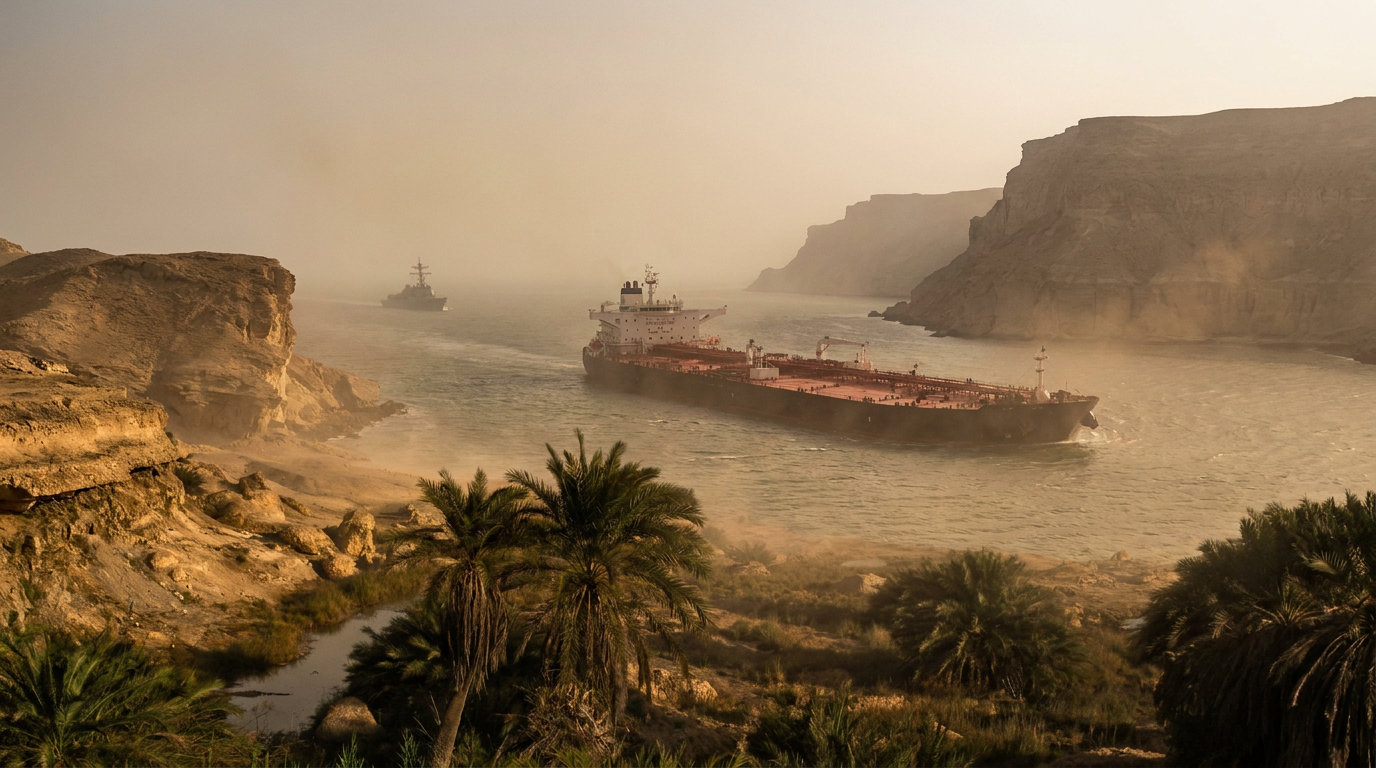
The global economy is facing its most severe energy supply shock in decades as the ongoing conflict involving Iran severely restricts commercial transit through the Strait of Hormuz. Despite sustained efforts by the United States military and allied naval forces to secure the critical waterway, commercial shipping volumes remain a mere fraction of their pre-war levels. The prolonged near-closure of the strait has choked off one of the world's most vital economic arteries, sending shockwaves through global commodity markets and fundamentally altering the macroeconomic outlook for the remainder of the decade.[1]
The economic fallout from the chokepoint is no longer a theoretical forecast—it is actively reshaping global finance and squeezing consumers. In the United States, year-over-year consumer price inflation surged to 4.2% in May 2026, marking the highest level recorded since April 2023. This inflationary spike was driven overwhelmingly by the soaring cost of energy, which has cascaded into higher prices for food and manufactured goods. The data confirms that the American economy, despite its relative energy independence, cannot fully insulate itself from a global supply contraction of this magnitude.[7]
Across the Atlantic, the European Central Bank was forced to take decisive action, raising its deposit rate to 2.25% on June 11 to combat the energy-driven price spike. The move marks a stark reversal from the rate cuts that financial markets had confidently anticipated earlier in the year, underscoring how geopolitical volatility is now dictating monetary policy. Policymakers in Frankfurt concluded that the inflation shock was too severe to ignore, prioritizing price stability even as higher borrowing costs threaten to stifle broader economic growth across the Eurozone.[3][8]
The Strait of Hormuz is arguably the single most critical vulnerability in the global energy infrastructure, and the sheer scale of the current disruption is unprecedented. At present, energy analysts estimate that more than 11 million barrels per day of Gulf crude and condensate production are curtailed. This massive volume of shut-in production has rapidly depleted global strategic reserves and left importing nations scrambling to secure alternative, often more expensive, sources of fuel to keep their economies running.[5]

Crucially, the disruption extends far beyond crude oil, creating a cascading crisis across multiple industrial sectors. Approximately 20% of the world's liquefied natural gas (LNG) supply is currently inaccessible to global markets due to the blockade. This creates a severe "bottleneck amplifier" effect that ripples through heavy industry, agriculture, and manufacturing, proving that the modern economy's reliance on the Middle East goes much deeper than the gasoline pumped into passenger vehicles.[5][6]
Natural gas and oil serve as the foundational feedstocks for the modern industrial world. A shortage of LNG directly impacts the production of ammonia and nitrogen fertilizers, threatening global crop yields and driving up food prices. Simultaneously, constrained oil supplies squeeze the availability of naphtha, a crucial component in the manufacturing of plastics and petrochemicals. Furthermore, specialized refined products like jet fuel have no viable short-term substitutes, meaning the aviation and global logistics sectors must absorb the price shocks immediately, passing those costs onto consumers.[6]
Central bankers are increasingly warning that the global economy may not simply snap back to its previous state once the shooting stops. Bundesbank President Joachim Nagel has explicitly cautioned that prices are likely to remain elevated for an extended period, even if a comprehensive peace agreement is reached quickly. He argues that the era of cheap, frictionless energy transit through the Persian Gulf may be permanently over, requiring a fundamental reassessment of long-term inflation targets.[3]
Central bankers are increasingly warning that the global economy may not simply snap back to its previous state once the shooting stops.
According to Nagel and other monetary hawks, global supply chains have fundamentally shifted in response to the vulnerability exposed by the conflict. The risk premiums associated with Middle Eastern transit will remain permanently higher, as shipping companies and insurers price in the persistent threat of future disruptions. Maritime war-risk insurance for vessels attempting to navigate the strait has already climbed by up to 50%, adding massive, unavoidable overhead to the baseline cost of global shipping.[3][6]

"The supply shock triggered by the war in the Middle East is proving to be strong and persistent," Nagel noted following the ECB's rate decision, adding that central banks cannot simply look through the crisis. He emphasized that the ECB is keeping all of its options open for another potential rate hike in July, a necessary precaution to ensure that long-term inflation expectations do not become permanently unanchored among businesses and consumers.[3]
Behind the scenes, regional powers are reportedly engaging in desperate, high-stakes financial diplomacy to secure their own borders and protect their economic infrastructure. On June 12, Reuters reported that the United Arab Emirates had agreed to a massive financial concession, allegedly moving to unlock between $10 billion and $20 billion in frozen Iranian assets in a bid to shield itself from the widening conflict.[4]
According to the exclusive report, the funds—which primarily consisted of long-frozen payments for Iranian oil exports—were to be released in exchange for Iran halting its missile and drone attacks on Emirati territory. The sources claimed that the arrangement was viewed as a tactical pivot by Abu Dhabi to protect Dubai's status as a premier global business hub, with an initial $3 billion tranche allegedly already transferred to Tehran.[4]
The UAE government, however, swiftly issued a forceful and categorical denial of the reported arrangement. The UAE Foreign Ministry labeled the claims "entirely false and unfounded," insisting that no frozen Iranian funds had been released, transferred, or facilitated through Emirati financial channels. Officials reiterated that the nation's foreign policy is focused on de-escalation and sustainable peace, not secret financial concessions.[2][4]
This public dispute highlights the intense diplomatic sensitivity surrounding sanctions relief and regional security. Gulf states are attempting to navigate the volatile endgame of the conflict, balancing the immediate need to protect their physical infrastructure from attack against the risk of alienating Washington or violating strict international financial sanctions that govern the global dollar-clearing system.[4]
Looking ahead, energy analysts warn of asymmetrical and potentially devastating risks if the diplomatic stalemate drags on. Under a moderate "Summer Settlement" scenario, where the strait remains largely closed until September before gradually reopening, the global economy would likely tip into a shallow recession in the second half of 2026, leaving permanent economic scarring compared to the pre-war baseline.[5]

However, if the disruption extends through the end of the year, the macroeconomic consequences could be catastrophic. Industry projections warn that Brent crude could approach $200 per barrel, driving diesel and jet fuel prices to unprecedented highs. Such a scenario would trigger severe economic contractions, potentially shrinking the European Union's GDP by 1.5% and plunging the Middle East into a deep, double-digit recession.[5]
How we got here
Feb 2026
Conflict escalates, leading to the near-closure of the Strait of Hormuz to commercial shipping.
May 2026
US consumer price inflation surges to 4.2%, the highest level in three years, driven by energy costs.
June 11, 2026
The European Central Bank raises its deposit rate to 2.25% to combat the persistent energy supply shock.
June 12, 2026
The UAE categorically denies reports that it agreed to unfreeze billions in Iranian assets to halt regional attacks.
Viewpoints in depth
Monetary Hawks
Central bankers arguing that the inflation shock is structural and requires sustained high interest rates.
Policymakers like Bundesbank President Joachim Nagel believe the global supply chain has fundamentally shifted. They argue that even a swift end to the conflict will not erase the newly established risk premiums on shipping and energy transit. Consequently, they maintain that central banks must keep borrowing costs elevated to prevent inflation expectations from permanently unanchoring, even if it risks slowing broader economic growth.
Energy Market Analysts
Industry experts warning of the asymmetrical economic risks of a prolonged chokepoint closure.
Analysts at firms like Wood Mackenzie emphasize the 'bottleneck amplifier' effect of the Strait of Hormuz. They point out that the crisis extends far beyond crude oil, severely restricting the global supply of LNG, fertilizers, and petrochemical feedstocks. Their models suggest that if the disruption extends through the end of 2026, Brent crude could approach $200 per barrel, triggering a severe global recession and unprecedented spikes in aviation and logistics costs.
Gulf Diplomats
Regional governments prioritizing physical security and de-escalation while navigating strict international sanctions.
For nations like the UAE, the primary objective is shielding their domestic infrastructure and status as global business hubs from the widening conflict. While reports frequently surface regarding back-channel financial concessions—such as unfreezing Iranian assets in exchange for peace—these governments publicly deny such arrangements. They must carefully balance the urgent need for regional de-escalation against the severe consequences of violating US-led financial sanctions.
What we don't know
- Whether the European Central Bank will implement another interest rate hike in July.
- How long the Strait of Hormuz will remain effectively closed to normal commercial shipping volumes.
- The true origin of the funds discussed in the disputed UAE-Iran financial arrangement reports.
Key terms
- Strait of Hormuz
- A narrow waterway between the Persian Gulf and the Gulf of Oman, serving as the world's most critical chokepoint for oil and natural gas transit.
- Naphtha
- A flammable liquid hydrocarbon mixture derived from petroleum, used heavily as a feedstock for producing plastics and petrochemicals.
- Deposit Rate
- The interest rate banks receive for depositing money with a central bank overnight, used as a primary tool to control inflation.
- Risk Premium
- The additional return or cost required by investors and insurers to compensate for the increased danger of operating in a conflict zone.
Frequently asked
Why is the Strait of Hormuz so important to the economy?
It is the primary transit route for Middle Eastern energy, carrying roughly 20% of the world's liquefied natural gas and millions of barrels of oil daily.
Will oil prices go back down when the war ends?
Central bankers warn that prices may remain elevated long-term, as global supply chains have fundamentally shifted and shipping risk premiums remain high.
Did the UAE pay Iran to stop attacks?
Reuters reported that the UAE agreed to unfreeze up to $20 billion in Iranian assets for peace, but the UAE government has categorically denied the claim.
Sources
Source coverage
8 outlets
3 viewpoints surfaced







[1]The New York TimesRegional Governments & Observers
Despite US Help, Little Oil Has Gone Through Strait of Hormuz
Read on The New York Times →[2]CNBCRegional Governments & Observers
UAE denies 'false' reports of fund transfer to Iran
Read on CNBC →[3]BloombergMonetary Hawks
Prices Likely to Stay Higher Even If Conflict Ends, Nagel Says
Read on Bloomberg →[4]ReutersRegional Governments & Observers
Exclusive-UAE to unlock billions of dollars for Iran, sources say
Read on Reuters →[5]Wood MackenzieEnergy & Trade Analysts
Strait of Hormuz closure risks greatest global energy supply shock in decades
Read on Wood Mackenzie →[6]IntereconomicsEnergy & Trade Analysts
A Critical-Inputs Playbook: What the Strait of Hormuz Tells Europe
Read on Intereconomics →[7]American Action ForumEnergy & Trade Analysts
The Oil Problem – Higher Inflation and Lower Growth
Read on American Action Forum →[8]CaixaBank ResearchMonetary Hawks
The financial conditions behind the economic scenario in 2026
Read on CaixaBank Research →

Every angle. Every day.
Get business stories with full source coverage and perspective breakdowns delivered to your inbox.