
The Solid-State Battery Era Arrives: How 2026 Became the Tipping Point for EV Tech
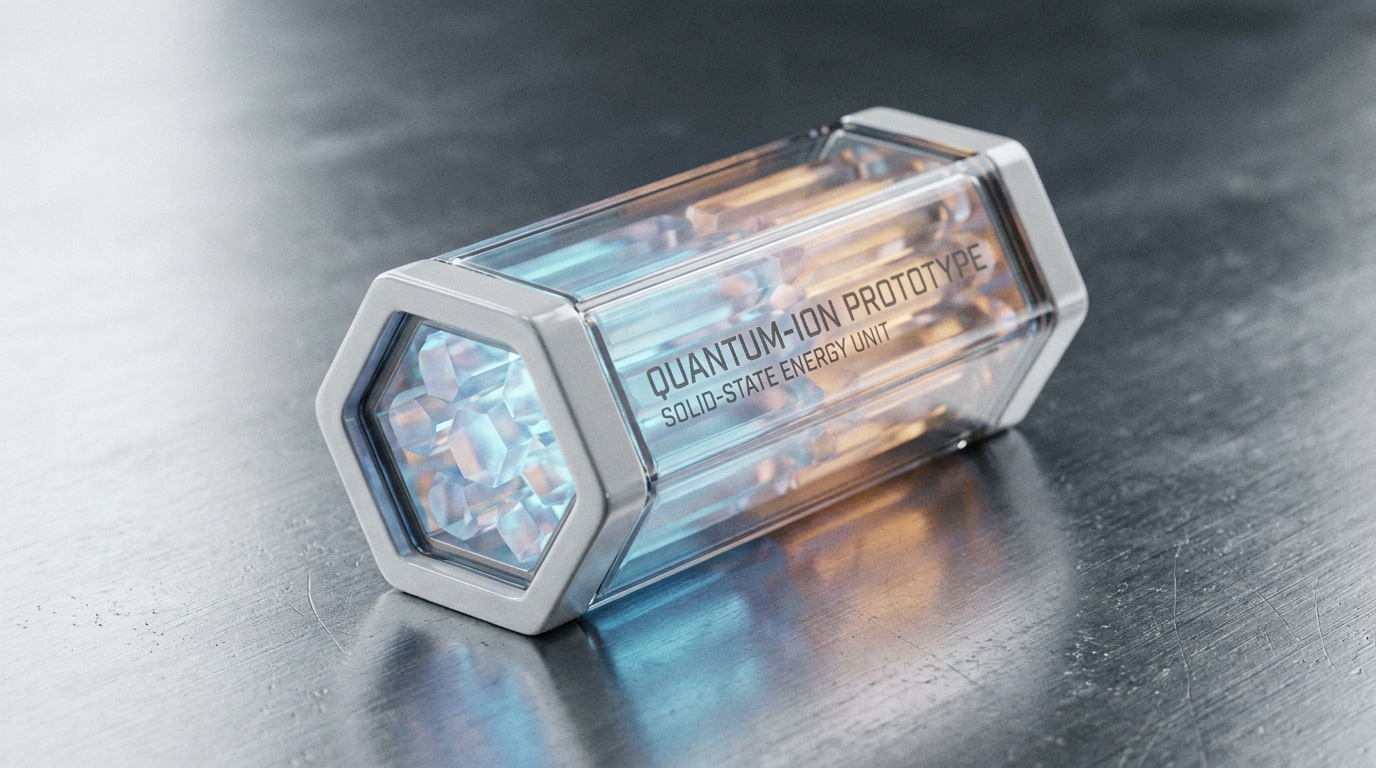
After years of laboratory development, solid-state batteries are finally entering pilot production in 2026, promising to double electric vehicle range and eliminate fire risks.
By Factlen Editorial Team
- Technology Innovators
- Startups and developers focused on the immediate performance leaps of solid-state chemistry.
- Legacy Automakers
- Established car manufacturers prioritizing safety, durability, and massive scale.
- Market Realists
- Industry analysts focused on the economic hurdles of displacing cheap lithium-ion.
What's not represented
- · Lithium Mining Industry
- · Battery Recycling Sector
Why this matters
Solid-state batteries represent a generational leap in energy storage. By doubling the range of electric vehicles and eliminating the risk of battery fires, this technology removes the final major hurdles to mass EV adoption and opens the door for electric aviation.
Key points
- Solid-state batteries replace flammable liquid electrolytes with solid materials, virtually eliminating the risk of battery fires.
- The technology allows for pure lithium-metal anodes, pushing energy density to 400–500 Wh/kg—nearly double that of current EVs.
- Major developers like QuantumScape and GBT have launched pilot production lines in 2026 to supply automakers with test cells.
- While premium EVs and motorcycles will see the technology first, mass-market adoption is expected closer to 2030 due to initial manufacturing costs.
For the better part of a decade, the solid-state battery has been the electric vehicle industry's white whale—a mythical technological "holy grail" perpetually promised to be just five years away. Automakers and startups alike have touted its potential to solve every major complaint about electric vehicles, from range anxiety to charging times to safety concerns. Yet, year after year, the technology remained trapped in research laboratories, struggling to overcome the immense engineering challenges of mass manufacturing. But in 2026, the narrative has definitively shifted from laboratory hype to factory reality. The transition marks what could be the most significant leap in commercial energy storage since the introduction of the rechargeable lithium-ion battery in the early 1990s.[7]
Across the globe, from Silicon Valley to Guangzhou, next-generation battery cells are rolling off pilot production lines and into early commercial vehicles. To understand why this matters, one must look inside the battery. Traditional lithium-ion batteries rely on a liquid electrolyte—a chemical soup that shuttles lithium ions back and forth between the anode and the cathode during charging and discharging. While highly effective and relatively cheap to produce, this liquid comes with severe compromises. It is highly flammable, meaning that if a cell is punctured in a crash or overheats during rapid charging, it can ignite, causing a dangerous chain reaction known as thermal runaway.[6][7]
Solid-state batteries replace this volatile liquid with a solid separator, typically made of advanced ceramics, polymers, or sulfides. This simple architectural swap fundamentally alters the battery's safety profile. Because the solid material is inherently non-flammable, the risk of catastrophic battery fires is virtually eliminated, even under extreme stress, high temperatures, or physical damage. This intrinsic safety allows engineers to rethink how battery packs are designed, stripping away the heavy, expensive cooling systems and protective armor currently required in modern electric vehicles.[6][7]

But safety is only half the equation; the true prize driving billions of dollars in investment is energy density. In traditional liquid batteries, engineers are forced to use graphite anodes because pure lithium metal reacts poorly with the liquid. When charged rapidly, a liquid battery can grow microscopic, needle-like metallic structures called dendrites. Over time, these dendrites can pierce the battery's internal separator, causing a short circuit and sparking a fire. The liquid essentially limits how much energy the battery can safely hold.[6]
A solid separator acts as a physical wall, suppressing dendrite growth. This allows manufacturers to finally use pure lithium-metal anodes without the risk of short circuits. The result is a massive leap in energy density—the amount of power a battery can hold relative to its physical weight and size. Today's best lithium-ion cells max out around 250 to 260 watt-hours per kilogram (Wh/kg). The solid-state cells entering pilot production in 2026 are hitting 400 to 500 Wh/kg.[1][6]

For drivers, this mathematical leap translates to a transformative real-world experience. An electric vehicle equipped with a solid-state battery could travel over 600 miles (1,000 kilometers) on a single charge. Alternatively, automakers could choose to maintain today's standard 300-mile range while shrinking the battery pack by half, shedding hundreds of pounds of weight. This weight reduction would make vehicles more efficient, improve handling, and reduce wear on tires and roads.[2][5]
For drivers, this mathematical leap translates to a transformative real-world experience.
Charging speeds are also seeing a paradigm shift. Because solid-state cells are vastly more resistant to heat, they can accept massive amounts of electrical current without degrading the battery's internal chemistry. Companies like QuantumScape and Greater Bay Technology (GBT) have demonstrated cells capable of charging from 10 percent to 80 percent capacity in under 15 minutes. This brings the electric vehicle charging experience remarkably close to the time it takes to pump a tank of gas, effectively eliminating the inconvenience of long road-trip stops.[1][2]
The race to commercialize this technology has accelerated dramatically in early 2026. In California, QuantumScape inaugurated its "Eagle Line," a highly automated pilot facility designed to produce solid-state cells for automotive testing and beyond. The company is actively sampling its technology with top-tier global automakers, proving that its flexible ceramic separator can be manufactured consistently at scale. The Eagle Line represents a critical bridge between building single cells in a lab and churning out millions of units in a gigafactory.[1][3]
Meanwhile, China is executing an aggressive, state-backed push toward mass production. GBT, backed by the automotive giant GAC Group, announced that its A-sample all-solid-state cells have successfully rolled off the production line. The company is targeting gigawatt-hour-level mass production by late 2026 or 2027, aiming to dominate the early global supply chain. Their cells have reportedly passed stringent needle penetration and thermal shock tests without a single fire or explosion, validating the safety claims of solid-state chemistry.[2]
The technology is already hitting the road in niche, high-performance applications. At the 2026 Consumer Electronics Show, battery startup Donut Lab announced that its solid-state cells are powering the 2026 model year of Verge Motorcycles. This marks one of the first true commercial deployments of the technology in a consumer vehicle. Motorcycles, which have strict space and weight constraints, are the perfect early proving ground for the high energy density that solid-state cells provide.[4]

Legacy automakers are taking a more methodical, long-term approach to integration. Toyota, which holds over 1,000 patents related to solid-state technology—more than any other company in the world—is targeting 2027 to 2028 for its first consumer-ready solid-state passenger vehicles. Their focus remains on ensuring the cells can survive hundreds of thousands of miles of real-world abuse, extreme weather fluctuations, and decades of vibration before scaling up to millions of vehicles.[5]
Despite the undeniable breakthroughs, a significant hurdle remains before solid-state batteries can take over the world: cost. Traditional lithium-ion battery prices have plummeted in recent years due to massive economies of scale, with some cell costs dropping near $60 per kilowatt-hour. Early solid-state batteries will carry a substantial premium, meaning they will initially be reserved for luxury electric vehicles, high-performance sports cars, and specialized commercial applications where buyers are willing to pay for peak performance.[6][7]
Because of this cost dynamic, battery developers are looking beyond the automotive sector to build early revenue streams. QuantumScape, for instance, is actively adapting its graphite-free, solid-state cells for defense aerospace, commercial drones, and artificial intelligence data centers. In these industries, extreme energy density and absolute fire safety easily justify a higher price tag, providing battery startups with a financial runway while they scale up automotive production.[1][3]

The era of the solid-state battery has officially begun, marking a turning point in the global energy transition. However, the shift will not happen overnight. The next few years will be defined by a trickle-down effect: starting in premium niches and two-wheeled vehicles in 2026, expanding to high-end passenger cars by 2028, and ultimately reaching the mass market as manufacturing scales and costs fall by the end of the decade. For the electric vehicle industry, the holy grail is finally within reach.[7]
How we got here
1991
Sony commercializes the first rechargeable lithium-ion battery, revolutionizing portable electronics.
2010s
Automakers adopt lithium-ion technology for mass-market EVs, but face limitations with range and fire safety.
2020
Toyota and QuantumScape unveil early solid-state prototypes, proving the chemistry works in the lab.
Early 2026
QuantumScape inaugurates its 'Eagle Line' pilot facility; Donut Lab deploys solid-state cells in commercial motorcycles.
2027–2028
Major automakers, including Toyota and GAC, target the launch of their first solid-state passenger vehicles.
Viewpoints in depth
Technology Innovators
Startups and developers focused on the immediate performance leaps of solid-state chemistry.
Companies like QuantumScape and Donut Lab argue that the fundamental science of solid-state batteries is now solved. Their focus is on proving that these cells can be manufactured at scale and deployed immediately in high-margin sectors like aviation, data centers, and premium motorcycles. They view 2026 as the definitive turning point where the technology transitions from R&D to commercial reality.
Legacy Automakers
Established car manufacturers prioritizing safety, durability, and massive scale.
Giants like Toyota and Volkswagen are taking a more measured approach. While they acknowledge the massive potential of solid-state technology, they emphasize that automotive-grade batteries must survive extreme weather, thousands of charging cycles, and decades of vibration. They are targeting the 2027–2028 window to ensure the manufacturing processes are flawless before putting the technology into consumer driveways.
Market Realists
Industry analysts focused on the economic hurdles of displacing lithium-ion.
Battery economists point out that traditional lithium-ion technology is a moving target. With lithium-ion cell costs dropping toward $60 per kWh, solid-state batteries will face a steep uphill battle to achieve price parity. These analysts argue that while solid-state will dominate the premium EV market, cheaper liquid or semi-solid chemistries will remain the standard for affordable, mass-market vehicles well into the 2030s.
What we don't know
- Exactly how quickly manufacturing costs can be reduced to match current lithium-ion prices.
- How the brittle ceramic separators will hold up to decades of physical vibration on rough roads.
- Whether the supply chain for pure lithium metal can scale fast enough to meet global automotive demand.
Key terms
- Solid-State Battery
- A battery that uses a solid material, rather than a liquid, to conduct ions between its internal electrodes.
- Electrolyte
- The medium inside a battery that allows electrical charge to flow between the cathode and anode.
- Dendrites
- Microscopic, needle-like metal structures that can grow inside liquid batteries, potentially causing short circuits and fires.
- Energy Density
- A measure of how much energy a battery can store relative to its weight, usually expressed in watt-hours per kilogram (Wh/kg).
- Thermal Runaway
- A dangerous chain reaction inside a damaged battery where excess heat causes adjacent cells to ignite, leading to a fire.
Frequently asked
Will solid-state batteries make EVs cheaper?
Not initially. Early solid-state batteries will be more expensive to manufacture than traditional lithium-ion cells. They will likely debut in premium vehicles before economies of scale bring prices down for the mass market.
Can I upgrade my current EV with a solid-state battery?
No. Solid-state batteries require different thermal management systems, software, and physical packaging, meaning they cannot be retrofitted into vehicles designed for liquid lithium-ion packs.
Are solid-state batteries completely fireproof?
While no energy storage device is entirely without risk, solid-state batteries eliminate the flammable liquid electrolyte, making them vastly safer and highly resistant to the thermal runaway fires associated with current EVs.
Why did this technology take so long to develop?
Engineers struggled for years to find solid materials that could conduct ions as efficiently as liquids at room temperature, while also developing manufacturing processes capable of producing these brittle ceramics at a massive scale.
Sources
Source coverage
7 outlets
3 viewpoints surfaced







[1]QuantumScapeTechnology Innovators
QS Blueprint for the Future of Energy Storage
Read on QuantumScape →[2]ElectrekTechnology Innovators
China ramps up solid-state EV battery production
Read on Electrek →[3]Battery TechnologyMarket Realists
QuantumScape Updates Solid-State Battery Strategy
Read on Battery Technology →[4]Donut LabTechnology Innovators
Donut Lab Introducing New High-Performance Solid State Batteries
Read on Donut Lab →[5]EV Infrastructure NewsLegacy Automakers
Toyota solid-state Battery timeline: production plans and lifespan projections
Read on EV Infrastructure News →[6]Bonnen BatteriesMarket Realists
Solid-State Batteries 2026 Update
Read on Bonnen Batteries →[7]Factlen Editorial TeamMarket Realists
Synthesis by Factlen editorial team
Read on Factlen Editorial Team →
Every angle. Every day.
Get transportation stories with full source coverage and perspective breakdowns delivered to your inbox.