
The Science of the Gut Microbiome: How Dietary Fiber and Fermented Foods Transform Human Health
Emerging research reveals that the trillions of microbes in our digestive tract act as a master control center for human health. By strategically consuming fiber and fermented foods, individuals can rapidly reshape their internal ecosystem to reduce inflammation and boost cognitive function.
By Factlen Editorial Team
- Clinical Microbiologists
- Focus on the specific biochemical mechanisms, genetic diversity, and metabolic outputs of gut bacteria.
- Nutritional Epidemiologists
- Analyze population-level data to link dietary patterns, like fiber intake, to long-term chronic disease outcomes.
- Gastroenterology Practitioners
- Translate microbiome science into actionable dietary guidelines for patients suffering from digestive and systemic issues.
- Factlen Editorial Synthesis
- Integrates clinical findings into an empowering, plain-language framework for everyday health optimization.
What's not represented
- · Commercial probiotic manufacturers
- · Agricultural producers of high-fiber crops
Why this matters
Understanding the gut microbiome shifts nutrition from a restrictive mindset of calorie-counting to an empowering focus on nourishing internal ecosystems. Because the microbiome responds to dietary changes in a matter of days, readers have immediate, actionable control over their metabolic, immune, and mental health.
Key points
- The human gut microbiome acts as a master control center, regulating digestion, immunity, and mental health.
- Dietary fiber acts as a prebiotic, feeding beneficial bacteria that produce anti-inflammatory short-chain fatty acids.
- Fermented foods like kimchi and kefir rapidly increase microbial diversity and lower systemic inflammation.
- The gut-brain axis connects digestive health directly to mood, with the gut producing 95% of the body's serotonin.
- Ultra-processed foods and emulsifiers disrupt the microbiome, while a diverse, plant-rich diet heals it.
For decades, the prevailing approach to human nutrition was largely mechanical, treating the body as a simple combustion engine where calories entered and energy was burned. That paradigm has undergone a radical transformation. Modern science has revealed that humans are not entirely human; we are complex ecosystems. The gastrointestinal tract hosts a bustling metropolis of bacteria, viruses, fungi, and archaea, collectively known as the gut microbiome. This internal ecosystem is now recognized as a master control center that dictates everything from how we extract nutrients to how our immune system responds to threats.[1][4]
The sheer scale of this microbial world is staggering. The average human gut contains approximately 38 trillion microbes, meaning that microbial cells actually outnumber human cells in the body. These microscopic residents possess millions of unique genes—vastly outnumbering the roughly 20,000 genes in the human genome. This genetic diversity equips the microbiome with the ability to perform complex biochemical functions that human cells simply cannot execute on their own, effectively acting as an acquired, highly adaptable organ.[1][4]
This paradigm shift fundamentally changes how we must think about food. When we eat, we are not just feeding ourselves; we are feeding our microbes. The composition of this microbial community is highly sensitive to the fuel it receives. A diet rich in diverse, whole foods cultivates a robust, diverse microbiome, while a diet heavy in ultra-processed foods starves beneficial bacteria and allows inflammatory strains to flourish. Understanding this dynamic offers an incredibly empowering tool for human health, moving the goalposts from restrictive dieting to additive nourishment.[5][7]
The primary mechanism by which we nourish our beneficial microbes is through the consumption of dietary fiber. For a long time, fiber was viewed merely as roughage—indigestible plant material that helped move waste through the digestive tract. However, nutritional science now understands fiber as a crucial prebiotic. Because human digestive enzymes cannot break down most complex carbohydrates, these fibers travel intact through the stomach and small intestine, arriving in the colon where they serve as the primary food source for our microbial residents.[3][5]
When beneficial gut bacteria ferment this dietary fiber, they produce highly beneficial byproducts known as short-chain fatty acids, or SCFAs. The most critical of these is butyrate. Butyrate serves as the primary energy source for colonocytes, the cells that line the colon. By keeping these cells well-fed and healthy, butyrate ensures that the intestinal barrier remains tight and impermeable, preventing toxins and undigested food particles from leaking into the bloodstream—a condition often referred to colloquially as 'leaky gut.'[1][6]

The benefits of short-chain fatty acids extend far beyond the walls of the colon. Once absorbed into the bloodstream, SCFAs travel throughout the body, acting as powerful anti-inflammatory signaling molecules. They communicate directly with the immune system, helping to regulate its response and prevent the chronic, low-grade inflammation that is a hallmark of numerous modern diseases, including type 2 diabetes, cardiovascular disease, and certain autoimmune conditions. In essence, fiber is the raw material that our microbes spin into systemic medicine.[1][3]
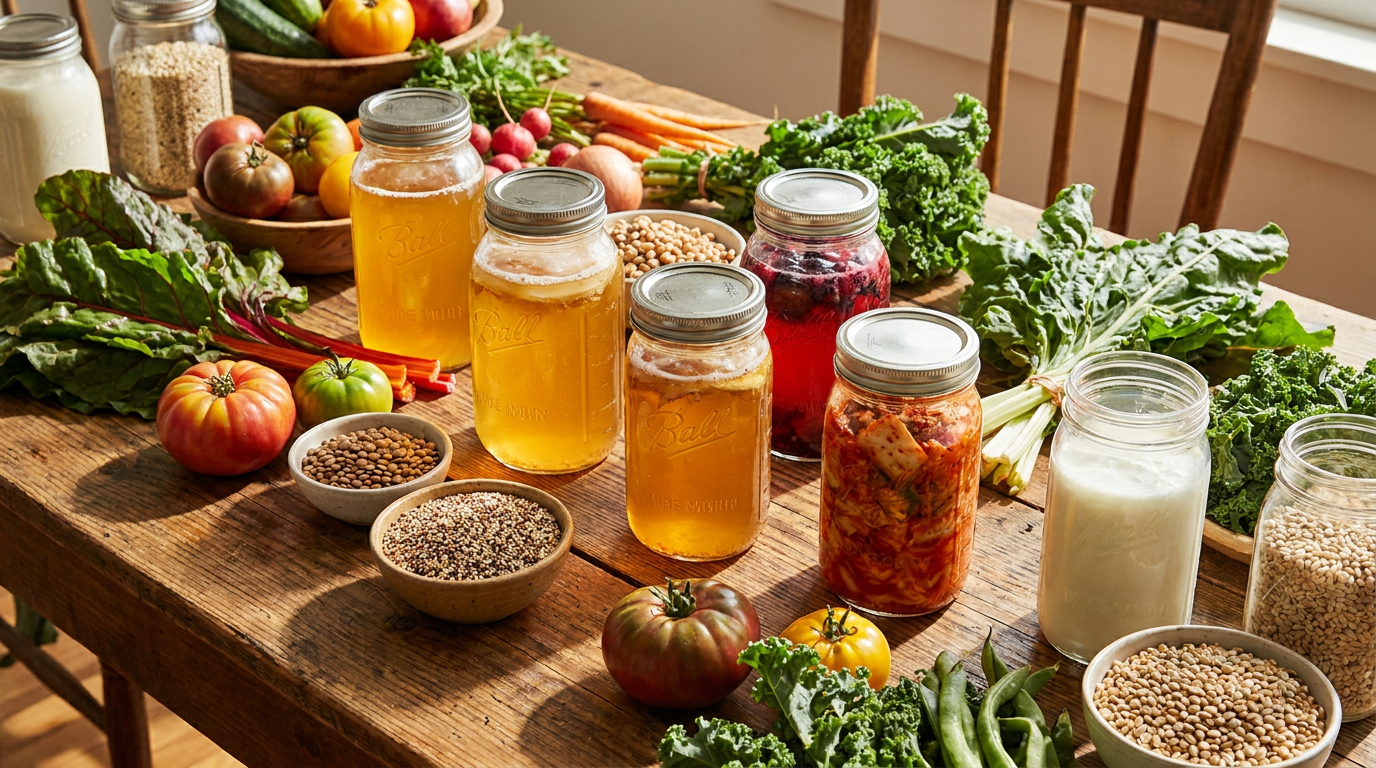
While fiber acts as the fertilizer for the gut ecosystem, fermented foods act as the seeds. Fermented foods—such as kefir, kimchi, kombucha, sauerkraut, and high-quality yogurt—are rich in live, beneficial cultures. Historically, fermentation was used primarily as a method of food preservation before the advent of refrigeration. Today, it is recognized as one of the most potent dietary interventions available for rapidly improving microbiome diversity and reducing systemic inflammation.[2][5]
A landmark clinical trial published in the journal Cell by researchers at Stanford University provided striking evidence of this effect. The study divided participants into two groups: one tasked with steadily increasing their intake of dietary fiber, and the other tasked with increasing their intake of fermented foods. The researchers then tracked the participants' microbiome composition and various markers of immune function over a 10-week period, expecting both diets to yield significant improvements.[2]
A landmark clinical trial published in the journal Cell by researchers at Stanford University provided striking evidence of this effect.
The results were surprising and highly illuminating. While the high-fiber diet altered microbiome function, it was the high-fermented food diet that led to a steady, significant increase in overall microbial diversity. Even more remarkably, the fermented food group saw a decrease in 19 distinct inflammatory proteins in their blood, including interleukin-6, a key driver of chronic inflammation. The study demonstrated that adding fermented foods to the diet provides a rapid, measurable upgrade to the immune system.[2][7]

Interestingly, the beneficial microbes consumed in fermented foods do not necessarily take up permanent residence in the gut. Instead, they act more like transient visitors or environmental engineers. As they pass through the digestive tract, they change the local environment—altering the pH, producing beneficial metabolites, and outcompeting harmful bacteria. This environmental shift creates hospitable conditions that allow the gut's native, beneficial species to flourish and multiply.[1][2]
The influence of the microbiome also extends upward, directly impacting the brain. This connection, known as the gut-brain axis, is a bidirectional communication network linking the enteric nervous system of the gut with the central nervous system of the brain. The primary superhighway for this communication is the vagus nerve, a long, wandering nerve that transmits signals rapidly between the two organs. What happens in the gut does not stay in the gut; it directly influences cognitive function and emotional well-being.[1][5]
One of the most profound discoveries in this field is the gut's role in neurotransmitter production. Approximately 95 percent of the body's serotonin—the neurotransmitter primarily responsible for regulating mood, anxiety, and happiness—is produced not in the brain, but in the gastrointestinal tract. Gut microbes play a crucial role in synthesizing the precursors to serotonin and other essential neurochemicals, including dopamine and GABA, which regulate stress and relaxation.[4][5]

Because of this profound chemical connection, a dysbiotic, or imbalanced, microbiome can send distress signals to the brain, contributing to feelings of anxiety, brain fog, and depression. Conversely, a thriving, diverse microbiome produces a steady stream of neuroactive compounds that promote mental clarity and emotional resilience. Nutritional psychiatry is now emerging as a legitimate medical field, utilizing dietary interventions to treat mental health conditions by first healing the gut.[1][7]
Navigating the modern food environment requires an understanding of what harms this delicate ecosystem. Ultra-processed foods (UPFs), which now make up the majority of calories consumed in many Western countries, are uniquely destructive to the microbiome. These foods are typically stripped of their natural fiber, depriving beneficial microbes of their primary food source. Without fiber to ferment, starving microbes may begin to consume the protective mucus lining of the colon itself.[3][6]
Furthermore, many ultra-processed foods contain industrial additives, such as emulsifiers and artificial sweeteners, which have been shown to disrupt microbial communities. Emulsifiers, used to improve texture and extend shelf life, can act like detergents in the gut, breaking down the mucosal barrier and promoting the growth of inflammatory bacteria. By learning to identify and minimize these heavily processed items, individuals can protect their internal ecosystems from daily chemical disruption.[6][7]
The most empowering aspect of microbiome science is its malleability. Unlike our human genome, which is fixed at birth, our microbial genome is highly dynamic. Research indicates that significant shifts in the microbiome's composition and function can occur within just a few days of changing one's diet. This means that an individual is never permanently locked into a state of poor gut health; every meal represents a new opportunity to cultivate a healthier internal landscape.[1][4]

Nutritionists and gastroenterologists increasingly recommend a strategy of abundance rather than restriction. The goal is to consume a wide variety of plant-based foods—aiming for 30 or more different types of plants per week, including vegetables, fruits, nuts, seeds, legumes, and whole grains. This diversity of fiber types ensures that a wide variety of microbial species are fed, leading to a more resilient and capable microbiome.[5][6]
As the 'food as medicine' movement gains traction, the science of the gut microbiome provides the biological proof of its efficacy. We are moving away from viewing food merely as fuel or a source of weight gain, and toward understanding it as the primary software that programs our biology. By embracing fiber-rich whole foods and traditional fermented staples, anyone can actively participate in their own healing, fostering an internal ecosystem that drives lifelong vitality.[5][7]
How we got here
2007
The National Institutes of Health launches the Human Microbiome Project to map the microbial makeup of healthy humans.
2014
Major scientific consensus emerges detailing the mechanisms of the gut-brain axis and its impact on mental health.
2021
Stanford University publishes landmark research proving fermented foods rapidly increase microbiome diversity and lower inflammation.
2026
Nutritional psychiatry and microbiome-targeted diets become mainstream tools for treating chronic and metabolic diseases.
Viewpoints in depth
Clinical Researchers
Focus on isolating the specific biochemical pathways through which microbes influence human health.
Clinical researchers view the microbiome as a complex biochemical factory. Their primary focus is on understanding exactly how specific microbial strains metabolize food into bioactive compounds like short-chain fatty acids. By mapping these pathways, they hope to develop highly targeted interventions—such as precision prebiotics or specific bacterial therapies—that can treat diseases ranging from inflammatory bowel disease to major depressive disorder without relying on broad-spectrum pharmaceuticals.
Public Health Advocates
Emphasize the need for systemic changes to the food environment to support population-level gut health.
For public health experts, the microbiome science is a call to action against the modern industrial food system. They argue that the proliferation of ultra-processed foods, stripped of fiber and laden with emulsifiers, is engineering a population-wide state of dysbiosis. Their focus is on policy changes, such as improving access to fresh, whole foods in underserved communities and regulating food additives that have been shown to degrade the intestinal mucosal barrier.
Microbiome Skeptics and Cautious Analysts
Warn against the over-commercialization of microbiome science before clinical applications are fully proven.
While acknowledging the profound importance of the gut ecosystem, cautious analysts warn that the commercial supplement industry has outpaced the actual science. They point out that many over-the-counter probiotic pills lack the efficacy, survivability, or specific strain validation needed to actually colonize the gut. This camp advocates for obtaining beneficial microbes through traditional fermented foods rather than expensive supplements, stressing that there is no 'magic pill' to replace a diverse, fiber-rich diet.
What we don't know
- The exact optimal ratio of different bacterial strains required for perfect human health.
- Why certain individuals respond dramatically to specific dietary interventions while others see minimal microbiome shifts.
- The long-term stability of microbiome changes once a targeted dietary intervention is stopped.
Key terms
- Microbiome
- The complete community of microorganisms—including bacteria, fungi, and viruses—that inhabit a particular environment, such as the human digestive tract.
- Short-Chain Fatty Acids (SCFAs)
- Beneficial compounds, such as butyrate, produced when gut bacteria ferment dietary fiber, known for their powerful anti-inflammatory properties.
- Butyrate
- A specific short-chain fatty acid that serves as the primary energy source for the cells lining the colon, helping to maintain a strong intestinal barrier.
- Vagus Nerve
- A major nerve that runs from the brainstem to the abdomen, serving as the primary communication highway between the brain and the gut.
- Dysbiosis
- An imbalance in the microbial communities of the gut, often characterized by a loss of beneficial bacteria and an overgrowth of harmful strains.
Frequently asked
What is the difference between prebiotics and probiotics?
Prebiotics are the indigestible plant fibers that feed your existing beneficial gut bacteria. Probiotics are the live, beneficial bacteria themselves, found in fermented foods like yogurt and kimchi.
How long does it take to improve gut health?
The microbiome is highly adaptable. Research shows that significant shifts in microbial composition and function can occur within just a few days of adopting a diet rich in fiber and fermented foods.
Do I need to take a probiotic supplement?
While supplements can be useful for specific medical conditions, most experts recommend obtaining probiotics through whole, fermented foods, which provide a broader diversity of strains alongside essential nutrients.
Why are ultra-processed foods bad for the gut?
Ultra-processed foods typically lack the fiber needed to feed beneficial bacteria and often contain emulsifiers and additives that can degrade the protective mucosal lining of the intestines.
Sources
Source coverage
7 outlets
4 viewpoints surfaced






[1]NatureClinical Microbiologists
The human gut microbiome in health and disease
Read on Nature →[2]CellClinical Microbiologists
Gut-microbiota-targeted diets modulate human immune status
Read on Cell →[3]The LancetNutritional Epidemiologists
Carbohydrate quality and human health: a series of systematic reviews and meta-analyses
Read on The Lancet →[4]National Institutes of HealthClinical Microbiologists
Human Microbiome Project
Read on National Institutes of Health →[5]Harvard T.H. Chan School of Public HealthNutritional Epidemiologists
The Microbiome
Read on Harvard T.H. Chan School of Public Health →[6]American Gastroenterological AssociationGastroenterology Practitioners
Diet and Gut Health
Read on American Gastroenterological Association →[7]Factlen Editorial TeamFactlen Editorial Synthesis
Synthesis by Factlen editorial team
Read on Factlen Editorial Team →
More in health
See all 7 stories →Neuroscience
Bilingual Brains Use a Single 'Grammatical Engine' for All Languages, Study Finds
0 sources
Bilingual Brain
Bilingual Brains Rely on a Single 'Grammatical Engine' for All Languages, Study Finds
0 sources
Cognitive Science
How the Bilingual Brain Uses a Single 'Grammatical Engine' for Every Language
0 sources
Protein Science
The Protein Paradox: Why Longevity Science and Muscle Health Are Colliding
0 sources
Every angle. Every day.
Get health stories with full source coverage and perspective breakdowns delivered to your inbox.