
The Science of Space: How Neuroaesthetics is Rewiring Interior Design for Mental Health
Neuroaesthetics is transforming interior design from a purely visual art into a science of well-being, proving that the right mix of lighting, color, and texture can measurably lower stress and boost cognitive function.
By Factlen Editorial Team
- Neuroarchitects & Researchers
- Focus on the biological data and measurable health outcomes of spatial design.
- Interior Designers
- Focus on translating scientific principles into practical, emotional experiences within the home.
- Public Health Advocates
- View the built environment as a frontline system for preventive healthcare.
What's not represented
- · Commercial Real Estate Developers
- · Affordable Housing Advocates
Why this matters
Understanding how your environment affects your brain chemistry empowers you to make simple, science-backed changes to your home or workspace that actively reduce anxiety, improve focus, and support your daily mental health.
Key points
- Neuroaesthetics is the scientific study of how the brain and nervous system respond to spatial environments and beauty.
- Thoughtfully designed spaces can measurably lower cortisol levels by 15 to 20 percent while boosting serotonin and dopamine.
- The interior design industry is shifting away from sterile minimalism toward warm, intentional living that supports mental health.
- Biophilic design, curvilinear shapes, and dynamic natural lighting are key elements that activate the brain's pleasure centers.
- Neuro-optimized environments are proving highly effective in commercial spaces, yielding up to 15 percent higher employee productivity.
You know the feeling. You walk into a room and your shoulders immediately drop. Your breathing slows, and a sense of calm washes over you. For decades, interior designers relied on intuition to create this effect, attributing it to good taste, a keen eye for proportion, or simply a great vibe. But today, science has a much more concrete explanation: your brain is undergoing a measurable, immediate biological response. Welcome to the emerging field of neuroaesthetics. At the intersection of neuroscience, psychology, and architecture, this discipline studies exactly how the human brain and nervous system respond to aesthetic experiences. It proves that the spaces we inhabit do not merely serve as passive backdrops to our daily lives; they actively shape our cognitive function, emotional regulation, and long-term physical health.[1][2]
As we move through 2026, the interior design industry is experiencing a profound, science-backed shift. The era of sterile, ultra-minimalist spaces—once heralded as the ultimate symbol of modern luxury and sophistication—is rapidly fading. Researchers have found that overly sparse, stark white environments can actually trigger emotional detachment and low-level anxiety, prompting a collective movement toward what designers are calling warm, intentional living. Neuroaesthetics invites us to decorate from the inside out, starting with what feels good, notes Suchi Reddy, a prominent architect who integrates neuroscience into her practice. This approach transforms design from a purely visual exercise into an evidence-based wellness practice, ensuring that every fabric, color, and light source serves a biological purpose.[2][7]
To truly understand how a room changes your mood, you have to look inside the brain. Advanced imaging techniques, such as functional magnetic resonance imaging (fMRI) and electroencephalograms (EEG), reveal that aesthetically pleasing environments stimulate the orbitofrontal cortex. This is the region of the brain intricately linked to emotional regulation, decision-making, and the processing of rewards. When you enter a harmonious space, your brain chemistry literally alters in real-time. Serotonin and dopamine levels rise, fostering a profound sense of pleasure and well-being. Simultaneously, the production of cortisol, the body's primary stress hormone, drops significantly. Clinical studies show that thoughtfully designed environments can reduce stress markers by 15 to 20 percent within minutes of entry.[6][7]

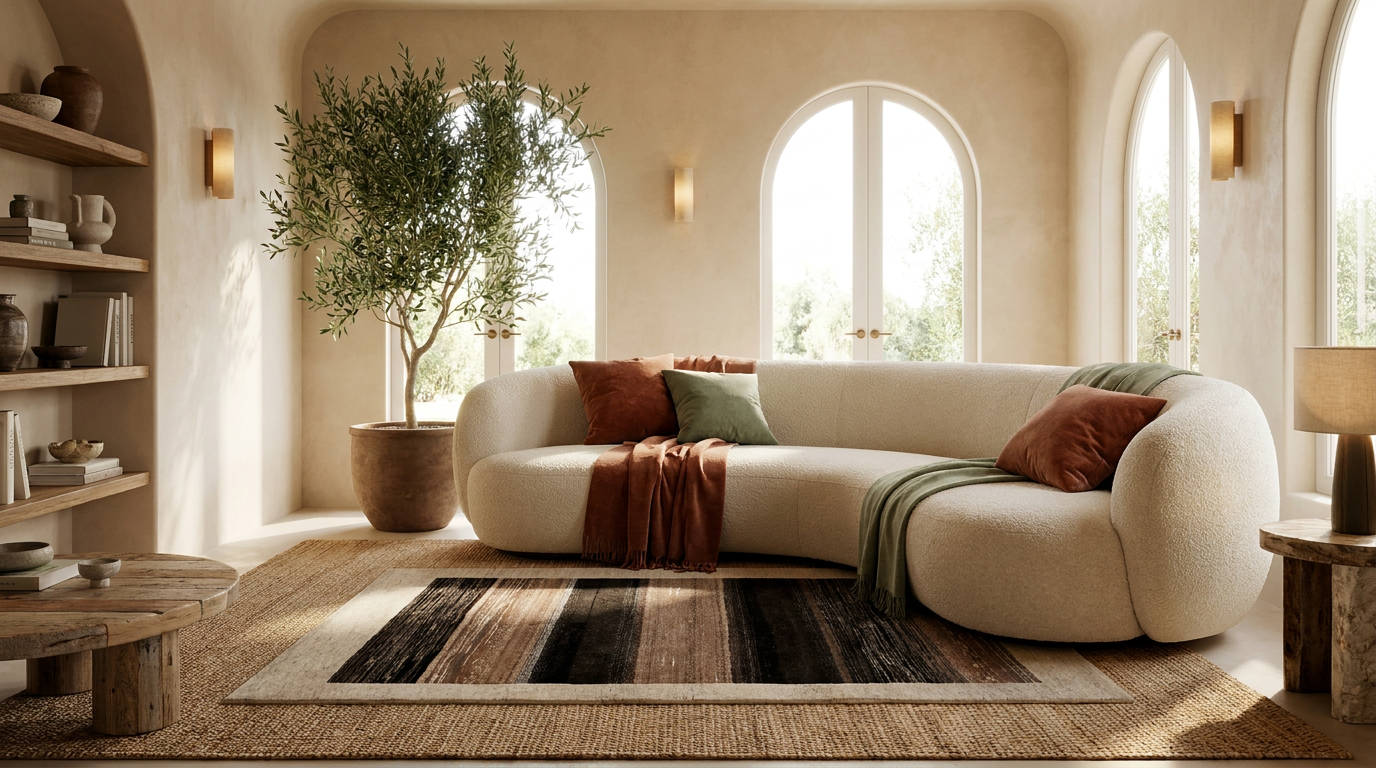
One of the most powerful triggers for this positive neurological response is biophilic design—the intentional integration of natural elements into the built environment. Evolutionary biology suggests that human brains are hardwired to seek out nature, viewing lush, natural landscapes as evolutionary safe havens. Incorporating indoor plants, water features, and natural materials like raw wood and textured stone does much more than just elevate a room's aesthetic appeal. Visual access to greenery and organic materials has been clinically shown to lower anxiety, reduce blood pressure, and significantly improve working memory and focus. When the brain perceives elements of the natural world, it shifts from a state of hyper-vigilance to one of restoration. This is why a room with a sweeping garden view or a carefully curated indoor olive tree feels inherently more relaxing than a windowless, concrete box.[1][6]
The physical geometry of a room also dictates our physiological reactions on a subconscious level. Neuroaesthetic research indicates that curvilinear spaces, rounded furniture, and organic shapes activate the brain's pleasure centers, making inhabitants feel calmer and more secure. The human eye naturally prefers to follow sweeping curves rather than sharp stops. In stark contrast, sharp angles, harsh corners, and jagged lines can subconsciously signal danger to the primal brain, triggering low-level stress responses and visual fatigue. This biological preference explains the massive resurgence of curved sofas, arched doorways, and kidney-shaped coffee tables dominating current design trends. By softening the edges of our living spaces, designers are effectively softening the cognitive load required to process the environment, allowing the nervous system to rest.[1][2]
The physical geometry of a room also dictates our physiological reactions on a subconscious level.
Color psychology serves as another critical pillar of neuroaesthetics, proving that the hues surrounding us act as subtle, continuous interventions in our neurobiology. Cool tones like soft blues and muted greens lower heart rates and promote deep relaxation, making them the ideal, science-backed choice for bedrooms or focus-heavy workspaces. Conversely, warmer tones like golden yellows, vibrant oranges, and rich terracotta stimulate alertness and encourage social interaction. In 2026, designers are leaning heavily into these deeper, earth-inspired palettes to create emotional continuity and a sense of grounding that stark white walls simply cannot provide. The saturation and brightness of these colors matter just as much as the hue itself; a muted sage green will soothe the nervous system, while a neon green might overstimulate it.[6][7]

Lighting serves as the invisible metronome for our biology. Natural daylight regulates our circadian rhythms, directly influencing sleep quality, energy levels, and serotonin production throughout the day. Where natural light is scarce, designers are increasingly utilizing dynamic lighting systems that mimic the shifting color temperature of the sun—moving from bright, cool tones in the morning to warm, amber glows in the evening. This careful manipulation of light maintains cognitive ease, prevents visual fatigue, and ensures that the body's internal clock remains synchronized with the natural world, even deep inside an office building. Poor lighting, on the other hand, is a known contributor to headaches, lethargy, and disrupted sleep patterns, making illumination one of the most critical health decisions in any interior project.[1][5]
Beyond the visual realm, neuroaesthetics places a heavy emphasis on tactile engagement. The physical texture of a room—from the inviting softness of a bouclé lounge chair to the grounding, rough feel of a woven jute rug—provides essential sensory balance. Touching natural, varied textures satisfies the brain's inherent need for sensory input without causing the overwhelming stimulation associated with visual clutter. When a space lacks texture, the brain struggles to form an emotional attachment to the environment, which is why overly sleek, high-gloss minimalist rooms often feel cold, uninviting, and ultimately uncomfortable to live in. By layering different tactile experiences, designers create a rich, multi-sensory environment that keeps the brain engaged in a gentle, restorative manner.[3][5]
The impact of these neuroaesthetic principles extends far beyond residential living rooms and cozy bedrooms. In the corporate world, forward-thinking companies are leveraging this science to boost performance and employee satisfaction. Data shows that employees working in biophilic, neuro-optimized offices report up to 15 percent higher productivity and significantly lower rates of afternoon fatigue and burnout. By providing access to natural light, acoustic privacy, and ergonomic, organic shapes, employers are finding that thoughtful design is one of the most effective tools for talent retention and cognitive output in the modern workforce. The modern office is no longer just a place to house desks; it is a strategic environment engineered to support the complex neurological needs of knowledge workers.[4][6]

Healthcare facilities are also undergoing a profound neuroaesthetic revolution. Historically, hospitals were designed purely for clinical efficiency, often resulting in sterile, anxiety-inducing environments filled with harsh fluorescent lights and echoing corridors. Today, medical centers designed with neuroaesthetic principles—featuring abundant natural light, acoustic comfort, warm wood finishes, and direct views of nature—have documented accelerated patient recovery times. Furthermore, these environments significantly reduce stress and decision fatigue among clinical staff, proving that empathetic, science-based architecture is a vital component of the healing process itself. When a patient's nervous system is calm, their body can redirect vital energy away from stress management and toward physical recovery, making the building an active participant in medical care.[1][4]
As the concept of open concept everything gives way to purposeful, acoustically sound rooms, the focus is squarely on how a space sounds and feels, not just how it photographs for a magazine. Unpredictable, echoing noise elevates cortisol and maintains heightened stress states, making it impossible to truly relax. Intentional acoustic design—using soft furnishings, heavy drapery, and specialized sound-absorbing panels—preserves mental clarity and creates distinct zones for rest, focus, and socialization within a single home. This acoustic separation allows families to coexist without sensory friction, providing quiet refuges that are essential for mental decompression at the end of a chaotic day.[2][3]

Ultimately, neuroaesthetics provides the rigorous scientific language to articulate what humans have intuitively known for centuries: beauty, harmony, and meaning are not frivolous luxuries. They are foundational requirements for our psychological and physical health. By aligning interior design with human biology, our homes, schools, and workplaces are evolving from mere shelters into powerful engines for collective well-being. As we continue to navigate a fast-paced, high-stress world, the ability to retreat into a space that actively heals and restores the nervous system is perhaps the ultimate modern luxury. Designers are no longer just decorators; they are spatial neurologists, crafting environments that allow human beings to flourish, connect, and thrive on a cellular level.[4][7]
How we got here
1990s
Brain scanning technology advances enough to measure real-time physiological responses to beauty and spatial design.
2019
Google and Johns Hopkins debut 'A Space for Being' at Salone del Mobile, measuring biological responses to rooms using wearable tech.
2021–2023
The post-pandemic shift accelerates the demand for homes that actively support mental health and emotional resilience.
2026
Neuroaesthetics becomes a foundational pillar of commercial and residential interior design, officially replacing sterile minimalism.
Viewpoints in depth
Neuroarchitects and Researchers
Focus on the biological data and measurable health outcomes of spatial design.
This camp views the built environment through the lens of biology and neuroscience. Using fMRI scans, EEG headsets, and biometric sensors, researchers argue that aesthetics are not subjective luxuries but evolutionary necessities. They emphasize that humans are hardwired to respond to specific spatial geometries, natural light, and biophilic elements, pointing to clinical data that shows lowered cortisol and accelerated healing in optimized environments.
Interior Designers
Focus on translating scientific principles into practical, emotional experiences within the home.
For design professionals, neuroaesthetics provides a scientific vocabulary for what they have long understood intuitively: a room must feel good, not just look good. This camp is actively leading the charge away from the sterile, ultra-minimalist trends of the past decade. They advocate for warm, intentional living, prioritizing organic textures, acoustic comfort, and emotionally resonant color palettes to create sanctuaries that support daily life.
Public Health Advocates
View the built environment as a frontline system for preventive healthcare.
Wellness experts and public health advocates argue that as people spend the vast majority of their lives indoors, architecture and interior design must be treated as public health interventions. They push for neuroaesthetic principles to be integrated into building codes, affordable housing, and corporate office standards, arguing that environments that actively reduce stress and foster collective resilience should be accessible to everyone, not just luxury clients.
What we don't know
- How individual neurodivergence—such as ADHD or autism—alters the brain's response to specific neuroaesthetic stimuli, as most baseline studies focus on neurotypical brains.
- The long-term longitudinal effects of living entirely within neuro-optimized environments over the course of decades.
Key terms
- Neuroaesthetics
- The scientific study of how the brain and nervous system respond to beauty, art, and spatial environments.
- Biophilic Design
- An architectural approach that connects building occupants more closely to nature through plants, natural light, and organic materials.
- Orbitofrontal Cortex
- A region of the brain involved in emotional regulation and decision-making that is highly stimulated by pleasing environments.
- Circadian Rhythm
- The body's internal 24-hour clock, which regulates sleep and wakefulness and is heavily influenced by natural light.
- Galvanic Skin Response
- A method of measuring the electrical conductance of the skin, used by researchers to track physiological stress and emotional arousal in different rooms.
Frequently asked
What is the difference between interior design and neuroaesthetics?
Traditional interior design often focuses on visual appeal and functional layout. Neuroaesthetics adds a scientific layer, measuring exactly how design choices alter brain chemistry, heart rate, and stress hormones.
How can I apply neuroaesthetics to my home on a budget?
You don't need a major renovation. Maximizing natural light, adding a few indoor plants, using soft textures, and painting a room in calming blues or greens can immediately trigger positive neurological responses.
Why is sterile minimalism becoming less popular?
Research shows that overly sparse, stark white environments can trigger emotional detachment and low-level anxiety. The brain naturally seeks warmth, texture, and sensory engagement to feel secure.
Sources
Source coverage
7 outlets
3 viewpoints surfaced







[1]ArchDailyNeuroarchitects & Researchers
Neuroesthetics: The Influence of Design on Human Experience
Read on ArchDaily →[2]LivingetcInterior Designers
Neuroaesthetics Explains How Your Home Makes You Feel
Read on Livingetc →[3]Science in DesignNeuroarchitects & Researchers
Neuroaesthetics for Interior Designers
Read on Science in Design →[4]ArchiExpo e-MagazinePublic Health Advocates
Neuroaesthetics Is Reshaping Wellness and the Built Environment
Read on ArchiExpo e-Magazine →[5]ModulyssNeuroarchitects & Researchers
The Science of Neuroaesthetics: Design for Well-Being
Read on Modulyss →[6]Connections By FinsaInterior Designers
Neuroaesthetics in interior design
Read on Connections By Finsa →[7]Factlen Editorial TeamPublic Health Advocates
Synthesis by Factlen editorial team
Read on Factlen Editorial Team →

Every angle. Every day.
Get lifestyle stories with full source coverage and perspective breakdowns delivered to your inbox.