
The Science of Sourdough: How Wild Yeast and Bacteria Transform Flour and Water
A deep dive into the microbial ecosystem of sourdough starters, revealing how lactic acid bacteria and wild yeast collaborate to create complex flavors, airy textures, and easily digestible bread.
By Factlen Editorial Team
- Microbiologists
- View the sourdough starter as a complex, dynamic model for studying microbial ecology and species interaction.
- Artisan Bakers
- Focus on manipulating environmental variables to control flavor, texture, and the physical properties of the dough.
- Nutritional Scientists
- Focus on how slow fermentation alters the biochemical makeup of the bread, improving digestibility and nutrient absorption.
What's not represented
- · Commercial Yeast Manufacturers
- · Gluten-Free Bakers
Why this matters
Understanding the biology behind fermentation allows home bakers to troubleshoot their dough, control flavor profiles from mild to intensely sour, and unlock the nutritional benefits of slow-fermented grains.
Key points
- Sourdough starters rely on a symbiotic ecosystem of wild yeast for leavening and lactic acid bacteria for flavor.
- The pioneer microbes in a starter primarily come from the flour itself, rather than the surrounding air.
- Temperature acts as a control dial: warmer environments favor mild lactic acid, while cooler temperatures promote sharp acetic acid.
- Long fermentation breaks down gluten proteins and phytic acid, making the bread easier to digest and its nutrients more bioavailable.
- Recent microbiome research shows that a baker's feeding routine and flour choice shape the starter more than its geographic location.
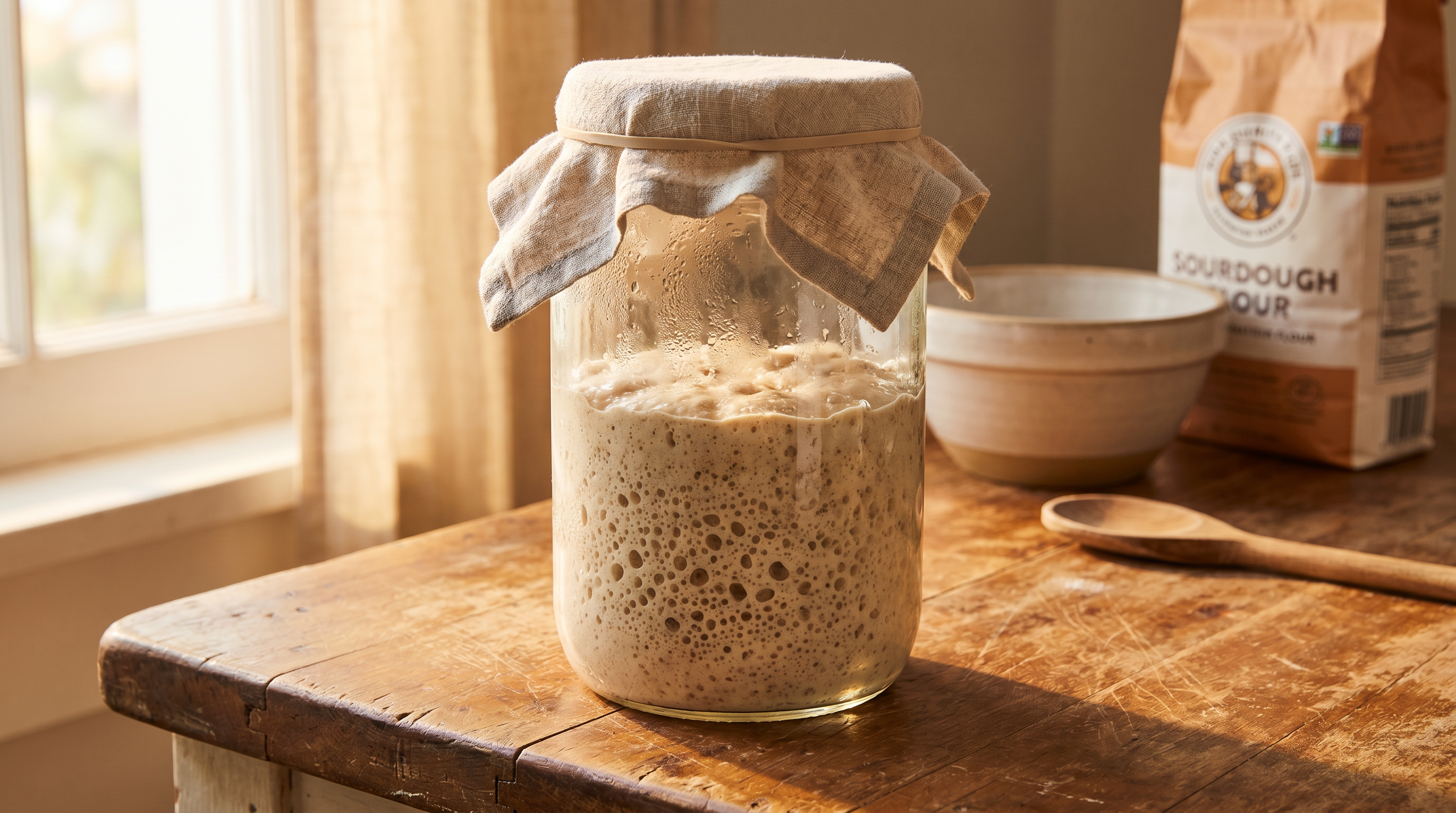
Bread has been a staple of the human diet for millennia, but long before the advent of commercial baker's yeast, every loaf was leavened by a microscopic ecosystem. A sourdough starter is a living, breathing culture created from just two humble ingredients: flour and water. When combined and left at room temperature, these ingredients awaken a dormant world of microorganisms. This bubbling mixture becomes a symbiotic community that not only makes bread rise but also fundamentally transforms its flavor, texture, and nutritional profile. Understanding the science behind this ancient process allows modern home bakers to move beyond rigid recipes and intuitively manage the living ecosystem on their kitchen counter.[2][6]
A common misconception among novice bakers is that a sourdough starter captures wild yeast entirely from the surrounding air. While airborne microbes do play a minor role, the vast majority of the pioneer microorganisms are already present in the flour itself. Wheat and rye grains naturally harbor diverse populations of bacteria and fungi in the field. When the grain is milled into flour, these microbes go dormant, waiting for hydration. Adding water provides the necessary moisture, while the complex carbohydrates in the flour serve as an abundant food source, kickstarting a fierce microscopic competition for dominance.[4]
Within a few days of regular feeding, this chaotic microbial battleground stabilizes into a cooperative, symbiotic ecosystem. The two primary survivors that come to dominate a mature sourdough starter are wild yeasts and lactic acid bacteria (LAB). These two distinct types of microorganisms have evolved to thrive together without outcompeting one another. The yeast and the bacteria consume slightly different types of sugars present in the flour, allowing them to coexist peacefully in the same jar while contributing entirely different characteristics to the final loaf of bread.[2][3]

The wild yeasts found in sourdough—most commonly species like Saccharomyces exiguus or Candida milleri—operate differently than the highly refined Saccharomyces cerevisiae sold in packets at the grocery store. Commercial yeast has been selectively bred for one primary trait: rapid, explosive gas production. Wild yeasts, by contrast, work much more slowly. As they consume the simple sugars broken down from the flour's starches, they release carbon dioxide gas and ethanol as metabolic byproducts. This slow, steady respiration is the engine that powers the dough's rise.[2][5]
The carbon dioxide produced by the wild yeast would simply escape into the air if not for the unique structural properties of wheat flour. When water mixes with wheat flour, two proteins—glutenin and gliadin—bond together to form a flexible, elastic network known as gluten. As the yeast respires, the carbon dioxide gas becomes trapped within this stretchy gluten matrix, forming thousands of tiny microscopic balloons. As these balloons inflate, the entire mass of dough expands and rises, creating the airy, open crumb structure that artisan bakers prize.[5]
While the wild yeast is responsible for the heavy lifting of leavening the bread, the lactic acid bacteria are the true flavor engines of the sourdough process. In a healthy, mature starter, LAB typically outnumber yeast cells by a staggering ratio of 100 to 1. Researchers have identified more than 50 different species of lactic acid bacteria that can inhabit sourdough cultures, with Lactobacillus sanfranciscensis and Lactobacillus plantarum being among the most common. These bacteria metabolize sugars and produce organic acids as their primary byproduct.[2][4]
The specific flavor profile of a sourdough loaf is largely determined by the ratio of two different organic acids produced by the bacteria: lactic acid and acetic acid. Lactic acid is the same compound that gives yogurt and buttermilk their mild, creamy tang. Acetic acid, on the other hand, is the primary component of vinegar, delivering a much sharper, more aggressive sour punch. The balance between these two acids dictates whether a loaf of bread will have a subtle, complex sweetness or a deeply robust, mouth-puckering sourness.[2][5]
As the lactic acid bacteria continuously pump out these organic acids, the overall pH of the sourdough culture drops significantly, creating a highly acidic environment. This acidity serves a crucial evolutionary purpose for the starter: it acts as a natural defense mechanism. The low pH creates a hostile environment that prevents harmful pathogens, mold, and spoilage bacteria from taking root in the dough. This same acidity carries over into the baked bread, acting as a natural preservative that extends the shelf life of sourdough far beyond that of standard commercially yeasted loaves.[2][3]
As the lactic acid bacteria continuously pump out these organic acids, the overall pH of the sourdough culture drops significantly, creating a highly acidic environment.
For the home baker, temperature is the most powerful control dial available to manipulate this microbial ecosystem. The activity levels of both the yeast and the bacteria are highly sensitive to their thermal environment. Warmer temperatures—typically between 75°F and 82°F (24°C to 28°C)—heavily favor the rapid reproduction of wild yeast and the production of mild lactic acid. Dough fermented in a warm environment will rise quickly and result in a loaf with a lighter, more delicate flavor profile and a less pronounced sour tang.[5][6]

Conversely, cooler temperatures fundamentally alter the balance of power within the dough. When a baker places the dough in the refrigerator for a cold fermentation—often called retarding the dough—the activity of the wild yeast slows to a crawl. However, certain strains of acetic acid-producing bacteria continue to thrive in the cold. A long, slow fermentation at low temperatures allows these bacteria to generate complex, deeply sour flavor compounds without the dough over-proofing, resulting in the robust, tangy loaves characteristic of traditional San Francisco sourdough.[5][6]
Beyond flavor and leavening, the extended fermentation time required for sourdough fundamentally alters the biochemical structure of the flour itself. The combination of the acidic environment and the long resting periods activates enzymes naturally present in the grain, such as phytase and protease. These enzymes begin to systematically break down the complex proteins and starches in the dough long before the bread ever reaches the oven. This enzymatic activity essentially pre-digests the flour, modifying the tough gluten network.[6]
This pre-digestion process has significant implications for human nutrition and overall digestibility. Because the complex gluten proteins have been partially degraded by the bacterial acids and enzymes over many hours, many individuals with mild non-celiac gluten sensitivities report that they can comfortably consume long-fermented sourdough bread without experiencing the typical digestive discomfort associated with fast-rising commercial bread. Furthermore, the breakdown of phytic acid—an anti-nutrient found in wheat bran—by the enzyme phytase unlocks essential minerals like iron, zinc, and magnesium. This crucial enzymatic action makes these vital nutrients highly bioavailable and much more easily absorbed by the human digestive tract.[6]
For decades, a pervasive myth in the baking community held that the unique flavor of a sourdough starter was dictated entirely by its geographic location—that a starter from San Francisco would inherently taste different than one from Paris due to local airborne microbes. However, recent large-scale microbiome studies, including extensive sequencing projects published in journals like eLife, have largely debunked this idea. Researchers analyzing hundreds of starters from around the world found little evidence of strict biogeographic patterns dictating microbial diversity.[1]
Instead of geography, the science shows that the baker's specific maintenance routine is the true architect of the starter's microbiome. Factors such as the hydration level (the ratio of water to flour), the feeding frequency, the ambient temperature of the kitchen, and the specific type of flour used exert a much stronger evolutionary pressure on the microbes. A starter fed exclusively with whole-grain rye flour will cultivate a vastly different microbial community than one fed with highly refined white wheat flour, regardless of whether it lives in California or Europe.[1][4]

The culmination of this microscopic journey occurs when the fermented dough is finally scored and loaded into a blistering hot oven. As the intense heat penetrates the dough, the wild yeast experiences a final, frantic burst of metabolic activity, rapidly producing a surge of carbon dioxide. This sudden expansion of gas, combined with the vaporization of water into steam, causes the dough to rapidly inflate in a phenomenon known as oven spring. This process continues until the internal temperature reaches approximately 140°F (60°C), at which point the yeast and bacteria die off.[5]
As the internal structure of the bread sets, the surface of the dough undergoes one of the most important chemical transformations in all of cooking: the Maillard reaction. Starting at around 300°F (150°C), the intense heat causes the residual amino acids and reducing sugars on the surface of the dough to rapidly interact. This complex cascade of chemical reactions creates hundreds of new flavor compounds, transforming the pale, sticky dough into a deeply caramelized, golden-brown crust with rich, roasted, and slightly bitter notes.[5]

To maximize both the oven spring and the Maillard reaction, artisan bakers introduce steam into the oven during the first half of the bake. The steam condenses on the relatively cool surface of the dough, keeping the exterior flexible and preventing the crust from setting prematurely. This allows the bread to expand to its absolute maximum volume. Once the steam is removed or dissipates, the dry heat takes over, rapidly dehydrating the surface to form the thick, blistered, and shatteringly crisp crust that defines a perfect loaf of sourdough.[5]
Ultimately, baking sourdough bread is a profound exercise in applied microbiology and chemistry. The baker is not merely following a static, rigid recipe, but rather acting as an ecosystem manager, carefully manipulating environmental variables to guide a living, breathing community of microorganisms. By understanding the intricate science of wild yeast, lactic acid bacteria, temperature control, and enzymatic activity, anyone can harness the raw power of natural fermentation. This knowledge empowers home bakers to transform simple flour and water into a culinary masterpiece that is as deeply nutritious as it is delicious.[6]
Viewpoints in depth
Microbiologists' view
Viewing the sourdough starter as a complex model for studying microbial ecology.
For microbiologists, a sourdough starter is a fascinating, accessible model of microbial ecology. Researchers study these cultures to understand how different species of bacteria and yeast compete, cooperate, and establish stable ecosystems. Recent large-scale sequencing projects have revealed that the microbial diversity in a starter is less about geographic origin and more about the specific environmental pressures applied by the baker, such as hydration levels and flour types. This research helps scientists understand broader principles of microbiome stability that can be applied to other fermented foods and even human gut health.
Artisan Bakers' view
Focusing on manipulating environmental variables to control flavor and texture.
From the perspective of an artisan baker, the science of sourdough is a practical toolkit for achieving culinary perfection. Bakers view temperature, hydration, and feeding schedules not as abstract biological concepts, but as control dials to manipulate the final loaf. By understanding that lactic acid bacteria thrive at different temperatures than wild yeast, a baker can intentionally retard a dough in the refrigerator to coax out a sharper, more complex flavor profile. The goal is to manage the fermentation process precisely to achieve the ideal balance of oven spring, crumb openness, and crust caramelization.
Nutritional Scientists' view
Analyzing how slow fermentation alters the biochemical makeup of the bread.
Nutritional scientists focus on the transformative biochemical effects of the long sourdough fermentation process. They highlight how the organic acids produced by lactic acid bacteria activate enzymes that break down complex carbohydrates and gluten proteins, effectively pre-digesting the flour. This process not only lowers the glycemic index of the bread, preventing rapid blood sugar spikes, but also degrades phytic acid, an anti-nutrient that normally binds to minerals. As a result, sourdough bread offers higher bioavailability of essential nutrients like iron and zinc compared to unfermented commercial bread.
What we don't know
- While we know which microbes dominate mature starters, the exact mechanisms of how they outcompete other species during the initial creation phase are still being studied.
- The precise threshold at which gluten breakdown in sourdough becomes universally tolerable for non-celiac gluten sensitivity remains difficult to standardize across different bakeries.
Key terms
- Lactic Acid Bacteria (LAB)
- A broad group of beneficial bacteria that consume sugars and produce lactic and acetic acids, responsible for the sour flavor and preservation of sourdough.
- Wild Yeast
- Naturally occurring single-celled fungi present on grains and in the environment that consume sugars and produce carbon dioxide gas to leaven bread.
- Maillard Reaction
- A chemical reaction between amino acids and reducing sugars that occurs under high heat, creating the browned color and complex roasted flavors of the bread crust.
- Oven Spring
- The rapid, final expansion of dough that occurs during the first few minutes of baking as heat causes gases to expand and yeast to produce a final burst of carbon dioxide.
- Gluten Network
- The elastic, web-like structure formed by wheat proteins when mixed with water, which traps carbon dioxide gas and allows the bread to rise.
Frequently asked
Why does my sourdough starter smell like nail polish remover?
A smell of acetone or nail polish remover indicates that the starter is hungry and highly acidic. The lactic acid bacteria have exhausted their food supply and are producing excess acetic acid; feeding the starter fresh flour and water will restore its balance.
Can I use any type of flour to make a sourdough starter?
Yes, but whole grain flours like rye or whole wheat are highly recommended for starting a culture. They contain more nutrients and a higher concentration of naturally occurring wild microbes on the bran, which speeds up the initial fermentation process.
Is sourdough bread safe for people with gluten intolerance?
While sourdough is not gluten-free, the long fermentation process breaks down a significant portion of the gluten proteins. Many individuals with mild, non-celiac gluten sensitivities find long-fermented sourdough much easier to digest, though it remains unsafe for those with celiac disease.
Why do bakers score the top of the dough before baking?
Scoring creates an intentional weak point in the gluten network on the surface of the dough. As the bread rapidly expands in the oven (oven spring), the score allows the dough to open up predictably rather than tearing randomly along the sides.
Sources
Source coverage
6 outlets
3 viewpoints surfaced






[1]eLifeMicrobiologists
The diversity and function of sourdough starter microbiomes
Read on eLife →[2]American Society for MicrobiologyMicrobiologists
What We Know About the Sourdough Microbiome
Read on American Society for Microbiology →[3]MDPIMicrobiologists
Sourdough Microbiota and Bread Protection
Read on MDPI →[4]National Institutes of HealthMicrobiologists
Microbial Communities in Different Sourdough Starters
Read on National Institutes of Health →[5]The GuardianArtisan Bakers
The science of sourdough: how to bake the perfect loaf
Read on The Guardian →[6]Factlen Editorial TeamNutritional Scientists
Synthesis by Factlen editorial team
Read on Factlen Editorial Team →

More in lifestyle
See all 30 stories →Neuroaesthetics
How Neuroaesthetics is Rewiring Interior Design for Brain Health
9 sources

Neuroarchitecture
How Neuroarchitecture and Biophilic Design Are Re-Engineering the Modern Home
10 sources

Skin Health
The Science of Skin Barrier Repair: Understanding Ceramides, Peptides, and the Acid Mantle
8 sources
Dating Culture
Beyond the Swipe: How 'Experiential Intimacy' and Run Clubs Are Rewriting the Rules of Dating
6 sources

Every angle. Every day.
Get lifestyle stories with full source coverage and perspective breakdowns delivered to your inbox.