
The Science of Neuroaesthetics: How Interior Design Physically Alters Brain Chemistry
A rapidly growing scientific discipline is proving that room shapes, lighting, and textures trigger measurable biological responses, transforming how we design our homes.
By Factlen Editorial Team
- Neuroscience Researchers
- Scientists focused on quantifying the biological impact of built environments using brain imaging and biometrics.
- Interior Designers
- Practitioners applying neuroaesthetic principles to residential and commercial spaces to improve client well-being.
- Public Health Advocates
- Experts looking at how neuroarchitecture can improve long-term care, aging in place, and mental health outcomes.
What's not represented
- · Affordable Housing Developers
- · Architectural Traditionalists
Why this matters
Because we spend over 90% of our lives indoors, understanding how our physical environments affect our nervous systems empowers us to design homes that actively reduce stress, lower blood pressure, and improve daily mental health.
Key points
- Neuroaesthetics is the scientific study of how the brain responds to beauty, art, and spatial design.
- Thoughtfully designed spaces can reduce stress hormones by up to 20% and lower blood pressure.
- Functional MRI scans reveal that curvilinear room designs activate the brain's emotion-processing centers.
- Biophilic design elements, such as wood grain and natural light, act as a biological reset for the nervous system.
People in developed countries spend over 90% of their time inside built environments, yet we rarely consider how the walls, lighting, and furniture around us are actively altering our brain chemistry. For decades, interior design has been treated as a purely subjective art form—a matter of personal taste, trends, and color swatches. But a quiet revolution is transforming the industry, shifting the focus from how a room looks to how it biologically functions.[3][7]
Enter neuroaesthetics, a rapidly growing scientific discipline that studies how the human brain and nervous system respond to beauty, art, and spatial design. By utilizing advanced technology like functional magnetic resonance imaging (fMRI) and biometric tracking, researchers are proving that our aesthetic preferences are not superficial. They are hardwired biological responses that dictate our physical and emotional health.[1][2][5]
The premise is rooted in evolutionary biology. The human brain processes roughly 11 million bits of sensory information every second, but we are consciously aware of only about 50 of them. The rest is processed subliminally by the autonomic nervous system. When we step into a room and instantly feel a sense of dread or a wave of calm, it is because our brains are rapidly scanning the environment for signals of safety or threat.[5]

"Neuroaesthetics examines how the environments we live in affect us on a physical and emotional level," explains Suchi Reddy, an architect whose practice focuses on the discipline. The proportions of a space, the tactile nature of its materials, and the quality of light all send immediate signals to the brain, shaping our mood before we even have time to articulate an opinion.[1]
The physiological impacts of these signals are highly measurable. Research consistently demonstrates that thoughtfully designed spaces can trigger a 15% to 20% reduction in stress hormones like cortisol. Conversely, environments with unpredictable noise, harsh lighting, or visual clutter keep the sympathetic nervous system in a state of high alert, leading to chronic mental fatigue and anxiety.[5]
One of the most profound discoveries in neuroarchitecture involves the shape of the objects that surround us. A landmark study published in Oxford Academic examined the impact of architectural contours on the brain by having participants view images of different room interiors while inside an fMRI scanner. The results revealed a stark neurological preference for curves.[4]

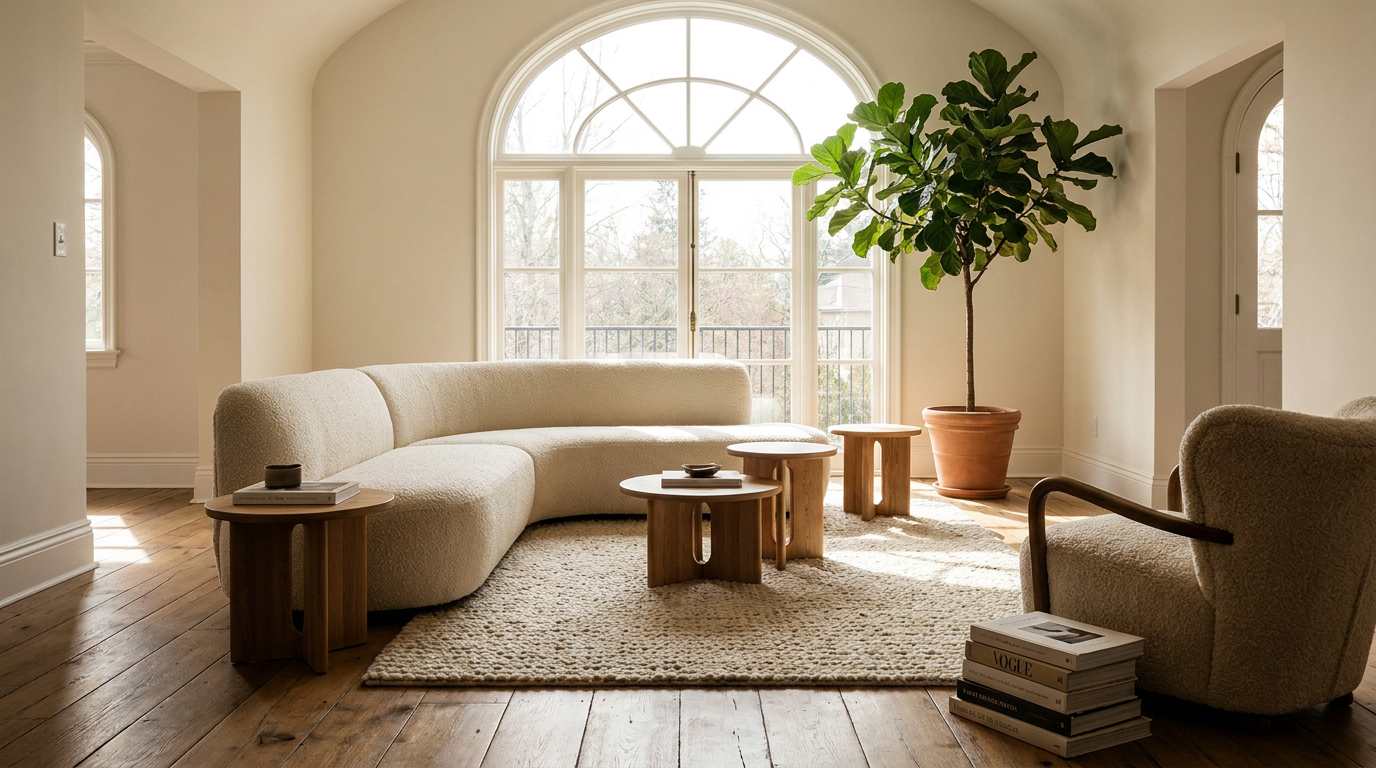
Participants overwhelmingly found curvilinear rooms more beautiful than rectilinear ones. More importantly, viewing curved architecture actively stimulated the anterior cingulate cortex—a region of the brain deeply involved in processing emotion. Sharp, jagged edges often subliminally signal danger to the primitive brain, while rounded furniture and arched doorways signal safety, triggering the release of dopamine and serotonin.[1][4]
Participants overwhelmingly found curvilinear rooms more beautiful than rectilinear ones.
Biophilic design—the practice of integrating natural elements into the built environment—is another cornerstone of neuroaesthetics. Humans spent millennia evolving outdoors, and our nervous systems remain calibrated to the rhythms of the natural world. Bringing nature indoors does more than just look pleasant; it acts as a biological reset button.[6]
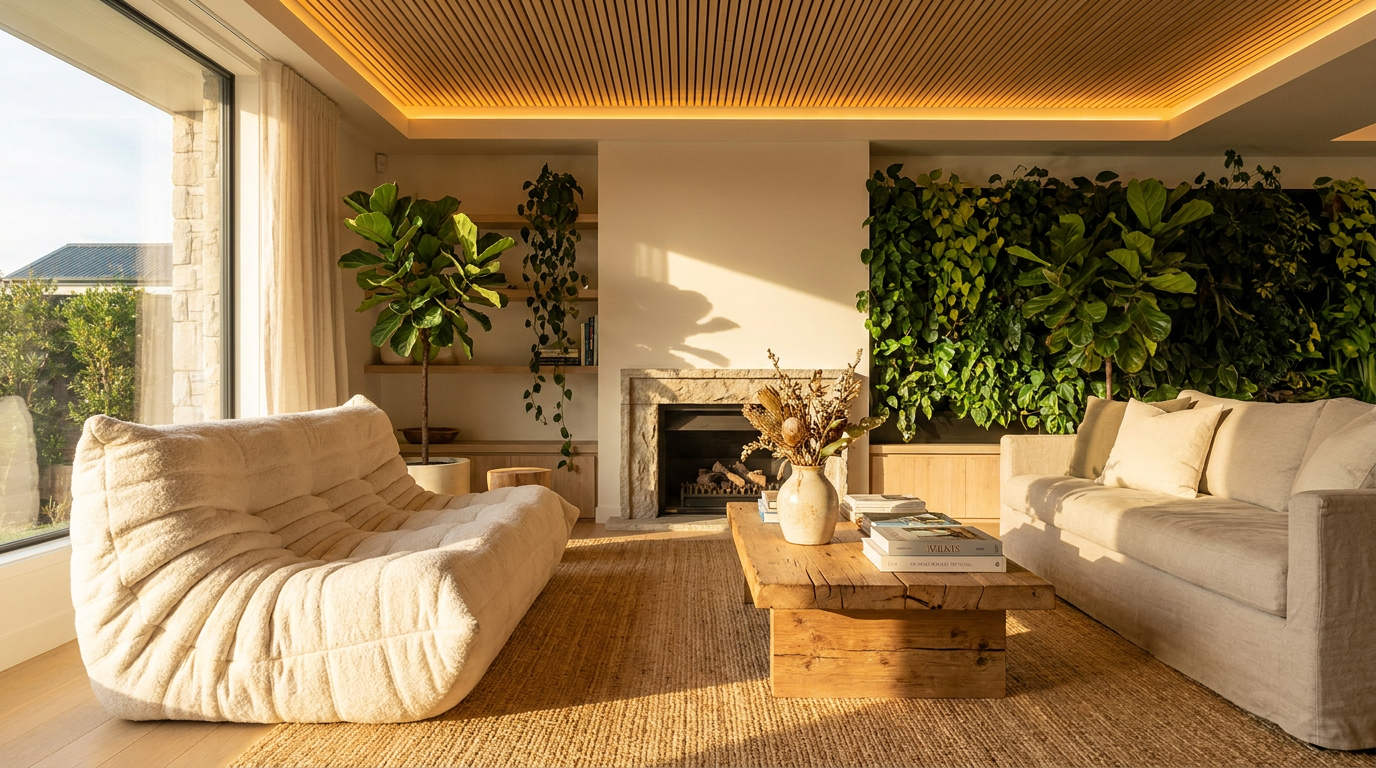
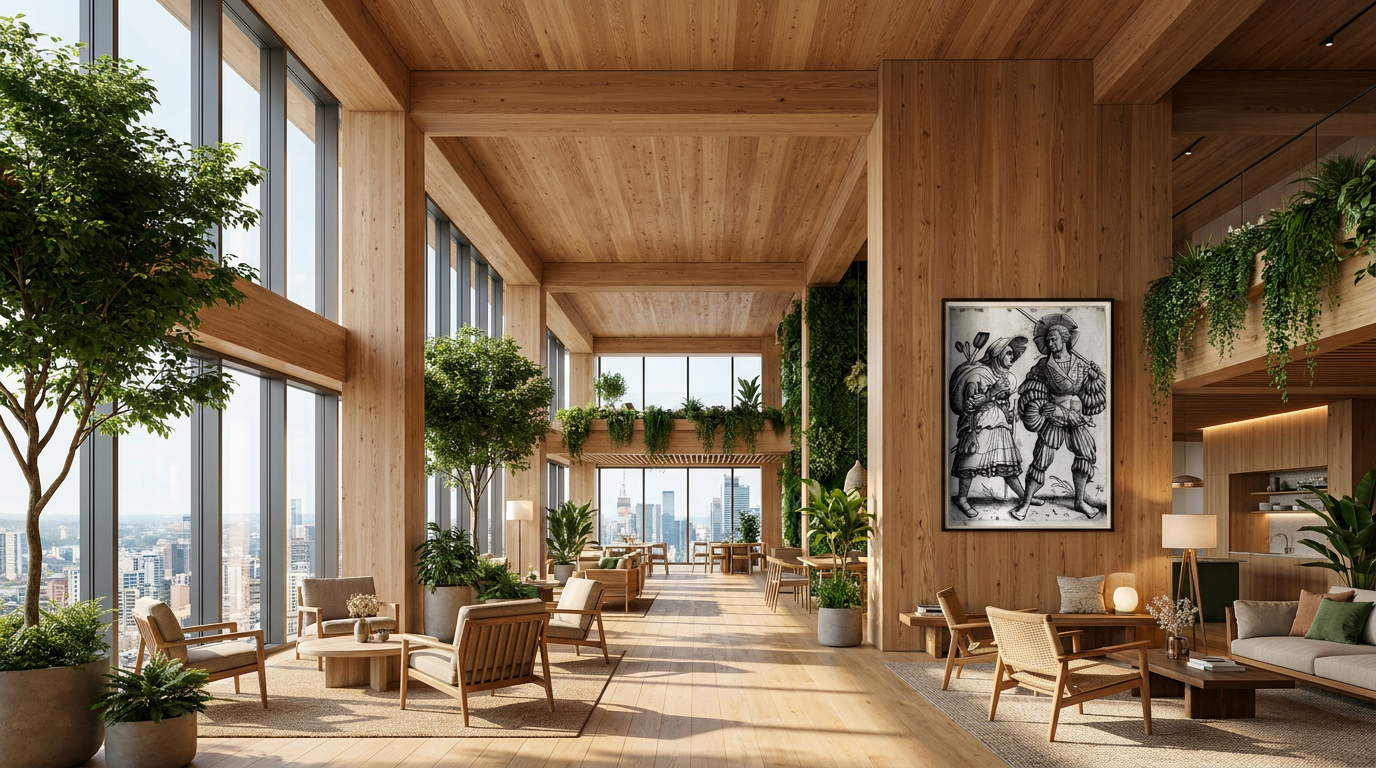
The biometric data supporting biophilia is striking. Scientific research has shown that simply viewing wood grain, whether real or accurately mimicked, can reduce a person's blood pressure by an average of five beats per minute. Layering these natural textures with living plants and organic patterns creates a multisensory environment that actively lowers heart rates and improves cognitive performance.[5][6]
To understand how to apply these findings, researchers at the Penn Center for Neuroaesthetics conducted a psychometric analysis of how humans experience architectural interiors. They identified three core psychological dimensions that dictate our comfort: coherence, fascination, and hominess. Coherence refers to how easily the brain can organize and comprehend a scene, while fascination measures the informational richness that keeps the mind engaged without overwhelming it.[3]

"Hominess," a newly identified dimension specific to architectural interiors, measures the degree of personal ease and comfort a space provides. When participants in the Penn study made approach-avoidance decisions—essentially deciding whether they wanted to stay in a room or leave—the degree of "hominess" directly covaried with neural activity in the brain's left cuneus.[3]
Color and light play equally critical roles in establishing this sense of hominess. Neuroaesthetics confirms that color psychology is not just a design myth. Blues and greens reliably promote calmness and focus by mimicking the sky and natural foliage, while warmer tones like butter-yellow or creamsicle-orange can stimulate energy and sociability.[2]
Lighting, meanwhile, dictates our circadian rhythms. Exposure to natural daylight regulates the body's internal clock, improving sleep quality and daytime alertness. When natural light is unavailable, neuroaesthetic principles suggest using layered, warm artificial lighting to mimic the setting sun in the evening, signaling to the brain that it is time to wind down and prepare for rest.[5][7]

The implications of this science extend far beyond luxury decorating; they are reshaping how we think about aging in place and long-term care. Traditionally, designing homes for older adults focused strictly on practicalities like mobility and physical safety. Now, designers are using neuroaesthetics to create environments that evoke positive emotional responses, combating the isolation and cognitive decline often associated with aging.[6]
Ultimately, neuroaesthetics invites us to decorate from the inside out, prioritizing how a space feels over how it looks on a screen. By understanding that our homes are not just passive shelters but active participants in our neurobiology, we can intentionally design spaces that heal, restore balance, and actively care for our well-being.[1][7]
How we got here
1990s
Brain scanning technology advances enough to measure human responses to beauty in real-time, birthing the field of neuroaesthetics.
2013
A landmark fMRI study reveals that viewing curvilinear rooms activates the brain's emotion-processing centers.
2021
The Penn Center for Neuroaesthetics publishes research identifying 'hominess' as a measurable psychological dimension of architectural interiors.
2024–2026
Neuroaesthetics moves from academic theory to mainstream interior design, heavily influencing residential and aging-in-place architecture.
Viewpoints in depth
Neuroscience Researchers
Scientists focused on quantifying the biological impact of built environments using brain imaging and biometrics.
This camp argues that aesthetic preferences are not subjective cultural constructs, but hardwired evolutionary responses. By using fMRI machines and tracking cortisol levels, researchers aim to create a standardized, evidence-based framework for architecture that treats building design as a matter of public health rather than mere decoration.
Interior Designers
Practitioners applying neuroaesthetic principles to residential and commercial spaces to improve client well-being.
For designers, neuroaesthetics provides scientific validation for what was previously considered intuition. They focus on the practical application of these findings—such as swapping harsh overhead lights for circadian-friendly lamps, or replacing sharp-edged tables with curved alternatives—to create spaces that actively reduce stress and foster connection.
Public Health Advocates
Experts looking at how neuroarchitecture can improve long-term care, aging in place, and mental health outcomes.
This perspective emphasizes the therapeutic potential of design, particularly for vulnerable populations. Advocates argue that integrating biophilic elements and hominess into hospitals, care facilities, and senior living homes can accelerate patient recovery, reduce anxiety, and improve the overall quality of life for those who spend the majority of their time indoors.
What we don't know
- How individual neurological differences, such as neurodivergence, alter a person's baseline response to specific aesthetic stimuli.
- The long-term, compounding physiological effects of living in a fully neuroaesthetic-optimized environment over multiple decades.
Key terms
- Neuroaesthetics
- The scientific study of how beauty, art, and spatial design affect the human brain and nervous system.
- Biophilic Design
- An architectural approach that connects building occupants more closely to nature to improve health and well-being.
- Curvilinear Design
- The use of curved lines and rounded shapes in architecture and furniture, which studies show activate emotion-processing centers in the brain.
- Anterior Cingulate Cortex
- A region of the brain involved in processing emotion that lights up when humans view aesthetically pleasing, curved spaces.
- Hominess
- A psychological dimension in neuroarchitecture that measures the degree of personal ease and comfort a space provides.
Frequently asked
What is the easiest way to apply neuroaesthetics at home?
Incorporating natural elements like wood textures, living plants, and natural light is the fastest way to lower stress hormones and blood pressure.
Do certain colors actually change brain chemistry?
Yes, studies show that specific colors trigger the release of neurotransmitters. Blues and greens promote calmness, while warmer tones stimulate energy.
Why do curved furniture pieces feel more relaxing?
Neuroimaging reveals that curvilinear shapes activate the brain's emotion-processing centers, signaling safety and comfort compared to sharp, rectilinear edges.
Sources
Source coverage
7 outlets
3 viewpoints surfaced







[1]LivingetcInterior Designers
Neuroaesthetics Explains How Your Home Makes You Feel
Read on Livingetc →[2]Artful Living MagazineInterior Designers
A Neuroaesthetics Approach to Home Design
Read on Artful Living Magazine →[3]PubMedNeuroscience Researchers
The neuroaesthetics of architectural spaces
Read on PubMed →[4]Oxford AcademicNeuroscience Researchers
The Neuroaesthetics of Architecture
Read on Oxford Academic →[5]Science in DesignInterior Designers
Neuroaesthetics for Interior Designers
Read on Science in Design →[6]AltroPublic Health Advocates
Designing with neuroaesthetics
Read on Altro →[7]Factlen Editorial TeamPublic Health Advocates
Synthesis by Factlen editorial team
Read on Factlen Editorial Team →
Every angle. Every day.
Get home stories with full source coverage and perspective breakdowns delivered to your inbox.