
The Science of Heat Pump Maintenance: How to Maximize Efficiency and Lifespan
Heat pumps are highly efficient, but improper use and neglected maintenance can reduce their efficiency by up to 25%. Understanding the mechanics of airflow, thermostat optimization, and seasonal care can extend a system's lifespan to over two decades.
By Factlen Editorial Team
- HVAC Professionals
- Prioritize preventative technical maintenance and proper installation to ensure system longevity.
- Energy Efficiency Agencies
- Focus on the macro-level energy savings and grid stability achieved through optimized residential systems.
- Consumer Advocates
- Emphasize cost-saving DIY maintenance strategies and practical advice for homeowners.
What's not represented
- · Renters who cannot control their building's HVAC maintenance schedules
- · Manufacturers of heat pump components and refrigerants
Why this matters
A properly maintained heat pump consumes 10% to 25% less energy than a neglected one, directly lowering monthly utility bills. Furthermore, proactive care can extend the system's lifespan from the standard 15 years to well over two decades, saving homeowners thousands in premature replacement costs.
Key points
- A well-maintained heat pump consumes 10% to 25% less energy than a neglected system, significantly reducing monthly utility bills.
- Consistent preventative care can extend the average lifespan of a heat pump from 15 years to over two decades.
- Maintaining unobstructed airflow by regularly changing indoor filters and clearing outdoor debris is the most critical DIY maintenance task.
- Unlike traditional furnaces, heat pumps operate most efficiently with a 'set it and forget it' thermostat strategy to avoid triggering expensive auxiliary heat.
The transition toward residential electrification has positioned the heat pump as the premier technology for modern climate control. Across the globe, homeowners are replacing traditional gas furnaces and standalone air conditioners with these unified systems, drawn by the promise of lower carbon footprints and reduced utility bills. However, this technological shift requires a fundamental change in how homeowners approach preventative maintenance. Because heat pumps operate continuously throughout the year—handling both the bitter cold of winter and the sweltering heat of summer—they accumulate wear and tear at an accelerated rate compared to seasonal appliances. Understanding the specific mechanical needs of these systems is essential to unlocking their full economic and environmental benefits.[2][6]
To understand why maintenance is so critical, it is necessary to understand the core mechanism of the technology. Unlike traditional combustion furnaces that burn fossil fuels to generate heat, a heat pump uses electricity and a chemical refrigerant to move heat from one place to another. In the summer, it extracts heat from inside the home and pumps it outdoors, functioning exactly like a standard air conditioner. In the winter, a reversing valve flips the flow of refrigerant, allowing the system to extract ambient thermal energy from the cold outside air and pump it indoors. This process of moving heat rather than creating it is what makes the technology so remarkably efficient.[6]
Because the system is essentially a continuous-duty thermal engine, the stakes for proper upkeep are exceptionally high. The U.S. Department of Energy explicitly warns that the difference in energy consumption between a well-maintained heat pump and a severely neglected one can range from 10% to 25%. When components are dirty or airflow is restricted, the compressor must work significantly harder to achieve the same temperature transfer. This increased workload not only draws more electricity from the grid, directly inflating monthly utility bills, but it also subjects the system's most expensive internal components to chronic mechanical stress.[2]
Furthermore, proactive care directly dictates the ultimate longevity of the system. While the average life expectancy of a residential air-source heat pump is generally cited as 15 years, optimal and consistent maintenance can extend that lifespan to 20 years or more. Conversely, neglecting basic upkeep can cause catastrophic compressor failure in less than a decade. Given that a full system replacement can cost anywhere from $5,000 to over $15,000 depending on the size of the home, extending the operational life of the unit by an extra five to ten years represents a massive financial return on the relatively small investment of routine maintenance.[5]

The most critical, yet simplest, maintenance task for any heat pump owner is the rigorous management of airflow. Because the system relies entirely on the efficient transfer of thermal energy across its internal and external coils, any obstruction to the air passing over those coils immediately degrades performance. Indoors, this means checking and replacing the air filters with strict regularity. HVAC professionals recommend inspecting the filter every single month, especially during peak heating and cooling seasons, and replacing it every one to three months. A clogged filter forces the indoor blower motor to strain against the resistance, drastically reducing the volume of conditioned air reaching the living spaces.[1][2]
When selecting replacement filters, homeowners must balance filtration quality with system airflow. Filters are graded on the MERV (Minimum Efficiency Reporting Value) scale. While high-MERV filters are excellent at trapping microscopic allergens, pet dander, and dust, they are also denser and can restrict airflow if the system's blower motor is not designed to handle the increased static pressure. The Department of Energy advises using a 1-inch pleated filter that matches the manufacturer's specifications, ensuring that the air remains clean without inadvertently choking the heat pump's internal circulation.[2]
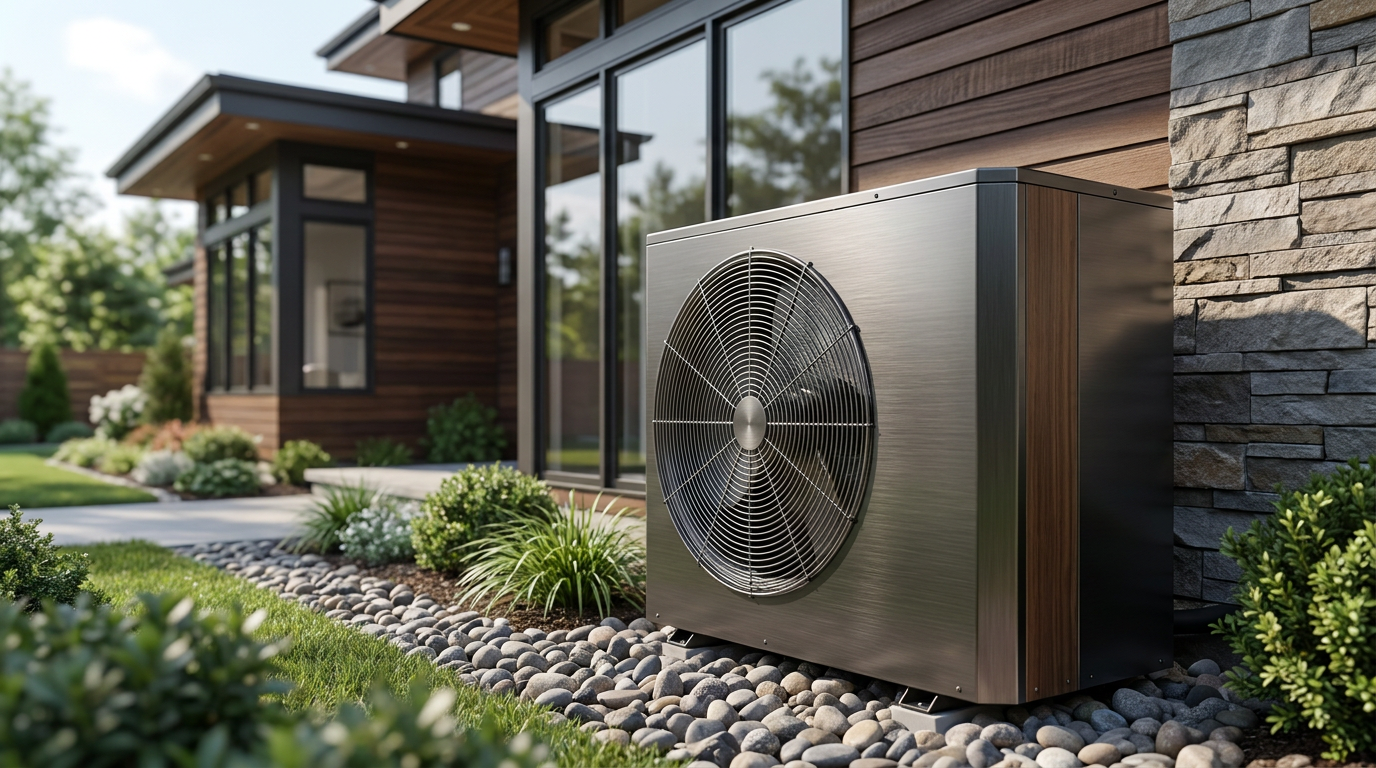
Outdoors, the condenser unit requires an equal level of vigilance to maintain unobstructed airflow. The outdoor cabinet houses the primary fan and the condenser coils, which must be able to pull in massive volumes of ambient air to extract or reject heat. Experts universally recommend maintaining a strict clearance zone of at least 18 to 24 inches around the entire perimeter of the unit. Homeowners should regularly trim back encroaching bushes, tall grass, and low-hanging branches, while also clearing away accumulated leaves, dirt, and debris that can get sucked against the delicate metal fins of the coil.[1][4]
Outdoors, the condenser unit requires an equal level of vigilance to maintain unobstructed airflow.
Beyond physical cleaning, optimizing a heat pump requires a significant paradigm shift in thermostat habits. For decades, homeowners with traditional gas or oil furnaces were taught to utilize deep thermostat setbacks—dropping the temperature by eight to ten degrees when leaving for work or going to sleep—to save fuel. However, applying this same strategy to a heat pump can actually waste energy and increase costs. The golden rule for heat pump operation, particularly in the winter, is often described by utility companies as "set it and forget it."[3]
The reason for this counterintuitive advice lies in how heat pumps handle rapid temperature recoveries. If a home is allowed to cool down to 60 degrees overnight, and the thermostat is suddenly programmed to reach 70 degrees in the morning, the heat pump's primary compressor may not be able to bridge that gap quickly enough on its own. To satisfy the sudden demand, the system will automatically trigger its "auxiliary" or "emergency" heat—a backup electric resistance heating element hidden inside the air handler. This backup heat is highly effective but consumes electricity at a massive rate, completely negating the efficiency of the heat pump.[1][2]

Winter weather introduces its own set of unique maintenance challenges for the outdoor unit. As the heat pump extracts thermal energy from cold, humid air, condensation naturally forms on the outdoor coils and quickly freezes. Modern heat pumps are equipped with an automatic defrost cycle that periodically reverses the system to melt this light frost. However, during heavy winter storms, significant snow accumulation or solid ice can overwhelm the defrost cycle, completely encasing the unit and blocking all airflow. Homeowners must routinely check the outdoor cabinet after severe weather events.[1][5]
If a thick layer of ice or snow does build up on the outdoor unit, it must be removed carefully to avoid causing permanent damage. HVAC technicians strongly advise against using sharp tools, ice picks, or shovels to chip the ice away, as a single slip can easily puncture the pressurized refrigerant lines hidden just behind the thin aluminum fins. Instead, the system should be temporarily switched to emergency heat, and the homeowner should gently brush away loose snow or use a hose with warm (not hot) water to safely melt the stubborn ice blockages.[5]
During the summer months, when the heat pump shifts into air conditioning mode, the maintenance focus moves to moisture management and thermal shading. As the indoor coil cools the warm, humid air inside the home, it generates a significant amount of condensation. This water drips into a pan and flows outside through a condensate drain line. Over time, algae, mold, and dust can clog this narrow PVC pipe, causing water to back up and potentially flood the utility closet or basement. Flushing the drain line with a simple mixture of water and vinegar at the start of the summer can prevent costly water damage.[5][6]
While diligent DIY maintenance is crucial, it cannot replace the necessity of professional, technical servicing. Manufacturers and utility providers universally recommend scheduling a comprehensive inspection by a licensed HVAC technician at least once a year, and ideally twice—once before the winter heating season and once before the summer cooling season. These professional tune-ups typically cost between $100 and $300, an expense that is easily offset by the resulting energy savings and the prevention of catastrophic mid-season breakdowns.[4]
During a professional service visit, technicians perform highly specialized tasks that are impossible for a homeowner to execute safely. Chief among these is measuring and adjusting the system's refrigerant charge. A heat pump requires a highly precise volume of refrigerant to operate efficiently; if the system is undercharged due to a microscopic leak, or overcharged from a previous sloppy repair, the Coefficient of Performance plummets. Operating a heat pump with the wrong refrigerant charge forces the compressor to run hotter and longer, drastically shortening its lifespan.[2][4]

In addition to refrigerant management, a professional tune-up includes a rigorous electrical inspection. The technician will test the run capacitor, which provides the initial jolt of electricity needed to start the compressor, replacing it if it shows signs of bulging or degradation. They will also tighten all electrical terminals, inspect the contactor for pitting, and verify that the reversing valve shifts smoothly between heating and cooling modes. Catching a failing ten-dollar electrical component during a routine inspection can prevent a thousand-dollar compressor failure a few months later.[2]
Ultimately, the transition to heat pump technology represents a massive leap forward in residential energy efficiency, but it demands a more engaged approach from the homeowner. By understanding the critical importance of unobstructed airflow, adopting smart thermostat strategies to avoid auxiliary heat, and investing in regular professional tune-ups, homeowners can ensure their systems operate at peak performance. A well-maintained heat pump is not just an appliance; it is a finely tuned thermal engine that will deliver reliable, cost-effective comfort for decades to come.[6]
How we got here
1852
Lord Kelvin develops the foundational concept of the heat pump, proposing that refrigeration systems could be reversed to provide heating.
1948
Robert C. Webber builds the first ground-source heat pump, utilizing the stable temperatures of the earth to heat his home.
1970s
The global energy crisis spurs the first major wave of residential air-source heat pump adoption as an alternative to expensive oil heating.
2020s
Breakthroughs in variable-speed inverter compressors allow heat pumps to operate efficiently in sub-zero climates, driving a massive modern installation boom.
Viewpoints in depth
HVAC Professionals
Focus on preventative maintenance, refrigerant levels, and electrical safety to prevent catastrophic failures.
HVAC technicians emphasize that heat pumps are complex thermal engines, not passive appliances. They argue that the vast majority of expensive compressor replacements they perform are the direct result of neglected maintenance—specifically clogged filters that choke airflow and microscopic refrigerant leaks that force the system to overwork. From their perspective, the $100 to $300 cost of an annual professional tune-up is an essential insurance policy that protects a $10,000 piece of equipment, rather than an optional luxury.
Energy Efficiency Advocates
Focus on the macroeconomic and environmental impact of optimized heat pumps reducing strain on the electrical grid.
Agencies like the Department of Energy view heat pump maintenance through the lens of grid stability and climate goals. Because a neglected heat pump can consume up to 25% more electricity, widespread poor maintenance across millions of homes creates a massive, unnecessary burden on the power grid during peak winter and summer months. Furthermore, when poorly optimized thermostats trigger inefficient electric resistance 'auxiliary heat,' it causes massive spikes in localized power demand. For these advocates, homeowner education on proper maintenance is a critical component of national energy security.
Homeowners
Focus on balancing the cost of professional maintenance with DIY tasks to maximize comfort and lower utility bills.
For the average homeowner, the primary concerns are monthly utility costs and indoor comfort. While many are willing to perform basic DIY tasks like changing air filters and clearing snow from the outdoor unit, there is often hesitation around paying for annual professional servicing if the system appears to be running fine. The homeowner perspective often involves a learning curve, particularly when transitioning from a traditional furnace, as they must unlearn old habits like deep thermostat setbacks and adapt to the 'set it and forget it' nature of heat pump operation.
What we don't know
- The exact long-term durability and maintenance requirements of the newest generation of cold-climate inverter heat pumps, which have only been widely deployed in the last few years.
- The precise return on investment for smart thermostats across all climate zones, as their effectiveness varies heavily depending on the specific heat pump model and local weather patterns.
Key terms
- Heat Pump
- An HVAC system that uses refrigeration technology to transfer heat from one location to another, providing both heating and cooling.
- Coefficient of Performance (COP)
- A ratio measuring a heat pump's efficiency, calculated by dividing the heat output by the electrical energy input.
- MERV Rating
- Minimum Efficiency Reporting Value; a scale that rates the effectiveness of air filters at trapping airborne particles.
- Auxiliary Heat
- A backup electric resistance heating element that activates when the heat pump cannot extract enough heat from the outside air.
- Reversing Valve
- A crucial internal component that reverses the flow of refrigerant, allowing the heat pump to switch seamlessly between heating and cooling modes.
Frequently asked
Should I turn down my heat pump at night to save money?
Generally, no. Deep thermostat setbacks can force the system to use inefficient auxiliary electric heat to recover the temperature in the morning. A 'set it and forget it' approach is often more efficient.
How often do I really need to change the air filter?
Most manufacturers recommend checking the filter monthly and replacing it every one to three months, depending on system usage, pet dander, and local air quality.
Is it safe to cover my outdoor heat pump in the winter?
No. Heat pumps run year-round and need unobstructed airflow to extract heat from the winter air. Covering the unit will cause it to malfunction and potentially damage the compressor.
Why is my heat pump blowing cool air in the winter?
Heat pumps produce air that is typically around 90-95°F, which is cooler than human body temperature and traditional gas furnaces (120°F). It is still heating the home, but the air may feel cool to the touch.
Sources
Source coverage
6 outlets
3 viewpoints surfaced






[1]EnergySageConsumer Advocates
How to Maintain Your Heat Pump
Read on EnergySage →[2]U.S. Department of EnergyEnergy Efficiency Agencies
Operating and Maintaining Your Heat Pump
Read on U.S. Department of Energy →[3]BC HydroEnergy Efficiency Agencies
Tips to maintain your heat pump
Read on BC Hydro →[4]Palmetto SolarHVAC Professionals
Heat Pump Maintenance: For the Best Efficiency and Savings
Read on Palmetto Solar →[5]HVAC ClevelandHVAC Professionals
How Long Do Heat Pumps Last: Factors Affecting Their Lifespan
Read on HVAC Cleveland →[6]Factlen Editorial TeamConsumer Advocates
Synthesis by Factlen editorial team
Read on Factlen Editorial Team →


Every angle. Every day.
Get home stories with full source coverage and perspective breakdowns delivered to your inbox.