
The Science of Biological Cleaning: How Probiotics and Enzymes Are Replacing Bleach
A new generation of household cleaners uses live bacteria and targeted enzymes to break down grime at the molecular level. Here is how biological cleaning works, and why experts say it is better for the home microbiome.
By Factlen Editorial Team
- Microbiome Advocates
- Argue that sterile homes are unnatural and detrimental to immune health, advocating for competitive exclusion via probiotics.
- Clinical & Industrial Hygienists
- Focus on the mechanical superiority of enzymes in breaking down complex proteins and biofilms that harbor dangerous pathogens.
- Traditional Sanitation Proponents
- Maintain that while biologicals are great for grime, acute chemical disinfectants remain non-negotiable for immediate pathogen neutralization.
What's not represented
- · Chemical detergent manufacturers
- · Allergy and immunology specialists
Why this matters
Traditional disinfectants wipe out all bacteria, often leaving surfaces vulnerable to harmful pathogens. Understanding how biological cleaners work allows you to maintain a healthier home environment without relying on harsh, irritating chemicals.
Key points
- Biological cleaners use live bacteria and targeted enzymes to break down household grime at the molecular level.
- Unlike chemical cleaners that stop working when dry, probiotics continue cleaning for up to 72 hours.
- Beneficial bacteria use competitive exclusion to starve out harmful pathogens and dismantle protective biofilms.
- Enzymatic cleaners are highly effective but require several minutes of dwell time to properly break down soils.
- Biological cleaners cannot be mixed with bleach or antibacterial wipes, which instantly kill the beneficial microbes.
For decades, the gold standard of household hygiene was absolute sterility. Consumers were taught that a truly clean home required carpet-bombing surfaces with bleach, ammonia, and harsh synthetic chemicals to eradicate 99.9 percent of all bacteria. This scorched-earth approach to domestic sanitation became deeply ingrained in modern culture, driven by a fear of pathogens and a desire for pristine, odor-free living spaces. However, this relentless pursuit of sterility often relies on volatile organic compounds that can irritate the respiratory system and degrade indoor air quality.[8]
But microbiologists and environmental health experts are increasingly warning that this scorched-earth approach to cleaning is fundamentally flawed. When harsh disinfectants wipe out all microbial life on a kitchen counter or bathroom floor, they create an unnatural biological vacuum. Because harmful pathogens often reproduce significantly faster than beneficial microbes, this sterile slate can quickly become overrun by the exact dangerous bacteria the chemicals were meant to destroy. By indiscriminately killing both good and bad microorganisms, traditional cleaners disrupt the delicate balance of the home's ecosystem.[5]
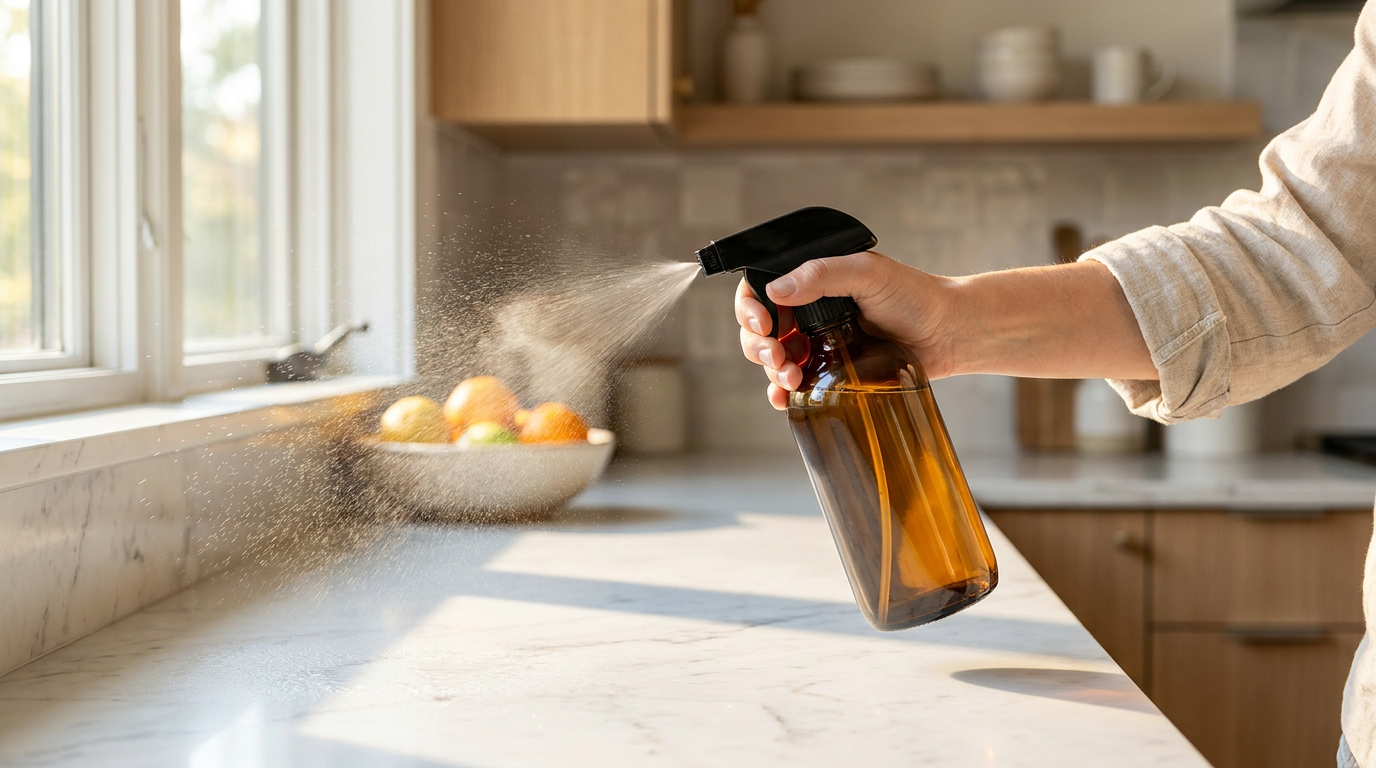
In response to these findings, a quiet revolution is taking place under the kitchen sink. Driven by advances in biotechnology and a growing understanding of microbial health, consumers and commercial facilities alike are abandoning reactive chemicals in favor of biological cleaning—specifically, enzymatic and probiotic cleaners. Instead of trying to kill everything in sight, these innovative formulas use nature’s own mechanisms to break down grime, eliminate odors at their source, and cultivate a healthy, balanced home microbiome that actively resists pathogenic overgrowth.[6]
To understand the mechanics of biological cleaning, one must first understand the role of enzymes. Enzymes are naturally occurring proteins that act as highly efficient biological catalysts, dramatically speeding up chemical reactions without being consumed in the process. In the context of cleaning, they function like microscopic lock-and-key mechanisms. Each specific type of enzyme is shaped to attach to a specific type of organic waste molecule, dismantling its complex structure into smaller, water-soluble pieces that can be easily wiped or washed away.[6][7]
Modern enzymatic cleaners typically rely on a sophisticated cocktail of four primary enzymes, each tasked with a specific target to handle complex, real-world messes. Proteases are designed to break down protein-based soils, making them ideal for blood, sweat, and food residue. Lipases specifically target fat molecules, dissolving stubborn cooking oils and grease. Amylases dismantle starches like pasta sauces and sugars, while cellulases break down plant fibers, particulate dirt, and hair. This combination ensures that almost any household mess, from spilled wine to pet accidents, can be effectively neutralized without relying on harsh solvents.[7]

This highly targeted, molecular approach makes enzymes remarkably efficient at tackling stubborn grime. Research published in the Journal of Surfactants and Detergents demonstrates that adding specific enzymes to cleaning formulations significantly improves the removal of complex organic stains compared to traditional, non-enzymatic chemical surfactants. Furthermore, because they physically dismantle the molecular structure of the organic waste, enzymes completely eliminate the source of odors rather than simply masking them with heavy artificial fragrances.[4][7]
However, pure enzyme cleaners have a distinct mechanical limitation: they are finite. Once the enzymes in a standard spray bottle are wiped away, diluted, or dry up on the surface, their cleaning action permanently stops. Unlike harsh chemicals that leave a lingering toxic residue, enzymes simply biodegrade into harmless amino acids once their specific task is complete. This is where the next frontier of biological cleaning—probiotic cleaners—enters the picture, transforming the way we maintain hygiene by introducing living organisms into the process.[6]
Probiotic cleaners do not just contain a static dose of enzymes; they contain live, beneficial bacteria that act as microscopic, self-replicating enzyme factories. When a probiotic cleaner is sprayed onto a surface, these carefully selected, dormant bacterial spores wake up and immediately begin consuming the organic matter—such as dirt, dead skin cells, and food spills—present on the counter, floor, or fabric. These microscopic workers establish a colony on the treated area, transforming the surface into an active cleaning zone.[5][8]
Probiotic cleaners do not just contain a static dose of enzymes; they contain live, beneficial bacteria that act as microscopic, self-replicating enzyme factories.
As long as there is "food" in the form of grime and a microscopic amount of ambient moisture available, these beneficial bacteria will continue to multiply and produce fresh enzymes. This creates a remarkable continuous cleaning effect that can last for up to 72 hours after the initial application, allowing the bacteria to reach deep into microscopic pores, scratches, and grout lines that traditional sponges completely miss.[6]

Beyond this continuous cleaning action, probiotics actively protect the home environment through a well-documented biological mechanism known as competitive exclusion. By intentionally flooding a surface with billions of harmless, beneficial bacteria, probiotic cleaners rapidly consume all the available biological resources. Harmful pathogens simply starve, unable to find the nutrients, moisture, or physical space required to establish a foothold and multiply to dangerous levels.[5][8]
This biological warfare is particularly effective against biofilms, which are one of the most persistent challenges in both domestic and clinical hygiene. Biofilms are stubborn, microscopic shields created by colonies of bacteria to protect themselves from environmental threats. Traditional chemical cleaners often glide right over biofilms, leaving the underlying bacteria completely intact. Probiotic enzymes, however, are specifically designed to digest these protective organic layers, dismantling the colony from the outside in.[5]
The efficacy of this biological approach is heavily documented in high-stakes, professional environments. The Centers for Disease Control and Prevention notes that enzymatic cleaners are highly effective at dissolving stubborn protein and fat residues on medical devices, often outperforming standard neutral detergents in removing microorganisms and organic buildup from complex clinical surfaces before they undergo high-level disinfection. This level of deep cleaning is critical in hospitals, where microscopic organic matter can shield dangerous pathogens from sterilization processes.[1]
Similarly, rigorous studies published by the National Institutes of Health have shown that implementing enzymatic cleaning protocols in commercial food processing facilities significantly reduces the concentration of spoiling bacteria. The research indicates that biological cleaning improves the overall microbial quality of the environment and the resulting food products far more effectively than conventional chemical sanitation methods alone. By breaking down the organic matrices that harbor spoilage organisms, enzymatic treatments provide a deeper, more resilient level of hygiene.[2]

The implications of this science for everyday household health are profound and currently under intense study. Major consumer goods researchers, including scientific teams at Unilever, are actively investigating how domestic probiotic cleaning products interact with the human skin microbiome and the broader indoor environment. Early evidence suggests that maintaining a balanced microbial ecosystem in the home can reduce exposure to common allergens and support healthier immune function, contrasting sharply with the respiratory irritation often caused by traditional cleaners.[3][5]
Despite their numerous advantages, transitioning to biological cleaners requires a fundamental shift in consumer habits and expectations. It is crucial to understand that they are not instant, FDA-cleared disinfectants. In high-risk scenarios—such as cleaning up a raw chicken spill on a cutting board or sanitizing a bathroom immediately after a severe viral illness—acute chemical disinfectants are still absolutely necessary to achieve immediate, on-contact sterilization.[8]
Furthermore, biological cleaners demand a degree of patience that spray-and-wipe chemicals do not. Because they rely on living organisms and sequential chemical reactions, they require adequate "dwell time" to function properly. Users must spray the solution and let it sit on a surface for several minutes to allow the enzymes sufficient time to break down the complex soils before wiping them away. Rushing the process by immediately wiping the surface dry prevents the biological catalysts from completing their molecular dismantling.[8]
Crucially, biological and chemical cleaners cannot be used simultaneously or even sequentially on the same surface. Applying bleach, ammonia, or antibacterial wipes over a probiotic-treated countertop will instantly kill the beneficial bacteria, completely neutralizing the product's primary advantage. Homeowners must choose one lane or the other, as the chemical approach actively destroys the biological one.[5]

Users must also exercise "fiber awareness" when utilizing enzymatic detergents on laundry, carpets, or upholstery. Because protease enzymes are specifically designed to aggressively break down proteins, they cannot distinguish between a protein-based blood stain and a protein-based fabric. Consequently, frequent use of enzymatic cleaners can slowly degrade delicate animal fibers like wool, silk, and cashmere over time. For these specific materials, traditional gentle detergents remain the safer, more appropriate choice to preserve the integrity of the garment.[4]
Ultimately, the rapid rise of biological cleaning represents a massive paradigm shift in how we manage our indoor environments. By moving away from the impossible and often harmful goal of absolute sterility, consumers are learning to harness the invisible power of the microscopic world. In the modern home, science is proving that the most effective way to fight bad bacteria is simply to deploy better bacteria.[8]
Viewpoints in depth
Microbiome Advocates
Argue that sterile homes are unnatural and detrimental to immune health, advocating for competitive exclusion via probiotics.
This camp, which includes environmental scientists and natural health advocates, argues that the mid-century obsession with killing 99.9% of household germs has backfired. They point to rising rates of allergies and autoimmune conditions as evidence that humans need regular exposure to diverse, harmless microbes to train their immune systems. By using probiotic cleaners, they argue, we can safely manage household grime while actively cultivating a protective, balanced indoor ecosystem that mirrors the natural world.
Clinical & Industrial Hygienists
Focus on the mechanical superiority of enzymes in breaking down complex proteins and biofilms that harbor dangerous pathogens.
For professionals managing hospital sterilization or food processing plants, the appeal of biological cleaning is purely mechanical. Traditional chemical disinfectants often fail to penetrate biofilms—the microscopic, sticky shields that bacterial colonies build to protect themselves. Hygienists value enzymatic cleaners because they actively digest these protective protein and fat layers, exposing the underlying pathogens and ensuring a truly deep clean that surface-level chemicals cannot achieve.
Traditional Sanitation Proponents
Maintain that while biologicals are great for grime, acute chemical disinfectants remain non-negotiable for immediate pathogen neutralization.
This perspective emphasizes the limitations of biological cleaning in high-risk scenarios. While acknowledging that enzymes are excellent for breaking down organic matter and controlling odors, traditional sanitation experts warn against relying on probiotics to handle acute biological hazards. In situations involving raw meat spills, bodily fluids, or active viral outbreaks within a household, they argue that the immediate, on-contact sterilization provided by EPA-registered chemical disinfectants is a non-negotiable safety requirement.
What we don't know
- The long-term epidemiological impacts of widespread domestic probiotic cleaner use on human immune system development.
- The exact transfer rate and survival duration of beneficial Bacillus spores from cleaned kitchen surfaces to the human skin microbiome.
Key terms
- Enzyme
- A natural protein that acts as a biological catalyst to break down specific complex molecules into smaller, washable pieces.
- Probiotic Cleaner
- A cleaning solution containing live, beneficial bacteria that continuously produce enzymes to digest organic waste over several days.
- Competitive Exclusion
- A biological process where beneficial bacteria consume all available resources on a surface, preventing harmful bacteria from surviving.
- Biofilm
- A stubborn, microscopic shield created by colonies of bacteria to protect themselves from environmental threats and traditional chemical cleaners.
- Protease
- A specific class of enzyme designed to break down protein-based stains like blood, sweat, and food residue.
Frequently asked
Can I use probiotic cleaners alongside bleach?
No. Harsh chemicals like bleach, ammonia, or antibacterial wipes will instantly kill the live beneficial bacteria in probiotic cleaners, completely neutralizing their continuous cleaning power.
Do biological cleaners kill viruses?
No. Probiotic and enzymatic cleaners are not registered disinfectants and do not instantly kill viruses on contact. They are designed for deep cleaning and microbiome balance, not acute sterilization.
Are enzyme cleaners safe for all fabrics?
Mostly, but use caution with animal fibers. Because protease enzymes are designed to break down proteins, they can degrade protein-based fabrics like wool, silk, and cashmere over time.
Sources
Source coverage
8 outlets
3 viewpoints surfaced







[1]Centers for Disease Control and PreventionClinical & Industrial Hygienists
Guidelines for Environmental Infection Control in Health-Care Facilities
Read on Centers for Disease Control and Prevention →[2]National Institutes of HealthClinical & Industrial Hygienists
Impact of Enzymatic Cleaning on Food Processing Facility Hygiene
Read on National Institutes of Health →[3]Unilever ResearchMicrobiome Advocates
Consumer and Environmental Microbiome Effects of Domestic Probiotic Cleaning Products
Read on Unilever Research →[4]Common GoodTraditional Sanitation Proponents
The Science of Enzymatic Cleaners and Fabric Care
Read on Common Good →[5]Hyve CleanMicrobiome Advocates
The Science of Probiotic Cleaners: How They Work
Read on Hyve Clean →[6]Thrive BioMicrobiome Advocates
Enzyme vs Probiotic Cleaners: What is the Difference?
Read on Thrive Bio →[7]Nyco ProductsClinical & Industrial Hygienists
The Magic of Bio-enzymatic Cleaners
Read on Nyco Products →[8]Factlen Editorial TeamTraditional Sanitation Proponents
Synthesis by Factlen editorial team
Read on Factlen Editorial Team →


Every angle. Every day.
Get home stories with full source coverage and perspective breakdowns delivered to your inbox.