
The Science of Aquascaping: How Underwater Gardens Are Rewiring Mental Health
The booming hobby of aquascaping combines complex water chemistry with biophilic design, offering proven psychological benefits and driving a multi-billion dollar market.
By Factlen Editorial Team
- High-Tech Enthusiasts
- Advocate for the use of pressurized CO2, intense lighting, and synthetic fertilizers to achieve rapid, pristine plant growth and complex designs.
- Wellness & Biophilic Designers
- Focus on the psychological and physiological benefits of aquariums, utilizing them as tools for stress reduction and interior harmony.
- Natural Method Advocates
- Favor low-tech setups using organic soil and minimal mechanical intervention, relying on natural ecological balance over rapid growth.
What's not represented
- · Commercial fish breeders
- · Wild aquatic plant conservationists
Why this matters
As urban living increasingly disconnects us from nature, aquascaping provides a scientifically backed method to lower stress hormones and improve focus right in your living room. Understanding the biological mechanisms behind these underwater ecosystems makes this powerful wellness tool accessible to anyone.
Key points
- Aquascaping has evolved from a niche hobby into a major driver of the $6.3 billion global aquarium market.
- Studies show that observing a planted aquarium actively lowers cortisol levels, heart rate, and blood pressure.
- Heavily planted tanks can bypass the traditional 3-6 week nitrogen cycle by absorbing toxic ammonia directly.
- High-tech setups use injected CO2 to supercharge plant growth, outcompete algae, and stabilize water pH.
- Low-tech "Walstad" methods offer an alternative, relying on organic soil and natural decomposition for a slower, balanced ecosystem.
- The routine maintenance of an aquascape serves as a form of active mindfulness and stress relief.
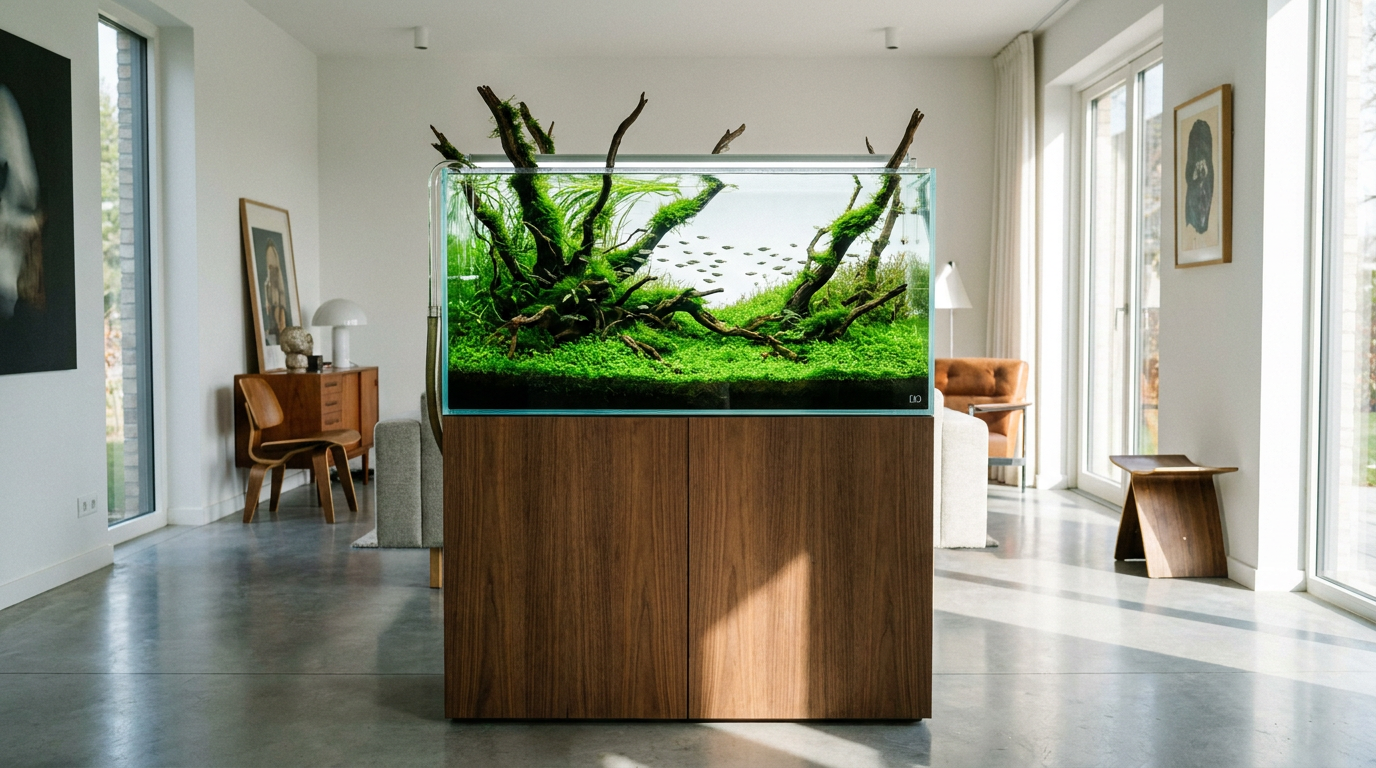
The glass box in the corner of the living room is undergoing a radical transformation. Gone are the days of neon gravel, plastic castles, and a solitary goldfish. In their place, a surging global movement known as "aquascaping" is turning home aquariums into lush, meticulously designed underwater forests. This intersection of biology, chemistry, and art has evolved from a niche hobby into a mainstream lifestyle trend, driven by a post-pandemic desire to bring the natural world indoors.[9]
The numbers reflect a massive shift in how people view aquatic pets. The global aquarium market, valued at $6.33 billion in 2024, is projected to reach $8.70 billion by 2032, growing at a steady 4.8% annually. Much of this growth is fueled not by traditional fishkeeping, but by the demand for high-end aquascaping materials: specialized rimless glass tanks, sophisticated LED lighting, and live aquatic plants.[1][6]

But the true driver of the aquascaping boom isn't just aesthetics; it is the profound, measurable impact these living ecosystems have on mental health. Biologist Edward O. Wilson's "biophilia hypothesis" suggests that humans possess an innate instinct to connect with nature. In increasingly dense urban environments, a thriving aquascape serves as a concentrated, accessible dose of the natural world, triggering neurological responses associated with safety and comfort.[3][9]
The psychological benefits are backed by clinical observation. Studies published in journals like Environment and Behavior demonstrate that even brief exposure to natural environments—including well-maintained aquariums—can significantly lower heart rates and reduce anxiety. The gentle movement of water, the sway of aquatic plants, and the slow, deliberate swimming of fish combine to create a meditative atmosphere that actively lowers cortisol, the body's primary stress hormone.[2][7]
Beyond passive observation, the act of maintaining an aquascape functions as a form of active mindfulness. The routine tasks of trimming fast-growing stem plants, performing weekly water changes, and testing water parameters force the hobbyist to slow down and remain present. This hands-on engagement provides a rewarding sense of accomplishment as the underwater landscape matures and thrives over months and years.[3][9]

Beneath the tranquil surface, however, an aquascape is a complex, highly active chemical environment. The success of these underwater gardens hinges on mastering the nitrogen cycle. In a traditional aquarium, fish waste breaks down into highly toxic ammonia. It typically takes three to six weeks for slow-growing colonies of beneficial bacteria to establish themselves in the filter, converting that ammonia into nitrite, and finally into relatively harmless nitrate.[3][8]
Aquascapers, however, have popularized a biological shortcut known as "silent cycling." By heavily planting the tank from day one—covering at least 70% of the substrate with fast-growing species—hobbyists can bypass the dangerous ammonia spikes that plague new aquariums. Aquatic plants actually prefer to absorb ammonia directly through their leaves as a primary nitrogen source, consuming it faster than bacteria can convert it.[3]
Aquatic plants actually prefer to absorb ammonia directly through their leaves as a primary nitrogen source, consuming it faster than bacteria can convert it.
This silent cycle relies on specific botanical workhorses. Fast-growing stem plants like Hygrophila and floating species like Salvinia act as nutrient sponges, pulling toxins from the water column almost instantly. When combined with nutrient-rich "aqua soil" that slowly leaches ammonia to feed the developing root systems, the plants create a naturally stable ecosystem that allows for the safe, gradual introduction of fish much earlier than traditional methods permit.[3][8]

To achieve the dense, vibrant growth seen in professional aquascapes, many enthusiasts turn to carbon dioxide (CO2) injection. Just as terrestrial plants require CO2 from the air, aquatic plants need dissolved carbon to perform photosynthesis efficiently. While some CO2 naturally diffuses into the water, it is rarely enough to support a heavily planted, brightly lit tank.[4]
Injecting pressurized CO2 gas into the water column supercharges plant metabolism. With a steady supply of carbon, plants can fully utilize the intense LED lighting and liquid fertilizers provided by the aquascaper. This rapid growth not only creates a visually stunning landscape but also allows the plants to outcompete nuisance algae for available nutrients, keeping the glass and hardscape pristine.[4][8]
Furthermore, CO2 injection plays a crucial role in water chemistry. When dissolved in water, CO2 forms a weak carbonic acid, which naturally lowers and stabilizes the pH of the aquarium. This slightly acidic environment mirrors the natural habitats of many popular tropical fish, such as tetras and rasboras, reducing their stress and enhancing their natural coloration.[4][9]

However, high-tech CO2 systems are not the only path to a beautiful aquascape. A dedicated subset of the hobby advocates for "low-tech" or "Walstad" methods, named after ecologist Diana Walstad. These setups rely on deep beds of organic potting soil capped with sand or gravel, utilizing the slow, natural decomposition of organic matter to provide a steady, low-level supply of CO2 and nutrients to the plants.[5]
The low-tech approach requires immense patience. Without injected CO2 and intense lighting, plant growth is slow and deliberate. Yet, advocates argue that these systems are ultimately more stable and require far less maintenance, relying on a precise, natural balance between the fish bioload, the soil microbiome, and the plant mass rather than mechanical intervention.[5][9]
Whether high-tech or low-tech, the foundation of any aquascape is the "hardscape"—the careful arrangement of rocks and driftwood that forms the structural backbone of the design. Hobbyists spend hours meticulously positioning stones to create forced perspective, mimicking sweeping mountain ranges, dense jungle roots, or serene riverbeds within the confines of a glass box.[6][9]

As the hobby continues to expand, the industry is adapting to meet the demand for sustainability. The rise of tissue-culture plants—grown in sterile laboratories rather than harvested from the wild—ensures that hobbyists receive pest-free, environmentally friendly flora. Meanwhile, advancements in smart aquarium technology are automating lighting schedules and fertilizer dosing, making the hobby more accessible to beginners.[6]
Ultimately, aquascaping represents a fundamental shift in how we interact with the natural world in our daily lives. It is a rejection of the sterile, disconnected modern interior in favor of a living, breathing ecosystem. By combining the rigorous science of water chemistry with the intuitive art of landscape design, aquascapers are creating spaces that not only sustain aquatic life, but actively nurture the human mind.[9]
How we got here
1990s
Japanese photographer Takashi Amano introduces the "Nature Aquarium" style, revolutionizing the hobby.
2010s
Advancements in affordable LED lighting and CO2 systems make high-tech aquascaping accessible to home hobbyists.
2020
Pandemic lockdowns trigger a massive global surge in indoor hobbies, dramatically accelerating aquascaping's popularity.
2024
The global aquarium market surpasses $6.3 billion, driven largely by the demand for premium aquascaping equipment.
2026
Biophilic design trends cement aquascaping as a mainstream wellness practice recognized for its mental health benefits.
Viewpoints in depth
High-Tech Aquascapers
Advocates for precision control using CO2, intense lighting, and synthetic fertilizers.
For high-tech enthusiasts, aquascaping is an exercise in mastering chemistry and biology to achieve spectacular visual results. By injecting pressurized CO2 and utilizing high-output LED lighting, they push aquatic plants to their maximum metabolic limits. This approach allows for the cultivation of notoriously difficult, vibrant red plant species and dense, carpet-like foregrounds that would perish in standard aquariums. While this method requires rigorous weekly maintenance and precise daily fertilizer dosing, proponents argue it is the only way to achieve the pristine, algae-free, competition-level landscapes that define modern aquascaping.
Low-Tech & Walstad Advocates
Proponents of natural, soil-based ecosystems that require minimal mechanical intervention.
Followers of the "Walstad method" and other low-tech approaches view the high-tech pursuit of rapid growth as unnecessary and unstable. Instead, they rely on a deep substrate of organic potting soil to provide a slow, steady release of nutrients and natural CO2 through decomposition. By carefully balancing the fish bioload with the plant mass, these aquariums can often run for months without water changes or fertilizer dosing. Advocates argue that this method is not only more affordable and accessible for beginners, but it also creates a more resilient, self-sustaining ecosystem that mimics how natural waterways actually function.
Wellness & Biophilic Designers
Professionals focused on the psychological and physiological benefits of bringing aquatic nature indoors.
For wellness experts and interior designers, the chemical mechanics of the tank are secondary to the psychological impact it has on the room's occupants. Rooted in the biophilia hypothesis, they view aquascapes as active therapeutic tools. Research consistently shows that the presence of a thriving aquatic ecosystem lowers cortisol levels, reduces blood pressure, and mitigates anxiety. In corporate offices, hospitals, and high-stress urban homes, these designers utilize aquascapes not merely as decoration, but as essential installations for mental health, providing a necessary visual and auditory escape from the digital world.
What we don't know
- The long-term ecological impact of mass-producing specific tissue-culture plant species for the global market.
- Exactly how much of the mental health benefit is derived from the visual aesthetics versus the routine physical maintenance of the tank.
Key terms
- Aquascaping
- The craft of arranging aquatic plants, as well as rocks, stones, cavework, or driftwood, in an aesthetically pleasing manner within an aquarium.
- Silent Cycling
- A biological process in heavily planted aquariums where live plants absorb toxic ammonia directly, bypassing the traditional bacterial nitrogen cycle.
- Hardscape
- The non-living structural elements of an aquascape, primarily consisting of specifically chosen rocks, stones, and driftwood.
- CO2 Injection
- The process of dissolving pressurized carbon dioxide gas into aquarium water to supercharge plant photosynthesis and growth.
- Biophilia Hypothesis
- The idea that humans possess an innate tendency to seek connections with nature and other forms of life, which provides psychological comfort.
- Tissue Culture Plants
- Aquatic plants grown in sterile laboratory conditions, ensuring they are free from algae, pesticides, and unwanted pests like snails.
Frequently asked
What is the difference between aquascaping and a regular fish tank?
While a traditional aquarium focuses primarily on keeping fish alive, aquascaping focuses on cultivating a beautiful, balanced underwater landscape using live plants, rocks, and wood. The fish are often secondary additions to complement the scenery.
Do I absolutely need a CO2 injection system?
No. While CO2 injection is required for demanding, fast-growing plant species and vibrant red colors, many beautiful "low-tech" aquascapes can be created using hardy plants like Anubias and Java Fern that thrive without added CO2.
What is "silent cycling" in an aquarium?
Silent cycling is a method where a tank is heavily planted from day one. The fast-growing plants absorb toxic ammonia directly from the water, preventing the dangerous chemical spikes associated with traditional fishless cycling.
How much time does maintaining an aquascape take?
A well-balanced high-tech tank typically requires 1 to 2 hours of maintenance per week, primarily consisting of a 50% water change, glass cleaning, and trimming fast-growing plants. Low-tech tanks require significantly less time.
Sources
Source coverage
9 outlets
3 viewpoints surfaced









[1]Intel Market Research
Aquarium Market Growth Analysis, Dynamics, Key Players and Innovations
Read on Intel Market Research →[2]Environment and BehaviorWellness & Biophilic Designers
Marine Biota and Psychological Well-Being
Read on Environment and Behavior →[3]Gensou AquascapingWellness & Biophilic Designers
The Science Behind Aquarium-Induced Calm
Read on Gensou Aquascaping →[4]Ripple Effect AquaticsHigh-Tech Enthusiasts
The Nitrogen Cycle & Why Choose Live Plants
Read on Ripple Effect Aquatics →[5]Aquarium ScienceNatural Method Advocates
Low Tech Planted Aquarium
Read on Aquarium Science →[6]Future Market Insights
Aquarium and Fish Bowls Market Size and Share Forecast Outlook
Read on Future Market Insights →[7]The Fish BarnWellness & Biophilic Designers
Psychological and Mental Health Benefits of Fishkeeping
Read on The Fish Barn →[8]CO2ArtHigh-Tech Enthusiasts
What to do after the aquarium has finished cycling?
Read on CO2Art →[9]Factlen Editorial Team
Synthesis by Factlen editorial team
Read on Factlen Editorial Team →
More in lifestyle
See all 35 stories →Future of Work
The Four-Day Workweek Is No Longer a Theory: What the Global Data Actually Shows
8 sources

Modern Romance
The Rise of 'Slow Dating': How Intentionality is Replacing the Swipe-Right Culture
8 sources

Everyday Awe
The Science of Awe: How Everyday Wonder Rewires the Brain and Body
6 sources

Sourdough Science
The Science of Sourdough: How Wild Yeast and Bacteria Transform Flour and Water
6 sources

Every angle. Every day.
Get lifestyle stories with full source coverage and perspective breakdowns delivered to your inbox.