
The Rise of Local AI: How Small Language Models Are Putting Power in Your Pocket
A new generation of highly efficient small language models is moving artificial intelligence out of the cloud and directly onto laptops and smartphones. This shift promises unprecedented privacy, zero latency, and offline capabilities for everyday users.
By Factlen Editorial Team
- Privacy & Security Advocates
- Champion local AI as the ultimate solution to data sovereignty and corporate surveillance.
- Open-Source Developers
- Focus on the democratization of artificial intelligence through accessible, highly optimized models.
- Hardware Manufacturers
- See the local AI boom as a catalyst for a massive hardware upgrade cycle.
What's not represented
- · Cloud Infrastructure Providers
- · Regulatory Policymakers
Why this matters
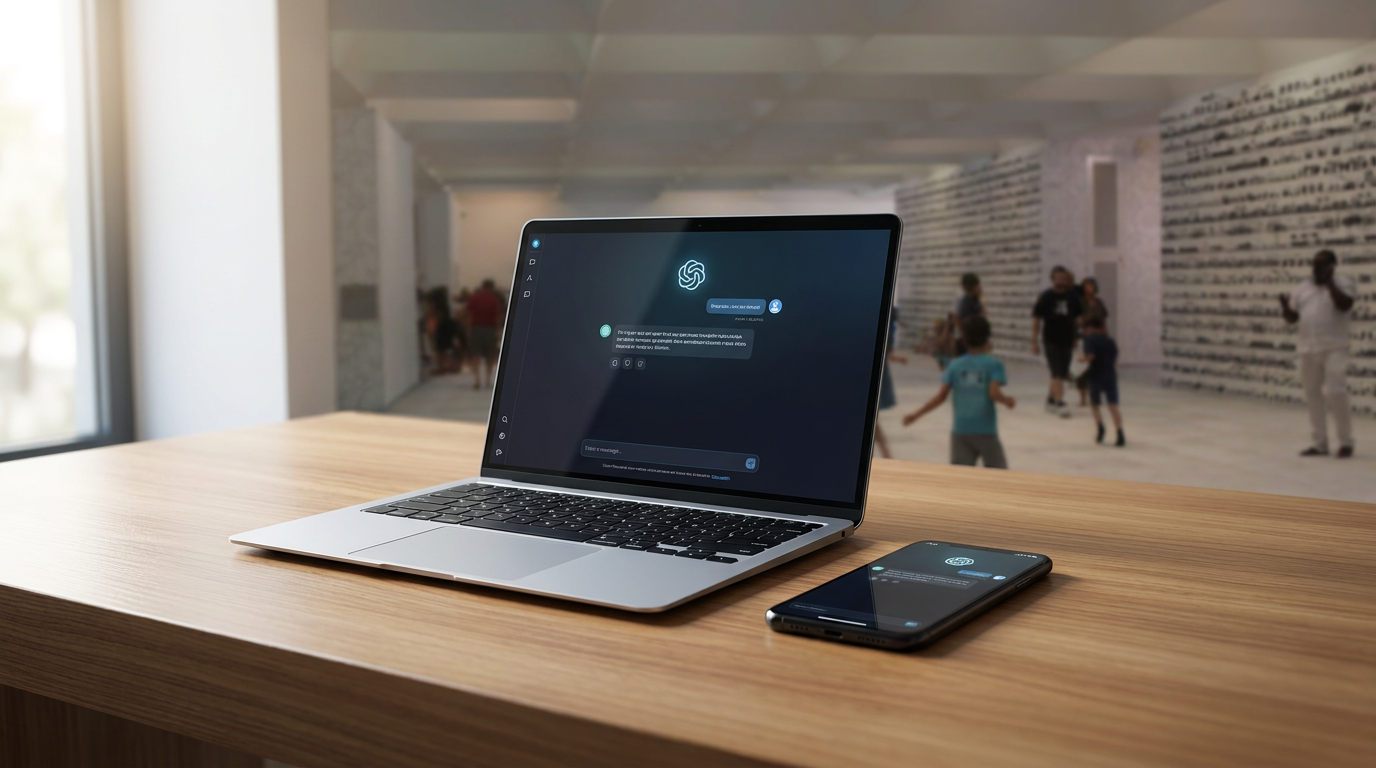
By running artificial intelligence locally on your own device, your sensitive data—from financial documents to personal messages—never has to be sent to a corporate server. This shift not only guarantees absolute privacy but also eliminates subscription fees and allows powerful AI tools to work instantly, even without an internet connection.
Key points
- Small Language Models (SLMs) are moving AI processing from cloud servers directly onto consumer devices.
- Modern SLMs operate with 1 to 8 billion parameters, making them highly efficient for everyday tasks.
- Running AI locally ensures absolute data privacy, as sensitive information never leaves the user's device.
- Local execution eliminates network latency and allows AI tools to function entirely offline.
- The shift requires new hardware, with 16GB of RAM and a dedicated NPU becoming the baseline for AI PCs.
- Quantization techniques compress massive AI models to fit within the memory constraints of laptops and phones.
For the past three years, using artificial intelligence meant sending your data to a massive, energy-hungry data center. Every prompt, question, and document was beamed to the cloud, processed by giant servers, and sent back. But in 2026, a fundamental shift is rewriting the rules of AI deployment.[3][7]
The era of "local AI" has arrived. Driven by a new class of highly optimized Small Language Models (SLMs) and specialized consumer hardware, powerful AI is moving directly onto laptops, smartphones, and edge devices.[1][3]
To understand the shift, one must look at the sheer scale of traditional Large Language Models (LLMs). Frontier models boast hundreds of billions—or even trillions—of parameters, requiring massive arrays of GPUs and immense electrical power to function.[1][2]

Small Language Models, by contrast, typically operate in the range of 1 billion to 8 billion parameters. While they lack the encyclopedic breadth to write a thesis on obscure 14th-century poetry, they are remarkably adept at the tasks users actually need: summarizing emails, drafting code, and answering document-specific questions.[1][4]
The performance of these compact models has surged dramatically. Microsoft’s Phi-4, Google’s Gemma 3, and Meta’s Llama 3.2 have proven that high-quality training data and architectural efficiency can trump raw parameter count.[4][6]
In fact, industry benchmarks in 2026 show that for 80% of everyday production use cases, a specialized SLM running locally performs just as well as a massive cloud model, while operating at a fraction of the cost.[1][4]

The catalyst for this localized revolution is hardware. Modern processors now routinely include Neural Processing Units (NPUs)—dedicated silicon designed specifically to handle the complex mathematics of artificial intelligence efficiently.[3][5]
Platforms like Qualcomm's Snapdragon X Elite, Intel's Core Ultra 200V, and AMD's Ryzen AI 300 series are pushing 40 to 80 TOPS (Trillion Operations Per Second), providing the necessary horsepower to run these models without melting the device.[5]
However, running AI locally places a heavy premium on system memory. Because model weights must be loaded directly into RAM, 16GB has become the absolute bare minimum for an "AI PC," with 32GB now widely recommended for users wanting to run capable local models smoothly.[4][5]

However, running AI locally places a heavy premium on system memory.
To fit these models into consumer hardware, developers rely on a technique called quantization. By compressing the mathematical precision of the model's weights—from 32-bit floating-point numbers down to 4-bit integers—a model that would normally require massive server memory can squeeze into a standard laptop's RAM.[1][4]
The most profound benefit of local AI is absolute privacy. Because the model runs entirely on the user's silicon, sensitive data—such as financial records, proprietary corporate code, or personal health queries—never leaves the device.[3][6]
This data sovereignty is transforming industries bound by strict compliance regulations, allowing legal and medical professionals to utilize AI assistance without violating client confidentiality or data protection laws.[2][3]
Beyond privacy, local execution eliminates the latency inherent in cloud computing. Without the need to transmit data to a server and wait for a response, on-device AI can deliver sub-second reaction times, enabling seamless real-time voice translation and instant code completion.[2][6]

It also untethers the user from the internet. A local SLM functions perfectly on an airplane, in a remote cabin, or during a network outage, transforming AI from a web service into a fundamental, always-available operating system utility.[3][6]
Energy efficiency is another critical triumph. Running complex AI on a standard CPU would drain a laptop battery in an hour. By offloading inference to the NPU, modern devices can process AI tasks continuously while maintaining all-day battery life, consuming up to 90% less energy than cloud-based alternatives.[5][6]
The future of AI is not exclusively small, but rather hybrid. Devices will increasingly route 95% of routine tasks to fast, private, local SLMs, reserving cloud connections only for the 5% of queries that require massive reasoning capabilities. This intelligent orchestration puts the power back in the user's pocket.[4][7]
How we got here
2023
Massive cloud-based Large Language Models dominate the AI landscape, requiring immense data center compute.
2024
Tech companies release highly capable, open-weight small models like Microsoft's Phi and Meta's Llama.
2025
The first generation of 'AI PCs' equipped with dedicated Neural Processing Units (NPUs) hits the consumer market.
2026
Small Language Models become the default for mobile and edge computing, handling the majority of daily AI tasks locally.
Viewpoints in depth
Privacy & Security Advocates
Champion local AI as the ultimate solution to data sovereignty and corporate surveillance.
For privacy advocates, the shift to on-device AI is a monumental victory. By processing sensitive information—such as medical records, financial documents, and personal communications—entirely on local silicon, users eliminate the risk of data breaches associated with cloud storage. This camp argues that the era of trading personal data for AI utility is ending, replaced by a paradigm where the user retains absolute ownership and control over their digital footprint.
Open-Source Developers
Focus on the democratization of artificial intelligence through accessible, highly optimized models.
The open-source community views Small Language Models as the great equalizer. By proving that a 3-billion-parameter model can match the performance of massive proprietary systems for specific tasks, developers are breaking the monopoly of big tech data centers. They emphasize that quantization and efficient architectures allow anyone with a standard laptop to build, modify, and deploy powerful AI tools without paying exorbitant API fees.
Hardware Manufacturers
See the local AI boom as a catalyst for a massive hardware upgrade cycle.
For silicon vendors and PC manufacturers, the demands of local AI represent a lucrative new frontier. They are aggressively pushing the narrative that legacy computers are obsolete, driving consumers toward 'AI PCs' equipped with dedicated Neural Processing Units (NPUs) and 32GB of RAM. This camp focuses heavily on metrics like TOPS (Trillion Operations Per Second) and battery efficiency, positioning specialized hardware as the necessary foundation for the next generation of computing.
What we don't know
- How quickly software developers will rewrite legacy applications to take full advantage of local NPUs.
- Whether the rapid pace of SLM innovation will eventually plateau, allowing cloud models to widen the performance gap again.
- How the economics of AI will shift as companies lose the recurring revenue of cloud API subscriptions.
Key terms
- Small Language Model (SLM)
- A compact artificial intelligence model designed to run efficiently on consumer hardware like laptops and phones, rather than massive cloud servers.
- Neural Processing Unit (NPU)
- A specialized hardware chip built into modern processors specifically designed to handle AI calculations quickly and efficiently.
- TOPS (Trillion Operations Per Second)
- A metric used to measure the performance of an NPU; 40 TOPS is generally considered the minimum for a modern AI PC.
- Quantization
- A compression technique that reduces the mathematical precision of an AI model so it can fit into the limited memory of a consumer device.
- Inference
- The process of an AI model actively running and generating a response to a user's prompt.
- Edge Computing
- Processing data locally on the device where it is generated (the 'edge' of the network), rather than sending it to a centralized cloud server.
Frequently asked
Can my current laptop run local AI?
It depends on your memory. Running capable local AI models requires a minimum of 16GB of RAM, though 32GB is highly recommended. An NPU is also needed for battery efficiency.
Is local AI as smart as ChatGPT?
For specific, focused tasks like summarizing documents or writing code, yes. However, small models lack the broad, encyclopedic knowledge of massive cloud-based models.
Do I need the internet to use a Small Language Model?
No. Once the model is downloaded to your device, it runs entirely offline, ensuring absolute privacy and zero network latency.
Will running AI locally drain my battery?
If run on a standard CPU, yes. However, modern 'AI PCs' use dedicated Neural Processing Units (NPUs) that handle AI tasks with extreme energy efficiency, preserving battery life.
Sources
Source coverage
7 outlets
3 viewpoints surfaced






[1]Machine Learning MasteryOpen-Source Developers
Introduction to Small Language Models: The Complete Guide for 2026
Read on Machine Learning Mastery →[2]MediumOpen-Source Developers
The SLM Paradigm Shift: From Bigger to Better
Read on Medium →[3]AI MagicxPrivacy & Security Advocates
On-Device AI in 2026: Running LLMs Locally on Your Phone, Laptop, and IoT Devices
Read on AI Magicx →[4]Local AI MasterOpen-Source Developers
Best Small Language Models 2026: 12 SLMs Ranked for 8GB RAM
Read on Local AI Master →[5]NeweggHardware Manufacturers
AI PC Buying Guide: What to Look for in 2026
Read on Newegg →[6]DEV CommunityPrivacy & Security Advocates
Efficiency Advantages of Small Language Models
Read on DEV Community →[7]Factlen Editorial TeamHardware Manufacturers
Synthesis by Factlen editorial team
Read on Factlen Editorial Team →
More in ai
See all 7 stories →Local AI
The Rise of Local AI: How to Run Powerful LLMs on Your Own Laptop
0 sources
Open Source AI
Open-Source AI Reaches Frontier Parity as MiniMax M3 and Local Agents Break the Cloud Monopoly
0 sources
Materials Science
How AI is Compressing Decades of Battery Research into Days
0 sources
AI in Medicine
UK Launches World's First AI Regulatory Sandbox to Transform Medicines Safety and Drug Development
0 sources

Every angle. Every day.
Get ai stories with full source coverage and perspective breakdowns delivered to your inbox.