
The Gut-Brain Axis: How 'Psychobiotics' and Diet Are Reshaping Mental Health
Emerging research reveals that the trillions of microbes in the digestive tract directly influence mood, anxiety, and depression. By targeting the gut microbiome through diet and 'psychobiotics,' scientists are unlocking a new frontier in mental health treatment.
By Factlen Editorial Team
- Microbiome Researchers
- Scientists focused on the biological and chemical mechanisms linking gut bacteria to brain function.
- Nutritional Psychiatrists
- Clinicians advocating for dietary interventions as a primary or adjunctive treatment for mental health.
- Clinical Skeptics
- Experts urging caution against overhyping probiotics as a standalone cure for severe psychiatric conditions.
What's not represented
- · Gastroenterologists treating physical gut disorders
- · Patients with severe, treatment-resistant depression
Why this matters
For decades, mental health was treated exclusively as a brain chemistry issue. Understanding the gut-brain axis empowers individuals to actively support their psychological well-being through accessible, daily dietary choices.
Key points
- The gut and brain communicate constantly via the vagus nerve, immune system, and neurotransmitters.
- Up to 90% of the body's serotonin is produced in the digestive tract by gut microbes.
- Diets high in fiber and fermented foods promote beneficial bacteria that reduce neuroinflammation.
- "Psychobiotics" are emerging as targeted microbial therapies to alleviate anxiety and depression.
- While promising, dietary interventions are not a standalone cure for severe psychiatric illnesses.
For decades, the fields of gastroenterology and psychiatry operated in entirely separate medical silos. The human brain was considered an isolated fortress, protected by the impenetrable blood-brain barrier, while the gut was viewed merely as a mechanical processing plant for extracting nutrients from food. Today, that rigid paradigm has been entirely upended by a wave of microbiological discoveries. A surge of research throughout 2025 and 2026 has cemented the reality of the "gut-brain axis"—a complex, bidirectional communication highway linking the trillions of microscopic organisms in our digestive tract directly to our emotional and cognitive centers.[1][3]
This microscopic ecosystem, known collectively as the gut microbiome, consists of roughly 500 trillion bacteria, fungi, and viruses residing primarily in the large intestine. Far from being passive hitchhikers merely along for the ride, these microbes are highly active chemical factories that operate around the clock. They synthesize essential neurotransmitters, regulate the body's immune responses, and produce potent metabolic byproducts that can physically alter the structure and function of the brain. The sheer volume of genetic material contained within these microbes vastly outnumbers human DNA, making the microbiome a critical, albeit invisible, organ in its own right.[4][5]
The implications of this connection for mental health are profound and paradigm-shifting. Conditions like generalized anxiety and major depressive disorder have long been treated almost exclusively from the "neck up," relying heavily on pharmaceuticals designed to tweak brain chemistry. However, these conditions are increasingly being viewed through a whole-body, systemic lens. By modifying the gut microbiome through targeted dietary changes, specific nutritional supplements, and lifestyle adjustments, researchers are unlocking a new, highly accessible frontier in psychiatric care that empowers patients to take an active role in their own psychological well-being.[2][6]
The communication network between the gut and the brain relies on three primary, overlapping channels: neural, immune, and endocrine. The most direct physical link is the vagus nerve, a massive, wandering cranial nerve that extends from the brainstem all the way down into the abdomen. The vagus nerve acts as a high-speed, bidirectional data cable, transmitting real-time signals from the gut microbiota directly into the limbic system, which serves as the brain's primary emotional processing center. When the gut is distressed, the vagus nerve ensures the brain immediately feels the impact.[1][3]

Chemically, the digestive tract is an absolute powerhouse of neurotransmitter production. While serotonin is universally famous as the brain's primary "feel-good" chemical, an estimated 90 percent of the body's total serotonin is actually manufactured by cells in the digestive tract, heavily influenced by microbial activity. Gut microbes also stimulate the production of gamma-aminobutyric acid (GABA), a crucial inhibitory neurotransmitter that calms nervous system activity and regulates anxiety levels. When the microbiome falls into a state of imbalance, the production of these critical mood-regulating chemicals can plummet, leaving the brain starved of the signals it needs to maintain emotional equilibrium.[5][6]
The immune system serves as the third critical communication channel along the gut-brain axis. A healthy, robust gut lining forms a tight, selective barrier, keeping harmful bacteria, undigested food particles, and environmental toxins safely contained within the digestive tract. However, a dysbiotic, or imbalanced, microbiome can degrade this delicate lining, leading to a condition commonly referred to as "leaky gut" or intestinal permeability. When bacterial fragments and toxins escape the confines of the gut and enter the systemic bloodstream, they immediately trigger a widespread, defensive immune response.[4][5]
This systemic immune response triggers the release of pro-inflammatory cytokines—chemical messengers that sound the alarm throughout the body. Crucially, these inflammatory cytokines are capable of crossing the blood-brain barrier, where they induce a state of neuroinflammation. Chronic, low-grade inflammation in the brain is now widely recognized by neuroscientists as a major underlying driver of clinical depression, brain fog, and cognitive decline. By keeping the intestinal barrier intact and preventing systemic inflammation, a diverse and healthy microbiome effectively acts as a vital neurological shield for the brain.[3][5]
If the microbiome dictates the baseline of our mental health, then diet is the primary, everyday tool we possess for dictating the health of the microbiome. The food we consume on a daily basis determines exactly which microbial populations thrive and which populations starve. Western diets—typically characterized by high intakes of ultra-processed foods, refined sugars, artificial emulsifiers, and unhealthy saturated fats—actively promote the rapid growth of inflammatory bacterial strains while simultaneously decimating the overall diversity of the microbial ecosystem.[1][6]
If the microbiome dictates the baseline of our mental health, then diet is the primary, everyday tool we possess for dictating the health of the microbiome.
Conversely, dietary patterns like the Mediterranean diet—which is remarkably rich in colorful vegetables, legumes, whole grains, nuts, and healthy fats like olive oil—have consistently been linked to significantly better mental health outcomes across large population studies. These plant-based, whole foods are densely packed with prebiotics, which are the complex, indigestible dietary fibers that serve as the primary, preferred food source for the most beneficial strains of gut bacteria. Feeding these microbes ensures they have the fuel required to perform their neuroprotective functions.[2][3]

When beneficial microbes ferment these complex prebiotic fibers in the colon, they produce a class of highly beneficial metabolic byproducts known as short-chain fatty acids (SCFAs), with butyrate being the most prominent. SCFAs are crucial molecules that not only nourish and repair the cells lining the gut wall but also travel through the bloodstream directly to the brain. Once there, SCFAs promote neuroplasticity, support the growth of new neurons, and actively suppress neuroinflammation. Notably, significantly lower levels of butyrate-producing bacteria are frequently observed in the microbiomes of individuals suffering from clinical depression.[4][5]
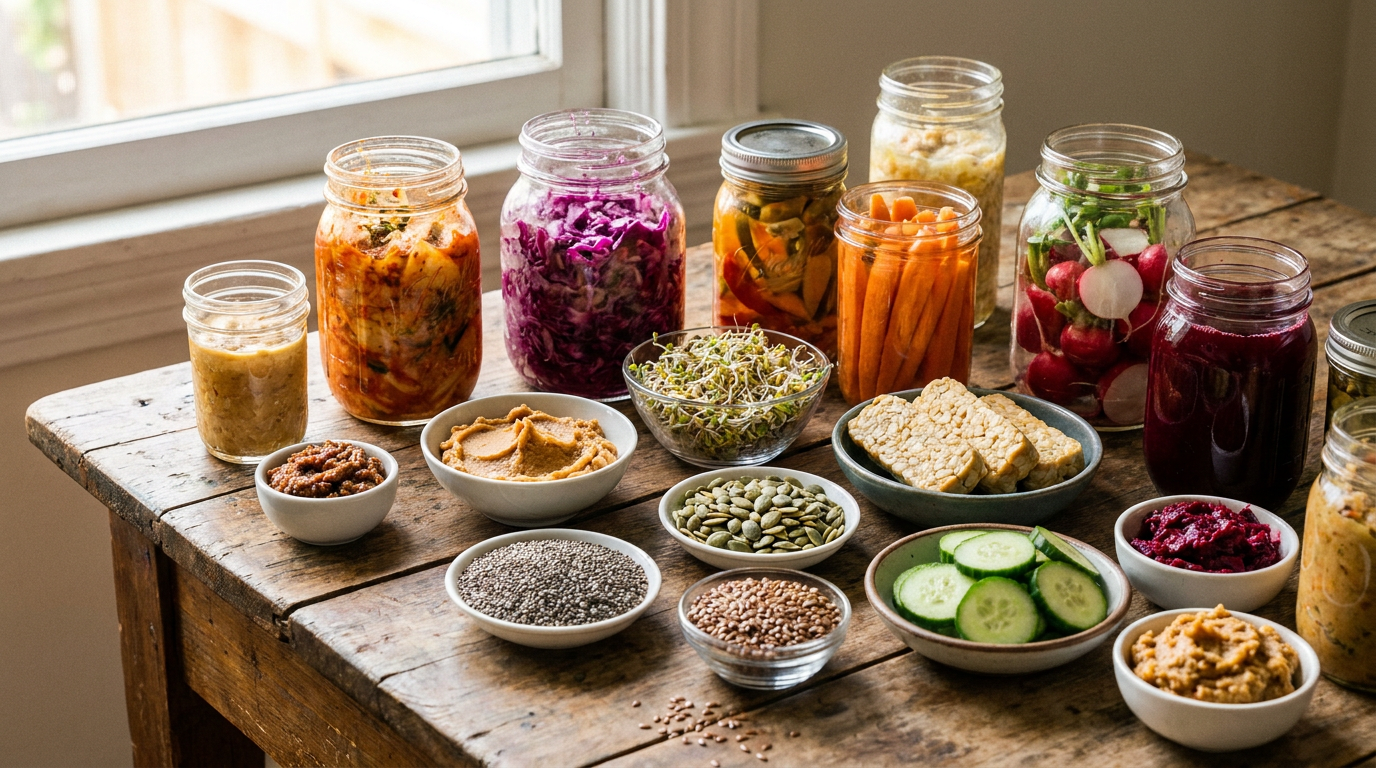
Fermented foods, such as traditional kefir, kimchi, raw sauerkraut, kombucha, and live-culture yogurt, offer another powerful dietary lever for modulating the gut-brain axis. Unlike prebiotics, which feed existing bacteria, fermented foods introduce live, beneficial bacterial cultures directly into the digestive tract. Recent clinical reviews and nutritional studies suggest that consistently incorporating both prebiotic fibers and probiotic-rich fermented foods into a daily diet can measurably reduce the severity of symptoms associated with mild to moderate anxiety and depression.[1][2]
The immense therapeutic potential of the gut-brain axis has recently given rise to an entirely new class of targeted interventions known in the scientific community as "psychobiotics." Originally defined simply as live probiotics that confer specific mental health benefits when ingested, the scientific definition of the term has rapidly expanded over the last few years. Today, psychobiotics encompass prebiotics, postbiotics (such as short-chain fatty acids), and highly targeted microbial therapies designed specifically to alter brain function, regulate mood, and treat psychiatric symptoms from the bottom up, rather than relying solely on traditional top-down pharmaceutical approaches.[6][7]
Specific bacterial strains, particularly those falling within the Lactobacillus and Bifidobacterium families, have shown remarkable, quantifiable efficacy in recent human clinical trials. When administered at clinical doses, these specific strains appear to actively dampen the reactivity of the amygdala—the brain's primary fear and emotion center. Furthermore, they help regulate the hypothalamic-pituitary-adrenal (HPA) axis, the complex hormonal system that controls the body's physiological stress response and the production of cortisol, thereby blunting the physical impact of chronic stress.[3][7]
The precise biological mechanisms behind how psychobiotics achieve these neurological feats are finally coming into sharper focus. Recent breakthrough discoveries highlight the critical role of bacterial extracellular vesicles—microscopic, lipid-bound packets released by gut bacteria into their surrounding environment. These vesicles are small enough to easily cross both the intestinal wall and the highly selective blood-brain barrier. Once inside the brain, they deliver bacterial genetic material and specialized enzymes directly to human brain cells, promoting neuroprotection and enhancing serotonergic signaling pathways.[7]

Despite the immense, paradigm-shifting promise of nutritional psychiatry and psychobiotic therapies, the field is still actively navigating significant scientific complexities. The human microbiome is an incredibly complex ecosystem that is as entirely unique to an individual as a fingerprint, shaped by decades of diet, environment, and genetics. Because of this massive baseline variability, a specific dietary intervention or a particular probiotic strain that miraculously alleviates anxiety in one patient might have absolutely no measurable effect on another, making standardized, one-size-fits-all psychiatric treatments exceedingly difficult to prescribe at this stage of research.[1][3]
Furthermore, clinical researchers heavily caution against viewing the microbiome as a simplistic, standalone cure for severe, clinical psychiatric illnesses. The gut-brain relationship is inherently bidirectional; just as a state of gut dysbiosis can trigger the onset of depression, the profound physiological stress of severe depression can alter gut motility, reduce stomach acid, and actively degrade the microbiome. Untangling this complex "chicken or egg" dynamic requires massive, longitudinal human trials that carefully control for genetics, environmental factors, and baseline mental health status.[2][8]
The commercial supplement industry has also vastly outpaced the rigorous scientific research, flooding the wellness market with generic, broadly marketed probiotic pills that often lack the specific, clinically tested bacterial strains required to achieve a genuine psychobiotic effect. Experts routinely stress that simply popping a daily probiotic capsule cannot magically undo the systemic neuroinflammatory damage caused by a chronically poor, highly processed diet, nor can it replace the need for comprehensive psychiatric care when dealing with severe mental health disorders.[3][8]

Nevertheless, the ongoing shift toward a microbiome-centric view of mental health is profoundly empowering for the general public. It moves the medical needle away from a purely deterministic, genetic view of brain chemistry—where patients often feel like passive victims of their own inherited neurotransmitter imbalances—and instead offers individuals actionable, daily lifestyle choices. By understanding the gut-brain connection, people are given the tools to actively support their psychological well-being and build long-term cognitive resilience from the ground up, using the grocery store as an extension of the pharmacy.[1][2]
By simply changing what is on the end of our forks—prioritizing diverse sources of dietary fiber, enthusiastically embracing fermented foods, and consciously feeding the trillions of microscopic organisms that share our bodies—we are actively participating in our own mental health care on a daily basis. The emerging scientific consensus across both gastroenterology and psychiatry is becoming increasingly clear and impossible to ignore: the human gut may truly serve as the body's second brain, and after decades of dietary neglect, we are finally learning exactly how to properly feed it for optimal emotional health.[1][3]
How we got here
Early 2000s
The Human Microbiome Project begins mapping the trillions of microbes living in and on the human body.
2013
The term 'psychobiotics' is coined to describe live bacteria that confer mental health benefits when ingested.
2019
Large-scale observational studies establish a clear link between the Mediterranean diet, gut diversity, and lower rates of depression.
2025-2026
Clinical trials begin isolating specific mechanisms, such as bacterial extracellular vesicles, that allow gut microbes to directly influence brain chemistry.
Viewpoints in depth
Microbiome Researchers
Scientists focused on the biological and chemical mechanisms linking gut bacteria to brain function.
This camp views the microbiome as an active endocrine and neural organ. They emphasize the discovery of specific pathways—such as the vagus nerve and bacterial extracellular vesicles—that allow gut microbes to bypass the blood-brain barrier. For these researchers, the future of psychiatry lies in precision medicine, where specific bacterial strains are prescribed to alter targeted neural circuits and neurotransmitter production.
Nutritional Psychiatrists
Clinicians advocating for dietary interventions as a primary or adjunctive treatment for mental health.
Nutritional psychiatrists focus on the systemic effects of whole-food diets. Rather than isolating single bacterial strains, they argue that a diverse, fiber-rich diet (like the Mediterranean diet) naturally cultivates a resilient microbiome. They point to clinical trials showing that reducing ultra-processed foods and increasing fermented foods can significantly lower systemic inflammation and alleviate symptoms of anxiety and depression.
Clinical Skeptics
Experts urging caution against overhyping probiotics as a standalone cure for severe psychiatric conditions.
While acknowledging the reality of the gut-brain axis, skeptics warn that the supplement industry has outpaced rigorous science. They highlight the 'chicken or egg' problem: it remains unclear whether dysbiosis causes depression, or if the physiological stress of depression degrades the microbiome. They advocate for massive, longitudinal human trials before psychobiotics can be reliably prescribed for severe mental illness.
What we don't know
- Whether gut dysbiosis is the primary cause of depression, or a secondary symptom of the physiological stress of the disease.
- Which specific bacterial strains are universally effective, given the massive individual variability in human microbiomes.
- The exact dosing and long-term efficacy of targeted psychobiotic supplements in diverse populations.
Key terms
- Gut-Brain Axis
- The bidirectional communication network linking the gastrointestinal tract and the central nervous system.
- Psychobiotics
- Beneficial bacteria (probiotics) or fiber fuels (prebiotics) that specifically influence brain function and mental health.
- Microbiome
- The collective ecosystem of bacteria, fungi, and viruses living inside the human digestive tract.
- Short-Chain Fatty Acids (SCFAs)
- Metabolic byproducts produced when gut bacteria ferment dietary fiber, known to reduce inflammation and protect brain health.
- Dysbiosis
- An imbalance in the gut microbial community, often caused by poor diet or antibiotics, linked to inflammation and disease.
Frequently asked
Can eating yogurt cure my depression?
No. While fermented foods like yogurt support a healthy microbiome and can alleviate mild symptoms, they are not a standalone cure for clinical depression. They are best used as an adjunctive lifestyle strategy alongside professional medical care.
What is the best diet for gut health?
Current evidence strongly supports the Mediterranean diet, which is rich in high-fiber vegetables, legumes, whole grains, and healthy fats. These foods provide the necessary prebiotics to fuel beneficial gut bacteria.
Do over-the-counter probiotic pills work for anxiety?
The efficacy of generic probiotic supplements is highly variable. Most commercial probiotics lack the specific, clinically tested strains required to achieve a measurable 'psychobiotic' effect on the brain.
How fast does diet change the microbiome?
The gut microbiome is highly dynamic. Studies show that significant shifts in microbial composition can occur within just 24 to 48 hours of a major dietary change, though long-term stability requires consistent habits.
Sources
Source coverage
8 outlets
3 viewpoints surfaced







[1]Annual Review of Food Science and TechnologyMicrobiome Researchers
From Fork to Feelings: How Foods Shape Mental Health via the Microbiota–Gut–Brain Axis
Read on Annual Review of Food Science and Technology →[2]Current Psychiatry ReportsNutritional Psychiatrists
Food and Mood: Current Evidence on Mental Health and the Microbiota-Gut-Brain Axis
Read on Current Psychiatry Reports →[3]CureusNutritional Psychiatrists
The Gut-Brain Axis and Mental Health: How Diet Shapes Our Cognitive and Emotional Well-Being
Read on Cureus →[4]The Ukrainian Biochemical JournalMicrobiome Researchers
Major depressive disorder and the microbiome-gut-brain axis
Read on The Ukrainian Biochemical Journal →[5]MDPINutritional Psychiatrists
Critical Review of the Cross-Links Between Dietary Components, the Gut Microbiome, and Depression
Read on MDPI →Gut Microbiome, Diet and Depression: Literature Review of Microbiological, Nutritional and Neuroscientific Aspects
Read on Current Nutrition Reports →[7]PubMed CentralMicrobiome Researchers
Deciphering psychobiotics' mechanism of action: bacterial extracellular vesicles in the spotlight
Read on PubMed Central →[8]Factlen Editorial TeamClinical Skeptics
Synthesis by Factlen editorial team
Read on Factlen Editorial Team →

Every angle. Every day.
Get health stories with full source coverage and perspective breakdowns delivered to your inbox.