
How Genomic Wellness and Stratospheric Flights Are Redefining Ultra-Luxury Travel in 2026
The ultra-luxury travel industry has abandoned generic five-star resorts in favor of hyper-personalized experiences, ranging from DNA-tailored medical retreats to zero-G-force balloon flights into the stratosphere.
By Factlen Editorial Team
- Wellness & Longevity Advocates
- Argues that the ultimate luxury is biological optimization and extending healthspan through personalized, data-driven medical interventions.
- Privacy & Security Prioritizers
- Values absolute isolation, controlled environments, and the elimination of decision fatigue as the highest forms of modern luxury.
- Experiential & Cultural Explorers
- Seeks out rare, highly curated access to remote environments, from the stratosphere to untouched cultural heritage sites.
What's not represented
- · Environmental advocates concerned about the carbon footprint of ultra-luxury travel
- · Local communities impacted by the privatization of remote destinations
Why this matters
As the ultra-wealthy shift their spending toward biological optimization and absolute privacy, these high-end innovations—from clinical genomics to zero-emission stratospheric flight—are setting new standards that will eventually trickle down to the broader travel and wellness industries.
Key points
- Ultra-luxury travel in 2026 has shifted away from generic five-star resorts toward hyper-personalized, frictionless experiences.
- Stratospheric balloon flights now offer six-hour journeys to the edge of space with Michelin-star dining and zero G-force.
- High-end wellness retreats require pre-arrival DNA testing to customize menus, fitness, and medical therapies to a guest's biochemistry.
- Over 35% of luxury leisure bookings are now for private, exclusive-use accommodations like fully staffed villas and residential yachts.
- Travelers are increasingly seeking "managed continuity" to eliminate decision fatigue and logistical planning during their trips.
The definition of ultra-luxury travel has fundamentally fractured in 2026. For decades, the pinnacle of high-end tourism was defined by standardized opulence: marble lobbies, generic five-star amenities, and crowded bucket-list destinations. Today, the industry's most exclusive tier has abandoned the traditional resort model entirely. Affluent travelers are no longer seeking to replicate their daily lives in a prettier location; they are demanding hyper-personalized, frictionless environments that adapt to their exact biological and psychological needs. The World Luxury Chamber of Commerce notes that luxury is now defined by intention, wellbeing, and emotional resonance rather than mere extravagance.[4]
This shift is driven by a growing rejection of what industry experts call "decision fatigue." High-net-worth individuals, who manage complex daily lives and businesses, are increasingly unwilling to act as project managers for their own vacations. The new standard of luxury is defined by "invisible service"—a managed continuity where logistics, vendor coordination, and micro-decisions are entirely abstracted away from the guest. Rather than booking fragmented services through various providers, travelers are demanding fully managed experiences where every detail operates under one coordinated structure. When guest experiences are managed from start to finish without requiring constant input, travel returns to its original purpose: presence, connection, and deep restoration.[3][5]
"Travelers are moving away from inspiration-led decisions and toward accountability-driven choices," notes a recent analysis by luxury management firm Tripwix. The goal is no longer simply to visit a beautiful destination, but to achieve a specific, guaranteed outcome—whether that is measurable biological restoration, absolute isolation, or access to environments previously off-limits to civilians. For high-ticket travel, the margin of error associated with unmanaged, fragmented bookings is now considered unacceptable. Digital tools have made it easy to discover destinations, but they have not made travel outcomes more reliable. Consequently, the ultra-wealthy are relying on expert curation to ensure that their highly specific expectations are met without compromise.[4][5]
Nowhere is this push for unprecedented, highly curated access more visible than in the sudden commercialization of stratospheric tourism. While companies like Virgin Galactic and Blue Origin spent years developing high-G-force rocket rides aimed at adrenaline-seeking thrill-seekers, a entirely new class of space tourism has emerged in 2026, designed specifically for the luxury hospitality market. This new frontier prioritizes elegance and comfort over extreme physical endurance, opening the edge of space to a much broader demographic of affluent travelers.[1]
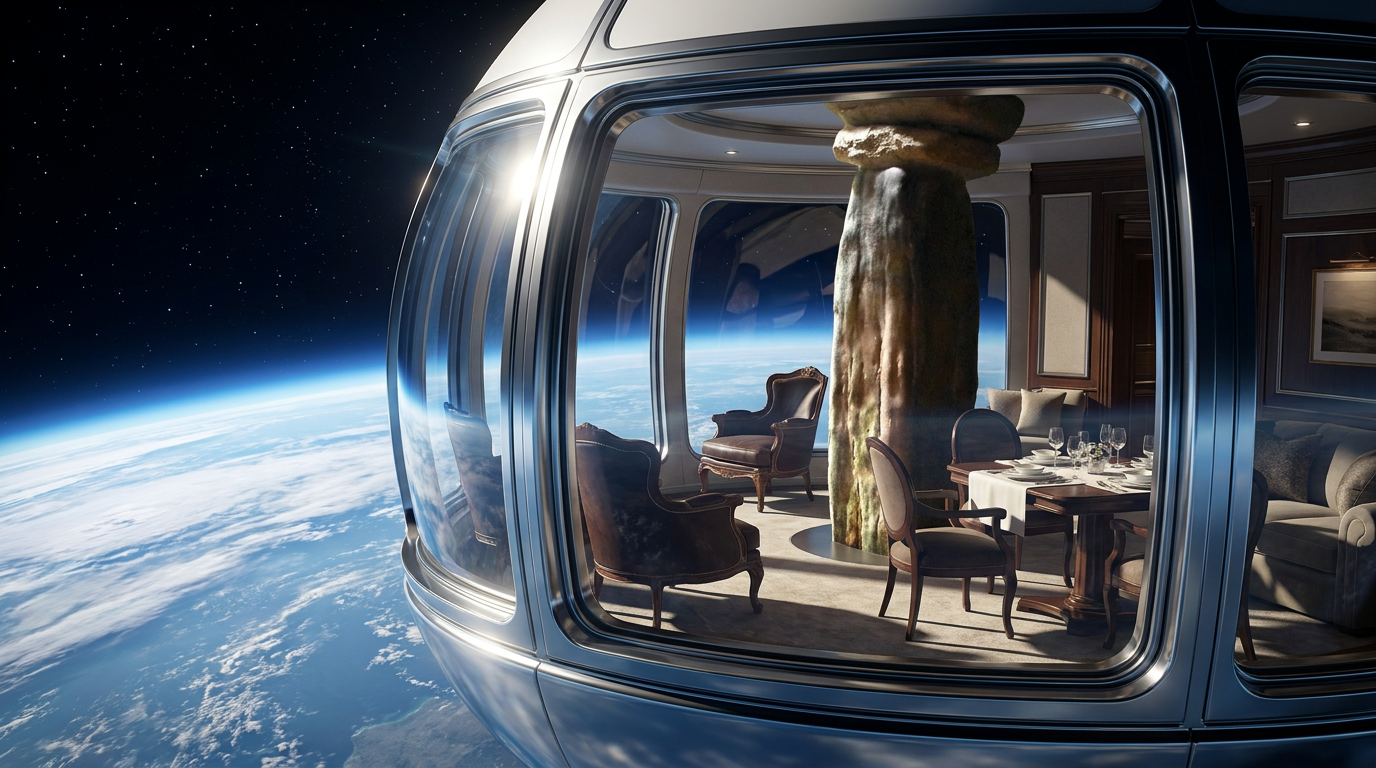
French aerospace company Zephalto has pioneered this space with Céleste, a pressurized stratospheric balloon that offers a radically different ascent. Rather than enduring the intense physical strain and noise of a rocket launch, six passengers board a refined, silent capsule that gently ascends to 25,000 meters (roughly 82,000 feet) above Earth. The ascent is so smooth that it requires no prior astronaut training or specialized physical conditioning, transforming space access from an extreme sport into a serene, ultra-premium hospitality experience.[1][6]

The six-hour journey allows guests to view the curvature of the Earth and the deep darkness of space while seated in elegant armchairs. Instead of strapping into high-stress harnesses, passengers sip premium French wine and consume Michelin-starred cuisine prepared onboard as they float in the stratosphere. By removing the physical barriers to entry, Zephalto has successfully merged aerospace engineering with haute hôtellerie. The company is already developing plans to introduce overnight stratospheric stays by 2028, signaling that the edge of space is rapidly becoming the ultimate exclusive destination.[1][6]
Back on Earth, the demand for hyper-personalization has triggered a revolution in wellness travel, moving far beyond traditional spa treatments into the realm of clinical genomics. Wellness is no longer viewed as a complementary vacation activity—a simple massage after a day of sightseeing—but as the central motivator for travel, with a strict focus on long-term biological optimization. Affluent travelers are increasingly seeking journeys that combine physical restoration, mental clarity, and measurable medical interventions. The World Luxury Chamber of Commerce reports that medical-wellness retreats and purpose-driven escapes are now the primary drivers for a significant portion of ultra-luxury bookings, fundamentally altering how resorts design their service offerings.[1][4]
Affluent travelers are increasingly seeking journeys that combine physical restoration, mental clarity, and measurable medical interventions.
Leading this charge are properties like the SHA Wellness Clinic in Spain and the Zulal Wellness Resort in Qatar, which now require guests to undergo comprehensive DNA testing weeks before their arrival. These genomic profiles provide a detailed, highly individualized map of a guest's nutrient absorption rates, food sensitivities, and genetic predispositions to inflammation, stress, or specific illnesses. By the time the guest steps foot on the property, the resort's medical and hospitality teams have already constructed a bespoke biological profile.[1][7]
Upon arrival, the guest's entire environment is pre-calibrated to their unique biochemistry. Personal chefs design highly specific menus that actively down-regulate inflammatory markers identified in the DNA test, while trainers build fitness regimens optimized for the guest's specific muscle-fiber composition and recovery rates. Spa therapies and medical treatments are similarly targeted to address genetic vulnerabilities, turning a luxury vacation into a highly calibrated medical intervention. This level of personalization ensures that the guest's time is spent actively extending their healthspan, rather than simply indulging in generic relaxation.[1][7]

Alongside biological optimization, the physical architecture of luxury travel has shifted toward absolute isolation. The shared spaces of traditional luxury hotels—communal infinity pools, bustling grand lobbies, and public fine-dining rooms—are increasingly viewed as liabilities rather than amenities. High-end tourists are actively avoiding environments where they must share space, schedules, or staff with strangers. For repeat luxury travelers, privacy has moved from a desirable feature to an essential operating condition. They value exclusive-use properties where their schedules, meals, and wellness regimens are entirely their own, insulated from the unpredictability of a shared resort environment.[3]
According to data from UN Tourism, over 35% of all luxury leisure bookings worldwide are now for private, exclusive-use accommodations. High-end travelers are opting for fully staffed private villas, remote hillside estates, and private islands where they control the entire environment. This trend is particularly pronounced among multigenerational families, who are traveling together in larger numbers. These groups require expansive, adaptable spaces with separate wings and dedicated staff to manage the complex logistics of different age groups, ensuring that grandparents, parents, and children can coexist without friction.[3][8]

For those who desire global mobility without sacrificing this absolute isolation, residential yachts have become the ultimate sanctuary. Vessels like The World allow residents to maintain perpetual luxury mobility, moving between global destinations while remaining within a completely private, controlled ecosystem. This ensures that the guest's specific preferences, dietary requirements, and security protocols remain unbroken, regardless of their geographic location. By utilizing private air travel to reach these floating residences, the ultra-wealthy can explore the planet without ever stepping foot in a public terminal or shared lobby.[1][3]
When ultra-luxury travelers do venture into the broader world for exploration, the focus has shifted from rapid sightseeing to "slow travel" and deep cultural immersion. The World Luxury Chamber of Commerce notes that travelers are prioritizing emotional connection, heritage, and craftsmanship over generic high-end aesthetics. Rather than rushing through tightly packed itineraries to check off bucket-list landmarks, they are moving with intention, allowing landscapes and cultures to unfold naturally as part of a grounded, meaningful journey. This evolution reflects a deeper desire for authenticity, where the cultural depth of an experience matters far more than the standardized luxury of the accommodation.[2][4]
This is evident in the rise of specialized overland and sea-based journeys. In Indonesia, bespoke phinisi liveaboard yachts offer slow, intentional navigation through the Komodo archipelago and Flores. These traditional wooden sailing ships have been retrofitted to ultra-luxury standards, allowing travelers to engage with remote, pristine marine environments without the friction of traditional transit. The journey itself becomes the destination, offering effortless access to natural wonders while maintaining the highest standards of personalized service and privacy. By moving slowly across the water, guests can deeply immerse themselves in the local ecosystem, far removed from the crowded tourist hubs of Southeast Asia.[2]

Similarly, newly accessible frontiers are being explored through highly curated, mobile luxury setups. Bespoke mobile camps in Angola facilitate cross-country road trips through untouched landscapes, while restored caravanserais in Uzbekistan offer immersive access to UNESCO-listed Silk Road cities. In Bhutan, luxury operators blend helicopter access to remote valleys with stays at ultra-exclusive properties, culminating in private viewings of ancient Buddhist festivals. These experiences provide the thrill of genuine exploration while maintaining a safety net of expert oversight and invisible service.[1]
A notable demographic driving these immersive, highly managed experiences is the solo female traveler. In 2026, luxury brands have fundamentally redesigned their service models to cater to women seeking independence, safety, and deeply restorative journeys. This demographic prioritizes discretion and proactive anticipation of needs, prompting leading hospitality brands to rethink their security protocols and service design. By ensuring absolute safety and seamless logistics, operators empower solo female travelers to explore remote and culturally rich destinations with complete peace of mind.[4]
Ultimately, the 2026 luxury travel landscape reflects a broader societal shift among the ultra-wealthy. Time, privacy, and biological health have become the ultimate scarce resources, far more valuable than traditional markers of wealth. By leveraging advanced aerospace technology, clinical genomics, and extreme logistical coordination, the modern luxury travel industry is no longer just selling a temporary escape to a beautiful beach. It is selling measurable biological transformation, absolute peace of mind, and the ability to experience the world entirely on one's own terms. As these innovations continue to mature, the gap between standard five-star hospitality and true ultra-luxury will only continue to widen.[3][4][5]
How we got here
2021
Virgin Galactic and Blue Origin launch first civilian spaceflights, establishing the high-G-force space tourism market.
2023
Luxury travel sees a post-pandemic surge in demand for private villas and exclusive-use properties.
2025
UN Tourism reports that over 35% of global luxury leisure bookings are now for private accommodations.
Spring 2026
Zephalto prepares its Céleste stratospheric balloon for commercial luxury flights.
2028
Projected launch of overnight stays in the stratosphere for ultra-high-net-worth travelers.
Viewpoints in depth
The Biological Optimizers
Viewing travel as a highly calibrated medical intervention.
For this demographic, a vacation is no longer about indulgence, but about measurable biological return on investment. They view standard luxury amenities as obsolete unless they actively contribute to longevity and healthspan. By integrating clinical genomics into hospitality, they argue that travel can fundamentally alter a person's baseline health, turning a two-week retreat into a targeted intervention against genetic predispositions to aging and disease.
The Isolationists
Prioritizing absolute privacy and the elimination of shared spaces.
This camp believes that true luxury is the absence of friction and the presence of total control. They argue that traditional five-star hotels, no matter how opulent, inherently compromise privacy by forcing interactions in shared lobbies, pools, and dining rooms. For these travelers, the ultimate status symbol is a fully staffed, exclusive-use environment where their schedule, security, and peace of mind are entirely insulated from the outside world.
The Frontier Seekers
Pushing the boundaries of civilian access to extreme environments.
Rather than seeking comfort, this group pursues rarity. They argue that as traditional luxury becomes mass-marketed, true exclusivity lies in accessing environments that are logistically or technologically difficult to reach. Whether it is a silent ascent to the stratosphere or a bespoke mobile camp in an untouched desert, they value the emotional resonance and perspective shift that comes from experiencing the genuinely unprecedented.
What we don't know
- How traditional luxury hotel chains will adapt their massive properties to compete with the demand for absolute isolation.
- The long-term regulatory and environmental frameworks that will govern commercial stratospheric balloon flights.
- Whether the intense data privacy concerns surrounding genomic wellness testing will limit its adoption among high-profile individuals.
Key terms
- Stratospheric Ballooning
- A method of high-altitude flight using a pressurized capsule suspended from a massive helium balloon, allowing smooth ascent to the edge of space without rocket propulsion.
- Genomic Wellness
- Health and lifestyle optimization based on an individual's DNA testing, tailoring diet, exercise, and medical treatments to their specific genetic markers.
- Decision Fatigue
- The deteriorating quality of decisions made by an individual after a long session of decision-making, which modern luxury travel seeks to eliminate through fully managed experiences.
- Phinisi
- A traditional Indonesian two-masted sailing ship, increasingly retrofitted as ultra-luxury liveaboard yachts for exploring remote archipelagos.
- Managed Continuity
- A service model where every logistical detail of a trip is coordinated by a single entity, ensuring a seamless experience without the guest needing to intervene.
Frequently asked
Do you need astronaut training for stratospheric balloon flights?
No. Because the ascent is slow and uses a balloon rather than rockets, there is no extreme G-force, making it accessible without specialized physical training.
How does DNA testing change a hotel stay?
Properties use your genetic profile to customize everything from the specific nutrients in your meals to the type of spa therapies and fitness routines that best suit your biology.
Why are luxury travelers avoiding traditional five-star hotels?
Many ultra-wealthy travelers are prioritizing absolute privacy and control, opting for fully staffed private villas to avoid shared spaces and communal amenities.
Sources
Source coverage
8 outlets
3 viewpoints surfaced








[1]Hans Travel & LifestyleExperiential & Cultural Explorers
Luxury Travel Trends 2026: The Future of Ultra-High-End Experiences
Read on Hans Travel & Lifestyle →[2]Komodo LuxuryExperiential & Cultural Explorers
Luxury Travel Trends 2026: The Transformative Travel Styles Shaping Your Next Journey
Read on Komodo Luxury →[3]Haute RetreatsPrivacy & Security Prioritizers
Luxury Travel Trends 2026: Private Escapes
Read on Haute Retreats →[4]World Luxury Chamber of CommerceWellness & Longevity Advocates
Luxury Travel Trends 2026: Experience, Wellness & More
Read on World Luxury Chamber of Commerce →[5]TripwixPrivacy & Security Prioritizers
Luxury Travel Trends 2026: Why Expert Care Defines Modern Luxury
Read on Tripwix →[6]ZephaltoExperiential & Cultural Explorers
Céleste: The Stratospheric Journey
Read on Zephalto →[7]SHA Wellness ClinicWellness & Longevity Advocates
Genomic Medicine and Personalized Wellness
Read on SHA Wellness Clinic →[8]UN TourismPrivacy & Security Prioritizers
2025 Global Luxury Leisure Report
Read on UN Tourism →
Every angle. Every day.
Get travel stories with full source coverage and perspective breakdowns delivered to your inbox.