
How 'Digital Provenance' is Replacing Traditional Fact-Checking in the Deepfake Era
As AI-generated media becomes indistinguishable from reality, newsrooms and governments are adopting cryptographic 'Content Credentials' to prove an image's origin rather than trying to detect fakes.
By Factlen Editorial Team
- Provenance Advocates
- Argue that cryptographic authentication at the source is the only sustainable defense against synthetic media.
- Institutional Adopters
- Value the standard for restoring institutional credibility and providing a verifiable chain of custody for public information.
- Security Skeptics
- Warn that metadata can be stripped and that cryptographic proof of origin does not guarantee the factual truth of the depicted event.
What's not represented
- · Independent Creators
- · Social Media Platform Engineers
Why this matters
With synthetic media projected to dominate the internet, the ability to verify what is real is shifting from a reactive guessing game to a proactive, built-in guarantee. Understanding how to read 'Content Credentials' will soon be as essential as checking a website's secure padlock icon.
Key points
- The arms race to detect deepfakes is being replaced by cryptographic tools that prove an image's authentic origin.
- The C2PA standard embeds a tamper-evident history into files, displaying a 'cr' icon for users to verify.
- Major camera manufacturers, including Leica and Nikon, now build this cryptographic signing directly into their hardware.
- Governments and newsrooms are adopting the standard to protect institutional credibility and combat state-sponsored disinformation.
- While C2PA proves a file's history, it cannot guarantee the factual truth of the depicted event, and metadata can still be stripped.
The arms race between deepfake generators and artificial intelligence detectors has reached a tipping point, and the detectors are losing. Generative AI models have advanced to a stage where synthetic media is visually and audibly indistinguishable from reality, rendering reactive fact-checking increasingly obsolete.[5][6]
In response, a global coalition of technology companies, news organizations, and government agencies is fundamentally flipping the model of digital verification. Instead of trying to spot fakes after they circulate, they are deploying cryptographic tools to prove what is real at the exact moment of creation.[2][6]
This proactive approach is built on the Coalition for Content Provenance and Authenticity (C2PA), an open technical standard that embeds a tamper-evident history into digital files. As of early 2026, the coalition has grown to over 6,000 members, moving digital provenance from a niche concept to a foundational layer of the internet.[3]
The mechanism relies on hardware-level cryptography. When a photograph is taken on a compliant device—such as recent professional cameras from Leica, Sony, and Nikon, or the latest flagship smartphones—a secure chip computes a unique digital fingerprint, or hash, of the image data.[2][4]

This hash is tied to a timestamp and the device's identity, then cryptographically signed. The resulting "manifest" travels invisibly with the file. If the image is subsequently cropped, color-corrected, or altered using generative AI, those specific edits are appended to the manifest, creating an unbroken chain of custody.[4]
For the end user, this complex cryptography manifests simply as a small "cr" (Content Credentials) icon displayed in the corner of an image or video. Clicking the icon reveals a transparent dossier: who created the file, what device was used, and exactly how it was modified before reaching the viewer's screen.[2]
The urgency driving this adoption is stark. Identity security researchers tracked a 900 percent increase in global deepfake incidents between 2023 and 2025. With synthetic content projected to account for a vast majority of online media by the end of 2026, establishing a baseline of truth has become an operational necessity.[5][6]
Identity security researchers tracked a 900 percent increase in global deepfake incidents between 2023 and 2025.
Regulatory frameworks are accelerating the shift. The European Union's AI Act, which takes full effect in August 2026, mandates strict transparency labeling for AI-generated content. The C2PA standard's AI assertion types provide a direct, standardized method for platforms and creators to satisfy these legal requirements.[6]
In the United States, the Cybersecurity and Infrastructure Security Agency (CISA) has explicitly recommended the adoption of content credentials for government and critical infrastructure media pipelines. The goal is to protect against state-sponsored disinformation campaigns that attempt to spoof official announcements or emergency alerts.[1][6]

This transition is giving rise to a new organizational discipline. Industry analysts at Gartner predict that by 2028, 40 percent of government organizations will establish dedicated "TrustOps" functions. These teams are tasked with managing digital trust through operational policies, moving agencies from reactive crisis management to a proactive trust architecture.[1]
Newsrooms are undergoing a similar transformation. Major broadcasters, including the BBC and CBC, have integrated C2PA protocols into their publishing workflows. By embedding cryptographic metadata into their visual journalism, these outlets ensure their reporting serves as verifiable proof, protecting their brand credibility from malicious impersonation.[2]
Despite its robust design, the C2PA standard is not a flawless silver bullet, and security researchers are transparent about its limitations. The most critical vulnerability is that the standard certifies the history of a file, not its underlying truth. A staged photograph of a fabricated event, captured on a compliant camera, will still generate a perfectly valid cryptographic signature.[3]
Furthermore, the chain of trust is fragile by design. If a bad actor takes a screenshot of a protected image, or if a non-compliant social media platform strips the metadata during compression, the provenance is lost. The resulting file is not flagged as fake, but it loses its cryptographic guarantee, returning the viewer to a state of uncertainty.[5]

To address this vulnerability, researchers are increasingly combining C2PA metadata with invisible digital watermarking technologies, such as Google's SynthID. These watermarks embed a resilient signal directly into the pixels of the media, allowing forensic tools to recover provenance data even if the standard metadata is stripped or the image is heavily compressed.[4]
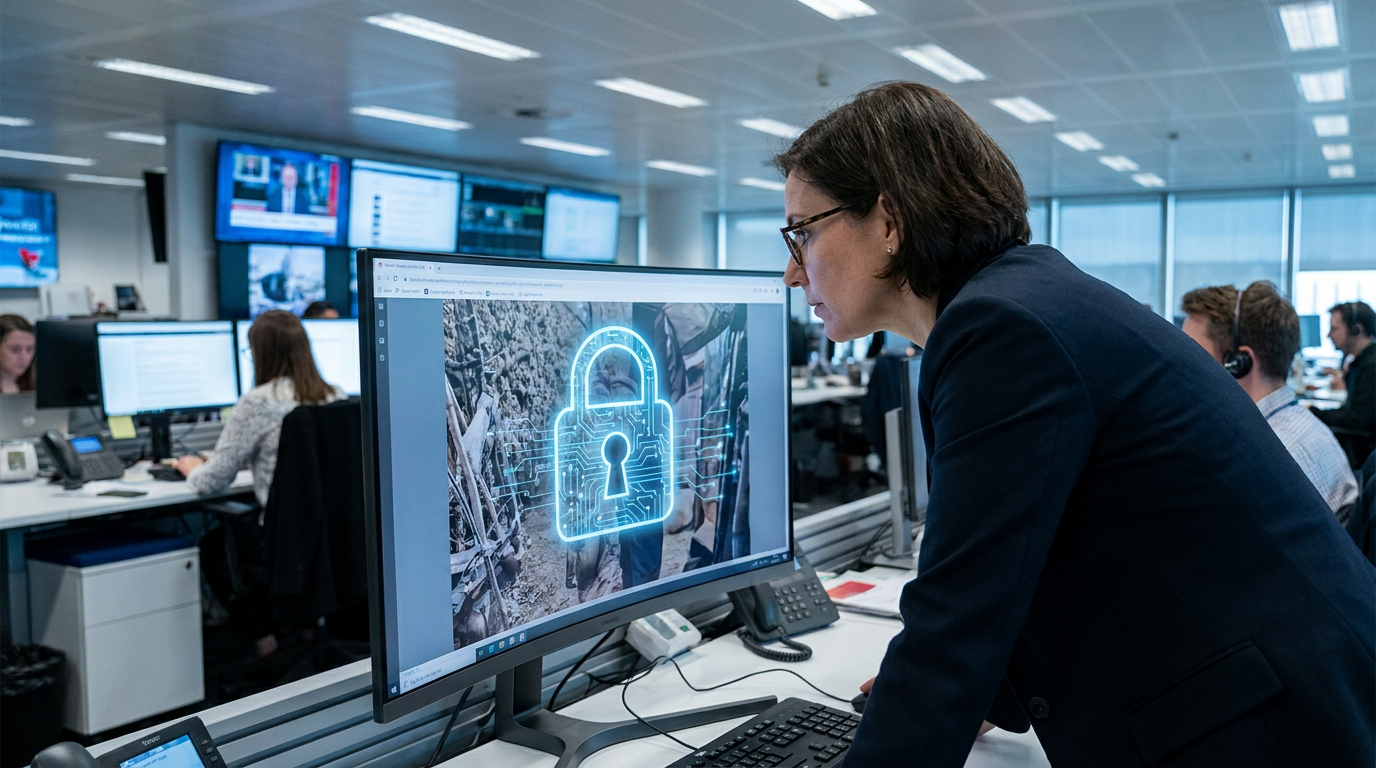
Ultimately, the adoption of digital provenance mirrors the internet's historical transition to encrypted HTTPS connections. Just as web users learned to look for a secure padlock icon before entering sensitive information, citizens in 2026 are being trained to look for Content Credentials before trusting or sharing high-stakes political media.[6]
How we got here
Feb 2021
The Coalition for Content Provenance and Authenticity (C2PA) is founded by major tech and media companies.
Oct 2023
Leica releases the M11-P, the first consumer camera with built-in C2PA hardware signing.
Jan 2025
The U.S. Cybersecurity and Infrastructure Security Agency (CISA) recommends C2PA adoption for government media.
Aug 2026
The European Union's AI Act takes full effect, mandating transparency labeling for AI-generated content.
Viewpoints in depth
Provenance Advocates
Focus on cryptographic certainty and the failure of detection models.
This camp, largely composed of tech coalitions and standards bodies, argues that the era of reactive fact-checking is over. Because generative AI models improve exponentially, detection algorithms will always be one step behind. They view cryptographic authentication at the source as the only mathematically sound defense against a flood of synthetic media, emphasizing that proving what is real is far more scalable than hunting for what is fake.
Institutional Adopters
Focus on brand protection, TrustOps, and verifiable public communication.
Government agencies and major newsrooms view digital provenance as a vital tool for institutional survival. In an environment where state-sponsored actors can easily clone a politician's voice or spoof a tax agency portal, these adopters are building 'TrustOps' architectures. For them, C2PA is less about policing the broader internet and more about creating a secure, verifiable channel for their own official communications, ensuring the public can always authenticate a genuine broadcast.
Security Skeptics
Focus on the 'analog hole' and the limitations of metadata.
Forensic analysts and cybersecurity researchers caution against treating Content Credentials as an absolute guarantee of truth. They point out the 'analog hole'—the reality that a perfectly valid cryptographic signature can be generated for a staged photograph or a physical screen displaying a deepfake. Furthermore, they warn that because metadata can be intentionally stripped by bad actors or compressed away by social media platforms, the system remains fragile in highly adversarial environments.
What we don't know
- How quickly major social media platforms will fully integrate and display Content Credentials in user feeds.
- Whether invisible watermarking technologies can become resilient enough to survive aggressive compression and intentional metadata stripping.
- How the public will adapt to verifying media provenance during fast-moving breaking news events.
Key terms
- Content Credentials
- The consumer-facing label and icon ('cr') that displays the provenance data attached to a digital file.
- Cryptographic Hash
- A unique digital fingerprint generated from a file's data; any change to the file alters the hash, revealing tampering.
- Digital Provenance
- The verifiable history of a digital asset, tracking its origin, ownership, and any modifications made over time.
- TrustOps
- An emerging organizational function dedicated to managing digital trust, verifying information, and combating disinformation proactively.
Frequently asked
What is the C2PA standard?
It is an open technical standard that embeds a verifiable, tamper-evident history into digital media files, showing exactly where they came from and how they were edited.
Does C2PA detect deepfakes?
No. It proves the origin of a file. If an AI tool creates an image, the C2PA manifest will transparently state that it was AI-generated, rather than trying to guess after the fact.
What happens if someone screenshots a protected image?
Taking a screenshot strips the original metadata, breaking the cryptographic chain of trust. This signals to the viewer that the new file is unverified.
How do I check an image's credentials?
Platforms supporting the standard display a small 'cr' icon on the media. Clicking it reveals the file's origin, creator, and edit history.
Sources
Source coverage
6 outlets
3 viewpoints surfaced






[1]GartnerInstitutional Adopters
Growth of government 'TrustOps' predicted in fight against deepfakes and disinformation
Read on Gartner →[2]Content Authenticity InitiativeProvenance Advocates
How it works - Content Authenticity Initiative
Read on Content Authenticity Initiative →[3]TrueScreenSecurity Skeptics
C2PA Standard in 2026: How It Works, Limitations & What's Missing
Read on TrueScreen →[4]FenxiSecurity Skeptics
The Authenticity War: How to Prove an Image or Video Is Real in the Age of AI
Read on Fenxi →[5]deepidvSecurity Skeptics
C2PA & Content Provenance vs Deepfakes (2026)
Read on deepidv →[6]Factlen Editorial TeamProvenance Advocates
Synthesis by Factlen editorial team
Read on Factlen Editorial Team →
More in news politics
See all 5 stories →


Every angle. Every day.
Get news politics stories with full source coverage and perspective breakdowns delivered to your inbox.