
Israel Strikes Beirut as U.S. and Iran Near Potential Peace Deal
The United States and Iran are reportedly close to finalizing a peace agreement to end their four-month conflict, but a recent Israeli strike on Hezbollah targets in Beirut threatens to derail the fragile negotiations.
By Factlen Editorial Team
- U.S. Administration
- Focused on securing a rapid diplomatic victory to reopen global shipping and cap Iran's nuclear program.
- Iranian Negotiators
- Seeking crucial sanctions relief while managing domestic opposition and demanding regional security guarantees.
- Israeli Government
- Skeptical of the deal's security provisions and committed to degrading Hezbollah's military capabilities in Lebanon.
- Iranian Hardliners
- Opposed to the deal, arguing that it surrenders vital leverage and makes unacceptable concessions to the West.
What's not represented
- · Lebanese Civilians
- · Global Shipping Industry
Why this matters
A finalized US-Iran peace deal would end a four-month war that has severely disrupted global shipping and spiked energy prices. However, if Israel's ongoing strikes in Lebanon collapse the negotiations, the region risks plunging back into a wider, multi-front conflict.
Key points
- The U.S. and Iran are nearing a peace deal to end their four-month conflict.
- The draft agreement includes sanctions relief and the release of $25 billion in frozen Iranian assets.
- Iran would pledge not to acquire nuclear weapons and dilute its highly enriched uranium.
- Israeli strikes on Hezbollah in Beirut threaten to derail the fragile negotiations.
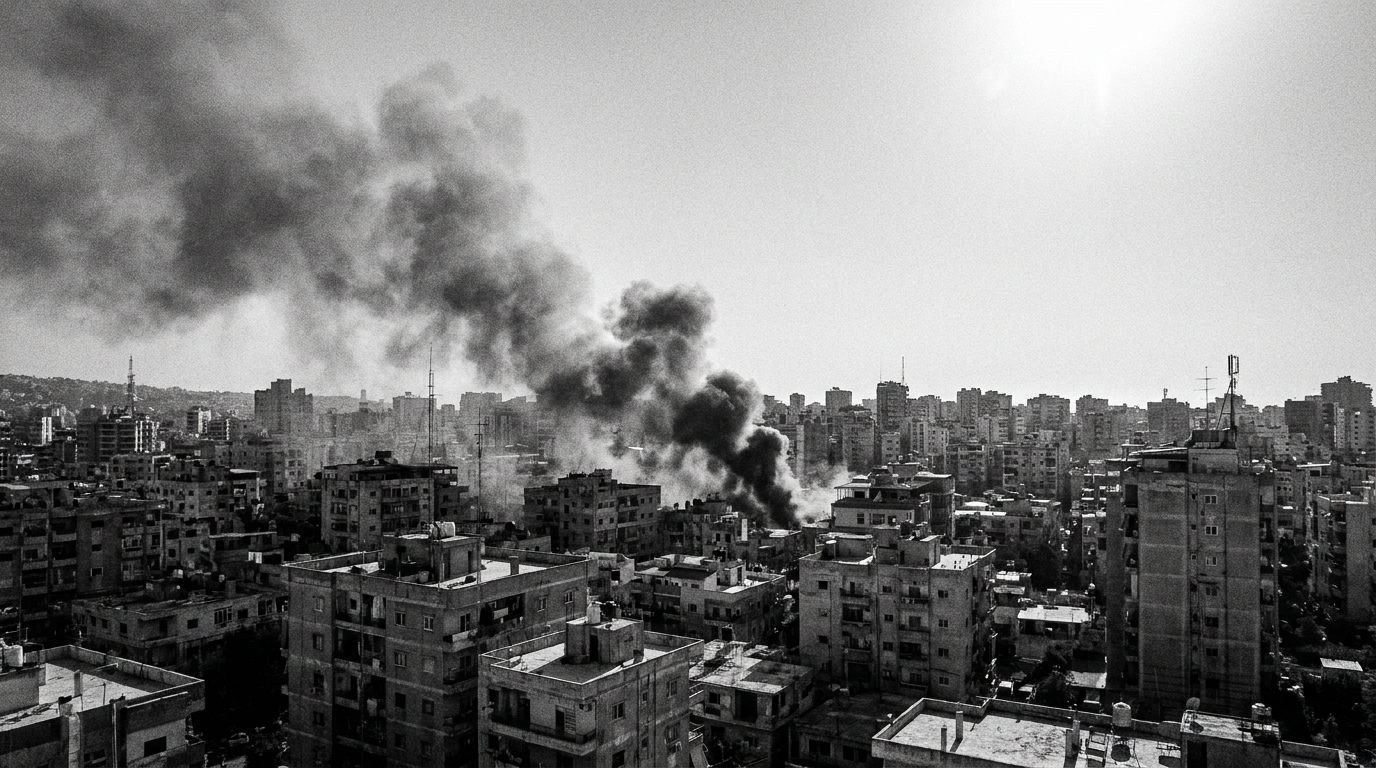
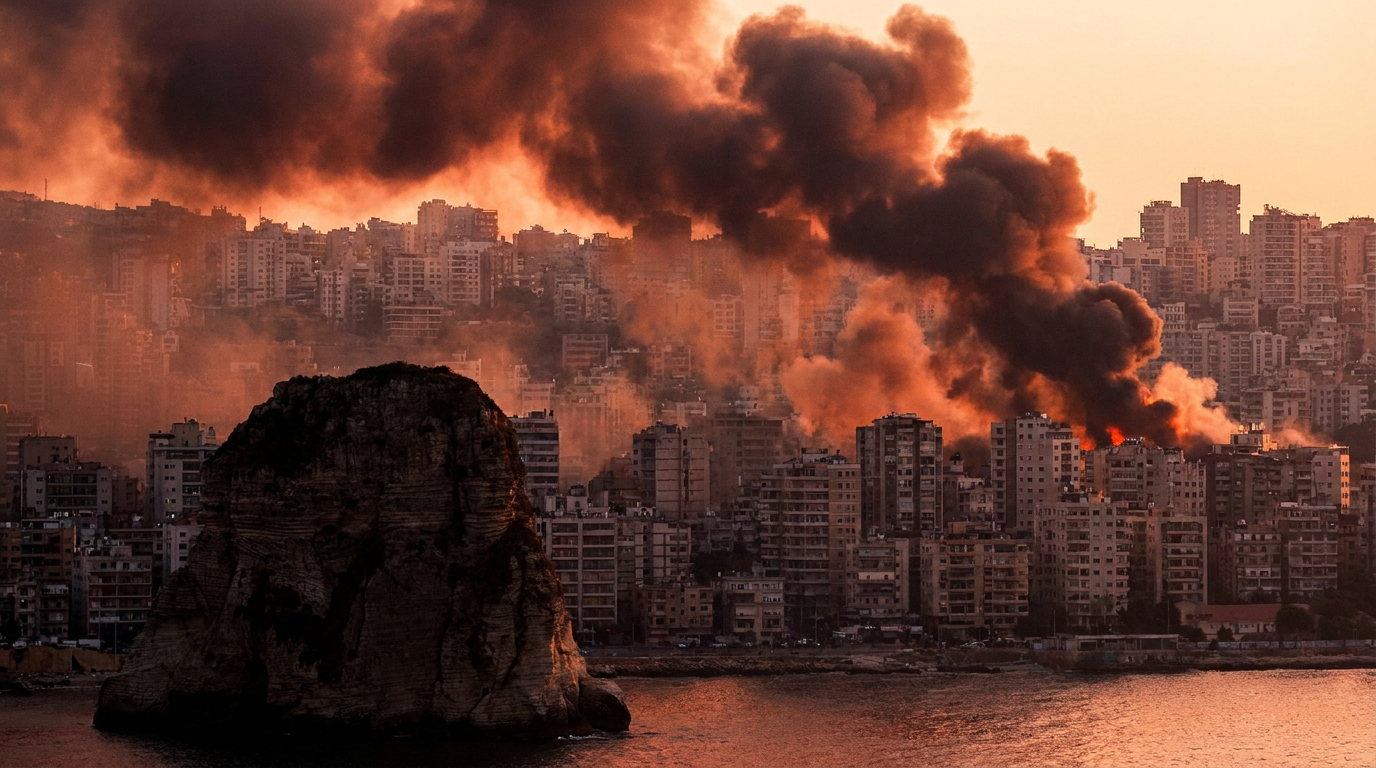
The United States and Iran are on the precipice of a historic agreement to end their four-month war, but a sudden escalation in Lebanon is testing the fragility of the diplomatic process. On Sunday, the Israeli military launched targeted strikes against Hezbollah infrastructure in Beirut's southern suburbs, sending plumes of smoke over the Lebanese capital. The strikes hit an apartment building in the densely populated Dahieh district, a known Hezbollah stronghold, resulting in casualties and widespread panic among residents who had recently returned during a period of relative calm. The attack introduces a volatile new variable into a geopolitical equation that mediators have spent weeks trying to balance.[4]
The strikes landed just hours before a highly anticipated signing ceremony that U.S. President Donald Trump claimed would take place on Sunday. The timing of the attack has prompted Iranian officials to warn that the fragile negotiations could be scuttled entirely. Iranian parliamentary Speaker Mohammad Bagher Qalibaf argued that the strikes demonstrate a lack of American will or ability to rein in its regional allies. For Tehran, the bombardment of its closest proxy force on the eve of a peace deal is viewed not just as a military challenge, but as a deliberate provocation designed to test Iran's commitment to the ceasefire framework.[1][3][6]
To understand the stakes of the current moment, it is necessary to examine the mechanics of the proposed peace deal. The draft memorandum of understanding is structured as a phased de-escalation, trading Iranian nuclear concessions and maritime access for sweeping American sanctions relief. Negotiators have spent weeks hammering out a framework that allows both Washington and Tehran to claim victory, carefully sequencing the unfreezing of assets and the lifting of blockades to ensure mutual compliance. The agreement represents the most significant diplomatic breakthrough since the conflict began, aiming to dismantle the economic and military architecture of the four-month war.[5][7]
The most immediate global impact of the deal would be the reopening of the Strait of Hormuz. The strait, a narrow waterway between the Persian Gulf and the Gulf of Oman, is a critical artery for global oil shipments. President Trump announced on social media that the strait would be 'OPEN TO ALL' immediately after the deal is signed, ending a blockade that has strangled global energy markets and driven up commodity prices for months. The resumption of free navigation through this chokepoint is a primary objective for the United States and its European allies, who have borne the economic brunt of the disruption.[3][6]

On the nuclear front, the draft agreement requires Iran to pledge that it will neither produce nor acquire nuclear weapons. Crucially, Tehran would also agree to dilute its existing stockpile of highly enriched uranium, a major concession aimed at extending its 'breakout time' for developing a bomb. The exact mechanism for this dilution—whether the material will be destroyed in-country, blended down, or removed entirely—remains a point of uncertainty. The draft establishes a 60-day window following the initial signing to negotiate these highly technical details, during which Iran has agreed not to further enrich uranium or expand its nuclear facilities.[5][7]
In exchange for these security guarantees, the United States would provide substantial economic relief. The draft reportedly includes a U.S. commitment to waive oil sanctions for a specified period, allowing Tehran to legally sell its oil on the global market and receive the revenues. This waiver is designed to provide immediate life support to an Iranian economy that has been suffocated by years of maximum pressure campaigns and the recent wartime blockade. The phased lifting of sanctions is tied directly to verified milestones in Iran's nuclear compliance, creating a step-by-step roadmap for economic normalization.[5][7]
Furthermore, the agreement outlines the unfreezing of approximately $25 billion in Iranian assets held abroad. These funds would reportedly be released through a combination of direct transfers, cooperation with regional states, and financial credit lines, providing a massive injection of capital into Iran's battered economy. Additionally, Washington has reportedly agreed to work with regional allies to prepare a reconstruction and development plan for Iran, which would be finalized within the same 60-day window as the nuclear protocols. This financial package is the cornerstone of Tehran's motivation for entering the agreement.[7]
Furthermore, the agreement outlines the unfreezing of approximately $25 billion in Iranian assets held abroad.
The deal also reportedly includes a U.S. pledge not to attack Iran in the future. This non-aggression guarantee has been a core demand of the Iranian negotiating team since the conflict began, serving as a prerequisite for any broader diplomatic settlement. After a war that saw direct U.S. and Israeli strikes on Iranian soil—including the operation that killed former Supreme Leader Ali Khamenei—Tehran has insisted on binding assurances that its sovereign territory will not be targeted once its asymmetric deterrents are scaled back.[3]
Despite the comprehensive nature of the draft, the timeline for its execution remains highly contested. While the Trump administration and Pakistani mediators have projected an imminent signing, Iranian officials have publicly pumped the brakes. Iran's Foreign Ministry spokesman Esmaeil Baqaei explicitly denied that a signing would occur on Sunday, though he left the door open for an agreement in the coming days. The conflicting narratives suggest that while the broad strokes of the memorandum are agreed upon, the final political authorization required to cross the finish line has not yet been granted in Tehran.[3][6][7]

This hesitation is deeply tied to domestic Iranian politics. Hardline factions within the Islamic Republic have mobilized against the deal, staging protests in major cities like Tehran and Mashhad. Iranian conservative outlets report that no final decision has been made, reflecting intense internal divisions over the terms. These groups accuse the Iranian negotiating team of making unacceptable concessions, arguing that relinquishing control over the Strait of Hormuz strips Tehran of its primary asymmetric weapon against the West. For the hardliners, the economic benefits of the deal do not justify the strategic vulnerabilities it creates.[7][8]
The wild card in the negotiations remains Israel's ongoing military campaign against Hezbollah in Lebanon. Israeli officials have expressed deep disappointment with the current form of the U.S.-Iran deal, arguing that it fails to adequately address the threat posed by Iranian proxy groups on Israel's borders. The Israeli government maintains that a bilateral agreement between Washington and Tehran does not obligate Israel to halt its operations against Hezbollah, which it views as an existential threat that must be degraded regardless of the broader diplomatic context.[4]
The Israeli strikes on Beirut's Dahieh district were framed by Prime Minister Benjamin Netanyahu's office as a direct response to Hezbollah launching three drones into northern Israel earlier in the day. However, the strikes also serve as a stark reminder of Israel's willingness to act independently of Washington's diplomatic timetable. Far-right Israeli ministers have openly called for the implementation of the 'Dahiyeh Doctrine'—a strategy of disproportionate retaliation against civilian infrastructure used by militants—warning that every drone launched into Israel will be met with devastating firepower in Beirut.[4][6]

The situation in southern Lebanon is deteriorating rapidly alongside the strikes in the capital. Following the Beirut bombardment, the Israeli military issued evacuation orders for 29 Lebanese villages, signaling preparations for a broader and potentially deeper ground offensive. Iran has consistently maintained that any comprehensive peace deal must include a ceasefire in Lebanon, creating a massive diplomatic hurdle. If Israel continues to escalate its campaign against Hezbollah, Tehran may find it politically impossible to sign a peace treaty with Israel's primary benefactor.[2][4][7]
Recognizing the fragility of the moment, Qatari mediators have flown to Tehran in a last-ditch effort to salvage the agreement and bridge the remaining gaps. Their task is monumental: they must convince Iranian leadership to sign a deal while Israeli bombs fall on their closest regional ally, and simultaneously assure the U.S. that Iran will follow through on its nuclear commitments. The mediators are working against the clock, aware that every new airstrike or drone launch increases the likelihood of the negotiations collapsing entirely.[6]
The coming days represent a critical juncture for the Middle East. If the diplomatic framework holds, it will end a devastating four-month war, stabilize global energy markets, and establish a new paradigm for managing Iran's nuclear ambitions. If the Beirut strikes trigger a collapse in talks, the region faces the grim prospect of a prolonged, multi-front war of attrition with no clear off-ramp. The fate of the agreement now hinges on whether the desire for economic relief and de-escalation can outweigh the gravitational pull of ongoing regional violence.[1][3][4]
How we got here
April 2026
A fragile ceasefire begins between the U.S. and Iran after weeks of direct conflict.
Early June 2026
Negotiations accelerate, with drafts circulating that include sanctions relief in exchange for nuclear limits.
June 13, 2026
President Trump announces a deal is scheduled to be signed the following day, promising the reopening of the Strait of Hormuz.
June 14, 2026 (Morning)
Hezbollah launches drones into northern Israel; Israel retaliates with strikes on Beirut's southern suburbs.
June 14, 2026 (Afternoon)
Iranian officials state no final decision has been made, while Qatari mediators arrive in Tehran to salvage the talks.
Viewpoints in depth
U.S. Administration's view
The U.S. seeks an immediate diplomatic victory to stabilize global markets and secure nuclear concessions.
President Trump and his administration are pushing aggressively to finalize the deal, viewing it as a major foreign policy win that neutralizes Iran's nuclear threat and reopens the Strait of Hormuz. By securing a pledge that Iran will dilute its enriched uranium and halt weapons development, the U.S. aims to end a costly four-month war that has severely disrupted global energy supplies. The administration appears willing to offer significant sanctions relief to lock in these gains quickly.
Iranian Negotiators' view
Iranian diplomats are balancing the need for economic relief with intense domestic pressure and regional security concerns.
For Iran's moderate factions and diplomatic corps, the deal represents a vital lifeline to rescue a sanctioned economy via the unfreezing of $25 billion and the resumption of oil sales. However, they are proceeding cautiously. They view Israel's strikes on Beirut as a deliberate provocation meant to sabotage the talks, and they are demanding guarantees that the U.S. can actually enforce the terms of the agreement across its regional allies.
Israeli Government's view
Israel views the emerging deal as insufficient and asserts its right to neutralize proxy threats on its borders.
Israeli leadership is deeply skeptical of the U.S.-Iran framework, arguing that it rewards Tehran with sanctions relief without dismantling the network of Iranian-backed militias encircling Israel. The government maintains that it will not be bound by a ceasefire that leaves Hezbollah intact in Lebanon. The strikes on Beirut are a demonstration of Israel's 'Dahiyeh Doctrine,' signaling that it will respond disproportionately to any cross-border attacks, regardless of Washington's diplomatic timeline.
Iranian Hardliners' view
Conservative factions in Iran view the deal as a capitulation that surrenders Tehran's most effective geopolitical leverage.
Hardline political and military figures in Iran are actively protesting the proposed memorandum. They argue that reopening the Strait of Hormuz removes Iran's primary asymmetric deterrent against Western pressure. These factions accuse the negotiating team of trading away national security for temporary economic relief, and they view the ongoing Israeli strikes in Lebanon as proof that the U.S. and its allies cannot be trusted to honor a non-aggression pact.
What we don't know
- Whether the Iranian Supreme Leader has given final authorization to sign the memorandum.
- How the highly enriched uranium will be diluted or removed during the 60-day window.
- If Israel plans to expand its strikes in Lebanon into a broader ground offensive.
Key terms
- Strait of Hormuz
- A narrow, strategically vital waterway between the Persian Gulf and the Gulf of Oman through which a massive portion of the world's oil supply passes.
- Dahieh
- A predominantly Shia suburb south of Beirut that serves as a major stronghold and command center for Hezbollah.
- Highly Enriched Uranium
- Uranium that has been processed to increase the concentration of the U-235 isotope, which can be used to fuel nuclear weapons if enriched to high enough levels.
- Sanctions Relief
- The lifting or suspending of economic penalties, allowing a country to resume international trade and access frozen financial assets.
Frequently asked
Is the US-Iran war officially over?
Not yet. While a draft peace agreement has been negotiated, Iranian officials state that a final decision has not been made, and recent Israeli strikes in Lebanon threaten to derail the process.
What does the US get out of the deal?
The agreement would require Iran to dilute its highly enriched uranium stockpile, pledge not to acquire nuclear weapons, and immediately reopen the Strait of Hormuz to global shipping.
What does Iran get out of the deal?
Iran would receive a phased lifting of U.S. sanctions, waivers to sell its oil on the global market, the release of $25 billion in frozen assets, and a U.S. pledge of non-aggression.
Why is Israel bombing Beirut during peace talks?
Israel states it is retaliating against Hezbollah drone attacks on northern Israel. The Israeli government is deeply dissatisfied with the U.S.-Iran deal and insists on its right to neutralize proxy threats on its borders.
Sources
Source coverage
8 outlets
4 viewpoints surfaced








[1]AxiosIranian Negotiators
Iran warns Israel's Beirut strike could derail U.S. deal
Read on Axios →[2]Al JazeeraIranian Negotiators
Anticipation, pushback in Iran as mediators work to finalise deal with US
Read on Al Jazeera →[3]The Washington PostU.S. Administration
U.S. and Iran to close deal within a day, Trump says, but Tehran yet to confirm
Read on The Washington Post →[4]Associated PressIsraeli Government
Israeli military strikes Beirut suburbs in the lead-up to anticipated US-Iran deal
Read on Associated Press →[5]ReutersIranian Negotiators
Iran agrees not to produce or acquire nuclear weapons in draft MOU
Read on Reuters →[6]The GuardianU.S. Administration
Middle East crisis live: Trump says Iran deal will be signed today but Tehran casts doubt on timing as Israel launches strikes on Beirut
Read on The Guardian →[7]The HinduIranian Hardliners
West Asia war LIVE: Iran says draft U.S. deal includes oil sanctions waiver, nuclear limits and asset release
Read on The Hindu →[8]Fars News AgencyIranian Hardliners
Tehran 'not yet' taken final decision on US peace deal
Read on Fars News Agency →


Every angle. Every day.
Get news politics stories with full source coverage and perspective breakdowns delivered to your inbox.