
Israeli Airstrikes in Beirut Threaten Historic U.S.-Iran Peace Deal Hours Before Signing
Israel launched targeted strikes against Hezbollah in Beirut on Sunday, prompting Iranian threats of retaliation that could derail a finalized U.S.-Iran peace agreement.
By Factlen Editorial Team
- U.S. Administration
- The White House views the peace deal as a vital economic and diplomatic victory that must not be derailed by localized skirmishes.
- Israeli Government
- Israel views Hezbollah and Iran as existential threats and refuses to let U.S. diplomatic timelines dictate its security operations.
- Iranian Leadership
- Tehran demands an end to Israeli strikes on its allies as a precondition for peace, viewing the Beirut attack as a test of U.S. credibility.
- Regional Mediators
- Qatar and Pakistan are focused on finalizing the technical details of the asset transfers and preserving the diplomatic off-ramp.
What's not represented
- · Lebanese civilians displaced by the ongoing cross-border conflict
- · Global shipping companies impacted by the Strait of Hormuz closure
Why this matters
This sudden military escalation threatens to collapse a diplomatic breakthrough that would end months of regional warfare and reopen the Strait of Hormuz. If the deal fails, global energy markets face renewed chaos, and the Middle East risks plunging back into a devastating multi-front war.
Key points
- Israel launched airstrikes on Beirut's southern suburbs, targeting a Hezbollah command center in response to drone fire.
- The escalation occurred hours before the U.S. and Iran were scheduled to sign a historic peace agreement.
- The draft deal includes unfreezing $25 billion in Iranian assets and reopening the Strait of Hormuz.
- U.S. President Donald Trump publicly rebuked the Israeli strike, urging all sides to preserve the diplomatic framework.
- Iranian officials warned the attack proves the U.S. cannot control its ally, threatening to walk away from the treaty.
- Qatari mediators are currently in Tehran attempting to salvage the agreement as the Israeli military issues new evacuation orders in Lebanon.
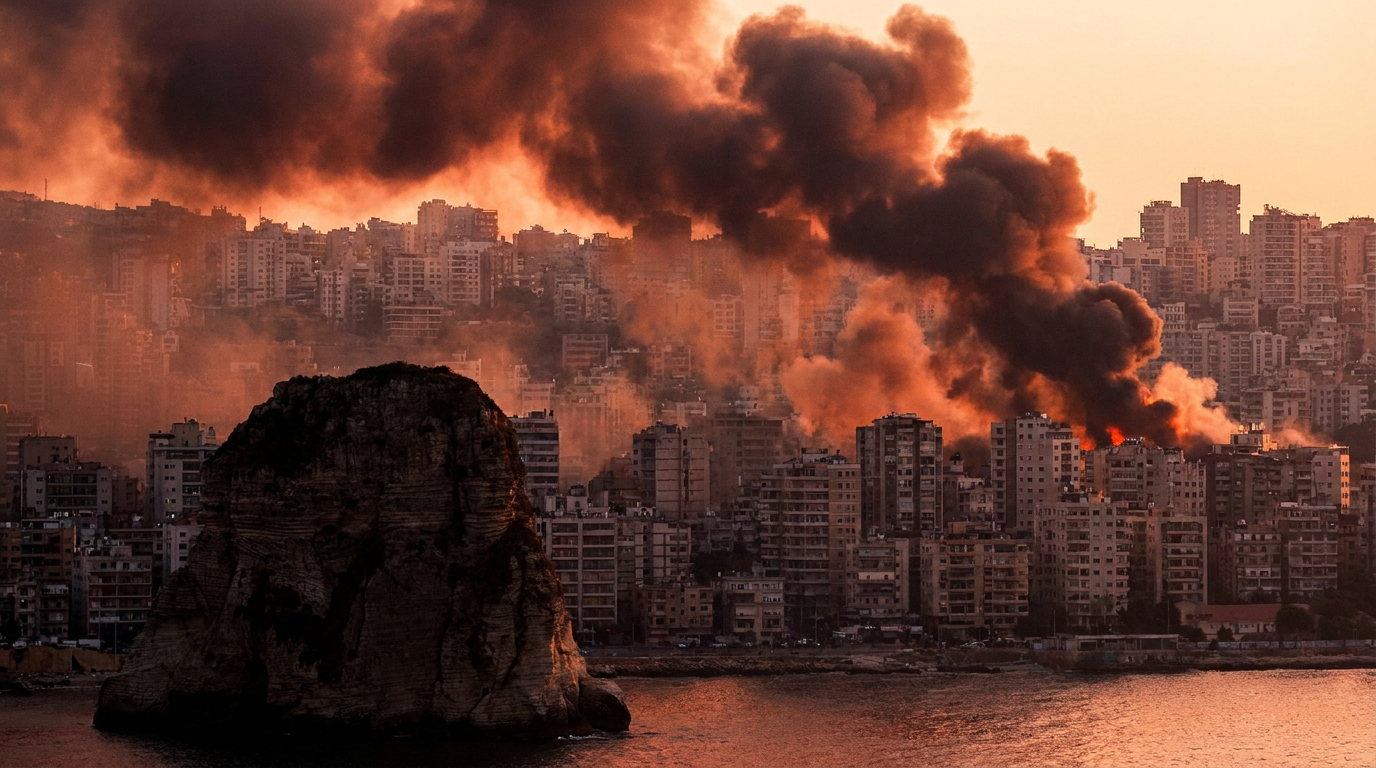
Israeli airstrikes leveled a building in Beirut's densely populated southern suburbs on Sunday, sending thick plumes of smoke over the Lebanese capital and threatening to completely derail a historic peace agreement between the United States and Iran. The targeted bombardment, which Lebanese civil defense officials reported caused multiple casualties, struck the Dahieh district just hours before American and Iranian diplomats were expected to sign a comprehensive treaty ending months of regional warfare. The sudden explosion of violence on the Lebanese front immediately sent shockwaves through the diplomatic back-channels, as Iranian officials warned that the attack could scuttle the final agreement before the ink was even dry. The strike underscores the deeply intertwined nature of the Middle East's multiple conflict zones, where a localized exchange of fire in the Levant possesses the power to upend a superpower peace treaty and dictate the trajectory of global energy markets.[1][3][4]
The fragile U.S.-Iran deal, painstakingly brokered over several weeks by mediators from Pakistan and Qatar, aims to establish a permanent ceasefire, reopen the critical Strait of Hormuz, and unfreeze $25 billion in Iranian assets held abroad. For the international community, the agreement represents a vital off-ramp from a devastating conflict that has severely disrupted global shipping and triggered a historic energy crisis. However, the sudden military escalation in Lebanon has thrown this diplomatic triumph into severe jeopardy. Tehran has consistently demanded that any comprehensive ceasefire arrangement must include an end to Israeli military operations against Hezbollah in Lebanon. By striking the Lebanese capital on the very day the treaty was slated for an electronic signature, the Israeli military has effectively forced Iran to choose between securing massive economic relief and maintaining its foundational alliance with its most powerful regional proxy.[1][4][7]
Israeli Prime Minister Benjamin Netanyahu and Defense Minister Israel Katz fiercely defended the Beirut operation, framing it as a necessary and precise response to unprovoked aggression. According to the Israel Defense Forces, the military targeted a senior command-and-control official belonging to Hezbollah's elite Radwan Force. The facility, reportedly located in a municipal building in the center of the Dahieh district, was destroyed after Hezbollah launched a series of explosive drones and projectiles into northern Israel earlier on Sunday morning. "We will not tolerate fire into our territory," Netanyahu and Katz declared in a joint statement, emphasizing that Israel retains the sovereign right to defend its northern communities regardless of broader geopolitical negotiations. The Israeli military released footage of the Hezbollah launches, noting that while the projectiles caused no casualties, the intent to terrorize Israeli civilians necessitated an overwhelming deterrent response in the Lebanese capital.[4][6]

The timing of the Beirut strike highlights Israel's profound and vocal dissatisfaction with the emerging U.S.-Iran diplomatic framework. Israeli security officials have privately and publicly warned that the proposed treaty poses significant risks to Israel's long-term survival, arguing that it fails to adequately address Iran's vast ballistic missile capabilities. Furthermore, Israeli leadership fears the deal will provide Tehran with the time and financial resources to rebuild Hezbollah's military infrastructure right on Israel's northern border, while simultaneously limiting future Israeli military responses. This deep-seated skepticism has led some diplomats involved in the Doha and Islamabad talks to accuse Israel of deliberately attempting to sabotage the peace agreement. By intentionally escalating the conflict with Hezbollah hours before the signing ceremony, these critics argue, Israel is attempting to provoke an Iranian retaliation that would force Washington to abandon the treaty and re-engage in the regional war.[4][5][6][8]
The unexpected escalation in Beirut prompted a rare, public, and remarkably blunt rebuke from U.S. President Donald Trump, who has staked significant domestic political capital on resolving the crisis and reopening the Strait of Hormuz ahead of the November midterm elections. Taking to his Truth Social platform, the President declared that the Israeli attack "should not have happened" on a day reserved for finalizing regional peace. In a striking departure from traditional U.S. talking points regarding Israeli self-defense, Trump characterized the initial Hezbollah drone fire as "very small and meaningless," noting that nobody was injured and insisting that such minor skirmishes should not disrupt a monumental diplomatic process. He urgently called on all sides to stand down, warning that the United States is incredibly close to a deal that will bring stability to the entire region, including Lebanon, and that further provocations could squander the historic opportunity.[2][3]
The unexpected escalation in Beirut prompted a rare, public, and remarkably blunt rebuke from U.S.
In Tehran, the Israeli strikes fueled immediate outrage among hardline factions and senior government officials, severely complicating the Iranian negotiating team's mandate. Iranian Parliament Speaker Mohammad Bagher Ghalibaf issued a stark warning, stating that the attack on Dahieh demonstrated that the United States either lacked the genuine will to fulfill its treaty commitments or simply lacked the ability to control its closest regional ally. Senior military commanders within the Islamic Revolutionary Guard Corps echoed this hardline sentiment, vowing that the bombardment of Beirut would not go unanswered and placing Iranian forces on full alert. Hardline protest rallies erupted in Tehran and Mashhad, with demonstrators accusing the Iranian foreign ministry of compromising with an untrustworthy adversary. The domestic pressure has forced Iranian leadership to pause the final sign-off, as they calculate whether signing the deal under the shadow of Israeli airstrikes would project fatal weakness to their regional adversaries.[4][5][7]

If the diplomatic framework can be salvaged from the current crisis, the memorandum of understanding would fundamentally reshape the Middle East's security architecture and economic landscape. According to leaked drafts of the agreement, the treaty commits Iran to a strict halt on further nuclear enrichment and a binding pledge not to produce or acquire nuclear weapons. In exchange, Washington has agreed to a phased lifting of all U.S. and U.N. sanctions, including immediate waivers on Iranian oil exports. Crucially, the deal includes a U.S. commitment to release $25 billion of Iran's frozen foreign assets through a complex network of direct transfers and regional credit lines. Furthermore, the United States and its regional allies would be obligated to draft a comprehensive reconstruction and development plan for the Iranian economy within 60 days of the signing, providing Tehran with a massive influx of capital to stabilize its domestic markets.[1][7]
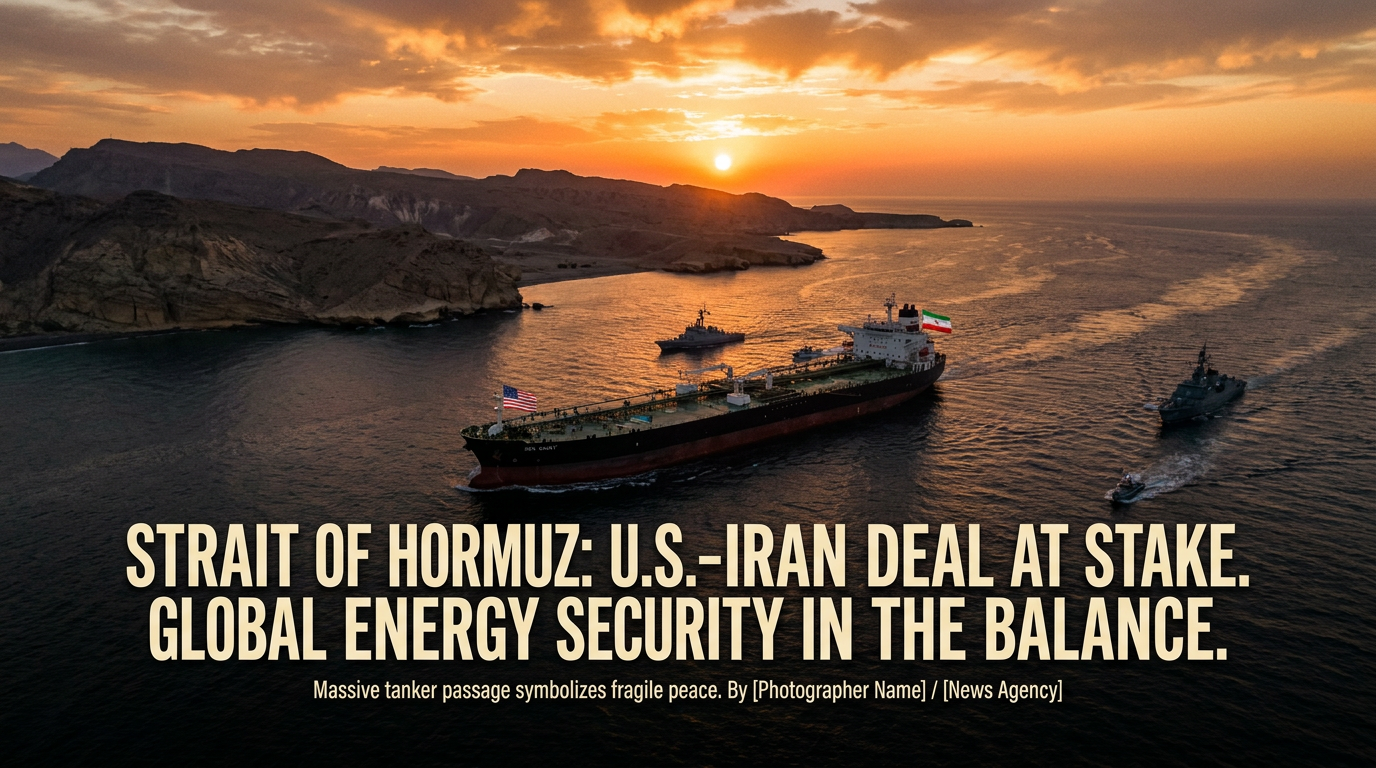
Beyond the immediate cessation of hostilities, reopening the Strait of Hormuz remains the central economic pillar of the negotiations for the Western alliance. The waterway's closure during the height of the U.S.-Iran conflict triggered one of the most severe global energy crises in modern history, driving up American petrol prices, spiking inflation, and straining international supply chains to their breaking point. The draft agreement explicitly stipulates that the strait would be opened "immediately" upon the electronic signing of the treaty, a concession the U.S. administration views as absolutely critical for stabilizing global markets. For the White House, securing the free flow of international energy shipments through the Persian Gulf is not merely a foreign policy objective, but a vital domestic imperative, making the preservation of the deal against the backdrop of the Beirut strikes a matter of paramount national interest.[3][5]
As the rhetoric escalated between Jerusalem and Tehran, regional mediators scrambled to keep the fragile agreement from collapsing entirely. Qatari negotiators urgently flew to Tehran on Sunday morning to coordinate directly with Iranian officials, attempting to smooth over the diplomatic fallout from the Beirut strikes and finalize the remaining technical details of the asset transfers. Simultaneously, Pakistan's Foreign Ministry continued its preparations to host a secure virtual signing ceremony, projecting outward confidence that the treaty would still be executed. However, Iranian state media outlets began casting public doubt on the timeline, quoting informed sources who stated that Tehran had "not yet" made a final decision on whether to proceed. The frantic flurry of diplomatic activity underscores the precarious nature of the talks, where a single miscalculation on the Lebanese border threatens to unravel months of painstaking statecraft.[2][3][5]

The Middle East now waits in a state of high anxiety to see whether Tehran will prioritize the massive economic relief promised by the peace deal or opt for military retaliation alongside its Hezbollah allies. The window for diplomacy is rapidly closing, as military postures on all sides harden. As diplomatic back-channels operate in overdrive to salvage the signing ceremony, the Israeli military has issued sweeping new evacuation orders for 29 villages in southern Lebanon, signaling that the Israel Defense Forces are preparing for a major escalation on the northern front regardless of the outcome of the U.S.-Iran negotiations. Whether the historic treaty can survive the smoke rising over Beirut will ultimately depend on whether Washington can restrain its ally and whether Tehran is willing to absorb a tactical blow in exchange for a strategic economic victory.[1][2][4]
How we got here
April 2026
A tenuous ceasefire takes hold after an initial wave of direct military clashes between the United States and Iran.
Early June 2026
Israel strikes the Beirut suburbs, sparking the most serious escalation of fighting since the April ceasefire.
June 13, 2026
U.S. and Pakistani leaders announce that a comprehensive peace deal is finalized and ready for an electronic signature.
June 14, 2026
Israel launches retaliatory airstrikes against Hezbollah in Beirut, prompting Iran to threaten to walk away from the treaty.
Viewpoints in depth
U.S. Administration's view
The White House views the peace deal as a vital economic and diplomatic victory that must not be derailed by localized skirmishes.
For the U.S. administration, reopening the Strait of Hormuz and ending the regional war is a paramount domestic and foreign policy objective. The President's public rebuke of the Israeli strike reflects a deep frustration with actions that jeopardize the fragile diplomatic framework. Washington argues that the broader strategic benefits of the deal—halting Iran's nuclear program and stabilizing global energy markets—far outweigh the tactical value of retaliatory strikes in Lebanon.
Israeli Government's view
Israel views Hezbollah and Iran as existential threats and refuses to let U.S. diplomatic timelines dictate its security operations.
Israeli leadership is profoundly skeptical of the U.S.-Iran agreement, arguing it enriches Tehran without dismantling its ballistic missile program or its network of proxy militias. From Jerusalem's perspective, Hezbollah's drone attacks on northern Israel demand an immediate and forceful military response to maintain deterrence. Israeli officials maintain that they are not bound by the U.S. ceasefire negotiations and will continue to strike Hezbollah targets to protect Israeli civilians, regardless of the diplomatic fallout.
Iranian Leadership's view
Tehran demands an end to Israeli strikes on its allies as a precondition for peace, viewing the Beirut attack as a test of U.S. credibility.
Iranian hardliners and military commanders argue that the Israeli strike on Beirut proves the United States is either unwilling or unable to enforce the terms of a regional ceasefire. For Tehran, abandoning Hezbollah under military pressure to secure sanctions relief would project fatal weakness. While the economic incentives of the $25 billion asset release are massive, Iranian leadership insists that any durable peace agreement must include a cessation of Israeli hostilities against the 'Axis of Resistance' in Lebanon.
What we don't know
- Whether Iran will ultimately sign the peace deal or choose to retaliate militarily alongside Hezbollah.
- If the United States has the leverage to prevent further Israeli strikes in Lebanon while negotiations continue.
- How long the Strait of Hormuz will remain closed if the diplomatic framework collapses.
Key terms
- Strait of Hormuz
- A crucial global energy chokepoint between the Persian Gulf and the Gulf of Oman, the closure of which severely disrupts international oil markets.
- Dahieh
- A predominantly Shia suburb south of Beirut, Lebanon, known as a major political and military stronghold for Hezbollah.
- Radwan Force
- Hezbollah's elite special operations unit, which Israeli officials stated was the primary target of the Beirut airstrikes.
Frequently asked
Why did Israel strike Beirut?
Israel stated the strike targeted a Hezbollah command center in response to drones and projectiles fired into northern Israel earlier in the day.
What are the terms of the U.S.-Iran deal?
The draft agreement includes a halt to Iranian nuclear enrichment, the lifting of U.S. sanctions, the release of $25 billion in frozen Iranian assets, and the immediate reopening of the Strait of Hormuz.
Will the Beirut strike cancel the peace treaty?
It remains uncertain. While Qatari mediators are working frantically in Tehran to save the deal, Iranian officials have warned that the Israeli attack could derail the final signing.
Sources
Source coverage
8 outlets
4 viewpoints surfaced








[1]AxiosIranian Leadership
Iran warns Israel's Beirut strike could derail U.S. deal
Read on Axios →[2]The GuardianU.S. Administration
Middle East crisis live: Trump says Israel should not have attacked Beirut but warns against retaliation
Read on The Guardian →[3]Financial TimesU.S. Administration
Israel strikes Beirut hours before expected US-Iran deal
Read on Financial Times →[4]CBC NewsRegional Mediators
Israeli military strikes Beirut suburbs ahead of anticipated U.S.-Iran deal
Read on CBC News →[5]Iran InternationalIranian Leadership
Beirut strikes complicate finalizing Iran-US deal
Read on Iran International →[6]The Media LineIsraeli Government
Israel Targets Hezbollah Commander in Beirut Amid Iran Deal Push
Read on The Media Line →[7]Saudi GazetteRegional Mediators
Israel strikes Beirut suburbs as US-Iran deal hangs in balance
Read on Saudi Gazette →[8]Fox NewsIsraeli Government
Beirut strikes complicate finalizing Iran-US deal
Read on Fox News →
More in news politics
See all 5 stories →


Every angle. Every day.
Get news politics stories with full source coverage and perspective breakdowns delivered to your inbox.