
EV vs. PHEV in 2026: How to Choose the Right Electrified Vehicle
As battery ranges expand and charging networks grow in 2026, the choice between a fully electric vehicle and a plug-in hybrid depends entirely on daily commuting habits and home charging access.
By Factlen Editorial Team
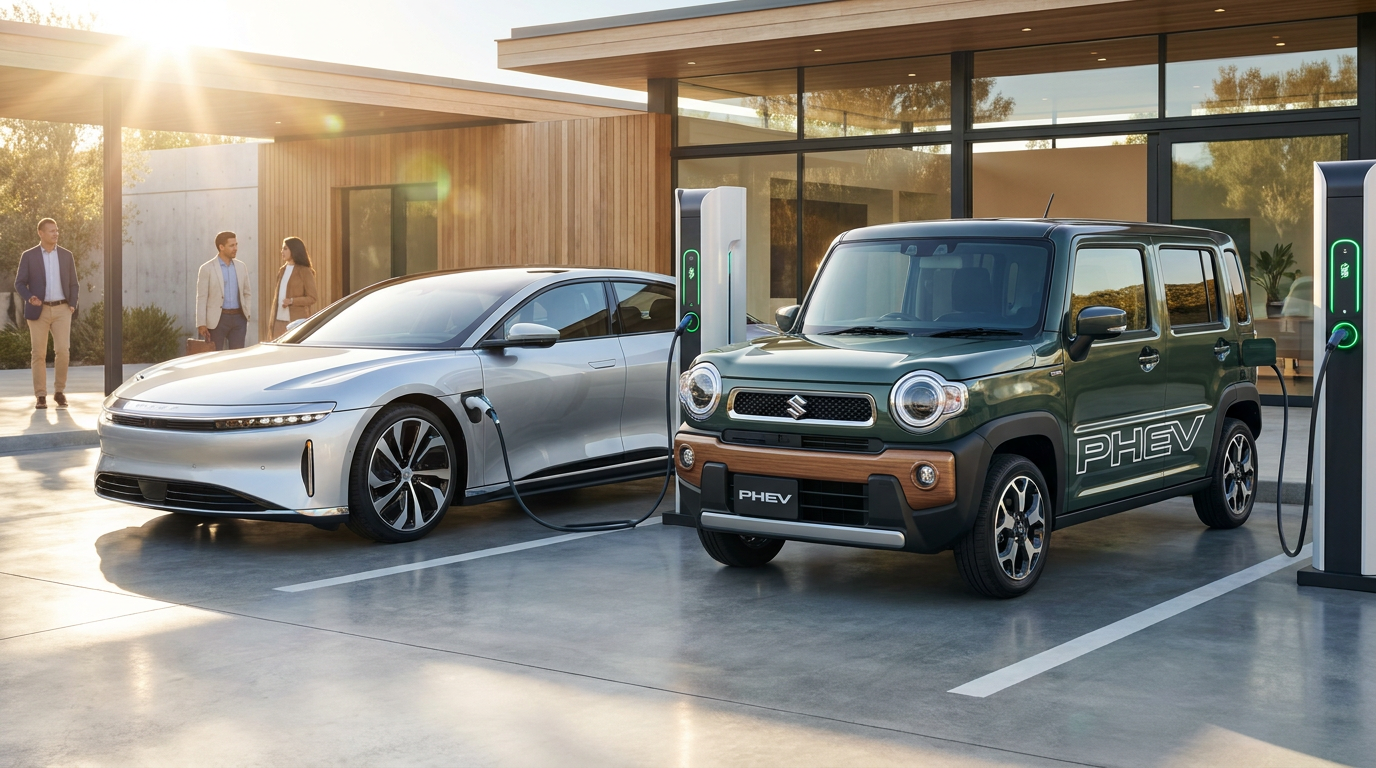
- Pure EV Advocates
- Prioritize zero emissions, simplified maintenance, and the lowest long-term operating costs.
- Transitional Hybrid Supporters
- Value the flexibility of a dual-powertrain to eliminate range anxiety on long trips.
- Pragmatic TCO Analysts
- Focus strictly on the mathematical breakdown of upfront costs versus daily mileage savings.
What's not represented
- · Used car buyers navigating battery degradation concerns
- · Apartment dwellers without any access to overnight charging infrastructure
Why this matters
Vehicles are the second-largest expense for most households. Selecting the wrong powertrain can lead to thousands of dollars in unnecessary fuel and maintenance costs, or leave drivers burdened with an incompatible daily charging routine.
Key points
- Plug-in hybrids (PHEVs) offer 30 to 80 miles of electric range for daily commutes, with a gas engine backup for long trips.
- Fully electric vehicles (EVs) provide the lowest total cost of ownership over time due to cheaper energy and minimal maintenance.
- PHEVs are currently 5% to 15% cheaper upfront than comparable EVs, though tax incentives often level the playing field.
- The optimal choice depends heavily on reliable access to home charging and the predictability of daily driving routes.
The automotive landscape in 2026 offers buyers more electrified options than ever before, turning the driveway into a battleground between two distinct philosophies. Fully electric vehicles have mainstreamed with improved ranges and faster charging architectures, while plug-in hybrid electric vehicles have surged in popularity as the ultimate transitional technology.[1][4]
Shoppers are no longer just comparing miles per gallon; they are weighing the zero-emission simplicity of a battery-electric model against the dual-powertrain flexibility of a plug-in hybrid. Making the right choice requires a side-by-side trade-off analysis of upfront costs, maintenance burdens, and daily driving habits.[3][6]
On the showroom floor, plug-in hybrids generally hold a five to fifteen percent sticker price advantage over comparable fully electric models, largely due to their significantly smaller battery packs. However, federal tax credits, state incentives, and utility rebates often close this gap, making the initial financial decision highly dependent on local policy.[3][5]

For the fully electric vehicle, the primary advantage is the exceptionally low operating cost. Electricity remains significantly cheaper than gasoline globally, and charging at home during off-peak hours can reduce energy costs by roughly seventy percent compared to fueling a traditional car.[6][7]
Against the electric vehicle is its reliance on public infrastructure for long-distance travel. While networks have expanded massively by 2026, fast charging still requires twenty to forty-five minutes, demanding more route planning and patience than a traditional five-minute gas stop.[1][2]
For the plug-in hybrid, the main draw is the "eighty-twenty rule." With modern models offering thirty to eighty miles of pure electric range, drivers can commute on cheap electricity all week, while the gasoline engine provides unlimited flexibility and zero range anxiety for weekend road trips.[4][5]

Against the plug-in hybrid is its immense mechanical complexity. It is arguably the most complex vehicle on the road, carrying both a high-voltage battery system and a combustion engine, meaning owners must manage charging cables while still paying for oil changes and spark plugs.[2][4]
Against the plug-in hybrid is its immense mechanical complexity.
Maintenance data clearly favors the pure electric route. An electric drivetrain contains roughly twenty moving parts, eliminating the need for transmission fluid, mufflers, and engine oil. In contrast, plug-in hybrids require servicing for two distinct propulsion systems, which drives up long-term maintenance costs.[4][5]
A 2026 simulation by SAE International reveals that electric vehicles become cheaper overall when daily driving exceeds certain mileage thresholds. However, for average commuters driving under forty miles a day, plug-in hybrids often present a lower total cost of ownership, provided they are charged nightly.[2][3]

Policy shifts are also altering the math. Global cities are increasingly implementing zero-emission zones that penalize plug-in hybrids if they run on gasoline, while next-generation batteries are helping 2026 electric models hold their resale value better than earlier iterations.[4][5]
Ultimately, the fully electric vehicle fits perfectly when a buyer has dedicated home or workplace charging, drives predictable daily routes, and wants to lock in the absolute lowest per-mile operating cost over a long ownership period.[1][6]
Conversely, the electric vehicle does not fit well when a driver relies entirely on public street charging, frequently tows heavy loads over long distances, or lives in rural regions with sparse fast-charging infrastructure.[1][3]

How we got here
2010
First mass-market PHEVs and EVs introduce plug-in technology to mainstream consumers.
2020
EV ranges cross the 250-mile threshold, making them viable for a broader range of households.
2024
PHEV sales surge globally as a 'transitional' choice for buyers hesitant about public charging infrastructure.
2026
Next-generation batteries push EV ranges higher, while PHEVs standardize 40+ miles of electric-only range.
Viewpoints in depth
Urban Commuters with Home Charging
Drivers who prioritize daily savings and zero emissions.
For this demographic, the fully electric vehicle is the undisputed winner. By charging overnight at off-peak rates, they bypass gas stations entirely and maximize the financial benefits of the EV's low operating costs. They view the occasional inconvenience of public charging during rare road trips as a worthwhile trade-off for years of simplified, oil-free maintenance.
Single-Car Families & Road Trippers
Households that need one vehicle to do absolutely everything.
This group champions the plug-in hybrid as the ultimate automotive safety net. They value the ability to run errands on electricity during the week without sacrificing the freedom to drive cross-country on a whim. For them, the mechanical complexity of a dual-powertrain is a reasonable price to pay for the complete elimination of range anxiety.
Fleet Managers & TCO Optimizers
Buyers focused strictly on the long-term mathematical breakdown of ownership.
Analytical buyers look past the sticker price to calculate the Total Cost of Ownership (TCO). They note that while PHEVs are cheaper upfront, EVs often win out over a five-to-seven-year period due to lower energy and maintenance costs. However, they also closely track local tax policies, noting that in regions with heavy EV subsidies, the electric vehicle's financial advantage accelerates rapidly.
What we don't know
- How quickly solid-state battery technology will trickle down to budget-friendly EVs, potentially rendering PHEVs obsolete.
- Whether future legislation in major markets will universally classify PHEVs as zero-emission vehicles or penalize them alongside traditional gas cars.
Key terms
- BEV
- Battery Electric Vehicle; a car powered entirely by electricity with no gas engine.
- PHEV
- Plug-in Hybrid Electric Vehicle; a car with both a rechargeable battery for short trips and a gas engine for long distances.
- TCO
- Total Cost of Ownership; the true cost of a vehicle including purchase price, fuel, maintenance, insurance, and depreciation.
- Regenerative Braking
- A system that captures energy normally lost during braking and uses it to recharge the battery.
Frequently asked
Do I still need oil changes with a plug-in hybrid?
Yes. Because a plug-in hybrid has a traditional gasoline engine alongside its electric motor, it still requires regular oil changes and engine maintenance.
Can I charge a PHEV at a public fast charger?
Most plug-in hybrids are designed for slower Level 2 charging at home, though some 2026 models support DC fast charging at reduced speeds compared to full EVs.
What happens if I never plug in my PHEV?
If you don't charge it, the vehicle operates like a heavy, less efficient gas car, negating its environmental and financial benefits.
Is an EV cheaper to maintain?
Yes. With only about 20 moving parts in the drivetrain and no combustion engine, EVs require significantly less routine maintenance.
Sources
Source coverage
7 outlets
3 viewpoints surfaced







[1]Kelley Blue BookPragmatic TCO Analysts
Electric Cars vs Hybrids: Key Considerations for Your Next Vehicle
Read on Kelley Blue Book →[2]CarzingTransitional Hybrid Supporters
The Case for Going Hybrid or EV in 2026
Read on Carzing →[3]Jinyu AutosPragmatic TCO Analysts
Core Comparison: Hybrid vs. Electric Across Six Dimensions
Read on Jinyu Autos →[4]Mobile Studio 24HPragmatic TCO Analysts
PHEV vs EV in 2026: Which Technology is Better
Read on Mobile Studio 24H →[5]Cars2Buy UKPure EV Advocates
Electric Vehicles vs Plug-in Hybrids: 2026 Leasing Guide
Read on Cars2Buy UK →[6]ElectraPure EV Advocates
Electric Car or Plug-in Hybrid: Which One Should You Choose?
Read on Electra →[7]QuashedTransitional Hybrid Supporters
EV vs PHEV: Total Cost of Ownership in 2026
Read on Quashed →

Every angle. Every day.
Get shopping stories with full source coverage and perspective breakdowns delivered to your inbox.