
Heat Pump vs. Vented Dryers: The Complete 2026 Comparison
As energy costs rise and ventless technology improves, heat pump dryers offer massive efficiency gains at the cost of longer cycles and higher upfront prices.
By Factlen Editorial Team
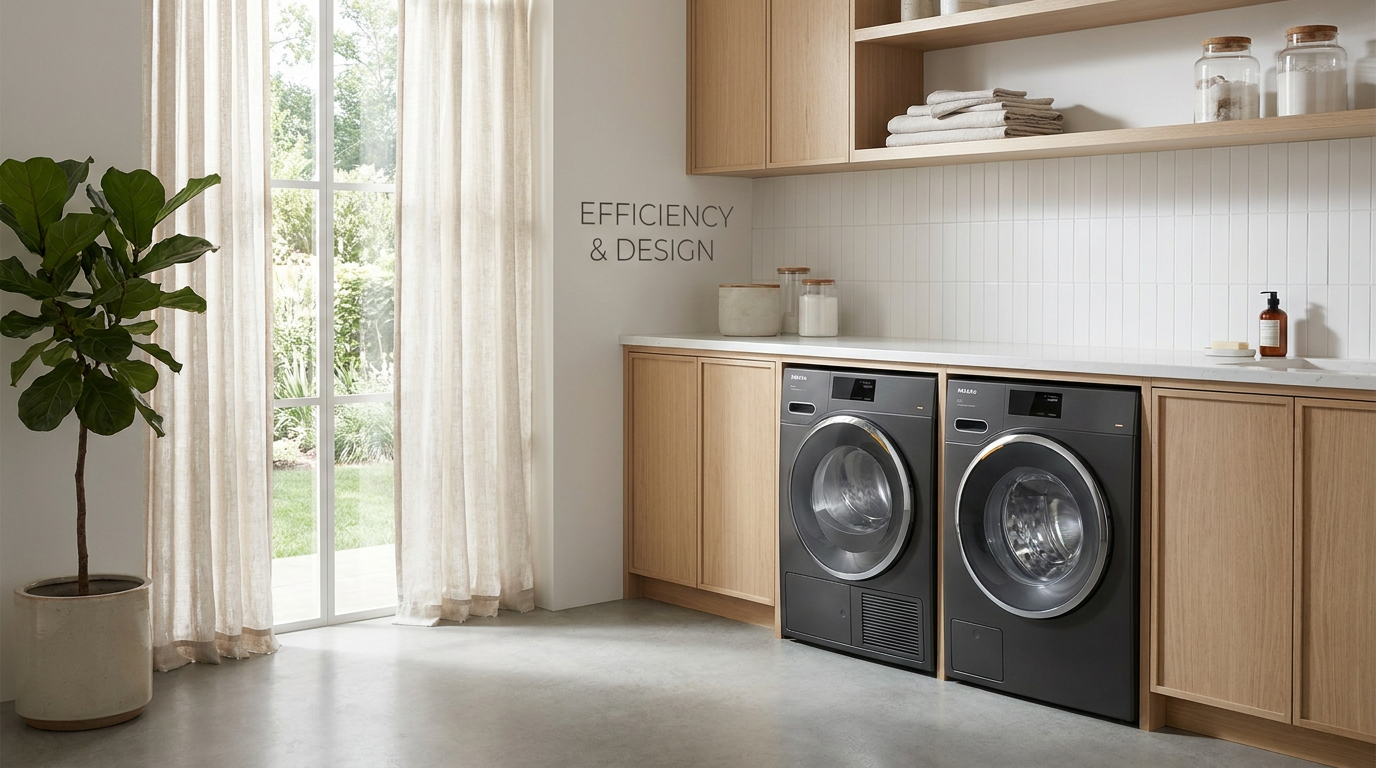
- Efficiency Advocates
- Prioritize long-term energy savings, environmental impact, and fabric care over upfront costs.
- Practical Traditionalists
- Value fast drying times, low initial purchase prices, and simple, proven mechanical reliability.
- Appliance Manufacturers
- Focus on pushing new ventless technology while maintaining budget-friendly legacy options for different markets.
- Factlen Analysis
- Synthesizes the trade-offs to provide conditional recommendations based on household needs.
What's not represented
- · Appliance Repair Technicians
- · Large-Family Consumers
Why this matters
Your clothes dryer is likely the second most energy-hungry appliance in your home. Choosing the right technology can save you hundreds of dollars a year in electricity, protect your expensive clothing from heat damage, and eliminate the fire hazards associated with traditional exterior vents.
Key points
- Heat pump dryers use a closed-loop system to recycle air, cutting energy consumption by up to 50% compared to vented models.
- Traditional vented dryers remain the fastest and most affordable option upfront, but cost significantly more to operate over time.
- Because they operate at lower temperatures, heat pump dryers are much gentler on fabrics, reducing shrinkage and wear.
- Ventless technology allows heat pump dryers to be installed anywhere in a home, making them ideal for apartments and interior closets.
- Heat pump models require regular cleaning of a secondary condenser filter, while vented models require routine exterior duct cleaning to prevent fires.
The humble clothes dryer is undergoing a quiet but profound revolution. For decades, the standard American and global household relied on a simple, brute-force method to dry laundry: blast the wet clothes with high heat and vent the damp, hot air directly outside. It was a system built for an era of cheap energy and minimal environmental oversight. Today, however, that paradigm is shifting rapidly toward heat pump technology. As consumers look to modernize their homes and reduce their carbon footprints, the debate between upgrading to a cutting-edge heat pump dryer or sticking with a traditional vented model has become one of the most common dilemmas in the appliance aisle.[6]
The stakes of this decision are surprisingly high. Aside from the home's primary HVAC system, a traditional vented dryer is often the most energy-hungry appliance operating under the roof. As electricity rates continue to climb—reaching upwards of 28 cents per kilowatt-hour in some regions—and environmental regulations tighten, the choice of how to dry clothes is no longer just a matter of weekend convenience. It is a significant financial and ecological decision that will impact a household's utility bills for the next decade.[2]
To understand the core comparison, one must first look at how traditional vented dryers operate. These legacy machines draw in ambient room air, heat it rapidly using high-draw electric coils or gas burners, and tumble the clothes through the hot environment. The resulting moisture-laden air is then expelled through a physical duct to the outside of the house. It is an undeniably fast and effective process, but it is inherently wasteful, as the expensive energy used to heat the air is literally blown out the window minute by minute.[3][4]

Heat pump dryers, by contrast, operate on an entirely different, closed-loop system. Instead of venting air outside, they utilize advanced refrigeration technology to extract moisture from the air inside the drum. The machine cools the air to condense the water—which is then either pumped into a drain or collected in a removable tank—and then reheats that exact same air to pass back through the tumbling clothes. Because they continuously recycle their own heat, they do not require an exterior vent of any kind.[1][5]
The primary case for heat pump dryers centers heavily on their remarkable energy efficiency. Industry data and appliance experts indicate that heat pump models consume between 28% and 50% less electricity than their traditional vented counterparts. Over the lifespan of the appliance, this drastic reduction in energy consumption translates into substantial utility bill savings. For a household doing multiple loads of laundry a week in a region with high electricity costs, a heat pump dryer can save hundreds of dollars a year, steadily paying back its premium over time.[3][8]
Beyond the electric meter, heat pump technology offers significant, tangible benefits for fabric care. Because they operate at much lower, more controlled temperatures than vented dryers, they are inherently gentler on clothing. High, aggressive heat is the primary culprit behind fabric shrinkage, color fading, and the gradual breakdown of elastic fibers in activewear. By drying clothes at a cooler temperature, heat pump models actively extend the life of the garments inside them, saving consumers money on wardrobe replacements.[2][4]
Installation flexibility is another major point in favor of heat pump systems. Because they are entirely ventless, they can be placed anywhere in a home that has a standard electrical outlet and sufficient airflow. They can be tucked inside an interior hallway closet, placed under a kitchen counter, or installed in the center of a high-rise apartment. This solves a major architectural headache for builders, remodelers, and renters who cannot easily drill a four-inch exhaust hole through an exterior wall.[1][5]

Installation flexibility is another major point in favor of heat pump systems.
However, the argument against heat pump dryers is rooted in two primary consumer pain points: time and upfront cost. Because they rely on lower temperatures and a gradual condensation process, heat pump dryers take significantly longer to complete a cycle. A load of heavy towels that might take 45 minutes in a vented dryer can take anywhere from one and a half to three hours in a heat pump model. For large families accustomed to churning through back-to-back laundry loads on a Sunday afternoon, this operational bottleneck can be deeply frustrating.[1][2]
The initial financial investment also gives many buyers pause. A standard vented dryer can often be purchased for between $300 and $1,000, making it a highly accessible option for budget-conscious shoppers or those replacing a broken unit in an emergency. Heat pump dryers, featuring complex compressors and delicate refrigeration coils, typically start at a much higher price point. While the energy savings often offset this premium over several years, the upfront sticker shock remains a significant barrier to entry for the average consumer.[1][7]
Conversely, the case for traditional vented dryers rests on their unmatched speed, low initial cost, and mechanical simplicity. They are the undisputed workhorses of the laundry world. When a household needs a child's soccer uniform washed and dried in under an hour before a game, a vented dryer consistently delivers. Furthermore, their simple, decades-old mechanical design means that when they do break down, replacement parts are universally available, and repairs are generally straightforward and inexpensive.[4][5]

Yet, the long-term evidence against vented dryers is mounting, particularly regarding hidden household inefficiencies. Beyond their direct utility costs, vented dryers create negative air pressure inside the home's overall climate control system. By constantly expelling hundreds of cubic feet of air outside, they force the house to draw in unconditioned outside air through cracks and windows to replace it. In the dead of winter, this means the home's heating system must work overtime to warm the freezing air the dryer just pulled inside.[6][7]
Maintenance requirements also differ significantly between the two technologies, presenting distinct trade-offs for the homeowner. Vented dryers require the user to regularly clean the exterior exhaust duct. A clogged vent not only drastically increases drying time and wastes energy, but it also poses a severe and documented fire hazard. Thousands of catastrophic house fires are attributed to neglected, lint-clogged dryer vents every single year, making duct maintenance a critical safety chore.[2][4]
Heat pump dryers completely eliminate the risk of duct fires, but they introduce their own specific maintenance chores. In addition to emptying the standard lint screen after every load, heat pump models feature a secondary condenser filter that must be cleaned regularly—often monthly—to keep the machine running efficiently. If this secondary filter becomes clogged with fine dust or pet hair, the compressor must work significantly harder, negating the energy savings and potentially leading to a highly expensive mechanical failure.[1][2]
Ultimately, choosing between the two technologies requires a clear-eyed assessment of a household's specific conditions. A heat pump dryer fits well when a home faces high local electricity rates, lacks access to an exterior vent, or prioritizes the longevity of delicate, expensive clothing. It is the optimal, forward-thinking choice for eco-conscious consumers, apartment dwellers, and those living in modern, tightly sealed, energy-efficient homes where venting air outside disrupts the climate control.[6]
On the other hand, a traditional vented dryer fits well when a household has a tight upfront budget, already possesses a clean and easily accessible exterior vent, and prioritizes rapid drying times above all else. Large families that need to process massive volumes of heavy laundry quickly may still find the brute force of a vented dryer more aligned with their weekly rhythm, provided they are willing to absorb the higher monthly energy costs and commit to regular duct cleaning.[6]
As the appliance market looks to the future, the momentum is clearly shifting toward closed-loop systems. In Europe, where energy costs have historically been much higher, heat pump dryers have already been the dominant standard for years. As manufacturing scales up globally and environmental regulations continue to incentivize extreme energy efficiency, the price gap between the two technologies is expected to narrow, making the heat pump's slow, gentle, and highly efficient approach the likely standard of tomorrow's laundry room.[3][6]
How we got here
Mid-20th Century
Traditional vented electric and gas dryers become the standard in North American households.
1990s
Heat pump dryer technology is introduced and begins gaining widespread adoption in Europe due to high energy costs.
2010s
Ventless condenser dryers offer an alternative for apartments, but prove inefficient and prone to overheating rooms.
Early 2020s
Major manufacturers scale up heat pump dryer production for the US market, improving capacities and features.
2025–2026
Heat pump models become a mainstream choice globally as consumers seek to offset rising electricity rates and access energy-efficiency rebates.
Viewpoints in depth
Efficiency Advocates
The argument for prioritizing long-term energy savings and fabric care.
This camp, which includes environmental groups and energy-conscious reviewers, argues that the traditional vented dryer is an outdated energy hog. By switching to a heat pump model, households can cut their drying energy use by up to 50%. They emphasize that while the upfront cost is higher, the return on investment is realized through drastically lower monthly utility bills and the extended lifespan of clothing that isn't subjected to extreme heat.
Practical Traditionalists
The argument for sticking with fast, affordable, and simple vented machines.
Proponents of traditional vented dryers focus on the immediate practicalities of large households. They point out that a heat pump dryer taking up to three hours to dry a load creates an unacceptable bottleneck for families doing multiple loads on a weekend. Furthermore, they argue that the mechanical simplicity of a vented dryer makes it far cheaper to buy and repair, warning that a broken compressor on a heat pump model can cost as much to fix as buying a brand new vented machine.
What we don't know
- Whether the long-term repair costs of complex heat pump compressors will ultimately negate their energy savings for the average consumer.
- How quickly government energy rebates will close the upfront price gap between the two technologies.
Key terms
- Heat Pump Technology
- A system that uses refrigerants and compressors to extract heat from the air, recycle it, and condense moisture, rather than generating heat from scratch.
- Closed-Loop System
- An appliance design that recirculates the same air continuously without venting it to the outside environment.
- Condenser Filter
- A secondary filter found in heat pump dryers that protects the delicate refrigeration coils from lint and debris.
- Negative Air Pressure
- A condition created when a vented dryer blows air out of the house, forcing the home to pull in unconditioned outside air through gaps to replace it.
Frequently asked
Do heat pump dryers need a vent?
No, heat pump dryers are completely ventless. They use a closed-loop system to condense moisture and either collect it in a removable tank or pump it directly into a drain.
Why do heat pump dryers take so long?
They operate at much lower temperatures than vented dryers to save energy and protect fabrics. This gentle process extends the drying cycle to anywhere from 1.5 to 3 hours.
Are heat pump dryers more expensive to repair?
Yes. Because they utilize complex refrigeration compressors and coils rather than simple heating elements, out-of-warranty repairs on heat pump dryers can be significantly more expensive.
Do vented dryers ruin clothes?
The high, aggressive heat used by traditional vented dryers can cause fabrics to shrink, fade, and degrade much faster over time compared to the gentle, lower heat of a heat pump model.
Sources
Source coverage
8 outlets
4 viewpoints surfaced






[1]Top Ten ReviewsEfficiency Advocates
Heat pump dryer vs vented dryer: Which is best?
Read on Top Ten Reviews →[2]Yale ApplianceEfficiency Advocates
Vented vs Condenser vs Heat Pump Dryers: Real Costs, Pros & Trade-Offs
Read on Yale Appliance →[3]Aztec AppliancePractical Traditionalists
Heat Pump Dryer vs. Vented Dryer
Read on Aztec Appliance →[4]ElectroluxAppliance Manufacturers
Vented vs Heat Pump vs Condenser Dryer: What's the Difference?
Read on Electrolux →[5]FoldersPractical Traditionalists
Choosing Between Vented, Condenser, and Heat Pump Dryers
Read on Folders →[6]Factlen Editorial TeamFactlen Analysis
Synthesis by Factlen editorial team
Read on Factlen Editorial Team →[7]LUMS Energy OptimizationEfficiency Advocates
Ventless Heat Pump Dryer vs. Vented Dryer: Which is Right for You?
Read on LUMS Energy Optimization →[8]Dryera TechAppliance Manufacturers
Heat Pump Dryer Vs Vented Dryer: What Are The Pros And Cons?
Read on Dryera Tech →


Every angle. Every day.
Get shopping stories with full source coverage and perspective breakdowns delivered to your inbox.