
Communities Are Building Their Own Grocery Stores to Fight Food Deserts
Frustrated by corporate consolidation and a lack of fresh food access, neighborhoods across the U.S. are successfully opening multi-million dollar community-owned grocery cooperatives.
By Factlen Editorial Team
- Urban Food Access Advocates
- Focused on eliminating food deserts and providing fresh, healthy food to underserved city neighborhoods.
- Small-Town Revitalization Groups
- Focused on replacing lost independent grocers and anchoring rural main streets.
- Cooperative Development Experts
- Focused on the financial mechanics, feasibility, and national scaling of the co-op model.
What's not represented
- · Corporate Grocery Executives
- · Commercial Real Estate Developers
Why this matters
As corporate supermarket chains increasingly abandon low-income and rural areas, the cooperative model offers a proven, community-funded blueprint for restoring local food access and keeping economic resources within the neighborhood.
Key points
- The Wasatch Food Co-op opened in Salt Lake City on May 20, 2026, marking the end of a 17-year community organizing effort.
- Neighborhoods in San Diego, St. Petersburg, and rural Minnesota are currently funding and building their own multi-million dollar grocery stores.
- Modern food cooperatives are democratically owned by residents who purchase a lifetime equity share, giving them a vote in store operations.
- Between 2008 and 2018, 134 new food co-ops opened in the U.S. with a 74% success rate, driven by a desire for local sourcing and food security.
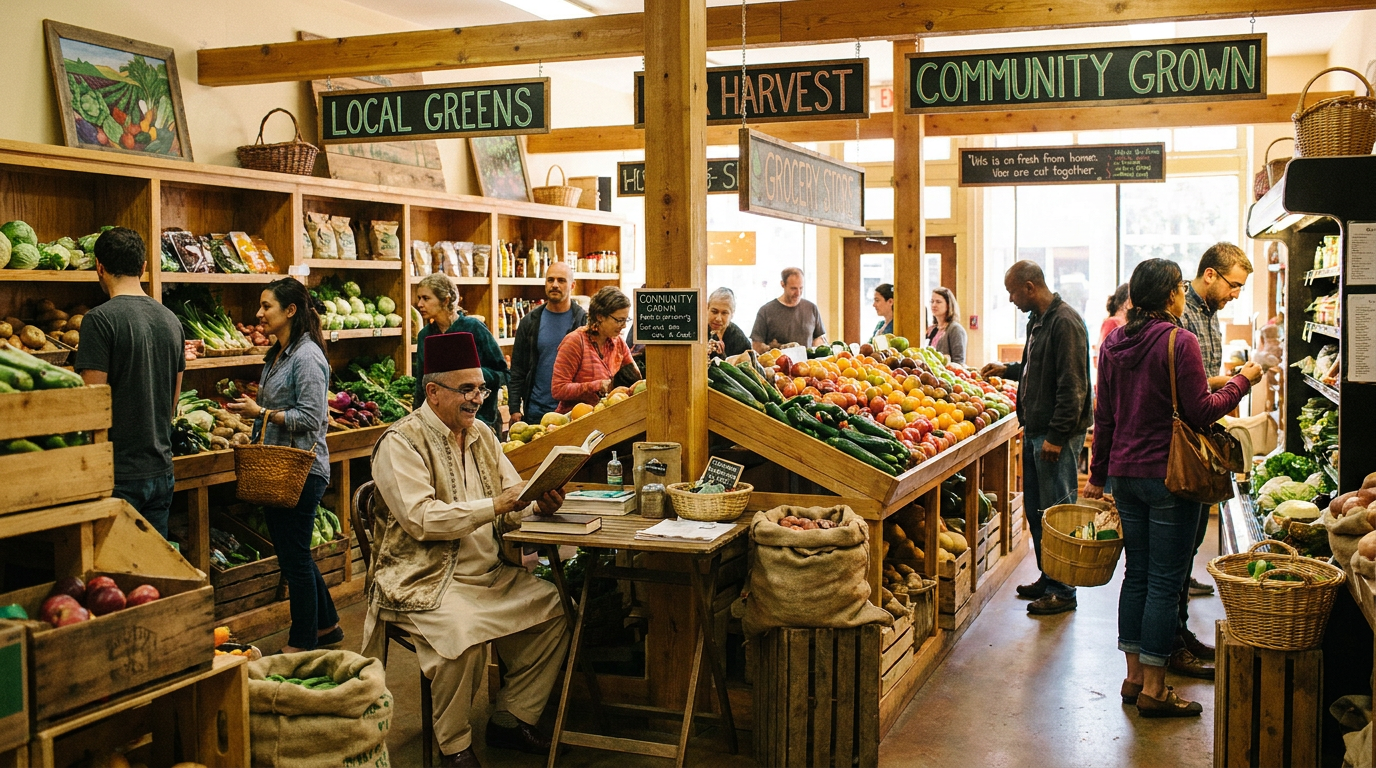
On May 20, 2026, a line of eager shoppers wrapped around the block in Salt Lake City's Liberty Wells neighborhood. They weren't waiting for a limited-edition sneaker drop or a celebrity appearance; they were waiting to buy groceries. The grand opening of the Wasatch Food Co-op marked the culmination of a 17-year grassroots effort to bring a community-owned grocery store to the area. Inside the renovated 6,500-square-foot space—formerly a neighborhood market that closed in 2022—shoppers found shelves stocked with locally sourced produce, meats, and everyday essentials. For the residents who had organized, fundraised, and navigated countless setbacks since 2009, the ribbon-cutting was a monumental victory for neighborhood self-determination.[1]
The celebration in Salt Lake City is part of a quiet but powerful national movement. Across the United States, communities frustrated by corporate grocery consolidation, food deserts, and the loss of independent markets are taking matters into their own hands. From the sun-drenched streets of Southern California to the rural downtowns of the Midwest, a new wave of community-owned grocery stores is emerging. These cooperatives operate on a fundamentally different business model than traditional chains: they are democratically owned and controlled by the people who shop there, prioritizing local economic health and food access over maximizing shareholder returns.[1][7]
The mechanics of a modern food cooperative are straightforward but require immense community buy-in. Residents purchase a lifetime equity share—often ranging from $100 to $300, which can typically be paid in installments—to become member-owners. This one-time investment grants them a single vote in board elections, a say in the store's sourcing policies, and a share of any future profits, which are usually reinvested into the store or distributed as dividends. However, anyone in the community can shop at the store, regardless of whether they own a share. This structure ensures that the grocery store remains anchored to the neighborhood's specific needs rather than the shifting priorities of a distant corporate headquarters.[2][6][7]

In urban areas, co-ops are increasingly viewed as a viable solution to entrenched food deserts. In South St. Petersburg, Florida, a neighborhood that has lacked a full-service grocery store for nearly a decade, the One Community Grocery Co-op is steadily advancing toward its goal. The organization recently secured a $50,000 pre-development grant from the city council to fund feasibility studies and site planning. Organizers are currently focused on reaching a 300-member milestone to secure a physical location. In the interim, they are hosting pop-up markets with produce from local urban farms, demonstrating the demand for fresh, accessible food while keeping dollars circulating within the local economy.[2]
A similar story is unfolding in Imperial Beach, a community in San Diego's South Bay. For years, residents have had to drive out of town to access a full-service grocery store with healthy, organic options. That will change this fall when the SunCoast Market Co-op officially opens its doors. Backed by more than 1,300 community owners, the store is in the final stages of construction. To ensure the market serves the entire community, organizers have committed to accepting CalFresh benefits and offering an additional 10% discount for members on food assistance programs, proving that the co-op model can successfully blend high-quality local sourcing with vital affordability initiatives.[4]
A similar story is unfolding in Imperial Beach, a community in San Diego's South Bay.
The cooperative resurgence is not limited to urban centers; it is also providing a lifeline to rural areas and small towns that have lost their independent grocers. As large supermarket chains consolidate and focus on high-density, high-margin suburban locations, many smaller communities have been left with only convenience stores or dollar stores for their food needs. In these towns, a community-owned grocery store is often the only way to restore downtown vibrancy and ensure access to fresh produce. The organizing in these rural areas reflects a deep commitment to community survival and local resilience.[3][7]
In Little Falls, Minnesota, a town that received a federal designation as a low-income, low-food-access area after its downtown grocery store closed, residents decided they couldn't wait for a corporate chain to save them. Eleven years ago, they began organizing the Purple Carrot Market. After years of planning and fundraising, construction finally began this past fall, with a grand opening targeted for late 2026. The project requires an estimated $1.5 million to launch, half of which the co-op is raising through a dedicated capital campaign. For the residents of Little Falls, the store represents a massive investment in their own community's future.[3]

Similarly, in Kennett Square, Pennsylvania, the Kennett Community Grocer recently celebrated a major breakthrough by signing a lease on a 3,000-square-foot storefront. After eight years of organizing, dreaming, and building a base of member-owners, the group is now targeting a May 2026 opening. The organizers have spent the intervening years building relationships with dozens of local farmers and producers who will eventually stock their shelves. By securing a physical home, the co-op has transitioned from a conceptual community project into a tangible economic engine that will soon support the broader agricultural economy of Chester County.[5]
Launching a grocery store from scratch is a notoriously difficult endeavor, and the modern co-op movement relies heavily on shared knowledge and professionalized support. The Food Co-op Initiative (FCI), a national nonprofit, provides crucial resources, consulting, and a structured 'Development Framework' to help startup teams navigate the complex journey. Unlike the 1970s, when a co-op could often be started with a small amount of capital as a simple buying club, today's food co-ops are multi-million dollar operations that require rigorous market studies, professional project management, and sophisticated capital campaigns.[3][6]
Despite these steep financial and logistical hurdles, the cooperative model has demonstrated remarkable resilience. According to industry data, between 2008 and 2018, 134 new food co-ops opened across the United States, boasting a 74% success rate. This wave of development brought in 160,000 new member-owners nationwide. The success of these stores is largely attributed to the deep community engagement required to open them; by the time a co-op cuts its ribbon, it already has a dedicated, financially invested customer base that is highly motivated to see the business thrive.[7]

Beyond providing food access, these community-owned stores serve as vital economic anchors for regional food systems. While a typical commercial grocery store might source only about 5% of its inventory from local producers, cooperatives prioritize regional agriculture. The newly opened Wasatch Food Co-op, for example, operates with a strict mandate to source at least 20% of its inventory locally. This commitment ensures that a significant portion of the community's grocery spending is redirected back to local farmers, bakers, and artisans, creating a multiplier effect that strengthens the entire regional economy.[1][7]
As the grocery industry continues to be shaped by mega-mergers, algorithmic pricing, and automated checkout lanes, the rise of community-owned markets offers a distinctly human alternative. These stores are proving that a grocery market can be more than just a place to extract profit from a neighborhood; it can be a community hub, an economic engine, and a testament to the power of collective action. For the shoppers lining up in Salt Lake City, and the thousands of member-owners organizing in towns across the country, the message is clear: if the corporate market won't feed the community, the community will feed itself.[1][2][6]
How we got here
1970s
A massive wave of food cooperatives launches across the U.S., primarily as small buying clubs focused on natural foods.
2008–2018
A resurgence in the cooperative model sees 134 new community-owned grocery stores open nationwide with a 74% success rate.
2022
The Southeast Market in Salt Lake City's Liberty Wells neighborhood closes, paving the way for the Wasatch Food Co-op to take over the space.
May 20, 2026
The Wasatch Food Co-op officially opens its doors after 17 years of community organizing and fundraising.
Viewpoints in depth
Urban Food Access Advocates
Focused on eliminating food deserts and providing fresh, healthy food to underserved city neighborhoods.
This perspective emphasizes the failure of corporate grocery chains to serve low-income and marginalized urban areas. Advocates argue that when profit-driven supermarkets abandon neighborhoods, community ownership is the most sustainable way to restore food access. They prioritize affordability initiatives, such as accepting SNAP/CalFresh benefits and offering need-based discounts, ensuring that the co-op serves the entire community rather than just affluent shoppers.
Small-Town Revitalization Groups
Focused on replacing lost independent grocers and anchoring rural main streets.
For rural organizers, a grocery store is more than a place to buy food; it is a critical piece of civic infrastructure. When a small town loses its independent grocer, it often loses downtown foot traffic, local jobs, and a sense of community identity. This camp views the cooperative model as a vital tool for rural economic development, ensuring that local dollars remain in the community rather than being extracted by distant corporate headquarters.
Cooperative Development Experts
Focused on the financial mechanics, feasibility, and national scaling of the co-op model.
Industry professionals and organizations like the Food Co-op Initiative focus on the rigorous business realities of opening a grocery store. They stress that passion is not enough; modern co-ops require multi-million dollar capital campaigns, professional market studies, and experienced management. This perspective highlights the importance of shared frameworks and peer-to-peer learning to maintain the sector's high success rate and avoid the financial pitfalls that can doom grassroots projects.
What we don't know
- Whether the current pace of new cooperative development can be sustained as commercial real estate and construction costs continue to rise.
- How traditional corporate grocery chains might respond if community-owned markets begin capturing a significant share of regional grocery spending.
Key terms
- Food Cooperative
- A grocery store that is democratically owned and controlled by the people who shop there, rather than by outside investors.
- Member-Owner
- An individual who has purchased an equity share in a cooperative, granting them a vote in board elections and a say in store policies.
- Food Desert
- A geographic area where residents have limited access to affordable, nutritious food, often due to the absence of a full-service grocery store.
- Capital Campaign
- A targeted fundraising effort by a cooperative to raise the significant funds required for construction, equipment, and initial inventory.
Frequently asked
Do I have to be a member to shop at a food co-op?
No. While member-owners provide the foundational capital and have voting rights, almost all community-owned grocery stores are open to the general public for shopping.
How much does it cost to join a grocery co-op?
A lifetime equity share typically ranges from $100 to $300, and most co-ops offer installment plans or subsidized shares for low-income residents.
Why do food co-ops take so long to open?
Opening a full-service grocery store is a multi-million dollar endeavor that requires extensive feasibility studies, real estate negotiations, and grassroots capital campaigns, which often take years to complete.
Are co-ops more expensive than regular grocery stores?
Pricing varies, but many co-ops actively work to remain affordable by accepting food assistance benefits and offering discounts to members, while also paying fair prices to local farmers.
Sources
Source coverage
7 outlets
3 viewpoints surfaced







[1]KUERUrban Food Access Advocates
Salt Lake City's long-awaited food co-op is finally open
Read on KUER →[2]FOX 13 Tampa BayUrban Food Access Advocates
South St. Pete grocery co-op moves closer to opening with city grant, growing membership
Read on FOX 13 Tampa Bay →[3]MPR NewsSmall-Town Revitalization Groups
The Little Falls co-op that could: Making a community-owned grocery store a reality
Read on MPR News →[4]KPBSUrban Food Access Advocates
First community-owned grocery store in San Diego's South Bay to open this fall
Read on KPBS →[5]Kennett Community GrocerSmall-Town Revitalization Groups
BREAKING NEWS: We have a HOME!
Read on Kennett Community Grocer →[6]Food Co-op InitiativeCooperative Development Experts
Food Co-op Development Framework
Read on Food Co-op Initiative →[7]PCC Community MarketsCooperative Development Experts
Grocery story: How food co-ops transformed an industry
Read on PCC Community Markets →
Every angle. Every day.
Get community stories with full source coverage and perspective breakdowns delivered to your inbox.