
Stablecoins Emerge as the New Financial Plumbing for the Global South
Digital dollars are quietly replacing traditional banking rails in emerging markets, offering instant cross-border payments and a hedge against local inflation.
By Factlen Editorial Team
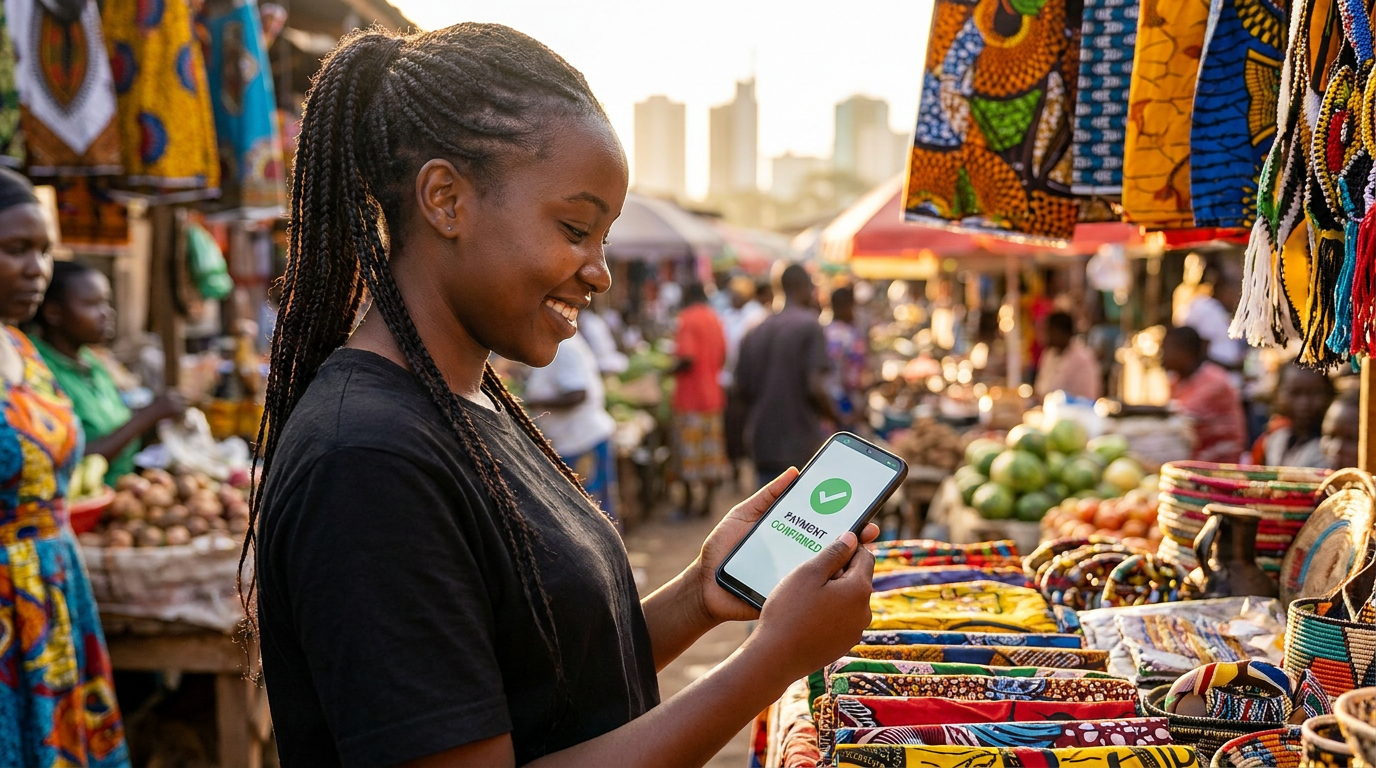
- Emerging Market Users
- Value stablecoins as a practical tool for wealth preservation and frictionless payments.
- Enterprise Adopters
- Focus on the operational efficiency, speed, and cost reduction of blockchain settlement.
- Macroeconomists & Regulators
- Monitor the systemic risks, capital flight, and monetary policy challenges of digital dollarization.
What's not represented
- · Traditional Remittance Providers facing disruption
- · Local Commercial Banks losing cross-border transaction fee revenue
Why this matters
For decades, workers and businesses in developing nations have been penalized by slow, expensive cross-border banking and volatile local currencies. The mainstream adoption of stablecoins is finally leveling the playing field, allowing anyone with a smartphone to transact instantly in digital dollars.
Key points
- Stablecoins have evolved from crypto trading tools into everyday financial infrastructure.
- 73% of global stablecoin savers are now located in emerging markets.
- B2B stablecoin payments surged to over $6 billion monthly by mid-2025.
- Users bypass 3-5 day banking delays and 2-7% wire fees for cross-border transactions.
- The IMF notes this trend mirrors traditional dollarization driven by local inflation.
For years, the cryptocurrency narrative was dominated by speculative trading, volatile tokens, and the search for the next digital gold rush. But by mid-2026, the industry's most significant breakthrough is happening quietly, far from the trading desks of Wall Street. Stablecoins—digital tokens pegged to fiat currencies like the U.S. dollar—have transitioned from niche trading tools into essential financial plumbing for millions of people in emerging markets.[4][6]
This shift represents the fulfillment of one of blockchain's earliest promises: creating a borderless, frictionless financial system. Rather than betting on the price of Bitcoin, users in Latin America, Sub-Saharan Africa, and Southeast Asia are utilizing stablecoins to bypass broken legacy banking systems, preserve their savings against hyperinflation, and run international businesses.[2][4]
The data reveals a stark geographic divide in how digital assets are utilized. According to recent industry insights, a staggering 73% of global stablecoin savers are now based in emerging markets. On major platforms, the number of users holding the majority of their portfolio in stablecoins has surged, reflecting a fundamental shift from speculation to everyday utility.[2]
For a freelance developer in Nairobi or a digital creator in Brazil, the appeal is entirely practical. Traditional cross-border payments through correspondent banking often take three to five business days to settle, with all-in costs reaching 2% to 7% once wire fees, foreign exchange markups, and intermediary deductions are factored in.[3]

In contrast, stablecoin transfers settle in seconds, often for fractions of a cent. Workers can receive their paychecks in digital dollars instantly, avoiding the delays and high friction of traditional remittance corridors. Once received, these funds can be held as a hedge against local currency devaluation or spent locally the same day.[2][3]
In contrast, stablecoin transfers settle in seconds, often for fractions of a cent.
The corporate sector has also recognized the immense efficiency gains. Business-to-business stablecoin payments surged from under $100 million per month in early 2023 to over $6 billion per month by mid-2025. In Latin America alone, 71% of firms are already utilizing stablecoins to manage cross-border supplier payments, effectively freeing up trapped working capital and eliminating reconciliation overhead.[3]

This enterprise adoption is being accelerated by newfound regulatory clarity. The passage of comprehensive frameworks—such as the Markets in Crypto-Assets (MiCA) regulation in Europe and the GENIUS Act in the United States—has provided traditional financial institutions and corporate treasuries the legal certainty they need to integrate stablecoin rails directly into their enterprise resource planning systems.[3][4]
The International Monetary Fund notes that this phenomenon is not purely a crypto-native trend, but rather a digital evolution of traditional dollarization. Citizens in countries with volatile currencies, high inflation, and fragile policy environments are naturally gravitating toward dollar-backed stablecoins because they offer the same economic safety as physical U.S. dollars, but with significantly lower barriers to entry.[1]
However, this rapid adoption presents a complex challenge for central banks in developing nations. While stablecoins empower individual citizens and small businesses, they also facilitate capital flight and can complicate domestic monetary policy. When local populations abandon their national currency for digital dollars, central banks lose a degree of control over their own economies.[1][6]

Despite these macroeconomic tensions, the technological infrastructure continues to mature. The user experience, long a stumbling block for blockchain adoption, has dramatically improved. In 2026, the underlying technology is becoming increasingly "invisible," allowing users to send and receive funds through intuitive mobile applications without needing to understand cryptographic keys or network gas fees.[5]
Looking ahead, the total addressable market for cross-border payments stands at $16.5 trillion. Industry analysts project that stablecoins could capture up to 10% of this volume by 2030, representing trillions of dollars in annual transactions moving away from legacy banking systems.[3]
Ultimately, the rise of stablecoins in the Global South demonstrates that the most transformative technologies are often the least flashy. By providing a reliable, instant, and low-cost medium of exchange, stablecoins are quietly upgrading the financial infrastructure for the half of the world that legacy banking left behind.[4][6]
How we got here
2020–2022
Stablecoins are primarily used as liquidity tools for crypto traders moving between volatile assets.
Early 2023
B2B stablecoin payments sit at under $100 million per month as early enterprise pilots begin.
2024–2025
Inflation in several emerging markets drives a surge in retail stablecoin adoption for wealth preservation.
Mid-2025
B2B stablecoin volume eclipses $6 billion per month as Latin American and Asian firms adopt the technology.
2026
Regulatory frameworks like MiCA and the GENIUS Act provide the legal clarity needed for widespread institutional integration.
Viewpoints in depth
Emerging Market Citizens
View stablecoins as a vital lifeline for preserving wealth and conducting business.
For freelancers, small business owners, and everyday savers in countries with high inflation, stablecoins offer unprecedented financial sovereignty. They provide a way to opt out of depreciating local currencies and bypass extortionate remittance fees, treating digital dollars as a basic utility rather than a speculative investment.
Corporate Treasuries
Focus on the operational efficiency and cost savings of blockchain rails.
Mid-market companies and multinational enterprises view stablecoins as a massive upgrade to global financial plumbing. By eliminating correspondent banks, they can settle cross-border supplier invoices instantly, freeing up working capital and dramatically reducing the 2-7% friction costs associated with traditional wire transfers.
Global Central Banks
Express concern over monetary sovereignty and capital flight.
Institutions like the IMF and emerging market central banks warn that widespread stablecoin adoption acts as a backdoor to dollarization. While beneficial to individuals, this trend can hollow out domestic capital markets, weaken the transmission of local monetary policy, and expose national economies to sudden capital outflows.
What we don't know
- How emerging market governments will regulate or restrict stablecoin access to protect their local currencies.
- Whether upcoming central bank digital currencies (CBDCs) will successfully compete with private dollar-backed stablecoins.
- The long-term impact on U.S. Treasury markets if stablecoin issuers become primary holders of government debt.
Key terms
- Stablecoin
- A digital currency pegged to a stable asset, most commonly the U.S. dollar, designed to maintain a consistent value.
- Dollarization
- The process by which a country's inhabitants use a foreign currency (usually the U.S. dollar) in parallel to or instead of their domestic currency.
- Correspondent Banking
- A traditional financial arrangement where banks provide services on behalf of another, often causing delays and fees in cross-border transfers.
- Working Capital
- The funds a business has available to meet its short-term obligations and daily operations.
Frequently asked
Why are people in emerging markets using stablecoins?
They use them to protect their savings from local inflation and to receive international payments instantly without paying high wire transfer fees.
Are stablecoins the same as Bitcoin?
No. While both use blockchain technology, stablecoins are pegged to traditional assets like the U.S. dollar, meaning their value does not wildly fluctuate like Bitcoin.
How are businesses using this technology?
Companies are using stablecoins to pay international suppliers and remote workers, settling invoices in seconds rather than waiting days for traditional bank wires to clear.
Sources
Source coverage
6 outlets
3 viewpoints surfaced






[1]International Monetary FundMacroeconomists & Regulators
Stablecoin flows have surged in recent years, and emerging market economies are increasingly on the receiving end
Read on International Monetary Fund →[2]Binance ResearchEmerging Market Users
Insights into a recent trend in stablecoin adoption across emerging markets
Read on Binance Research →[3]TazapayEnterprise Adopters
Building a Stablecoin Strategy for Emerging Market Corridors
Read on Tazapay →[4]FystackEnterprise Adopters
Stablecoin Adoption in 2026: From Crypto Trading to Global Payments Infrastructure
Read on Fystack →[5]PixelPlexEnterprise Adopters
Top 10 Blockchain Use Cases In 2026: How Your Business Can Ride the Wave
Read on PixelPlex →[6]Factlen Editorial TeamMacroeconomists & Regulators
Synthesis by Factlen editorial team
Read on Factlen Editorial Team →



Every angle. Every day.
Get finance stories with full source coverage and perspective breakdowns delivered to your inbox.