
SpaceX's $1.77 Trillion IPO and the Return of the Venture Capital Moonshot
As SpaceX prepares for a record-breaking public offering, its massive valuation is validating a broader venture capital shift away from software and toward physical infrastructure, deep tech, and space-based AI compute.
By Factlen Editorial Team
- Moonshot Optimists
- Believe the $1.77T valuation is justified by the massive total addressable market of space infrastructure and AI compute.
- Valuation Skeptics
- Argue the IPO prices in flawless execution of unproven technologies, viewing the stock as an expensive call option.
- Deep Tech Investors
- View the IPO as validation that capital should flow to hard science and physical infrastructure rather than just software.
What's not represented
- · Retail investors priced out of early rounds
- · Competitors in the legacy aerospace sector
Why this matters
For years, venture capital prioritized quick-flip software apps over fundamental scientific breakthroughs. SpaceX's massive valuation proves that public markets will reward companies solving hard, physical-world problems—a shift that is already redirecting billions of dollars into climate tech, advanced manufacturing, and space infrastructure.
Key points
- SpaceX is preparing for an IPO at a record-breaking $1.77 trillion valuation.
- Analysts note the valuation relies heavily on unproven "moonshots," including orbital data centers for AI.
- The IPO highlights a broader shift in venture capital toward "deep tech" and physical infrastructure.
- Over 20% of global venture capital now flows into hard science, double the share from a decade ago.
- Investors are increasingly funding capital-intensive projects like climate tech, advanced manufacturing, and space exploration.
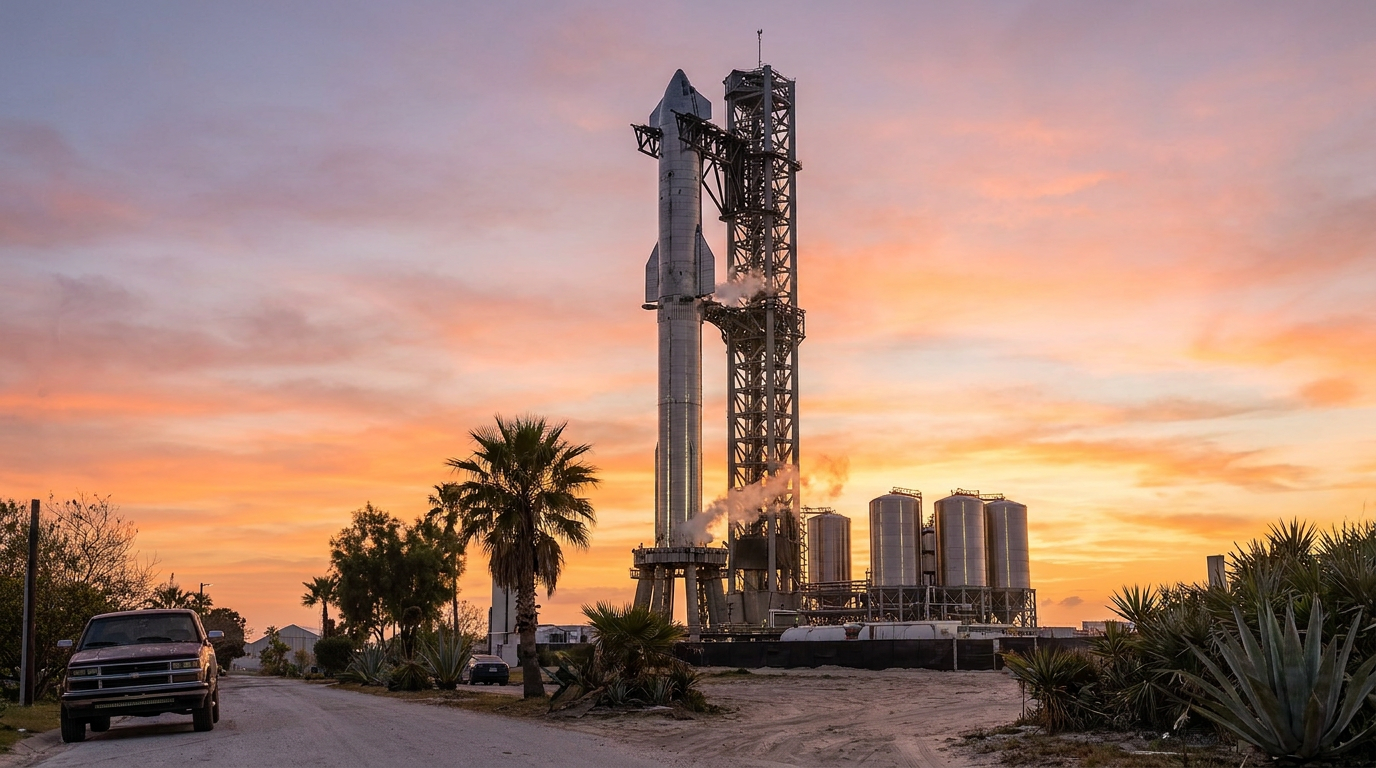
The venture capital industry was built on the premise of the "moonshot"—the idea that a small group of engineers could rewrite the rules of physics and economics. Yet for the past decade, the industry largely settled for funding software applications, digital marketplaces, and incremental efficiency tools. This month, the original definition of the moonshot is returning to the public markets with staggering force. SpaceX is preparing for its initial public offering at a valuation of $1.77 trillion, making it the most highly valued private company in history to transition to the public markets.[3][5]
The sheer scale of the offering is forcing Wall Street to recalibrate how it values frontier technology. At $1.77 trillion, SpaceX is worth more than 430 times the cost of sending the Artemis II crew to the moon. The IPO is generating immense pent-up demand from both institutional and retail investors, with the company reserving 5% of its shares specifically for private investors and certain employees.[3][6]
For those employees, the financial windfall is already reshaping local economies. In Texas, where much of the company's engineering and launch infrastructure is based, the paper wealth held by SpaceX staff is now theoretically enough to purchase every home in certain surrounding municipalities. It is a classic venture capital success story, but one built on physical rockets, metallurgy, and orbital mechanics rather than lines of code.[2]
However, financial analysts are sharply divided on whether the math behind the $1.77 trillion figure actually works. The offering price is expected to sit near $135 per share, a multiple that far outstrips any traditional technology company. According to researchers at Morningstar, the company's current core businesses—launch services and the Starlink satellite internet constellation—only justify a fair value of roughly $63 per share.[4][5]

To bridge the massive gap between $63 and $135, investors are essentially buying a "call option"—a financial term for paying a premium today for the right to participate in massive future upside—on the future of human infrastructure. Financial models circulated ahead of the IPO reveal that the trillion-dollar premium rests on three distinct technological leaps: the successful deployment of the fully reusable Starship rocket, the establishment of a Mars colony, and the creation of orbital data centers.[4][5][6]
It is this last category—orbital data centers—that has quietly become the linchpin of the most optimistic financial models. As artificial intelligence models scale, they require unprecedented amounts of electricity and generate massive heat. The "moonshot" scenario envisions SpaceX leveraging its launch monopoly to place massive server farms in orbit.[4][5]
The mechanism behind orbital compute is theoretically elegant. By placing data centers in space, operators can utilize the vacuum of space for natural, frictionless cooling and harness uninterrupted solar radiation for limitless power. If SpaceX can successfully commercialize this orbital AI infrastructure alongside a rapidly reusable Starship, Morningstar projects the company could actually be worth $1.97 trillion, or $154 per share.[4][5]

The mechanism behind orbital compute is theoretically elegant.
However, analysts assign only a 7% probability to this flawless execution scenario. The engineering challenges of space-based compute—from radiation shielding to latency and orbital maintenance—remain entirely unsolved and likely will not materialize into a commercial product until at least 2028.[4]
Despite the skepticism from traditional financial analysts, the SpaceX IPO is acting as a massive validation signal for a broader structural shift in the venture capital ecosystem. Investors are increasingly abandoning the quick-flip software model in favor of "hard tech" or "deep tech"—startup companies solving fundamental scientific and engineering challenges that require heavy capital expenditure.[8]
The data bears out this structural pivot. Over 20% of all global venture capital now flows into deep tech, double its share from a decade ago. In 2025 alone, global venture capital deployed $512 billion, with physical infrastructure, defense technology, and advanced materials capturing an outsized share of the mega-rounds.[8]

This trend is heavily intertwined with the physical demands of the AI boom. Venture capitalists are realizing that software cannot scale without hardware. This realization drove climate tech and energy investment to $40.5 billion in 2025, as investors poured capital into grid modernization, advanced battery storage, and next-generation nuclear fission and fusion to power terrestrial data centers.[7]
"The thesis is no longer controversial," notes industry tracking firm Peony. "The world's hardest problems—energy transition, computational limits, healthcare transformation, national security—will be solved not by software applications, but by companies built on fundamental scientific and engineering breakthroughs."[8]
For founders building in these capital-intensive sectors, the SpaceX IPO is the ultimate proof of concept. It demonstrates that public markets are willing to underwrite massive, multi-decade infrastructure projects if the potential monopoly at the end of the tunnel is large enough. It proves that investors still have an appetite for genuine moonshots.[1]

Yet, the risks remain astronomical. A former Tesla board member recently noted that SpaceX must achieve at least two of its three core moonshots just to maintain its current market value, let alone grow it. If Starship faces prolonged regulatory delays or if orbital data centers prove economically unviable, the $1.77 trillion valuation could face a severe correction.[4][6]
The coming weeks will test whether the broader market shares the venture capital industry's renewed appetite for science fiction turned reality. Higher interest rates have historically made long-term growth stories harder to justify, and the Federal Reserve's upcoming policy decisions will heavily influence the cost of capital for these ambitious projects.[1]
Regardless of where the stock price settles on its first day of trading, the SpaceX IPO marks a definitive end to the software-only era of venture capital. The industry has remembered how to look up, and the capital is following suit, funding the physical infrastructure that will define the next century.[1][8]
How we got here
2015
Deep tech and defense tech venture capital begins a steady growth trajectory, moving away from pure software.
2021-2022
Venture capital funding peaks globally, but crossover funds begin retreating from capital-intensive hardware.
2025
Deep tech funding surges to capture over 20% of all global VC, with climate and infrastructure hitting $40.5 billion.
June 2026
SpaceX prepares for its initial public offering at a $1.77 trillion valuation, testing public market appetite for moonshots.
2028 (Projected)
The earliest date analysts expect SpaceX could potentially commercialize orbital data centers.
Viewpoints in depth
Moonshot Optimists
Believe the $1.77T valuation is justified by the massive total addressable market of space infrastructure.
Proponents of the massive valuation argue that traditional financial models fail to capture the scale of SpaceX's potential monopolies. If Starship achieves rapid reusability, it will drop the cost of reaching orbit to unprecedented lows. This would allow SpaceX to deploy orbital data centers, capturing a massive share of the booming artificial intelligence compute market by offering servers powered by limitless solar energy and cooled by the vacuum of space.
Valuation Skeptics
Argue the IPO prices in flawless execution of unproven technologies.
Traditional financial analysts, such as those at Morningstar, point out that SpaceX's current core businesses—launch services and Starlink—only justify a fair value of roughly $63 per share. They argue that buying in at $135 per share means paying a massive premium for a 'call option' on projects like Mars colonization and orbital servers. Because these engineering challenges remain unsolved, skeptics assign a low probability to their flawless execution, warning that the stock could face a severe correction if timelines slip.
Deep Tech Investors
View the IPO as validation that capital should flow to hard science.
For venture capitalists focused on climate tech, advanced manufacturing, and defense, the SpaceX IPO is a watershed moment. It proves to limited partners that public markets are willing to underwrite 10-to-20-year infrastructure projects, provided the technological moat is deep enough. This validation is giving VC firms the cover to continue shifting billions of dollars away from software and into capital-intensive fields like nuclear fusion, robotics, and grid modernization.
What we don't know
- Whether SpaceX can successfully overcome the engineering challenges of building and maintaining data centers in orbit.
- How the stock will perform in the short term if the Federal Reserve maintains higher interest rates.
- If the broader deep tech venture capital boom will yield profitable exits comparable to the software era.
Key terms
- Moonshot
- An ambitious, exploratory project undertaken without expectation of near-term profitability, aiming for a massive technological breakthrough.
- Deep Tech
- Startup companies focused on providing technology solutions based on substantial scientific or engineering challenges, rather than just software.
- Call Option
- A financial contract giving the buyer the right to participate in future upside. Analysts use this metaphorically to describe buying SpaceX stock for its future, unproven projects.
- Orbital Compute
- The concept of processing data and running artificial intelligence models on servers located in space.
Frequently asked
What is an orbital data center?
A theoretical network of servers placed in space to process artificial intelligence workloads. It aims to use the vacuum of space for natural cooling and uninterrupted solar radiation for power.
Why is Morningstar valuing SpaceX lower than its IPO price?
Morningstar bases its $63 fair value estimate on SpaceX's existing businesses, like launch services and Starlink. They view future projects like Mars colonization and orbital servers as too uncertain to fully price in today.
How much of global venture capital goes to deep tech?
Over 20% of all global venture capital funding now goes to deep tech and hard science, which is double the share it held a decade ago.
How much of the SpaceX IPO is reserved for employees?
The company has reserved 5% of its shares specifically for certain employees and private investors.
Sources
Source coverage
8 outlets
3 viewpoints surfaced







[1]MarketWatchMoonshot Optimists
SpaceX shows investors still want moonshots. The Fed may test that theory this week.
Read on MarketWatch →SpaceX employees now have enough wealth on paper to buy every home in this Texas city
Read on MarketWatch →[3]Yahoo FinanceValuation Skeptics
Experts warn SpaceX's $1.77T valuation defies gravity — here's how Canadians can invest in space while staying grounded
Read on Yahoo Finance →[4]MorningstarValuation Skeptics
Why We Think the SpaceX IPO Is Overvalued
Read on Morningstar →[5]Financial TimesMoonshot Optimists
SpaceX IPO valuation rests on ambitious moonshots
Read on Financial Times →[6]CNBCMoonshot Optimists
SpaceX's IPO Milestone: Former Tesla Board Member Highlights Moonshots for Valuation
Read on CNBC →[7]Sightline ClimateDeep Tech Investors
2025 Climate Tech Investment Trends
Read on Sightline Climate →[8]PeonyDeep Tech Investors
Top 15 Deep Tech VCs Writing $2M-$100M Checks in 2026
Read on Peony →



Every angle. Every day.
Get finance stories with full source coverage and perspective breakdowns delivered to your inbox.