
Evidence-Based Review: Do At-Home Red Light Therapy Masks Actually Work?
Clinical data supports at-home red light therapy for fine lines and collagen production, but the devices require months of consistent use and fall short on broader claims.
By Factlen Editorial Team
- Clinical Dermatologists
- Value the proven biological mechanisms of photobiomodulation but caution that home devices are underpowered compared to in-office treatments.
- Consumer Tech Reviewers
- Focus on usability, comfort, and consistent long-term results, noting that the best device is the one users will actually wear daily.
- Evidence-Based Consumers
- Seek non-invasive, side-effect-free alternatives to injectables and laser resurfacing, accepting slower results for higher safety.
What's not represented
- · Aestheticians offering in-office treatments
- · Manufacturers of competing laser devices
Why this matters
With premium LED face masks costing upwards of $400, consumers need to know if the underlying science justifies the investment. Understanding the difference between clinical efficacy and marketing hype ensures buyers choose devices with the correct wavelengths and power output to actually improve skin health.
Key points
- Photobiomodulation uses red and near-infrared light to stimulate cellular energy and boost collagen production.
- Clinical trials show significant improvements in fine lines and skin texture after 12 weeks of consistent use.
- At-home masks deliver a fraction of the power of in-office clinical panels, requiring strict adherence to see results.
- Red light alone does not cure acne; effective acne treatment requires devices that incorporate antibacterial blue light.
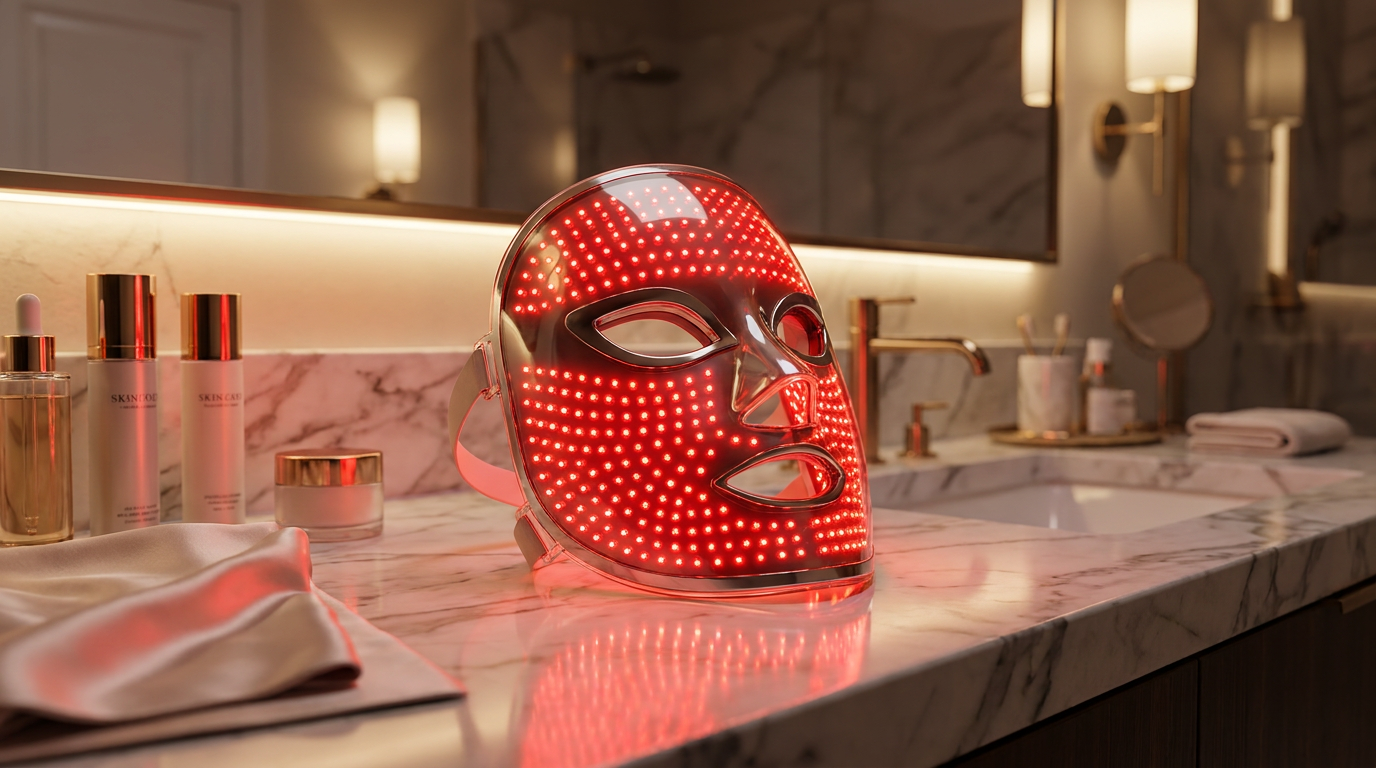
The beauty and wellness markets have been thoroughly illuminated by a new obsession: at-home red light therapy. Once confined to the sterile environments of dermatology clinics and physical therapy offices, glowing masks resembling futuristic armor are now ubiquitous on social media feeds and vanity tables alike. Promising to smooth wrinkles, banish acne, and stimulate collagen production without the pain, expense, or downtime associated with chemical peels and ablative lasers, these devices have rapidly spawned a multi-million dollar consumer category. From flexible silicone face coverings to rigid, multi-colored visors, the hardware has become a status symbol in modern skincare routines.
But as the market floods with devices ranging from $50 budget buys to $500 FDA-cleared investments from established beauty brands, consumers are left navigating a dense maze of marketing claims. The central question remains for anyone considering the investment: do these at-home devices actually possess the power to alter the biology of the skin, or are they merely expensive, elaborate nightlights? Separating the genuine clinical science from the aggressive aesthetic marketing requires a close look at the underlying cellular mechanisms and the specific power outputs of the devices being sold.
To answer that question, it is necessary to examine the underlying biological mechanism, known clinically as photobiomodulation (PBM). Unlike ultraviolet light, which damages cellular DNA and accelerates aging, or ablative lasers, which intentionally injure the skin to provoke a wound-healing response, PBM is entirely non-thermal and non-destructive. It relies on specific, carefully calibrated wavelengths of light—primarily visible red light (typically between 630 and 680 nanometers) and invisible near-infrared light (between 800 and 850 nanometers)—to penetrate the skin's surface without generating heat or causing discomfort.[1][3]

When these specific photons reach the deeper layers of the tissue, they are absorbed by a photoacceptor enzyme located within the mitochondria called cytochrome c oxidase. This interaction kicks off a profound cascade of cellular events. Primarily, it displaces nitric oxide—a molecule that can inhibit cellular respiration when a cell is under stress—and dramatically boosts the production of adenosine triphosphate (ATP), which serves as the primary energy currency of the human body. By clearing the metabolic roadblock, the light therapy essentially allows tired or aging cells to breathe and function optimally again.[1][3]
With more ATP available, skin cells operate at an optimized, youthful capacity. This enhanced cellular energy drives the synthesis and proliferation of fibroblasts, the specialized cells that produce collagen and elastin. These structural proteins are directly responsible for maintaining skin firmness, elasticity, and a smooth texture. Simultaneously, the light exposure modulates the body's inflammatory response by regulating cytokine production, which helps to reduce surface redness, calm irritation, and significantly accelerate the tissue repair process after blemishes or minor damage.[1]
With more ATP available, skin cells operate at an optimized, youthful capacity.
The clinical evidence supporting this mechanism for anti-aging and skin rejuvenation is genuinely strong. A 2025 multi-center, randomized, double-blind, sham-controlled study published in the journal Medicine evaluated patients using a home-use LED mask specifically targeting periorbital wrinkles, commonly known as crow's feet, over a 12-week period. The researchers found statistically significant improvements in wrinkle depth, overall skin texture, and underlying collagen density compared to the control group, confirming that the biological mechanism translates to visible results when applied consistently.[2]
Similarly, a comprehensive 2025 consensus statement from the Journal of the American Academy of Dermatology (JAAD) affirmed that photobiomodulation is an effective, evidence-based intervention for skin rejuvenation, wound healing, and even androgenic alopecia, or pattern hair loss. However, the JAAD consensus also highlighted a critical caveat that consumers often miss: the results are highly dependent on dosimetry. Dosimetry refers to the specific amount of light energy, measured in joules, that is actually delivered to and absorbed by the target tissue during a session.[1][4]

This is precisely where the gap between professional clinical panels and at-home consumer masks becomes apparent. A professional, in-office LED panel utilized by a dermatologist might deliver an irradiance—the power density of the light—of 100 to 200 milliwatts per square centimeter (mW/cm²). In stark contrast, the current generation of premium at-home masks typically delivers a fraction of that power, usually between 30 and 60 mW/cm². Because the home devices are significantly less powerful, they require strict, unwavering consistency—often three to four times a week for at least three months—to accumulate a therapeutic dose comparable to a few in-office visits.[4][7]
While the evidence for anti-aging and collagen production is robust, the data supporting other common marketing claims is decidedly more mixed. For the treatment of active acne, red light alone is generally insufficient. While red light can effectively calm the inflammation and redness associated with a severe breakout, it does not kill Cutibacterium acnes, the underlying bacteria responsible for the infection. For effective acne management, clinical guidelines recommend devices that combine red light with blue light (typically around 415 nm), which possesses proven antibacterial properties that target the root cause of the blemishes.[4]
Despite the nuances in efficacy, safety remains one of the category's strongest and most appealing selling points. Because the therapy is non-thermal and utilizes absolutely no UV radiation, there is zero risk of sunburn, DNA mutation, or skin cancer associated with its use. The primary safety consideration involves ocular health. While red and near-infrared light are generally considered safe at consumer power levels, high-intensity exposure or the frequent use of blue light can pose a risk of photochemical retinopathy. Consequently, dermatologists strongly advise users to wear the opaque eye shields provided with most reputable devices.[3][4]

For consumers navigating the saturated market, independent testing by outlets like The New York Times Wirecutter and Forbes consistently points to a few established industry leaders. Flexible silicone masks, such as the Omnilux Contour Face and the CurrentBody Skin LED Mask, are frequently praised for combining clinically relevant wavelengths with a highly comfortable, wearable fit that actively encourages the daily use required for success. For those seeking faster, three-minute sessions and acne-fighting blue light capabilities, rigid models like the Dr. Dennis Gross DRx SpectraLite FaceWare Pro remain top-tier recommendations.[5][6]
Ultimately, at-home red light therapy is neither a marketing myth nor an overnight miracle. It is a biologically sound, evidence-backed therapeutic modality that operates on a slow, cumulative timeline. For users seeking a non-invasive, painless addition to their skincare routine—and who possess the discipline and patience to wait 12 weeks for the biological processes to yield visible results—the clinical science suggests that the resulting glow is indeed much more than just skin deep.[7]
Viewpoints in depth
Clinical Dermatologists
Value the proven biological mechanisms of photobiomodulation but caution that home devices are underpowered compared to in-office treatments.
Medical professionals acknowledge that the science behind photobiomodulation is sound. Decades of research, initially funded by NASA, confirm that specific wavelengths of light stimulate mitochondrial function. However, dermatologists emphasize a crucial distinction between clinical efficacy and consumer reality. In-office LED panels deliver highly calibrated irradiance (often exceeding 100 mW/cm²), whereas battery-powered home masks output a fraction of that power. Consequently, while dermatologists recommend home devices as a safe adjunct to a broader skincare routine, they caution patients against expecting the dramatic, rapid tightening achieved by in-office lasers or radiofrequency treatments.
Consumer Tech Reviewers
Focus on usability, comfort, and consistent long-term results, noting that the best device is the one users will actually wear daily.
For product testers and beauty editors, the evaluation of LED masks hinges on compliance. Because the biological effects of low-level light therapy are cumulative, a device's efficacy is directly tied to how often it is used. Reviewers consistently penalize rigid, uncomfortable masks that dig into the face or require the user to remain tethered to a wall outlet. Instead, flexible silicone models like the Omnilux Contour and CurrentBody Skin LED Mask frequently top recommendation lists because their comfort and portability encourage the 12-week daily adherence required to see actual results.
Evidence-Based Consumers
Seek non-invasive, side-effect-free alternatives to injectables and laser resurfacing, accepting slower results for higher safety.
For a growing cohort of skincare consumers, the appeal of red light therapy lies entirely in its safety profile. Wary of the potential complications associated with chemical peels, Botox, or ablative lasers—such as hyperpigmentation, burns, or prolonged downtime—these users view photobiomodulation as a low-risk long game. They are willing to trade the immediate, dramatic results of in-office procedures for a gentle, daily ritual that supports long-term cellular health without damaging the skin barrier.
What we don't know
- The exact long-term efficacy ceiling of low-power home devices compared to decades of clinical panel use remains under study.
- Whether the addition of secondary wavelengths (like yellow or green light) in some consumer masks provides any statistically significant benefit beyond standard red and near-infrared.
Key terms
- Photobiomodulation (PBM)
- The use of specific wavelengths of light to stimulate cellular function and promote healing without causing heat damage to the tissue.
- Cytochrome c oxidase
- An enzyme located within the mitochondria that absorbs red and near-infrared light, triggering a significant increase in cellular energy production.
- Irradiance
- The power density of the light emitted by a device, usually measured in milliwatts per square centimeter, which determines how much energy actually reaches the skin.
- Near-infrared (NIR) light
- Invisible light wavelengths (typically 800-850 nm) that penetrate deeper into tissue than visible red light, often used for deeper collagen stimulation and muscle recovery.
Frequently asked
Does red light therapy cause skin cancer?
No. Red and near-infrared light do not contain UV rays, which are the wavelengths responsible for DNA damage and skin cancer. The therapy is non-thermal and non-destructive.
How long does it take to see results from an LED mask?
Clinical trials typically show measurable improvements in skin texture and collagen density after 12 weeks of consistent use, usually defined as three to four sessions per week.
Can I use red light therapy for acne?
Red light alone only reduces inflammation. For active breakouts, clinical guidelines recommend devices that combine red light with blue light, which actively kills acne-causing bacteria.
Is red light therapy safe for the eyes?
While red light is generally safe, high-intensity near-infrared and blue light can pose retinal risks. Dermatologists strongly recommend using the opaque eye shields provided with the devices.
Sources
Source coverage
7 outlets
3 viewpoints surfaced







[1]Journal of the American Academy of DermatologyClinical Dermatologists
Photobiomodulation CME part I: Overview and mechanism of action
Read on Journal of the American Academy of Dermatology →[2]MedicineClinical Dermatologists
Clinical study to evaluate the efficacy and safety of home-used LED and IRED mask for crow's feet
Read on Medicine →[3]Stanford MedicineClinical Dermatologists
What the science says about red light therapy
Read on Stanford Medicine →[4]Dermatology TimesClinical Dermatologists
The Evidence Behind At-Home Red Light Therapy Devices
Read on Dermatology Times →[5]ForbesConsumer Tech Reviewers
Best Red Light Therapy Masks 2026
Read on Forbes →[6]The New York Times WirecutterConsumer Tech Reviewers
The Best Red-Light Therapy Device
Read on The New York Times Wirecutter →[7]Factlen Editorial TeamEvidence-Based Consumers
Synthesis by Factlen editorial team
Read on Factlen Editorial Team →

Every angle. Every day.
Get shopping stories with full source coverage and perspective breakdowns delivered to your inbox.