
Semi-Solid-State Batteries Finally Arrive in Consumer Gadgets
After years of hype around solid-state technology, a pragmatic 'gel' battery alternative has hit the market in 2026, powering a new wave of ultra-thin power banks and safer, longer-lasting e-bikes.
By Factlen Editorial Team
- E-Mobility Advocates
- Values the massive improvements in cycle life, cold-weather reliability, and fire safety that make electric bicycles a more viable car replacement.
- Consumer Tech Reviewers
- Focuses on how the technology enables dramatically thinner, lighter, and more convenient everyday accessories.
- Battery Manufacturers
- Emphasizes the pragmatic engineering balance of gel electrolytes as a bridge to fully solid-state power.
What's not represented
- · Aviation Regulators
- · Traditional Lithium-Ion Manufacturers
Why this matters
This breakthrough ends the era of disposable electronics that die after 500 charge cycles and directly mitigates the growing urban crisis of e-bike battery fires, making everyday devices significantly safer and longer-lasting.
Key points
- Semi-solid-state 'gel' batteries have officially entered the consumer market in 2026, powering new e-bikes and smartphone accessories.
- The technology replaces highly flammable liquid electrolytes with a stable gel, drastically reducing the risk of battery fires.
- New e-bike batteries using the chemistry boast a lifespan of 1,200 charge cycles, doubling the longevity of traditional lithium-ion packs.
- The gel chemistry retains up to 80% of its capacity in freezing temperatures, solving a major pain point for winter commuters.
- Accessory makers are leveraging the technology to build ultra-thin magnetic power banks, some measuring just 6.8 millimeters thick.
The tech industry has spent the better part of a decade chasing the holy grail of energy storage: the solid-state battery. Promised as the ultimate solution to range anxiety and device longevity, fully solid-state cells have continually faced delayed timelines, bogged down by high manufacturing costs and complex engineering hurdles. However, rather than waiting another ten years for perfection, a highly effective and pragmatic compromise has quietly slipped into the consumer market in 2026. This intermediate step is finally delivering on the promises of next-generation power, fundamentally upgrading the gadgets people use every day without the exorbitant price premiums of experimental tech.[1][3]
Known as semi-solid-state or "gel" batteries, this intermediate technology is now powering a new generation of electric bicycles and ultra-thin smartphone accessories. By replacing the highly flammable liquid electrolyte found in traditional lithium-ion cells with a viscous gel, manufacturers are delivering dramatic improvements in safety, longevity, and energy density. For years, consumers have accepted that their expensive electronics would inevitably degrade after a few years of use, or that carrying portable power meant lugging around a heavy, swelling brick. The arrival of semi-solid-state chemistry is actively rewriting those expectations, offering a tangible leap forward that riders and tech enthusiasts can actually purchase today.[1][5]
The chemistry shift driving this upgrade is subtle but profound. Traditional lithium-ion batteries rely on a liquid electrolyte to shuttle ions back and forth between the anode and cathode during charging and discharging. In a standard cell, that liquid makes up anywhere from 60% to 90% of the battery's interior volume. While effective at conducting energy, the liquid is highly volatile. If the battery is punctured, crushed, or overheats due to a short circuit, that liquid can rapidly vaporize and ignite. This vulnerability is the core mechanism behind the thermal runaway fires that have plagued urban e-bike adoption and prompted airline bans on certain electronics.[5][7]

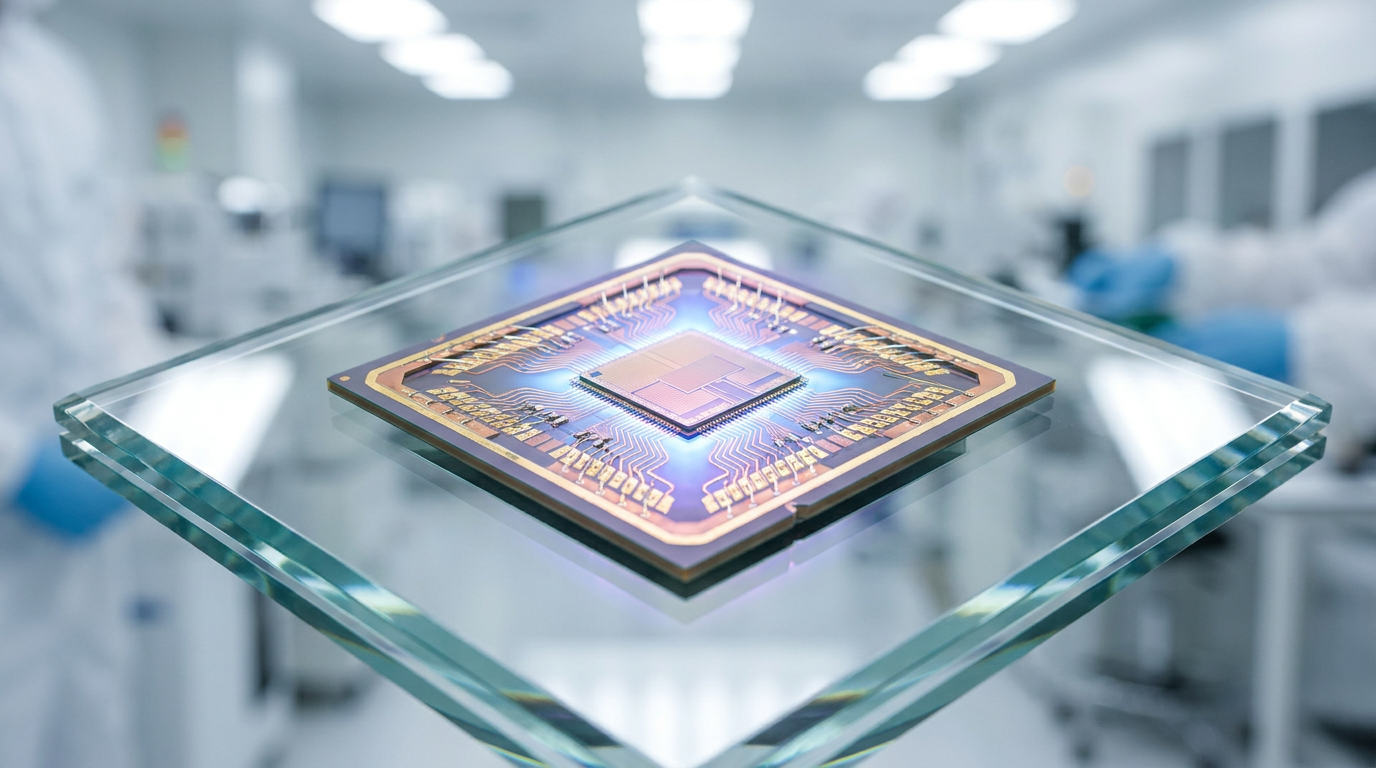
Semi-solid-state cells mitigate this danger by reducing the liquid content to between 5% and 15%. The remainder of the conductive medium is replaced with a solid-state electrolyte coating and a stable, gel-like substance. This hybrid configuration preserves the high ionic conductivity needed for fast charging while suppressing the growth of lithium dendrites—microscopic, needle-like spikes that can pierce internal separators and cause catastrophic short circuits. Because the gel does not flow or vaporize in the same volatile manner as a pure liquid, the battery becomes vastly more stable under extreme physical and thermal stress, dramatically lowering the risk of spontaneous combustion.[7]
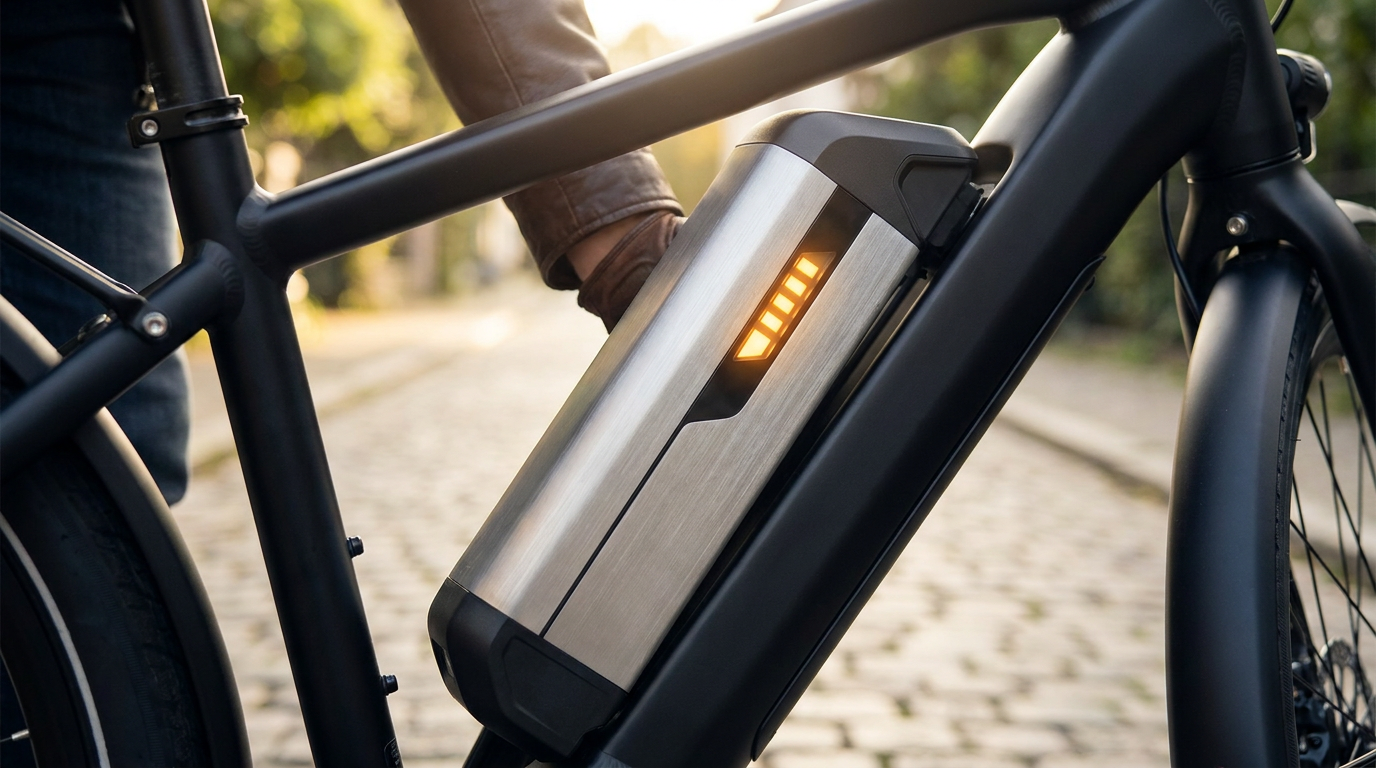
The most visible and impactful application of this technology is currently unfolding in the e-mobility sector. California-based e-bike manufacturer Ride1Up recently launched the Revv1 Evo, a moped-style commuter that is widely recognized as the world's first production electric bicycle powered by a semi-solid-state battery. Rather than being a one-off prototype or a distant concept, the bike is actively rolling off assembly lines. Other major players in the cycling industry, including manufacturing giant Giant, are also preparing to roll out their own gel-battery models later this year, signaling a permanent shift in how the industry approaches electric powertrains.[2][3][8]
The most visible and impactful application of this technology is currently unfolding in the e-mobility sector.
For daily e-bike riders, the practical benefits of this chemical shift are immediate and highly lucrative. The most significant hurdle for traditional e-bike ownership has always been cycle life; standard lithium-ion packs typically begin to lose their ability to hold a full charge after about 500 charge cycles. The new semi-solid-state packs shatter that restrictive ceiling, offering upwards of 1,200 charge cycles before suffering any meaningful dip in capacity. This effectively doubles the lifespan of the battery, turning a component that usually requires a costly replacement every four to five years into one that could realistically last a full decade.[3][4][8]

Furthermore, the gel chemistry is proving to be far more resilient to extreme environmental conditions. Traditional lithium-ion batteries are notoriously sensitive to the cold, often losing massive amounts of range and power output during winter commutes. Early testing and manufacturer data indicate that semi-solid-state batteries retain 70% to 80% of their discharge capability at freezing temperatures, compared to less than 50% for standard lithium-ion packs. This thermal resilience transforms electric bicycles from fair-weather recreational toys into reliable, year-round transportation tools, regardless of the local climate, while also eliminating the anxiety of leaving a bike parked outside in the cold.[3][4][8]
Beyond electric bicycles, the semi-solid-state revolution is simultaneously reshaping the landscape of everyday smartphone accessories. Because traditional liquid electrolytes require extra internal containment volume to safely manage swelling as they heat up and cool down, lithium-ion power banks have always been inherently bulky. The gel-like electrolyte in semi-solid cells, however, can be compressed into much tighter, thinner profiles without carrying the same dangerous swelling risks. This architectural freedom has allowed accessory designers to fundamentally rethink the physical footprint of portable power, stripping away the bulky plastic housings that consumers have long tolerated in exchange for extra battery life.[5][6]

This engineering breakthrough has spawned an entirely new category of ultra-thin magnetic power banks that seamlessly integrate with modern smartphones. Brands like BMX, KUXIU, Statik, and Momax debuted their semi-solid-state chargers at the CES 2026 trade show, and these devices are now hitting retail shelves globally to widespread acclaim. The BMX SolidSafe Air, for instance, measures an astonishing 6.8 millimeters thick and weighs just 116 grams. This makes the power bank significantly slimmer and lighter than the actual smartphones it is designed to charge, allowing it to snap magnetically onto the back of a device without adding cumbersome bulk to a user's pocket or bag.[5][6]
Housed in premium materials like titanium and aluminum to dissipate heat faster than standard plastic, these new power banks deliver fast 15W Qi2 wireless charging while virtually eliminating the fire risks associated with carrying high-capacity batteries on airplanes. Reviewers have noted that the underlying safety improvements are just as compelling as the sleek, modern form factor. To prove the stability of the gel chemistry, manufacturers have publicly released rigorous abuse-testing footage showing fully charged semi-solid-state cells being punctured with nails, drilled into, and cut in half without catching fire or exploding—a catastrophic failure that would instantly occur if the same tests were applied to a traditional lithium-ion cell.[5][6]
While fully solid-state batteries are still projected to be years away from mass-market affordability, the arrival of semi-solid-state technology proves that the battery industry has not plateaued in its quest for better energy storage. By successfully bridging the gap between volatile liquid and complex solid chemistries, these gel batteries are solving the most pressing pain points of modern electronics right now. Whether it is doubling the lifespan of a commuter e-bike, ensuring a battery won't catch fire in a crowded apartment building, or simply making a smartphone charger thin enough to forget about, semi-solid-state power is making daily gadgets safer, slimmer, and significantly more reliable for the average consumer.[1][3]
How we got here
Early 2020s
The tech industry heavily hypes fully solid-state batteries as the imminent future of EVs and consumer electronics, but manufacturing bottlenecks delay mass adoption.
Late 2024
Chinese automaker NIO launches one of the world's first semi-solid-state battery packs for electric vehicles, proving the gel chemistry's viability at scale.
January 2026
Accessory brands debut the first ultra-thin semi-solid-state magnetic power banks at the CES trade show, showcasing 6.8mm profiles.
May 2026
Ride1Up announces the Revv1 Evo, the world's first production electric bicycle powered by a semi-solid-state battery, promising 1,200 charge cycles.
June 2026
Semi-solid-state power banks and e-bikes begin shipping to consumers, marking the technology's mainstream arrival.
Viewpoints in depth
Consumer Tech Reviewers
Focuses on how the technology enables dramatically thinner, lighter, and more convenient everyday accessories.
For tech reviewers and everyday smartphone users, the appeal of semi-solid-state batteries lies primarily in form factor and convenience. Because the gel electrolyte doesn't require the bulky containment housing needed to prevent liquid lithium-ion cells from swelling, manufacturers can compress the batteries into incredibly thin profiles. Reviewers praise devices like the 6.8mm BMX SolidSafe Air for finally making magnetic power banks pocket-friendly, noting that the added thermal stability and fire safety are excellent bonuses to an already superior physical design.
E-Mobility Advocates
Values the massive improvements in cycle life, cold-weather reliability, and fire safety that make electric bicycles a more viable car replacement.
Within the e-bike community, the shift to semi-solid-state power is viewed as a monumental leap for urban transportation. Advocates highlight that doubling the cycle life to 1,200 charges fundamentally changes the economics of owning an e-bike, turning it into a decade-long investment rather than a depreciating asset. Furthermore, the drastic reduction in thermal runaway risk addresses the growing regulatory backlash against e-bikes in dense cities, while the battery's ability to retain power in freezing temperatures makes winter commuting far more reliable.
Battery Manufacturers
Emphasizes the pragmatic engineering balance of gel electrolytes as a bridge to fully solid-state power.
From an engineering and manufacturing perspective, semi-solid-state cells represent a brilliant compromise. While the industry still views fully solid-state batteries as the ultimate goal, producing them at scale remains prohibitively expensive. Manufacturers note that by retaining just 5% to 15% liquid in a gel format, they can utilize existing lithium-ion production lines with only moderate retooling. This allows them to deliver 80% of the benefits of a solid-state battery today, without waiting for the manufacturing breakthroughs required for pure solid-state tech.
What we don't know
- It remains unclear how quickly the broader consumer electronics industry, including major smartphone and laptop manufacturers, will transition to semi-solid-state cells.
- The long-term real-world degradation curve of these batteries over a full decade of daily use has yet to be independently verified outside of lab testing.
- While prices are currently competitive in premium tiers, it is unknown when the technology will scale down to budget-friendly e-bikes and entry-level gadgets.
Key terms
- Electrolyte
- The conductive medium inside a battery that allows ions to flow between the anode and cathode during charging and discharging.
- Thermal Runaway
- A dangerous chain reaction within a battery where overheating causes further temperature increases, often leading to a fire or explosion.
- Lithium Dendrites
- Microscopic, needle-like structures that can grow inside a battery over time, potentially piercing the separator and causing an internal short circuit.
- Solid-State Battery
- A next-generation battery technology that uses a completely solid electrolyte, currently facing high manufacturing costs that limit mass-market consumer adoption.
- Cycle Life
- The number of complete charge and discharge cycles a battery can undergo before its capacity significantly degrades.
Frequently asked
What is a semi-solid-state battery?
It is a battery that replaces most of the highly flammable liquid electrolyte found in traditional lithium-ion cells with a viscous, gel-like substance and solid materials, improving safety and energy density.
Are semi-solid-state batteries safer than lithium-ion?
Yes. By drastically reducing the liquid content, they are far less prone to thermal runaway and fires if punctured, crushed, or overheated.
How long do semi-solid-state e-bike batteries last?
They are rated for approximately 1,200 full charge cycles before noticeable degradation, roughly double the 500-cycle lifespan of standard lithium-ion e-bike batteries.
Can I buy a semi-solid-state gadget today?
Yes. The technology is currently available in select 2026 e-bike models, like the Ride1Up Revv1 Evo, as well as ultra-thin magnetic power banks from brands like BMX and Statik.
Sources
Source coverage
8 outlets
3 viewpoints surfaced








[1]The VergeConsumer Tech Reviewers
Solid-state batteries still aren’t ready, but gels are
Read on The Verge →[2]NotebookcheckE-Mobility Advocates
Ride1Up launches world's first e-bike with semi solid state battery
Read on Notebookcheck →[3]ElectrekE-Mobility Advocates
Semi-solid state batteries are coming to the e-bike industry – and for real this time
Read on Electrek →[4]ForbesE-Mobility Advocates
Why This New E-Bike's Battery Changes Everything
Read on Forbes →[5]Android AuthorityConsumer Tech Reviewers
A new breed of power banks is here, and they're built around safer battery chemistry
Read on Android Authority →[6]AppleInsiderConsumer Tech Reviewers
The best solid-state MagSafe batteries for your iPhone in 2026
Read on AppleInsider →[7]Ride1UpBattery Manufacturers
The Future of Power with Semi-Solid-State Technology
Read on Ride1Up →[8]ebike24E-Mobility Advocates
Semi-Solid-State Battery in an Ebike: World Premiere with the Ride1Up Revv1 Evo from the US
Read on ebike24 →
Every angle. Every day.
Get technology stories with full source coverage and perspective breakdowns delivered to your inbox.