
The Evidence Is In: Upzoning and the 'Missing Middle' Successfully Curb Rent Growth
A wave of land-use reforms in cities like Auckland and Minneapolis has provided empirical proof that legalizing denser housing directly increases supply and stabilizes rent prices. However, researchers caution that market-rate construction must still be paired with subsidies to reach the lowest-income households.
By Factlen Editorial Team
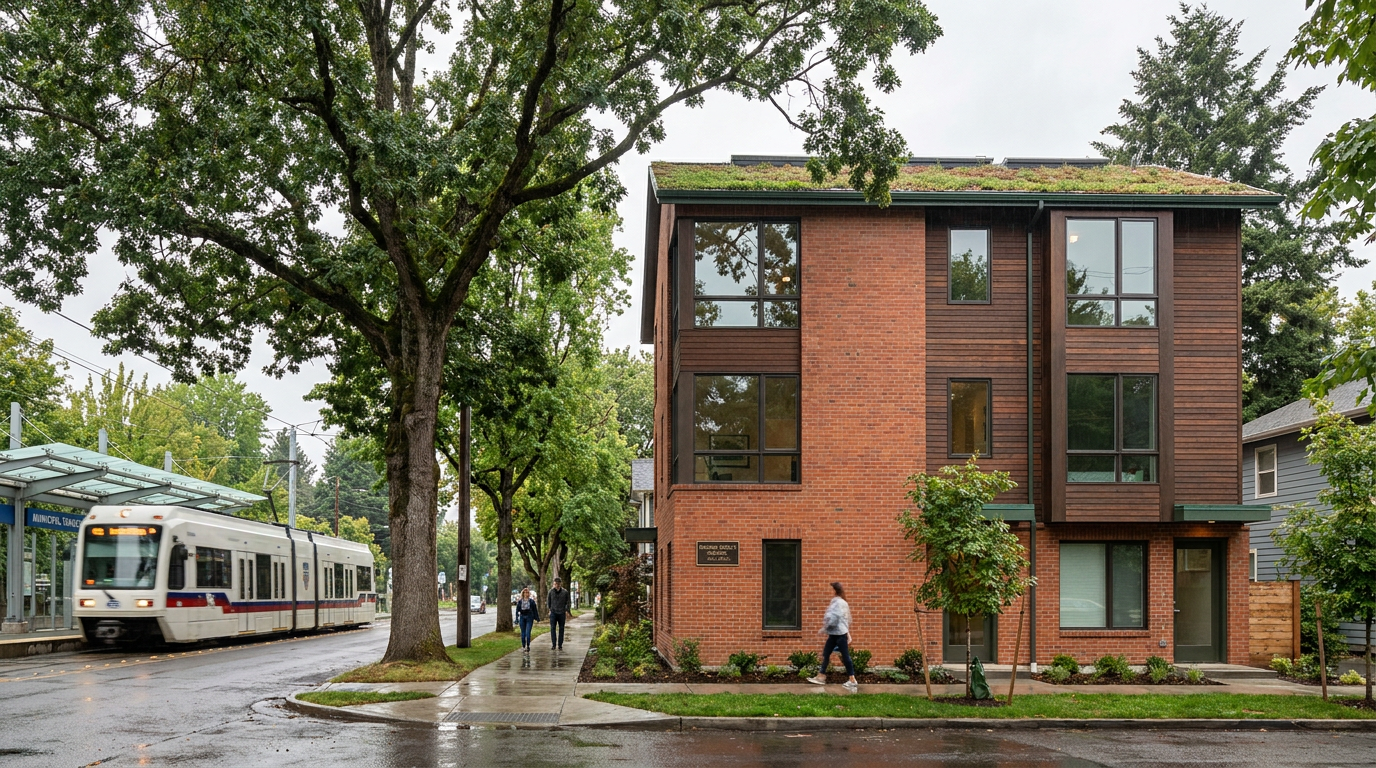
- Market-Supply Advocates
- Argue that removing zoning barriers and increasing market-rate housing supply is the primary mechanism for stabilizing rent.
- Subsidized Housing Advocates
- Emphasize that market-rate construction fails to reach low-income households without direct government subsidies.
- Policy Researchers
- Focus on tracking the legislative landscape and synthesizing the data into actionable state-level frameworks.
What's not represented
- · Suburban homeowners concerned about property values and neighborhood character
- · Low-income renters currently facing displacement in gentrifying neighborhoods
Why this matters
Housing costs are the primary driver of inflation and financial strain for the middle class. Understanding that zoning reform actually works to lower rents empowers voters and policymakers to dismantle exclusionary laws and build more affordable, dynamic communities.
Key points
- Auckland's 2016 decision to upzone three-quarters of its residential land led to a record surge in housing construction and significantly slowed rent growth.
- Minneapolis successfully held rent growth to just 1 percent over five years by increasing its housing stock by 12 percent through comprehensive zoning reform.
- State legislatures are increasingly overriding local zoning laws, passing a record 124 pro-housing bills between July 2024 and June 2025.
- While upzoning stabilizes the middle market, researchers emphasize that direct government subsidies remain essential to house households earning below 50 percent of the Area Median Income.
For decades, the debate over housing affordability has been paralyzed by a central, fiercely contested question: Does building more market-rate homes actually lower rents for everyone else? As the cost of shelter consumes an ever-larger share of household incomes across the developed world, a vocal contingent of 'supply skeptics' has argued that new construction only induces demand, enriches developers, and gentrifies working-class neighborhoods. This skepticism has frequently provided political cover for municipalities to maintain strict zoning laws that effectively ban new apartment buildings, creating a severe bottleneck in the housing supply.
But a wave of sweeping land-use reforms enacted over the past decade is finally yielding hard, empirical data, replacing ideological arguments with measurable outcomes. From the American Midwest to the coastal cities of New Zealand, municipalities that systematically dismantled exclusionary zoning laws are providing a real-time laboratory for urban economics. The emerging evidence pack points to a clear, data-backed consensus: legalizing density works to stabilize prices and increase inventory, though researchers caution it is not a standalone cure for deep poverty. By examining the outcomes of these pioneering cities, policymakers are finally mapping a proven route out of the housing crisis.
The most definitive test case for large-scale upzoning comes from Auckland, New Zealand. In 2016, facing a severe housing shortage and rapid population growth that threatened to price out an entire generation, the city implemented a radical policy experiment. Auckland upzoned approximately three-quarters of its residential land in a single legislative sweep. This historic reform allowed for medium- and high-density housing in vast swaths of the city that had previously been strictly restricted to single-family homes, effectively tripling the number of dwellings that could legally be built within the city's existing footprint.[2]

Researchers from the University of Auckland and Yale University applied rigorous quasi-experimental econometric methods to track the fallout of this massive rezoning effort. The results were staggering. By 2022, housing construction in Auckland surged to a record high of 12 consented dwellings per 1,000 residents. The researchers found strong statistical evidence that the zoning changes directly stimulated this construction boom, rather than simply shifting development from other areas. Even when accounting for potential displacement effects, the data confirmed that the upzoning policy fundamentally altered the trajectory of the city's housing supply.[2]
Crucially, this unprecedented supply shock translated into tangible price relief for residents. Between 2016 and 2023, rental prices in Auckland rose by approximately 20 percent—a figure that, while still representing an increase, was significantly lower than the average rent growth seen in other large New Zealand cities over the same inflationary period. For the first time in a generation, Auckland's housing supply outstripped its demographic demand. The researchers concluded that while housing in Auckland remains expensive, the upzoning reforms successfully decoupled the city from the runaway rent inflation plaguing its peer municipalities.[2]
A similar, equally scrutinized success story has unfolded in Minneapolis, Minnesota, providing a blueprint for American urban centers. Beginning in 2009 and culminating in a landmark 2018 comprehensive plan, the city enacted a series of aggressive land-use reforms aimed at dismantling decades of exclusionary zoning. Minneapolis eliminated minimum parking requirements, legalized duplexes and triplexes citywide, and, most consequentially, permitted high-density apartment buildings near transit corridors and commercial centers. These changes were designed to organically weave density back into the urban fabric without requiring massive, disruptive redevelopment projects.[1]

A similar, equally scrutinized success story has unfolded in Minneapolis, Minnesota, providing a blueprint for American urban centers.
An extensive analysis by The Pew Charitable Trusts tracked the economic impact of these changes between 2017 and 2022, revealing a stark divergence from regional trends. Over that five-year window, Minneapolis increased its total housing stock by a robust 12 percent. Consequently, citywide rent growth was held to a mere 1 percent. By stark contrast, the rest of Minnesota added only 4 percent to its housing stock during the same period, and saw rents spike by 14 percent. Despite experiencing similar population and household growth, Minneapolis successfully absorbed the demand by simply allowing builders to build.[1]
The Pew data also revealed profound secondary social benefits stemming from this stabilized housing market. Because rent growth was 13 percentage points lower than the state average, Minneapolis renters saved an estimated $1,700 annually compared to what they would have paid under standard inflationary conditions. Furthermore, the level of homelessness in Hennepin County, which encompasses Minneapolis, dropped by 12 percent during those five years. Over the exact same timeframe, homelessness rose by 14 percent in the rest of the state, underscoring the direct link between housing availability and severe housing insecurity.[1]
Recognizing these localized successes, state legislatures are increasingly stepping in to override restrictive municipal zoning codes that stifle regional economic growth. According to tracking by the Mercatus Center and the NYU Furman Center, state governments passed a record-breaking 124 pro-housing bills between July 2024 and June 2025. These laws frequently preempt local control to ease permitting processes, abolish arbitrary parking mandates, and legalize 'missing middle' housing. This legislative wave reflects a growing bipartisan consensus that local governments, often swayed by vocal neighborhood opposition, cannot be solely trusted to solve a macroeconomic supply crisis.[4][6]

However, the evidence pack also clearly highlights the limitations of zoning reform as a standalone solution. The Urban Institute notes that while upzoning is a necessary prerequisite for affordability, it is insufficient on its own to house the lowest-income populations. High land acquisition costs and elevated interest rates have severely impeded the actual construction of missing middle housing—such as fourplexes and courtyard apartments—even in jurisdictions where it is now legally permitted. Zoning creates the legal capacity for housing, but it does not alter the underlying mathematics of real estate finance.[3]
Developers face steep financial headwinds when attempting to purchase a single-family lot, demolish the existing structure, and finance a new multi-unit building. The Urban Institute's financial modeling suggests that without access to new sources of low-cost capital, property tax abatements, or streamlined conversion processes, these small-scale projects often fail to pencil out for investors. As a result, the newly created zoning capacity frequently remains underutilized, leaving the theoretical promise of missing middle housing unfulfilled in the face of harsh macroeconomic realities.[3]
Furthermore, market-rate construction fundamentally cannot reach households earning below 50 percent of the Area Median Income. While a 10 percent increase in a market's housing supply correlates with a 5 percent decrease in rent growth, according to research highlighted by the Center for American Progress, that macroeconomic cooling does not magically produce units affordable to minimum-wage workers. The filtering process—where wealthier renters move into new luxury units, freeing up older, cheaper apartments—works to stabilize the middle of the market, but it fails to reach the bottom.[5]
Ultimately, the empirical data dictates a unified, two-pronged approach to the housing crisis. Upzoning and the abolition of exclusionary land-use policies are highly effective, proven tools for taming runaway rent growth, preventing middle-class displacement, and accommodating population growth. But to fully solve the crisis, these market-based supply reforms must be aggressively paired with robust, direct public subsidies. Only by combining deregulated market-rate construction with dedicated funding for public housing and rental vouchers can policymakers ensure that the benefits of a growing city are accessible to residents across the entire income spectrum.[7]

How we got here
2016
Auckland, New Zealand upzones approximately three-quarters of its residential land to allow medium-density housing.
2018
Minneapolis passes its 2040 comprehensive plan, becoming the first major US city to end single-family-only zoning.
2021-2022
Auckland's housing construction surges to a record high, proving the supply-side efficacy of the 2016 reforms.
2024
The Pew Charitable Trusts publishes data showing Minneapolis successfully curbed rent growth to 1% over five years.
2024-2025
US state legislatures pass a record-breaking 124 pro-housing bills, increasingly preempting local zoning control.
Viewpoints in depth
Market-Supply Advocates
Argue that removing zoning barriers and increasing market-rate housing supply is the primary mechanism for stabilizing rent.
This camp, supported by economists and urbanist organizations, points to hard data from cities like Auckland and Minneapolis to prove that supply and demand apply to housing. They argue that exclusionary zoning artificially constricts the housing supply, driving up prices for everyone. By legalizing density and streamlining permitting, they believe the private market can build enough homes to halt runaway rent inflation and restore affordability to the middle class.
Subsidized Housing Advocates
Emphasize that market-rate construction fails to reach low-income households without direct government subsidies.
While generally supportive of zoning reform, this perspective cautions against viewing deregulation as a silver bullet. Organizations like the Urban Institute highlight that the private market cannot profitably build housing for households earning below 50 percent of the Area Median Income, regardless of how permissive the zoning is. They argue that upzoning must be aggressively paired with public housing investments, rental vouchers, and low-income tax credits to prevent the most vulnerable populations from falling into homelessness.
Local Control Defenders
Argue against state-level preemption of municipal zoning, prioritizing neighborhood character and local infrastructure capacity.
Often represented by suburban municipalities and neighborhood associations, this camp fiercely opposes efforts by state legislatures to override local zoning codes. They argue that top-down upzoning mandates ignore local nuances, strain municipal infrastructure like water and schools, and permanently alter the architectural character of established single-family neighborhoods. They advocate for localized, incremental growth rather than sweeping, state-mandated density.
What we don't know
- How long the current high-interest-rate environment will continue to suppress the financing and construction of 'missing middle' housing projects.
- Whether state-level preemption of local zoning laws will face successful legal challenges from municipalities fighting to retain local control.
Key terms
- Upzoning
- The process of changing local zoning codes to allow for higher-density development, such as permitting apartment buildings on land previously restricted to single-family homes.
- Missing Middle Housing
- Medium-density housing types, like fourplexes and courtyard apartments, that are compatible in scale with single-family neighborhoods but have been largely illegal to build for decades.
- Area Median Income (AMI)
- The midpoint of a region's income distribution, used by government agencies to determine eligibility for affordable housing programs.
- Exclusionary Zoning
- Land-use regulations, such as minimum lot sizes or bans on multi-family housing, that effectively prevent lower-income households from moving into a neighborhood.
Frequently asked
What exactly is 'missing middle' housing?
It refers to multi-unit housing types—such as duplexes, triplexes, townhomes, and small apartment buildings—that sit between single-family homes and large high-rise complexes.
Does building luxury apartments lower rent for everyone else?
Yes, evidence shows that increasing the overall housing supply, even at the high end, reduces rent growth regionally by freeing up older, less expensive units as wealthier renters move into the new buildings.
Why are state governments overriding local zoning laws?
States are recognizing that local municipalities often block new housing to appease vocal neighborhood groups, which exacerbates regional housing shortages and stifles broader economic growth.
Will upzoning solve homelessness?
While upzoning slows rent growth and helps prevent displacement, researchers emphasize that market-rate construction alone cannot house the lowest-income populations without direct government subsidies.
Sources
Source coverage
7 outlets
3 viewpoints surfaced







[1]The Pew Charitable TrustsMarket-Supply Advocates
Minneapolis Land Use Reforms Offer a Blueprint for Housing Affordability
Read on The Pew Charitable Trusts →[2]University of AucklandMarket-Supply Advocates
Will Upzoning Deliver Housing Affordability for Everyone? Evidence from Auckland
Read on University of Auckland →[3]Urban InstituteSubsidized Housing Advocates
Small Apartment Buildings Can Help Address Housing Shortages, but High Land Costs and Interest Rates Are Limiting Construction
Read on Urban Institute →[4]Mercatus CenterMarket-Supply Advocates
Framing Futures: Pro-Housing Legislation Goes Vertical in 2025
Read on Mercatus Center →[5]Center for American ProgressSubsidized Housing Advocates
Build, Baby, Build: A Plan To Lower Housing Costs for All
Read on Center for American Progress →[6]NYU Furman CenterPolicy Researchers
Assessing Land-Use Reform
Read on NYU Furman Center →[7]Factlen Editorial TeamPolicy Researchers
Synthesis by Factlen editorial team
Read on Factlen Editorial Team →
Every angle. Every day.
Get real estate stories with full source coverage and perspective breakdowns delivered to your inbox.