
The Rise of 'Coolcationing': How Climate-Adaptive Travel is Reshaping Summer Tourism
As extreme heatwaves disrupt traditional Mediterranean holidays, travelers are driving a massive surge in 'coolcations' to temperate northern destinations like Scandinavia.
By Factlen Editorial Team
- Climate-Adaptive Travelers
- Seeking relief from extreme heat and prioritizing sustainable, nature-immersive experiences.
- Nordic Destination Managers
- Welcoming the economic boom while actively managing capacity to protect fragile ecosystems.
- Sustainable Tourism Advocates
- Highlighting the paradox of flying long-haul to escape climate change and advocating for strict low-volume travel models.
- Global Industry Analysts
- Tracking the macroeconomic shift of tourism dollars from the Mediterranean to northern latitudes.
What's not represented
- · Local residents in newly popular Arctic towns
- · Workers in southern European seasonal hospitality
Why this matters
The traditional summer holiday map is being permanently redrawn. For anyone planning a vacation, understanding this shift means the difference between a restorative, predictable trip and one derailed by extreme weather and overcrowding.
Key points
- Global searches for cooler summer destinations have surged 74% year-over-year.
- Norway, Sweden, and Denmark reported record-breaking foreign guest nights in 2025.
- Travelers are actively avoiding the Mediterranean due to recurring 44°C heatwaves and unpredictability.
- The shift is accelerating sustainable, low-volume tourism models to protect fragile northern ecosystems.
- Southern European destinations are adapting by heavily marketing their spring and autumn shoulder seasons.
For decades, the defining image of a European summer vacation was a sun-drenched Mediterranean beach, complete with crowded promenades and sweltering afternoons. But as global temperatures climb and extreme heatwaves become the new normal across southern Europe, a profound structural shift is rewriting the rules of global tourism. Travelers are increasingly abandoning the traditional sun-and-sand model in favor of temperate climates, clean air, and uncrowded spaces. This mass migration toward northern latitudes has birthed one of the most significant travel movements of the decade: the coolcation.[5]
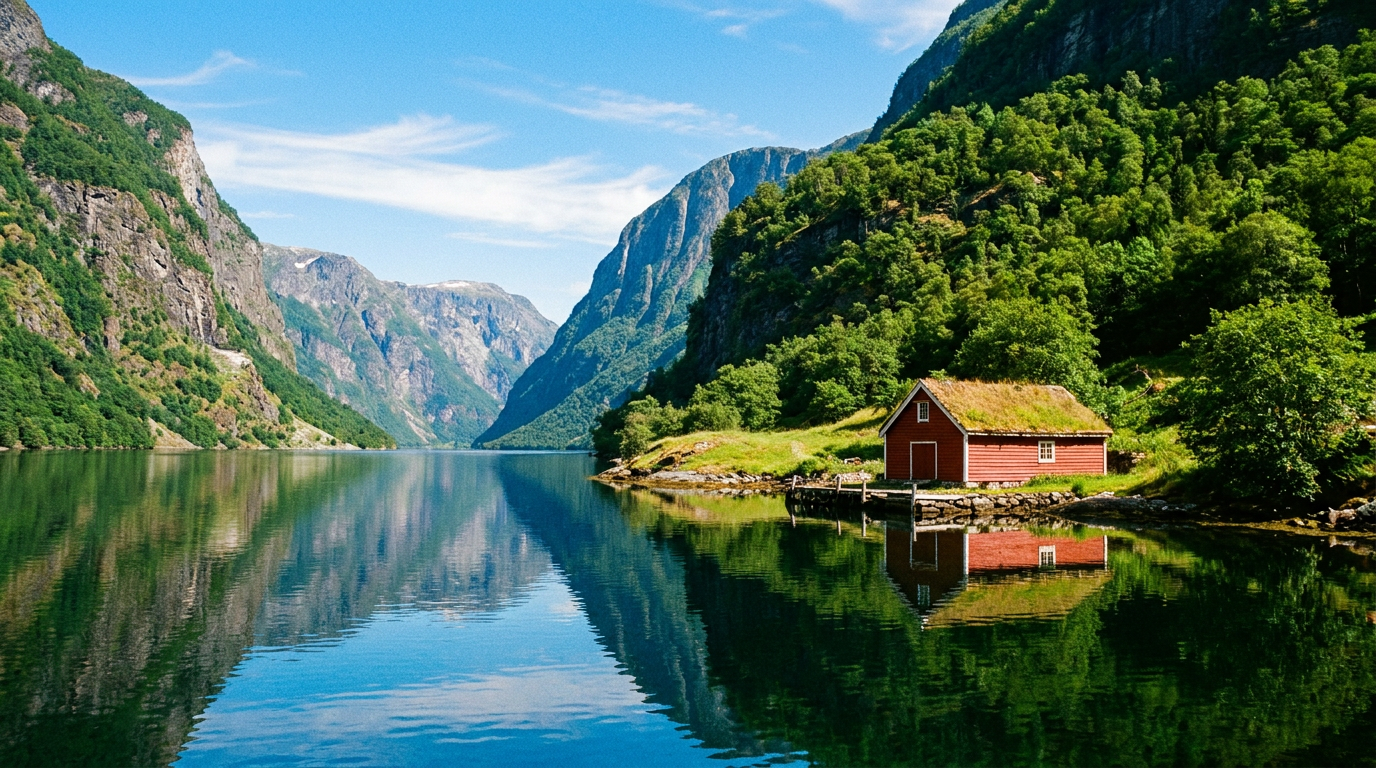
A portmanteau of 'cool' and 'vacation,' coolcationing involves deliberately selecting northern latitudinal or high-altitude destinations with milder summer climates—typically ranging from 15°C to 22°C. While the term began as a clever marketing buzzword around 2023, it has rapidly evolved into a dominant market strategy for the 2026 summer season. The appeal is straightforward. Instead of enduring 44°C days in Seville or Athens, where outdoor activities are often suspended by midday, travelers are seeking the predictable comfort of Norwegian fjords, Swedish lakes, and the Scottish Highlands.[2][5]
The data underpinning this shift is striking. According to recent industry reports, global booking searches for designated cooler destinations have escalated by 74% year-over-year. This is not merely a temporary reaction to a single hot summer, but a calculated adaptation by travelers who now view climate resilience as a prerequisite for their holidays. Luxury travel networks report that a vast majority of their clients now actively prioritize destinations with milder weather, fundamentally altering how travel advisors build summer itineraries.[2]

Scandinavia has emerged as the undisputed epicenter of the coolcation boom. Norway, Sweden, and Denmark have all reported record-breaking tourism figures in the wake of this behavioral shift. Statistics Norway recorded an all-time high of 40.6 million guest nights in 2025, with foreign demand jumping by 14%. Sweden similarly saw its commercial accommodation guest nights reach 30.8 million during the summer months, driven by a surge in international arrivals. Denmark had already set a high-water mark the previous year with over 65 million overnight stays.[1][3]
Airlines are rapidly adjusting their networks to capture this northbound momentum. Scandinavian Airlines reported passenger volumes to Nordic destinations rising by more than 10% year-on-year in early 2026. Crucially, the airline noted dramatic surges in bookings originating from southern Europe itself. Flight bookings from France to Norway jumped 22%, while arrivals from Spain and Italy to specific Norwegian cities saw increases of up to 52%. For many southern Europeans, Scandinavia's cool climate is no longer viewed as a disadvantage, but as a necessary refuge.[1][3]
The mechanism driving this trend extends beyond simple temperature avoidance. It intersects heavily with a parallel movement known in the industry as 'hushpitality'—a growing preference for quiet, restorative, and deeply nature-immersive experiences over crowded, performance-driven tourism. The vast, sparsely populated landscapes of the Nordic region naturally encourage this kind of contemplation. Travelers are swapping mega-resorts and beach clubs for mountain cabins, glacier hikes, and the serene simplicity of a lakeside retreat.[5]
This psychological pivot is also rooted in a desire for predictability. When travelers invest significant time and money into a summer holiday, they expect to be able to execute their itineraries. The recurring heatwaves, wildfires, and severe storms that have plagued central and southern Europe in recent years introduce a level of risk that many families and older travelers are no longer willing to accept. A coolcation offers a reliable environment where heritage exploration and outdoor recreation are not held hostage by the midday sun.[1][2]
This psychological pivot is also rooted in a desire for predictability.
Economically, the influx of summer visitors is transforming northern communities that previously relied heavily on winter tourism. Towns like Tromsø in the Norwegian Arctic, once primarily known as a winter destination for viewing the Northern Lights, are reinventing themselves as year-round hubs. The expansion of the tourist season into the summer months provides a more stable, year-round income for local businesses, reducing the precarious boom-and-bust cycle that often plagues seasonal resort towns.[1]

However, the rapid acceleration of the coolcation trend introduces complex challenges regarding capacity and environmental preservation. Many of the most sought-after northern destinations are characterized by fragile ecosystems and small, rural communities that were never designed to handle mass tourism. In iconic locations like Norway's Lofoten Islands and the Geirangerfjord, locals have begun expressing concerns about traffic congestion, waste management, and the environmental impact of increased cruise ship traffic.[1]
The paradox of climate-adaptive travel is not lost on environmental conservationists. While travelers are flying north to escape the consequences of a warming planet, the carbon emissions generated by these long-haul flights contribute to the very problem they are fleeing. This tension places an immense responsibility on destination management organizations to ensure that the growth in tourism does not degrade the pristine environments that make these regions so appealing in the first place.[4][5]
To address these pressures, Scandinavian countries are leaning heavily into sustainable tourism models. The region already dominates the Euromonitor International Sustainable Travel Index, with Sweden, Finland, and Norway consistently ranking at the top. These nations are pioneers in lifecycle assessment research and are highly engaged with the United Nations' Sustainable Development Goals. Their approach increasingly prioritizes high-value, low-volume tourism, encouraging longer stays and slower, more intentional travel rather than rapid, high-turnover visits.[4]

Destination planners are also actively dispersing tourists away from overcrowded hotspots and into lesser-known regions. By promoting secondary cities, inland forests, and alternative coastal routes, tourism boards hope to distribute the economic benefits of the coolcation boom more evenly while mitigating the strain on local infrastructure. Sweden's 'Swedish Prescription' initiative, which highlights the evidence-based health benefits of spending time in nature, exemplifies this strategy of directing visitors toward vast, uncrowded natural spaces.[3]
Meanwhile, traditional southern European destinations are being forced to adapt to their new climate reality. Recognizing that peak summer is becoming increasingly hostile to leisure travel, tourism boards in the Mediterranean are pivoting their marketing efforts toward the shoulder seasons of spring and autumn. They are also spotlighting early morning and late evening experiences, such as sunrise hikes and stargazing tours, to help visitors navigate the heat of the day safely.[5]

The coolcation trend represents a fundamental realignment of the global travel map. It is a clear signal that climate change is no longer just a background consideration for the tourism industry, but an active driver of consumer behavior. As travelers become more sophisticated in their understanding of climate risks, the definition of an ideal summer holiday will continue to evolve, prioritizing resilience, comfort, and environmental stewardship over the traditional pursuit of the sun.[2][5]
Ultimately, the rise of climate-adaptive travel offers a hopeful blueprint for the future of tourism. It demonstrates that the industry can pivot in response to environmental realities, and that travelers are willing to embrace new paradigms of rest and exploration. By valuing space, nature, and sustainability, the coolcation movement not only provides immediate relief for heat-weary vacationers, but also champions a more mindful and balanced approach to experiencing the world.[5]
How we got here
Summer 2023
Record heatwaves across southern Europe spark the initial mainstream interest in 'coolcations'.
Late 2024
Denmark sets a national record with over 65 million overnight stays, signaling a structural shift.
Summer 2025
Norway and Sweden report all-time high guest nights, with significant surges in arrivals from southern Europe.
Early 2026
Industry reports confirm a 74% year-over-year increase in global searches for cooler travel destinations.
Viewpoints in depth
Climate-Adaptive Travelers
Prioritizing physical comfort, predictable itineraries, and nature over traditional beach holidays.
For this demographic, the calculus of summer travel has fundamentally changed. The risk of spending thousands of dollars only to be trapped indoors by 44°C heat is no longer acceptable. They are actively seeking out the 15°C to 22°C sweet spot, trading crowded promenades for quiet fjords and prioritizing destinations that offer clean air and reliable outdoor recreation.
Nordic Destination Managers
Balancing an unprecedented economic windfall with the urgent need to protect fragile environments.
Tourism boards in Scandinavia are thrilled by the influx of summer revenue, which stabilizes economies previously reliant on winter travel. However, they are acutely aware of the risks of overtourism. Their focus has shifted entirely to 'high-value, low-volume' models, actively dispersing visitors away from strained hotspots like Lofoten and into lesser-known inland regions to preserve the authentic character of their heritage sites.
Southern European Hospitality
Pivoting marketing strategies to survive the hollowing out of peak summer demand.
Facing a mass migration of their traditional July and August clientele, Mediterranean tourism operators are rewriting their playbooks. They are heavily promoting the 'shoulder seasons' of May, June, September, and October. During peak summer, they are adapting by offering early-morning and late-evening experiences—such as sunrise hikes and stargazing—to help visitors safely navigate the extreme midday heat.
What we don't know
- Whether the economic boom in northern destinations can outpace the infrastructure costs of managing mass tourism.
- How severely the permanent loss of peak summer revenue will impact the long-term economies of Mediterranean nations.
- If the carbon footprint of increased long-haul flights to Scandinavia will offset the region's sustainable tourism efforts.
Key terms
- Coolcationing
- The deliberate choice to travel to northern or high-altitude destinations during summer to avoid extreme heat.
- Hushpitality
- A travel trend prioritizing quiet, restorative, and deeply nature-immersive experiences over crowded, highly stimulating tourism.
- Shoulder Season
- The travel periods just before and after the peak summer months, increasingly popular in southern Europe to avoid heat.
- Climate-Adaptive Tourism
- The strategic adjustment of travel habits and destination management in response to the realities of global climate change.
Frequently asked
What exactly is a coolcation?
A coolcation is a summer holiday taken in a temperate or northern climate—such as Scandinavia or Scotland—specifically to escape the extreme heatwaves of traditional sun-and-sand destinations.
Why are people avoiding the Mediterranean in summer?
Record-breaking temperatures, often exceeding 44°C, along with wildfires and severe storms, have made peak summer in southern Europe uncomfortable and unpredictable for many travelers.
Are northern destinations becoming overcrowded?
Yes, in certain hotspots. Places like Tromsø and the Lofoten Islands are experiencing strain on local infrastructure, prompting a shift toward sustainable, low-volume tourism models.
How is the travel industry adapting to this shift?
Airlines are adding northern routes, Nordic hotels are expanding summer capacity, and southern European destinations are pivoting to market their cooler 'shoulder seasons' in spring and autumn.
Sources
Source coverage
5 outlets
4 viewpoints surfaced





[1]ForbesNordic Destination Managers
5 Travel Trends Fueling Scandinavia's Tourism Boom
Read on Forbes →[2]TravelPulse CanadaClimate-Adaptive Travelers
Coolcations Heat Up as Climate Concerns Reshape Travel Demand: New Data
Read on TravelPulse Canada →[3]SAS GroupClimate-Adaptive Travelers
Travel Trends 2026: Heading North
Read on SAS Group →[4]Travel WeeklySustainable Tourism Advocates
Scandinavia dominates sustainable travel index
Read on Travel Weekly →[5]Factlen Editorial TeamGlobal Industry Analysts
Synthesis by Factlen editorial team
Read on Factlen Editorial Team →

Every angle. Every day.
Get travel stories with full source coverage and perspective breakdowns delivered to your inbox.