
The 2026 E-Bike Buying Guide: Navigating Classes, Motors, and Batteries
As electric bikes mature into highly specialized vehicles, choosing the right model requires understanding legal class systems, motor torque, and battery capacity. This comprehensive guide demystifies the technical jargon to help buyers find the perfect ride.
By Factlen Editorial Team
- Trail Access Advocates
- Argue for strict adherence to Class 1 pedal-assist models to preserve access to non-motorized trails and parks.
- Urban Mobility Proponents
- Value high-speed Class 3 bikes and throttle-assist Class 2 models as legitimate car replacements for city infrastructure.
- Performance Purists
- Focus on mid-drive torque, natural ride feel, and premium components from established cycling brands.
- Consumer Educators
- Focus on demystifying technical jargon and guiding buyers toward safe, reliable, and legally compliant purchases.
What's not represented
- · Pedestrians and traditional cyclists sharing multi-use paths
- · Local land managers and park rangers enforcing trail rules
Why this matters
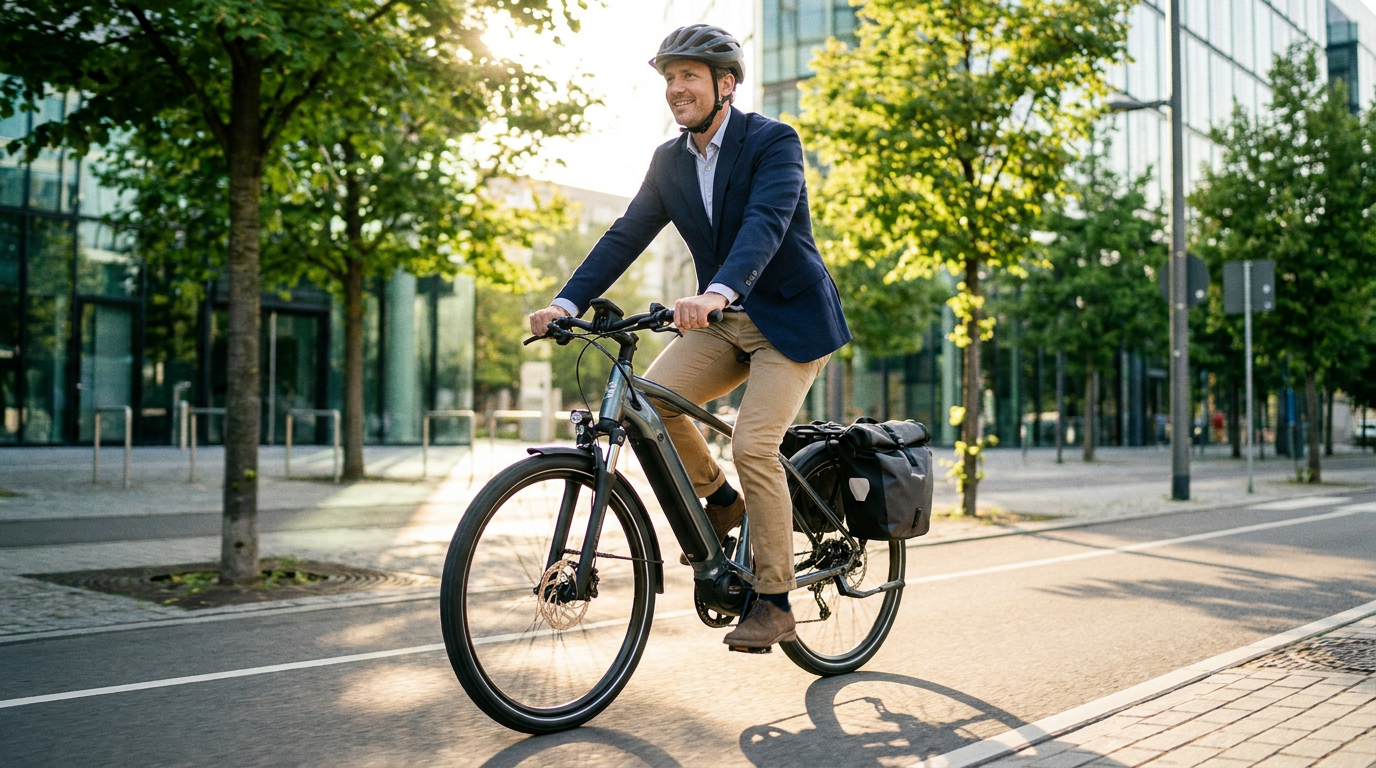
Choosing the right e-bike can replace your car commute, improve your fitness, and save thousands in fuel costs—but buying the wrong class or motor can leave you with a heavy bike that is illegal on your local trails.
Key points
- The US Three-Class System dictates e-bike speed limits and trail access, making it the most important initial buying decision.
- Class 1 and 3 bikes are pedal-assist only, while Class 2 bikes feature a throttle for motor-only propulsion.
- Mid-drive motors offer superior hill-climbing efficiency and balance compared to simpler hub motors.
- Motor torque, measured in Newton-meters (Nm), is a better indicator of real-world performance than peak wattage.
- A battery capacity of 600 to 750 watt-hours (Wh) is the recommended sweet spot for daily commuting.
- Experts advise testing bikes at a local shop to ensure proper fit, assembly, and long-term mechanical support.
Electric bicycles have reached a state of maturity in 2026. The market has shifted from a niche novelty to a highly specialized transportation sector, offering everything from rugged electric mountain bikes to sleek urban commuters. But with this evolution comes a dizzying array of technical jargon that can easily overwhelm a new buyer.[7]
For first-time buyers, navigating spec sheets filled with watt-hours, torque ratings, and mid-drive motor classifications can feel like studying for an electrical engineering exam. However, finding the right electric bicycle does not require a technical degree; it requires matching the machine's capabilities to your specific daily route, physical needs, and riding style.[6][7]
The most critical starting point for any buyer in the United States is understanding the Three-Class System. Established to help local governments and park services regulate path safety, this framework dictates how fast an e-bike can go, how the motor engages, and where it is legally permitted to ride.[1][2]
Class 1 e-bikes are the most widely accepted and trail-friendly option. These models are strictly pedal-assist, meaning the motor only provides power while the rider is actively pedaling, and the assistance cuts off completely at 20 miles per hour. Because they mimic the natural feel of a traditional bicycle and lack a throttle, Class 1 bikes are generally permitted on multi-use paths, city bike lanes, and most mountain bike trails.[1][2]

Class 2 e-bikes share the same 20 mph speed limit but introduce a throttle, allowing the bike to move forward entirely under motor power without any pedaling required. This feature is highly valued by riders with limited mobility, cargo haulers, or commuters who want to accelerate quickly from a dead stop at traffic lights. However, because of the throttle, Class 2 models face stricter regulations and are frequently banned from unpaved single-track trails.[1][2]
Class 3 e-bikes are built for speed and efficiency, making them the ultimate tool for long-distance road commuters. These bikes are pedal-assist only, but the motor continues to provide support up to 28 mph. Due to their higher top speeds, Class 3 models are typically restricted to road use and dedicated bike lanes, and are generally prohibited from shared pedestrian paths.[1][2]
Once the legal class is determined, the next major decision is the motor type. The market is divided into two primary architectures: hub motors and mid-drive motors. Hub motors, which sit inside the center of the rear or front wheel, are simpler, require less maintenance, and are common on budget-friendly and entry-level commuter models.[3][4]
Once the legal class is determined, the next major decision is the motor type.
Mid-drive motors, conversely, are positioned at the bike's bottom bracket between the pedals. This placement allows the motor to drive the chain and utilize the bicycle's existing gears, making mid-drives significantly more efficient on steep climbs. They also offer a lower center of gravity and a more balanced, natural ride feel, which is why they dominate the premium and mountain bike segments.[3][4]
When evaluating motor power, buyers should look past peak wattage and focus on torque, measured in Newton-meters (Nm). Torque represents the actual twisting force that dictates acceleration and climbing ability. For flat city riding, 60 to 80 Nm is usually sufficient. However, for riders tackling steep hills, hauling heavy cargo, or navigating off-road trails, a motor delivering 85 Nm to 120 Nm is essential for a confident, strain-free climb.[3]

In the premium mid-drive space, the 2026 market is largely a two-horse race between Bosch and Shimano. Bosch is widely considered the benchmark for raw power and ecosystem integration. Their latest Generation 5 Performance Line CX motors can be tuned via software to deliver up to 120 Nm of torque, offering exceptional traction control and sustained power for aggressive climbing.[4][7]
Shimano, particularly with its EP801 system, takes a different approach, prioritizing a lightweight build and a highly organic ride feel. While Shimano motors typically cap out around 85 Nm, their progressive power delivery and quieter operation make the bike feel more like a traditional bicycle with a constant, natural tailwind, appealing to cycling purists and gravel riders.[4]
A motor is only as good as its power source, making battery capacity a vital consideration. Battery size is measured in watt-hours (Wh), which directly correlates to range. While range claims can be highly subjective—varying wildly based on rider weight, terrain, and assist levels—a 600 to 750 Wh battery has emerged as the sweet spot for daily commuters, reliably delivering 30 to 50 miles per charge.[3][5]

Beyond electronics, frame geometry plays a massive role in long-term satisfaction. Step-through frames, once relegated to the 'ladies bike' category, have surged in popularity across all demographics. By eliminating the high top tube, step-throughs allow riders to easily mount and dismount, a crucial feature when the bike is loaded with heavy groceries or for riders with limited hip mobility.[5][6]
Because e-bikes are significantly heavier than traditional bicycles—often weighing between 45 and 70 pounds—stopping power cannot be compromised. Hydraulic disc brakes are universally recommended over mechanical disc or rim brakes, as they provide superior, weather-resistant stopping force with less hand effort and require less frequent adjustment.[3][5]
Finally, buyers must set realistic budget expectations. While ultra-cheap models exist online, the $1,500 to $3,000 range is the current sweet spot for a reliable, safe, and serviceable e-bike. Bikes in this tier feature reputable motor systems, certified batteries, and quality components that will withstand daily use.[5]

Experts strongly advise against buying an e-bike purely based on online specifications. Visiting a local bike shop for a test ride is the only way to truly assess the motor's responsiveness, the frame's comfort, and the bike's handling. Furthermore, purchasing locally ensures access to professional assembly, warranty support, and the specialized mechanical service required to keep an e-bike running smoothly for years.[5][6]
How we got here
2010
Bosch debuts its first e-bike drive system, setting the stage for modern mid-drive performance.
2014-2015
The US bicycle industry develops the Three-Class System to standardize e-bike regulations across states.
2022
Bosch launches the Smart System, integrating motors, batteries, and apps into a highly customizable digital ecosystem.
2026
E-bikes reach mass maturity, with highly specialized models, 120Nm torque benchmarks, and widespread adoption of step-through frames.
Viewpoints in depth
Urban Commuters
Prioritize speed, cargo capacity, and car-replacement utility.
For riders looking to replace their daily driving commute, the focus shifts entirely to utility and sustained speed. This camp heavily favors Class 3 e-bikes, which provide pedal assistance up to 28 mph, allowing riders to safely keep pace with urban traffic. They prioritize large battery capacities (750 Wh or more) to eliminate range anxiety, integrated lighting for safety, and robust rear racks for carrying laptops and groceries. For these riders, the e-bike is an essential transportation tool rather than a recreational toy.
Trail & Recreation Riders
Favor natural ride feel and unrestricted access to nature.
Off-road enthusiasts and weekend explorers prioritize the physical experience of cycling. This group strongly advocates for Class 1 mid-drive electric mountain bikes (eMTBs). Because Class 1 bikes lack a throttle and require active pedaling, they are legally permitted on the vast majority of non-motorized single-track trails and state parks. These riders look for high-torque motors (85 Nm to 120 Nm) from brands like Bosch or Shimano that deliver smooth, progressive power, ensuring the bike feels like a traditional mountain bike with a bionic tailwind.
Accessibility & Utility Riders
Rely on throttles and accessible frame designs for mobility.
For riders with limited mobility, seniors, or those hauling heavy cargo, the physical demands of pedaling can be a barrier to entry. This perspective champions Class 2 e-bikes equipped with throttles, allowing the rider to move forward from a dead stop without straining their knees or hips. They also heavily favor step-through frames, which eliminate the need to swing a leg over a high top tube. For this camp, the e-bike is an equalizing technology that restores independence and makes outdoor recreation accessible to everyone.
What we don't know
- How future state and federal legislation might further restrict or reclassify high-speed Class 3 e-bikes on shared infrastructure.
- Whether solid-state battery technology will become commercially viable for e-bikes in the near term, potentially doubling range.
- How the secondary market for used e-bikes will evolve as older batteries degrade and proprietary motor parts become scarce.
Key terms
- Pedal-Assist (PAS)
- A system where the electric motor only provides power while the rider is actively pedaling.
- Throttle
- A mechanism, usually on the handlebar, that allows the motor to propel the bike forward without the rider needing to pedal.
- Torque (Nm)
- A measurement of rotational force. In e-bikes, higher torque means better acceleration and climbing ability on steep hills.
- Watt-hours (Wh)
- A measurement of battery capacity. A higher Wh rating generally translates to a longer riding range per charge.
- Mid-Drive Motor
- An electric motor located at the bicycle's bottom bracket (between the pedals) that drives the chain directly.
Frequently asked
Can I ride an e-bike if the battery dies?
Yes, but it will be significantly harder. E-bikes weigh 45 to 70 pounds, so pedaling without motor assistance requires considerable effort, especially on inclines.
What is the difference between a hub motor and a mid-drive motor?
Hub motors sit in the wheel and are simpler and cheaper. Mid-drive motors sit at the pedals, use the bike's gears, and provide a more balanced, efficient, and natural ride feel.
Are e-bikes allowed on all bike paths?
No. Access depends on the bike's class. Class 1 bikes are widely accepted, while Class 2 (throttle) and Class 3 (high-speed) bikes are often restricted from shared pedestrian paths and mountain bike trails.
How long does an e-bike battery last?
Most high-quality batteries last 500 to 800 charge cycles before significant degradation, which typically translates to 3 to 5 years of regular use.
Sources
Source coverage
7 outlets
4 viewpoints surfaced




[1]Electric Bikes USAUrban Mobility Proponents
E-Bike Classes Explained: What's the Difference Between Class 1, 2, and 3?
Read on Electric Bikes USA →[2]The Cyclist ChoiceTrail Access Advocates
Quick Answer: Class 1, Class 2 & Class 3 Electric Bikes
Read on The Cyclist Choice →[3]EveloPerformance Purists
How to Choose the Right Electric Bike in 2026
Read on Evelo →[4]Cyclist StylePerformance Purists
Bosch vs Shimano: 2026 E-Bike Motor Guide
Read on Cyclist Style →[5]Riding 5Urban Mobility Proponents
How to Choose Your First E-Bike
Read on Riding 5 →[6]BikelineConsumer Educators
E-Bike Buying Guide for Beginners
Read on Bikeline →[7]Factlen Editorial TeamConsumer Educators
Synthesis by Factlen editorial team
Read on Factlen Editorial Team →

Every angle. Every day.
Get shopping stories with full source coverage and perspective breakdowns delivered to your inbox.