
How to Buy a Phone That Lasts: Understanding Smartphone Repairability Scores in 2026
Sweeping new right-to-repair laws and mandatory repairability labels have transformed the smartphone market in 2026. Understanding these new metrics can help consumers save hundreds of dollars and keep their devices running for years.
By Kavya Nair

The era of treating smartphones as disposable, two-year rentals is coming to a close. In 2026, consumers are holding onto their devices longer than ever, driven by rising flagship prices and plateauing hardware innovation.
But keeping a phone for four or five years requires a device that can physically survive the journey. That means being able to replace a degraded battery or a shattered screen without paying the equivalent price of an entirely new phone.
Enter the repairability score. Once a niche metric championed primarily by DIY enthusiasts and independent technicians, repairability has become a central pillar of mainstream smartphone shopping, backed by sweeping new legislation across the globe.
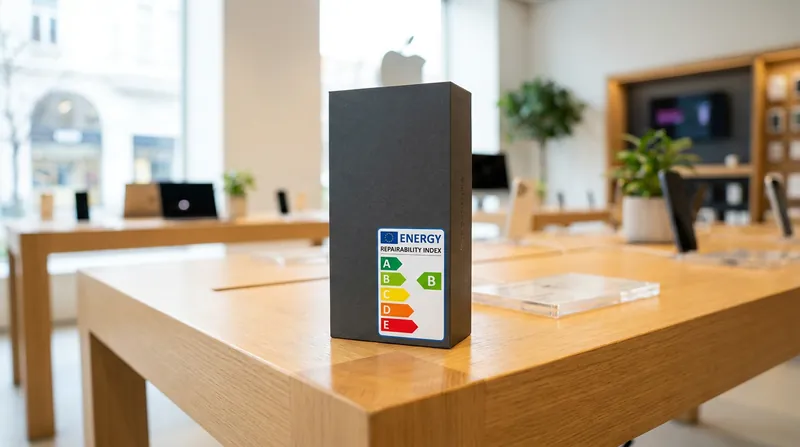
The most significant shift originated in the European Union. As of mid-2025, every new smartphone placed on the EU market must display a standardized A-to-E repairability score on its energy label, right next to its battery life and durability ratings.[3]
This label is not merely a voluntary sticker. The EU's Ecodesign Directive established a strict legal baseline for market access, mandating that manufacturers guarantee critical spare parts remain available to repairers for seven years after a model is discontinued.[3]
The directive also targets planned obsolescence directly, requiring that smartphone batteries withstand at least 800 full charge cycles while retaining 80% of their original capacity, and that operating system updates are provided for a minimum of five years.
While the EU mandated consumer-facing labels, the United States has focused on dismantling the software barriers that prevent independent repairs. A wave of state-level "Right to Repair" laws has fundamentally altered how devices are serviced in North America.
Colorado's landmark legislation, which took effect in January 2026, joined Oregon in explicitly banning a controversial manufacturer practice known as "parts pairing."
Parts pairing uses software to cryptographically lock a device to its original factory components. If a consumer or independent shop replaces a broken screen with a genuine but unpaired part, the software might disable features like facial recognition or display persistent warning messages.
By outlawing this practice, states like Colorado and Oregon have forced manufacturers to open their ecosystems, allowing independent repair shops to use third-party or salvaged components without triggering artificial software locks.
The impact of these global regulations is already highly visible in the hardware released over the past year. Teardowns by independent repair advocates reveal a stark departure from the glue-heavy, sealed-glass slabs of the past decade.[1][2]
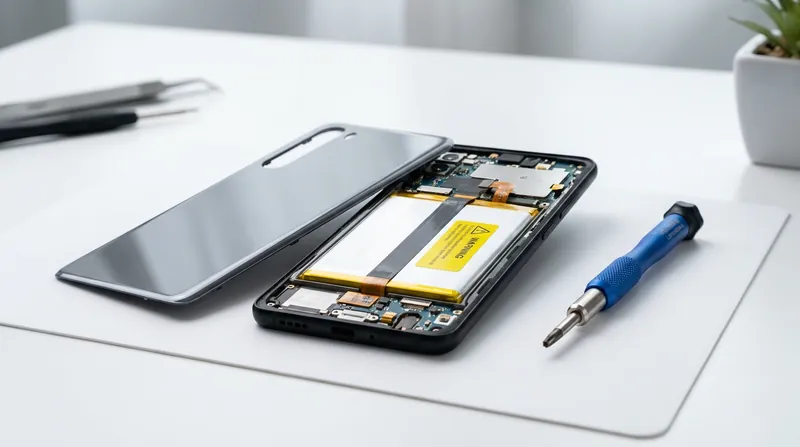
Samsung's Galaxy S25 Ultra, for instance, introduced intuitive pull tabs for its battery, eliminating the need for heat guns and chemical solvents to pry out a degraded cell. Reviewers noted it was the most repair-friendly Galaxy device in a decade.[1]
Apple has also adapted to the new landscape, expanding its Self Service Repair program and redesigning the internal architecture of the iPhone 16 Pro Max to allow easier access to internal components, earning it high marks from teardown experts.[2]
However, consumer advocates caution that a high physical repairability score does not automatically guarantee an affordable repair. The current EU A-to-E label evaluates how easy a phone is to take apart, but it does not factor in the retail price of the spare parts.
A device might earn an "A" for using standard screws instead of industrial adhesive, but if the manufacturer charges $300 for a replacement display, the economic barrier to repair remains prohibitively high for the average user.
This loophole has prompted right-to-repair coalitions to push for further transparency, arguing that true repairability must include affordable access to components, not just the physical ability to open the chassis.
Despite these ongoing battles over pricing, the landscape for smartphone buyers in 2026 is vastly more transparent and empowering than it was just three years ago. The veil of proprietary hardware has been permanently lifted.
For consumers, the takeaway is clear: treating a smartphone's repairability score with the same weight as its camera resolution or processor speed is the most effective way to ensure the device will last.
By choosing phones with accessible batteries, guaranteed software support, and a robust ecosystem of affordable spare parts, buyers can save hundreds of dollars over the life of their device while keeping perfectly good electronics out of landfills.
Key points
- New EU regulations require all smartphones to display an A-to-E repairability score and guarantee spare parts for seven years.
- US states like Colorado and Oregon have banned 'parts pairing,' a software lock that previously hindered independent repairs.
- Major manufacturers have redesigned 2025 and 2026 flagships with easier-to-remove batteries and modular components.
- While physical repairability has improved, consumer advocates warn that the high cost of spare parts remains a barrier.
Unanswered questions
- Whether the European Union will update its repairability label to factor in the retail cost of spare parts.
- How aggressively manufacturers will price their official replacement components now that they are legally required to provide them.
- If a unified federal Right to Repair law will pass in the United States to standardize the patchwork of state regulations.
How we got here
July 2023
The European Commission adopts new Ecodesign and Energy Labelling Regulations for smartphones.
January 2025
Oregon's Right to Repair Act goes into effect, becoming the first to ban parts pairing.
June 2025
The EU mandate requiring A-to-E repairability scores on smartphone energy labels officially takes effect.
January 2026
Colorado's expanded digital right-to-repair law takes effect, further cementing the ban on parts pairing in the US.
- Consumer & Environmental Advocates
- Focus on lowering the cost of spare parts and eliminating software locks to make repairs economically viable.
- Tech Reviewers & Analysts
- Evaluate the practical, real-world ease of repairing new devices through teardowns and hardware analysis.
- Regulators & Industry Observers
- Implement legal frameworks and market standards to reduce e-waste and enforce consumer rights.
Perspectives this story doesn't cover
- Used Device Retailers
- Component Suppliers
Sources
Source coverage
3 outlets
3 viewpoints surfaced



- [1]ExtremeTechTech Reviewers & Analysts
iFixit: Galaxy S25 Ultra's Repairability Is 'Better Than Most Samsung Flagships'
Read on ExtremeTech → - [2]Tom's GuideTech Reviewers & Analysts
Galaxy S25 Ultra scores high for repairability — iPhone 16 Pro Max still beats it
Read on Tom's Guide → - [3]Gadget HacksTech Reviewers & Analysts
EU Repairable Smartphones Rules: What Changed and What Hasn't
Read on Gadget Hacks →
More in Shopping & Reviews
See all →Foldable Tech
The Passport Shift: How Samsung's Wider Galaxy Z Fold 8 Design Will Reshape Foldable Phone Shopping
2 sources
Device Repairability
The Repairability Score: How the EU's New Energy Label and 7-Year Spare Parts Mandate Will Change Smartphone Shopping
2 sources
Satellite Tech
The 2026 Guide to Smartphone Satellite Connectivity: How Direct-to-Cell is Eliminating Dead Zones
3 sources

Carrier Subsidies
The 2026 Smartphone Market Shift: Why Apple Now Controls 75% of US Carrier Sales
3 sources
Comments
Every angle. Every day.
Get Shopping & Reviews stories with full source coverage and perspective breakdowns, free every day.