
Trump Signs $70 Billion 'Secure America Act,' Cementing Immigration Enforcement Funding Through 2029
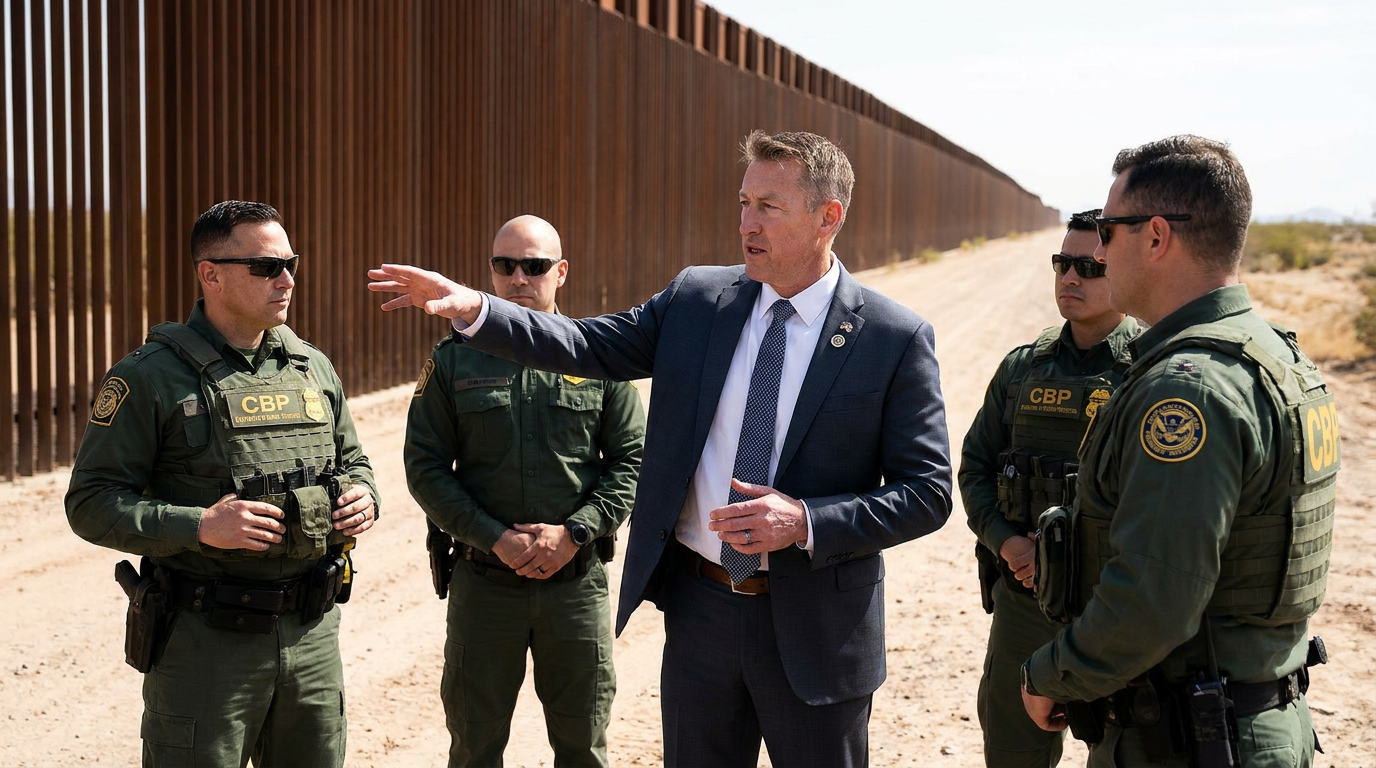
President Trump has signed a sweeping $70 billion funding package for immigration enforcement, securing the budgets of ICE and Customs and Border Protection through the end of his term. The legislation effectively bypasses congressional Democrats and bankrolls the administration's mass deportation and border security agenda.
By Factlen Editorial Team
- Trump Administration & GOP
- Argues the funding is necessary to secure the border, dismantle cartels, and bypass Democratic obstruction.
- Immigration Advocates & Democrats
- Warns the bill bankrolls a draconian mass deportation campaign with insufficient oversight and harms immigrant communities.
- Local Communities
- Highlights the economic and psychological disruption caused by increased workplace raids and interior enforcement.
What's not represented
- · Agricultural and construction employers facing labor shortages
- · International human rights observers
Why this matters
The $70 billion package guarantees that federal immigration agencies have uninterrupted funding through 2029, removing the threat of government shutdowns over border policy and providing the financial fuel for the administration's promised mass deportation operations.
Key points
- President Trump signed the $70 billion Secure America Act, fully funding ICE and CBP through 2029.
- The legislation allocates $38 billion to ICE and $26 billion to CBP, bypassing Democratic opposition.
- The final law excluded several proposed oversight measures, including mandates for judicial warrants on private property.
- The funding surge coincides with an increase in interior workplace raids and a looming Supreme Court decision on birthright citizenship.
President Donald Trump has signed the "Secure America Act" into law, authorizing roughly $70 billion in new funding for federal immigration enforcement. The sweeping legislation guarantees the budgets of Immigration and Customs Enforcement (ICE) and Customs and Border Protection (CBP) through the end of his second term.[1][2]
The financial package represents a massive escalation in resources for the administration's border security and deportation operations. Of the total, approximately $38 billion is allocated directly to ICE, while $26 billion is earmarked for CBP, with an additional $5 billion distributed across the broader Department of Homeland Security.[1]
Crucially, the legislation makes these funds available through September 30, 2029—eight months after Trump is scheduled to leave office. This extended timeline effectively insulates the agencies from future congressional budget battles or government shutdown threats during the remainder of the administration.[1][3]

The passage of the bill, originally introduced as S. 2 by Senator Lindsey Graham, concludes a bitter, months-long standoff in Congress. Republican leaders championed the act as a necessary measure to bypass Democratic opposition, which had stalled homeland security appropriations for over 100 days.[2][3]
The White House immediately celebrated the signing, issuing statements framing the law as the definitive end to "Democrat obstruction." Administration officials credit their enforcement-first approach with driving illegal border crossings to generational lows and achieving negative net migration in 2025.[2]
According to the administration, the $70 billion will be deployed to dismantle criminal cartels, intercept fentanyl trafficking, and expand the physical and technological infrastructure at the southern border. House Republicans echoed this sentiment, arguing the funds are essential for officers who put themselves in harm's way daily.[2][3]
However, critics and civil rights organizations warn that the legislation bankrolls a draconian mass deportation campaign with severely limited oversight. The final text of the law notably excluded several accountability measures that Democrats had fought to include.[1][7]
However, critics and civil rights organizations warn that the legislation bankrolls a draconian mass deportation campaign with severely limited oversight.
Stripped from the bill were provisions that would have required DHS officers to obtain judicial warrants before making arrests on private property, banned immigration officials from wearing face-concealing masks, and established "safe zones" barring enforcement near schools, hospitals, and churches.[1]

The $38 billion ICE allocation will specifically fund an expansion of deportation infrastructure. This includes hiring more enforcement personnel, funding government attorneys to expedite removal proceedings, and covering the massive transportation and logistics costs associated with large-scale repatriations.[1]
It also funnels resources into expanding 287(g) agreements, a controversial program that deputizes state and local law enforcement agencies to perform federal immigration duties.[1]
The legislative victory coincides with a highly visible uptick in interior enforcement operations across the country. Just days before the bill's signing, ICE agents conducted a workplace raid at a construction site in Bemidji, Minnesota, detaining several workers without the prior knowledge or coordination of local police.[4]
These operations continue to send shockwaves through immigrant communities and local economies. In Los Angeles, labor unions and advocacy groups recently marked the one-year anniversary of a massive Fashion District raid, noting that affected families are still struggling with lost wages, stalled legal cases, and lingering trauma.[5]

Policy analysts note that the administration's strategy relies heavily on deterrence, prioritizing enforcement over pathways to legal status or visa expansion. Researchers warn that this approach, while politically resonant with the president's base, risks exacerbating labor shortages in key sectors like agriculture and construction.[7]
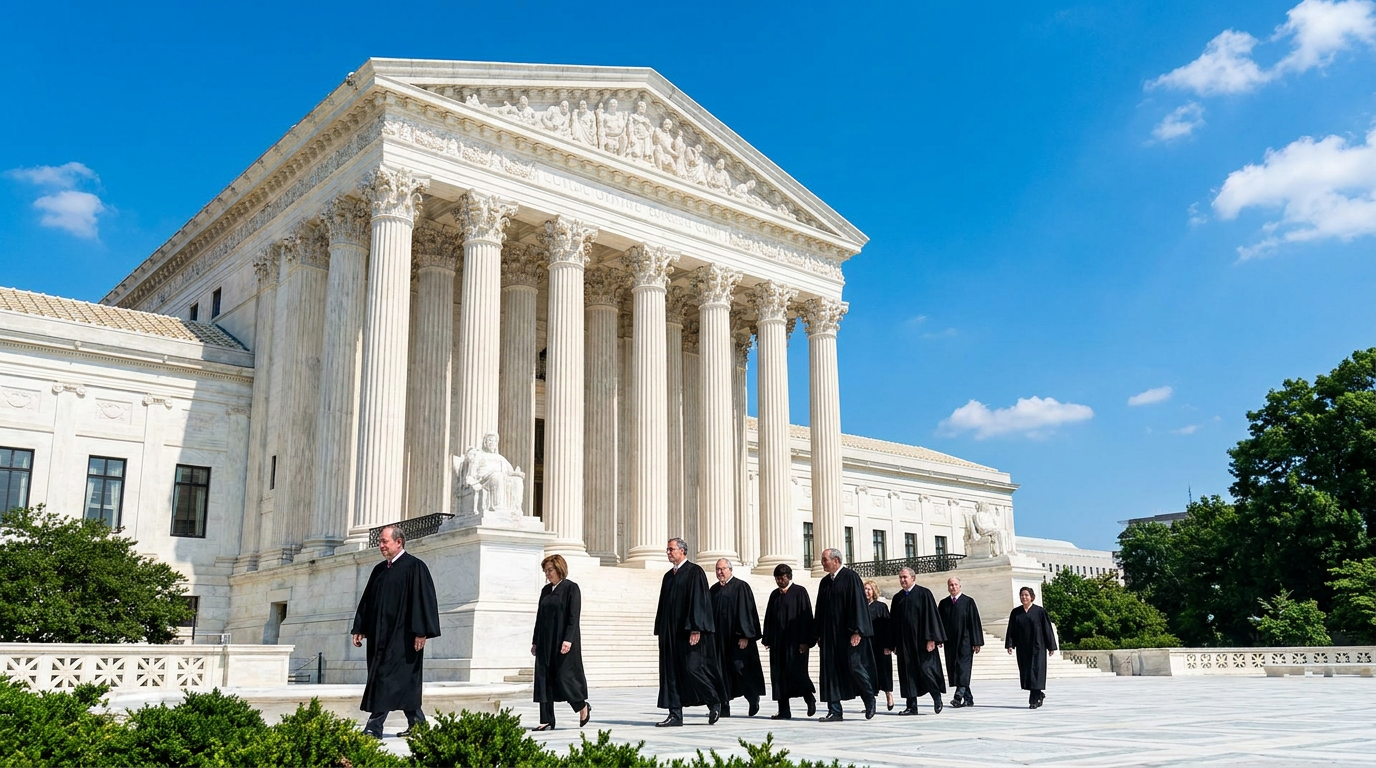
While the administration has now secured its financial footing, its broader immigration agenda still faces formidable legal hurdles. The Supreme Court is preparing to issue rulings on several high-stakes immigration cases before its summer recess at the end of June.[6][8]
Chief among these is a challenge to Trump's executive order attempting to end birthright citizenship for the children of undocumented immigrants. If the conservative-majority court upholds the directive, it would fundamentally rewrite the long-standing interpretation of the 14th Amendment's Citizenship Clause, marking a profound shift in American identity and law.[6][8]
How we got here
Early 2025
The administration launches a renewed wave of large-scale interior workplace raids, including major operations in Los Angeles and Omaha.
Spring 2026
Congressional Democrats block homeland security appropriations, leading to a 100-day standoff over border policy funding.
June 9, 2026
The Secure America Act (S. 2) passes, bypassing the appropriations standoff to fully fund ICE and CBP through 2029.
June 10, 2026
President Trump signs the $70 billion package into law.
Viewpoints in depth
The Administration & GOP
Argues the funding is necessary to secure the border, dismantle cartels, and bypass Democratic obstruction.
Proponents of the Secure America Act view the $70 billion package as a long-overdue victory for national security. The White House and Republican lawmakers argue that the funds are essential to maintain operational control of the border, combat fentanyl trafficking, and support the officers on the front lines. They frame the legislation as a necessary maneuver to end what they describe as dangerous political games by Democrats who had stalled homeland security appropriations.
Immigration Advocates
Warns the bill bankrolls a draconian mass deportation campaign with insufficient oversight.
Civil rights organizations and immigration advocates argue that the legislation writes a blank check for an aggressive interior enforcement agenda. They point to the removal of key accountability measures—such as requirements for judicial warrants and bans on face-concealing masks—as evidence that the administration intends to operate with minimal oversight. Advocates warn that the massive influx of cash will lead to widespread profiling and the fracturing of immigrant communities.
Local Communities & Labor
Highlights the economic and psychological disruption caused by increased workplace raids.
Local leaders, labor unions, and business owners in areas targeted by ICE operations emphasize the collateral damage of heightened enforcement. They point to the lingering trauma of large-scale raids in cities like Los Angeles and Omaha, noting that such actions disrupt local economies, shutter businesses, and leave families struggling with lost wages and separated households. Many argue that the deterrence-only approach fails to address the underlying labor demands that drive migration.
What we don't know
- How the Supreme Court will rule on the administration's executive order attempting to end birthright citizenship.
- Whether the massive funding increase will face new legal challenges from civil rights organizations.
- How the expanded 287(g) agreements will be implemented in states and cities that have previously resisted federal immigration cooperation.
Key terms
- Customs and Border Protection (CBP)
- The federal agency responsible for securing U.S. borders and regulating international trade and travel.
- Immigration and Customs Enforcement (ICE)
- The federal law enforcement agency tasked with enforcing immigration laws within the interior of the United States.
- 287(g) Agreements
- Partnerships that allow state and local law enforcement officers to collaborate with the federal government to enforce federal immigration laws.
- Birthright Citizenship
- The legal right to citizenship for all children born in a country's territory, regardless of parentage, currently guaranteed in the U.S. by the 14th Amendment.
Frequently asked
What is the Secure America Act?
It is a newly signed law providing roughly $70 billion in funding for federal immigration enforcement agencies, including ICE and CBP.
How long does the funding last?
The legislation secures funding for these agencies through September 30, 2029, extending beyond the end of President Trump's second term.
Did the bill include Democratic oversight demands?
No. The final law excluded several proposed accountability measures, such as requiring judicial warrants for private property arrests and barring enforcement near schools.
What else is happening with immigration policy?
The Supreme Court is expected to rule soon on the legality of a presidential executive order attempting to end birthright citizenship.
Sources
Source coverage
8 outlets
3 viewpoints surfaced








[1]The GuardianImmigration Advocates & Democrats
ICE, borders and DHS: what's in Trump's $70bn immigration crackdown bill?
Read on The Guardian →[2]The White HouseTrump Administration & GOP
The Secure America Act Ends Democrat Obstruction— Fully Funds CBP, ICE and President Trump's Border Security Agenda
Read on The White House →[3]House Majority LeaderTrump Administration & GOP
The Republican Recap: Week of June 8, 2026
Read on House Majority Leader →[4]KAXELocal Communities
ICE detains 'several' workers from at least 1 Bemidji job site
Read on KAXE →[5]Los Angeles TimesLocal Communities
A year after L.A. worksite immigration raid at fashion company, former workers still struggling
Read on Los Angeles Times →[6]AxiosImmigration Advocates & Democrats
Supreme Court's final cases loom over Trump's immigration, election hopes
Read on Axios →[7]Brookings InstitutionImmigration Advocates & Democrats
What will 2026 bring for US migration policy?
Read on Brookings Institution →[8]CBS NewsImmigration Advocates & Democrats
The major cases the Supreme Court will decide in the coming weeks
Read on CBS News →

More in news politics
See all 6 stories →Supreme Court
Supreme Court Enters Final Stretch With 23 Cases That Could Reshape Executive Power
0 sources
US-Iran Deal
Israel Strikes Beirut as U.S. and Iran Near Potential Peace Deal
0 sources

Iran Diplomacy
US and Iran Near Mediated Security Framework Amid Regional Pushback
0 sources

EV Transition
UK to Water Down 2030 Electric Vehicle Sales Targets Amid Industry Pressure
0 sources

Every angle. Every day.
Get news politics stories with full source coverage and perspective breakdowns delivered to your inbox.