
U.S. and Iran Near Peace Deal as Israel Launches Fresh Strikes on Beirut
As Washington and Tehran finalize a memorandum to end hostilities and reopen the Strait of Hormuz, Israeli forces bombed Hezbollah targets in Lebanon, exposing deep rifts over the region's security future.
By Factlen Editorial Team
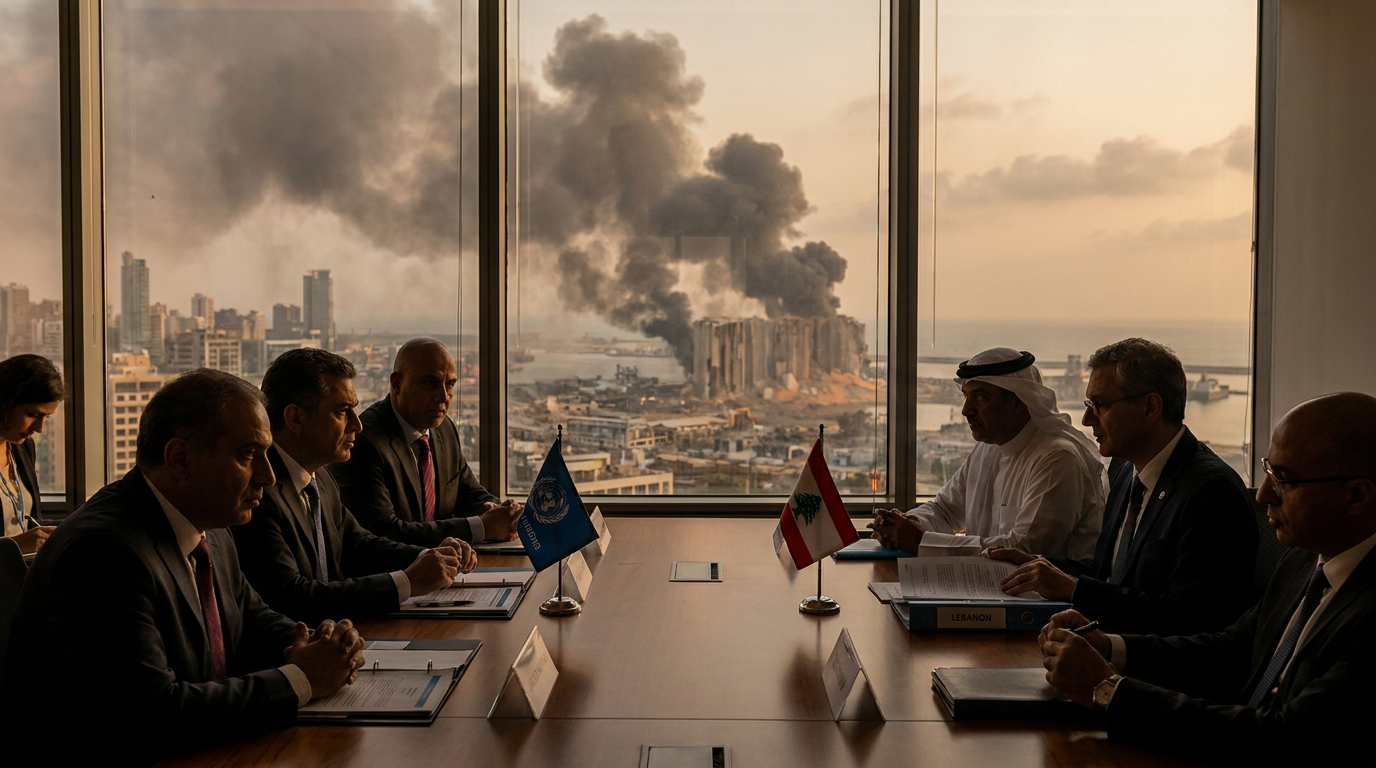
- U.S. & Mediators
- Prioritizes ending the immediate conflict, reopening global shipping lanes, and capping nuclear enrichment through diplomacy.
- Israeli Security Establishment
- Views the deal as insufficient, demanding the total dismantling of Iran's nuclear program and proxy networks.
- Iranian Hardliners
- Opposes the deal as a capitulation, demanding permanent sanctions relief and an end to Israeli strikes in Lebanon.
What's not represented
- · Lebanese civilians caught in the crossfire of Israeli strikes and Hezbollah operations.
- · European and Asian energy importers heavily reliant on the Strait of Hormuz.
Why this matters
The simultaneous push for a U.S.-Iran peace deal and the escalation of Israeli strikes in Lebanon will determine whether the global economy regains access to the critical Strait of Hormuz, or if the Middle East plunges deeper into a multi-front war.
Key points
- U.S. President Donald Trump announced a U.S.-Iran peace deal is scheduled for immediate signing, though Tehran says a final decision is pending.
- The proposed memorandum includes a 60-day framework for nuclear talks, the unfreezing of Iranian assets, and the reopening of the Strait of Hormuz.
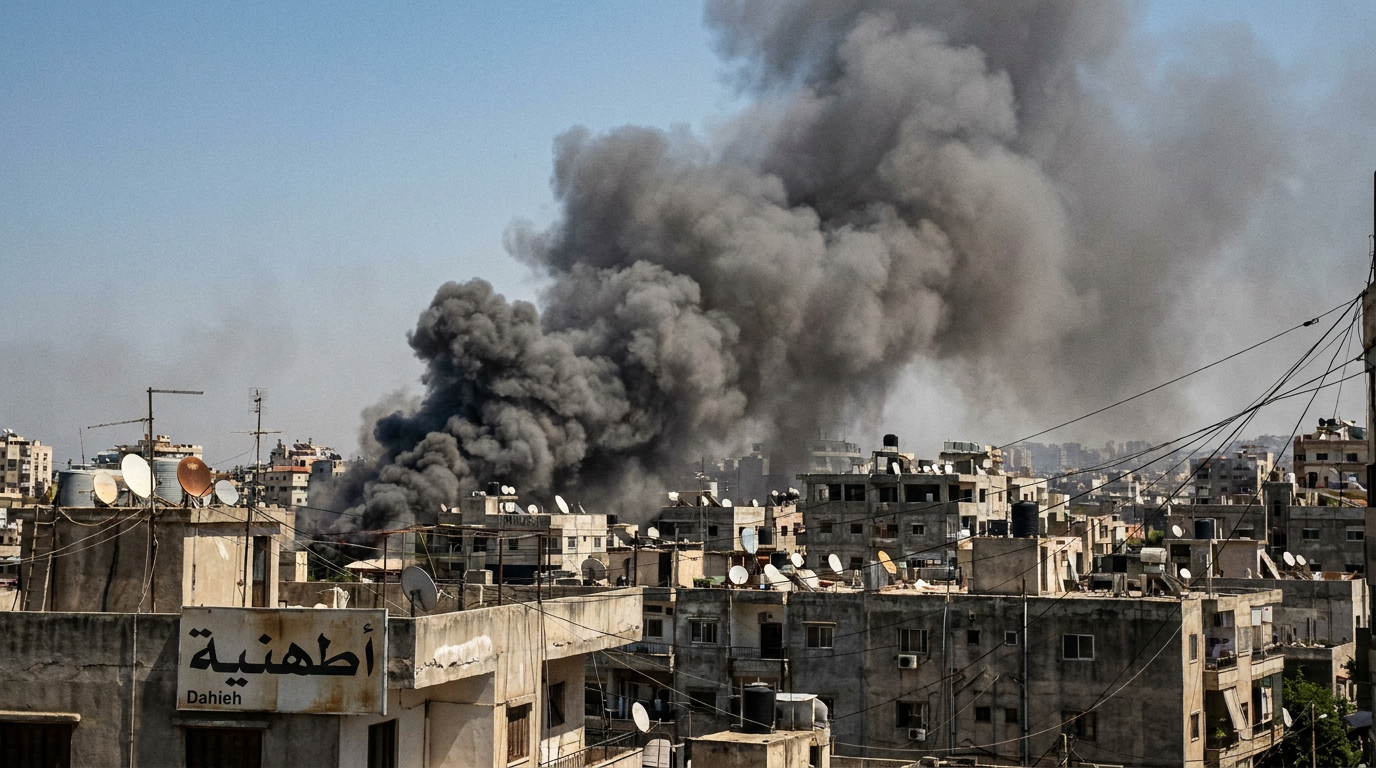
- Simultaneously, the Israeli military launched airstrikes against Hezbollah targets in Beirut's Dahiyeh district in response to rocket fire.
- Israeli Opposition Leader Yair Lapid heavily criticized the emerging deal, calling it a strategic failure that leaves Iran's nuclear capacity intact.
A volatile convergence of military force and high-stakes diplomacy is unfolding across the Middle East. On Sunday, the Israeli military launched a series of precision airstrikes against Hezbollah infrastructure in the southern suburbs of Beirut, sending plumes of smoke over the Lebanese capital. The bombardment occurred just hours after U.S. President Donald Trump declared that a comprehensive peace agreement with Iran was scheduled to be signed, promising an immediate end to the months-long conflict and the reopening of the critical Strait of Hormuz. The simultaneous developments highlight a deep fracture between Washington’s push for a diplomatic off-ramp and Israel’s ongoing military campaign against Iranian proxies.[1][3][8]
The proposed agreement, structured as a Memorandum of Understanding (MOU), aims to halt the direct hostilities that erupted earlier this year between the United States, Israel, and Iran. According to regional officials and leaked drafts, the framework would establish a 60-day period for technical negotiations regarding Iran’s nuclear program. In exchange for Tehran agreeing not to further enrich uranium or expand its nuclear facilities during this window, the U.S. would reportedly lift its naval blockade on Iranian ports and unfreeze billions of dollars in Iranian assets. Crucially for the global economy, Iran would be required to immediately reopen the Strait of Hormuz to all commercial shipping.[3][5][7]
President Trump has aggressively championed the emerging deal, framing it as a definitive victory for American security and economic interests. In a weekend social media post, Trump asserted that the agreement constitutes a "wall to no nuclear weapon" and claimed that Iran would no longer seek or possess such arms. He emphasized that the arrangement is strictly performance-based, contrasting it with the 2015 nuclear accord negotiated by the Obama administration. According to U.S. officials, the ultimate goal involves the removal or downblending of Iran's highly enriched uranium stockpile, though the exact mechanisms remain a subject for the impending 60-day technical talks.[2][4]

Despite the optimism emanating from Washington, the timeline for the agreement remains highly contested in Tehran. While Pakistani Prime Minister Shehbaz Sharif, whose government has played a central mediating role alongside Qatar, indicated that an "electronic signing" was imminent, Iranian officials have publicly pumped the brakes. Iran’s Foreign Ministry and state media outlets reported that a final decision has "not yet" been taken by the country's leadership. Qatari negotiators arrived in Tehran on Sunday in a last-ditch effort to bridge the remaining gaps, as Iranian diplomats navigate intense domestic pressure.[1][5]
Within Iran, the prospect of the MOU has triggered fierce backlash from hardline factions. Protests erupted outside the foreign ministry in Tehran and in the city of Mashhad, with demonstrators demanding the resignation of chief negotiator Abbas Araghchi. Hardliners argue that the agreement requires excessive concessions and strips Tehran of its primary strategic leverage—the closure of the Strait of Hormuz—without guaranteeing permanent sanctions relief. The internal political friction underscores the delicate balancing act facing Iran's leadership as they weigh the economic benefits of unfrozen assets against the ideological cost of compromising with Washington.[7][9]
Within Iran, the prospect of the MOU has triggered fierce backlash from hardline factions.
As diplomats scrambled in Tehran, the reality on the ground in Lebanon painted a starkly different picture. The Israel Defense Forces (IDF) confirmed that its warplanes targeted underground command nodes and infrastructure belonging to Hezbollah in Beirut’s Dahiyeh district. The office of Israeli Prime Minister Benjamin Netanyahu stated that the strikes were a direct response to Hezbollah launching projectiles into northern Israeli communities earlier in the day. The escalation in Lebanon represents a critical stumbling block for the broader peace effort, as Tehran has consistently demanded that any U.S.-Iran ceasefire must also encompass an end to Israeli military operations against Hezbollah.[1][3]

The Beirut strikes expose a widening strategic rift between the United States and Israel. Reports indicate that Netanyahu was caught off guard by Trump’s sudden announcement of an imminent signing, having been in a security cabinet meeting discussing the Iranian threat at the time. While the U.S. is eager to pivot away from the Middle East conflict and stabilize global energy markets ahead of the G7 summit, Israel remains focused on degrading the military capabilities of the "Axis of Resistance." Israeli Defense Minister Israel Katz explicitly stated that Israel retains the right to act independently to prevent Iran from obtaining nuclear weapons, regardless of any agreement brokered by Washington.[4][6]
The emerging U.S.-Iran deal has ignited a political firestorm within Israel, drawing scathing criticism from across the political spectrum. Opposition Leader Yair Lapid launched a blistering attack on Netanyahu, characterizing the MOU as a "total failure" of Israeli strategy. Lapid argued that the agreement fails to achieve any of Jerusalem's wartime objectives, leaving the Iranian government in power, its ballistic missile program intact, and its capacity to rebuild nuclear infrastructure preserved. He further accused Netanyahu of turning Israel into a "vassal state" that is forced to take orders regarding its own national security from the American administration.[2][9]
The stakes of the diplomatic maneuvering extend far beyond the immediate region. The months-long closure of the Strait of Hormuz has severely disrupted global supply chains, choking off a vital artery for oil and liquefied natural gas and sending shockwaves through international markets. For the Trump administration, reopening the strait is an urgent economic imperative. However, geopolitical analysts warn that if the underlying drivers of the conflict—namely Iran's nuclear ambitions and its support for regional proxy militias—are merely delayed rather than resolved, the current ceasefire efforts may only serve to manage the war rather than definitively end it.[3][6]

At the heart of Israel’s anxiety is the sheer scale of Iran’s current nuclear infrastructure. According to recent assessments by the International Atomic Energy Agency, Tehran has amassed over 440 kilograms of uranium enriched to 60 percent purity—a technical hairsbreadth away from the 90 percent threshold required for weapons-grade material. While the proposed U.S.-Iran memorandum reportedly includes an Iranian commitment not to produce or acquire nuclear weapons, Israeli intelligence officials fear the 60-day negotiation window merely kicks the can down the road. Without the immediate physical dismantling of subterranean enrichment facilities, critics argue that Tehran could quickly reconstitute its program once international attention shifts.[3][4]
The diplomatic breakthrough, if it holds, represents a significant geopolitical victory for the mediating nations. Pakistan has taken an unusually prominent role in the negotiations, with Prime Minister Shehbaz Sharif coordinating closely with Washington to keep the fragile talks from collapsing over the past several months. Qatari diplomats, leveraging their long-standing backchannel relationships with Tehran, have shuttled between capitals to iron out the final technicalities of the sanctions relief. The reliance on Islamabad and Doha highlights a shifting diplomatic architecture in the Middle East, where traditional Western leverage has increasingly required the facilitation of regional partners to achieve tangible results.[3][5]

The economic urgency of the deal will take center stage at the upcoming Group of Seven (G7) summit in France. President Trump is expected to use the gathering to coordinate an international effort to demine the Strait of Hormuz, a massive logistical undertaking that will require cooperation from European and Arab allies. The waterway's effective closure has not only spiked global energy prices but has also forced a costly realignment of global shipping routes. By prioritizing the immediate reopening of the strait, the U.S. administration aims to deliver a tangible economic win, even as the longer-term security implications of the Iranian nuclear file remain fiercely debated in Jerusalem and across the broader Middle East.[3][6]
How we got here
Late Feb 2026
The U.S. and Israel launch military strikes against Iran, sparking a broader regional war.
April 2026
A tenuous ceasefire takes hold, though low-level exchanges and proxy conflicts continue.
Early June 2026
Israel strikes Beirut suburbs; Iran retaliates with missile strikes on Israel.
June 13, 2026
President Trump announces a U.S.-Iran deal is scheduled to be signed, promising to reopen the Strait of Hormuz.
June 14, 2026
Israel bombs Hezbollah targets in Beirut as Qatari mediators arrive in Tehran to finalize the U.S.-Iran agreement.
Viewpoints in depth
U.S. Administration's view
The deal is a pragmatic victory that ends a costly war and secures global economic stability.
President Trump and his administration view the Memorandum of Understanding as a strictly performance-based triumph. By securing the immediate reopening of the Strait of Hormuz, the U.S. aims to stabilize global energy markets and deliver a major economic win. Washington argues that the deal prevents Iran from obtaining a nuclear weapon without committing the U.S. to an endless regional war, emphasizing that sanctions relief is contingent on verifiable Iranian compliance during the upcoming 60-day technical framework.
Israeli Government's view
The agreement is a dangerous concession that leaves Iran's nuclear and proxy capabilities intact.
Prime Minister Benjamin Netanyahu and his defense establishment view the U.S.-Iran deal with deep suspicion. They argue that a 60-day negotiation window and the unfreezing of billions of dollars will only embolden Tehran and fund its "Axis of Resistance." Israel insists that any valid agreement must include the physical dismantling of Iran's enrichment infrastructure and a halt to its support for groups like Hezbollah. Consequently, Israeli leadership maintains that the IDF reserves the right to act independently to secure its northern border and prevent a nuclear-armed Iran.
Iranian Hardliners' view
The memorandum surrenders vital strategic leverage for inadequate economic guarantees.
Conservative factions within Iran, including elements of the IRGC and hardline parliamentarians, strongly oppose the emerging deal. They argue that reopening the Strait of Hormuz—Tehran's primary instrument of deterrence—before all sanctions are permanently lifted is a strategic capitulation. Protesters and hardline media outlets accuse the negotiating team of making excessive concessions to Washington, demanding that the U.S. pay reparations for the conflict and guarantee that Israel will completely halt its military operations in Lebanon as a precondition for any agreement.
What we don't know
- Whether Iranian Supreme Leader Mojtaba Khamenei will ultimately approve the memorandum despite fierce pushback from hardline factions.
- How the 60-day technical framework will enforce the downblending or removal of Iran's 60% enriched uranium stockpile.
- Whether Israel will agree to scale back its military operations in Lebanon if a U.S.-Iran ceasefire is formally signed.
Key terms
- Memorandum of Understanding (MOU)
- A formal, non-binding agreement outlining the broad terms of a deal before a final, detailed treaty is drafted.
- Strait of Hormuz
- A narrow, strategically vital waterway between the Persian Gulf and the Gulf of Oman, through which a significant portion of the world's oil passes.
- Downblending
- The process of reducing the concentration of the U-235 isotope in enriched uranium, making it unsuitable for use in nuclear weapons.
- Dahiyeh
- A predominantly Shia suburb south of Beirut, Lebanon, known as a major stronghold and command center for the Hezbollah militant group.
Frequently asked
Is the U.S.-Iran peace deal finalized?
Not yet. While U.S. President Donald Trump announced the deal would be signed immediately, Iranian officials stated that a final decision is still under review in Tehran.
Why is Israel bombing Beirut during peace talks?
Israel states its strikes on Hezbollah infrastructure in Beirut are a direct response to Hezbollah firing projectiles into northern Israel, maintaining its right to self-defense regardless of U.S.-Iran negotiations.
What happens to the Strait of Hormuz under the deal?
The proposed agreement requires Iran to immediately reopen the Strait of Hormuz to all commercial shipping, while the U.S. would lift its naval blockade on Iranian ports.
Does this agreement eliminate Iran's nuclear program?
The current memorandum establishes a 60-day framework to negotiate the technical details of Iran's nuclear program, including the potential downblending of its enriched uranium, but it does not immediately dismantle the facilities.
Sources
Source coverage
9 outlets
3 viewpoints surfaced









[1]The GuardianU.S. & Mediators
Middle East crisis live: Trump says Iran deal will be signed today but sources tell media Tehran 'not yet' taken final decision
Read on The Guardian →[2]The Jerusalem PostIsraeli Security Establishment
Donald Trump: Deal with Iran to be signed 'tomorrow,' Strait of Hormuz to open after
Read on The Jerusalem Post →[3]Associated PressU.S. & Mediators
Israeli military strikes Beirut suburbs in the lead-up to anticipated US-Iran deal
Read on Associated Press →[4]AxiosIsraeli Security Establishment
Trump tells Netanyahu it's time for war to end, calls Iran deal 'great'
Read on Axios →[5]Radio Free EuropeU.S. & Mediators
Qatari Negotiators Travel To Tehran In Bid To Finalize US-Iran Deal
Read on Radio Free Europe →[6]i24NEWSIsraeli Security Establishment
Netanyahu To Skip G7 As Trump Lines Up Arab Leaders For Iran Deal Talks
Read on i24NEWS →[7]The New ArabIranian Hardliners
Iran says no decision taken on US deal; Israel bombs Beirut
Read on The New Arab →[8]Al JazeeraIranian Hardliners
Israel attacks Beirut on same day Trump says Iran deal to be signed
Read on Al Jazeera →[9]The Times of IsraelIsraeli Security Establishment
Emerging US-Iran deal criticized in Israel, Iran by opponents of countries' leaderships
Read on The Times of Israel →
More in news politics
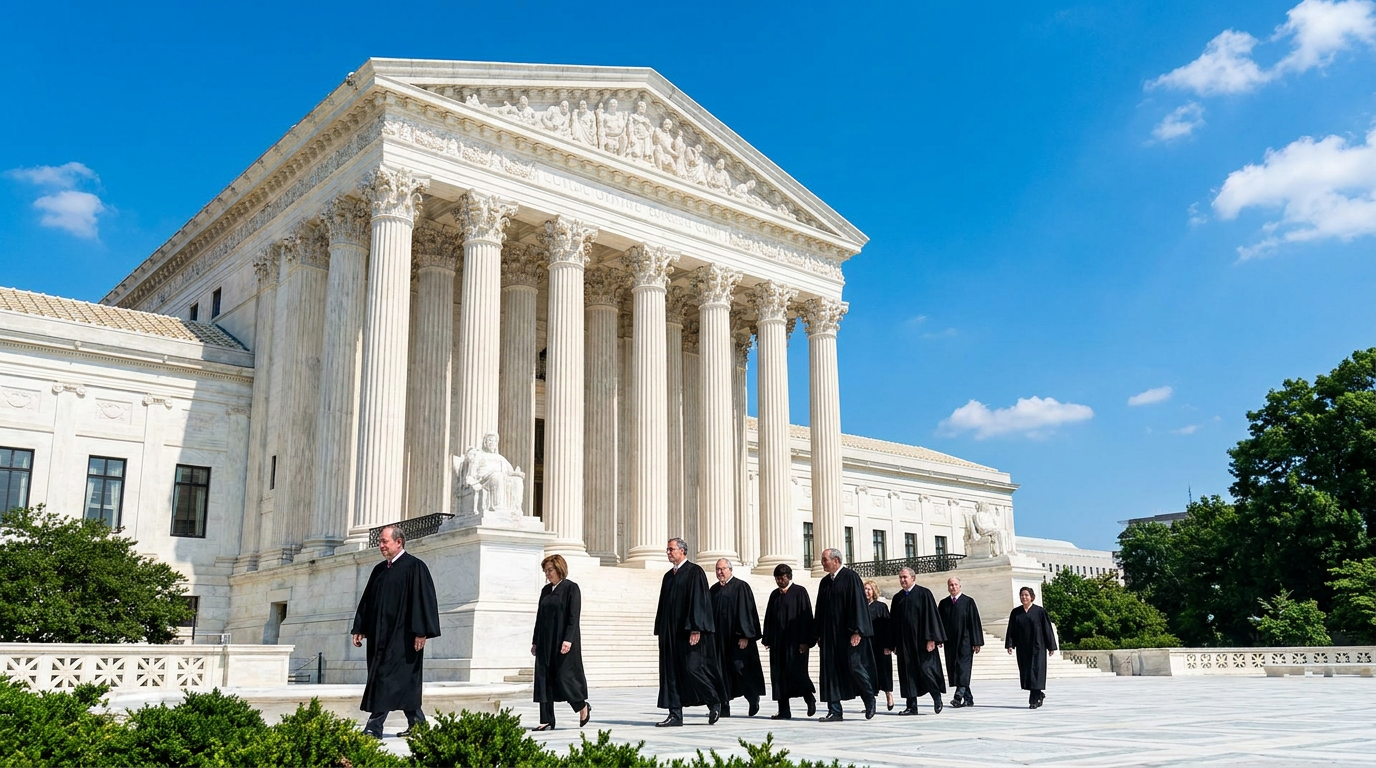
See all 6 stories →Supreme Court
Supreme Court Enters Final Stretch With 23 Cases That Could Reshape Executive Power
0 sources
US-Iran Deal
Israel Strikes Beirut as U.S. and Iran Near Potential Peace Deal
0 sources
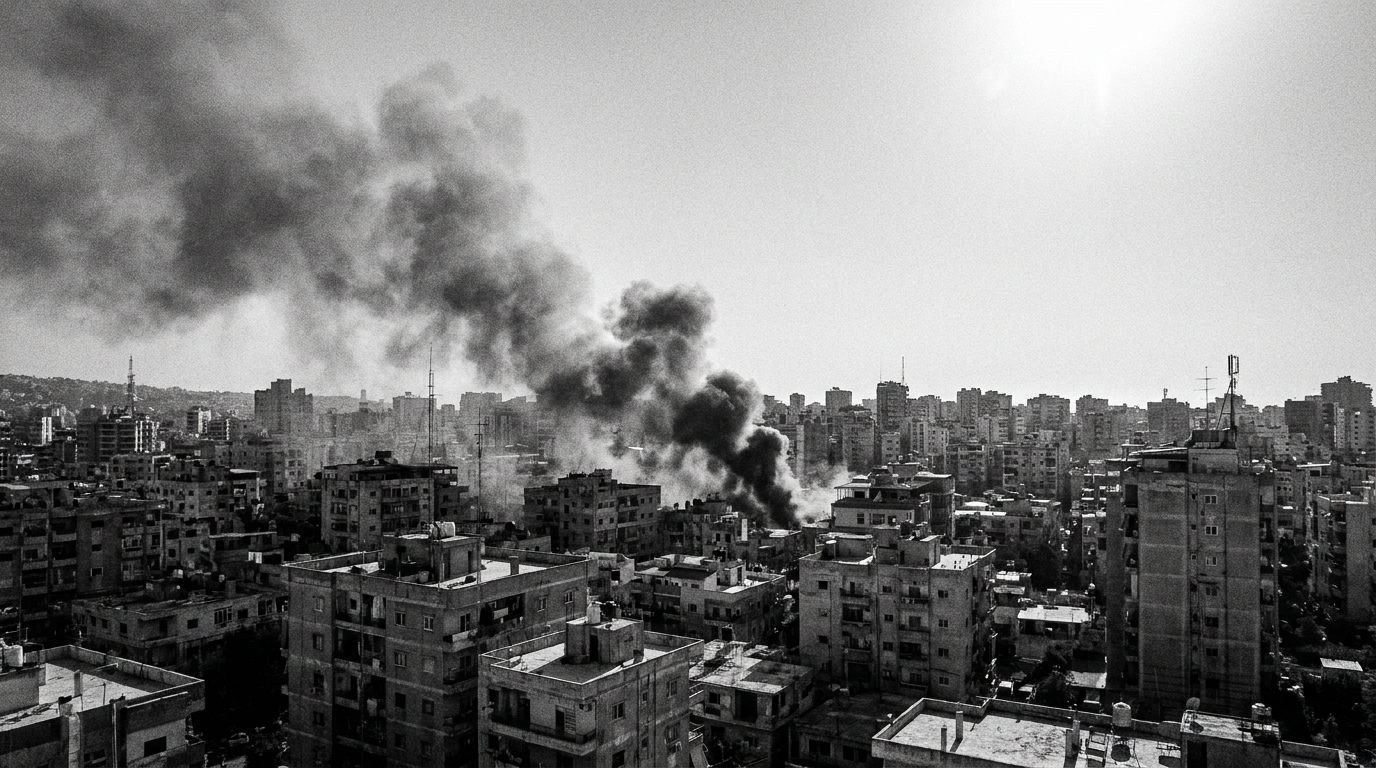
Iran Diplomacy
US and Iran Near Mediated Security Framework Amid Regional Pushback
0 sources
EV Transition
UK to Water Down 2030 Electric Vehicle Sales Targets Amid Industry Pressure
0 sources

Every angle. Every day.
Get news politics stories with full source coverage and perspective breakdowns delivered to your inbox.