
The 2026 Cycling Safety Revolution: How Radar, AI, and MIPS Are Changing the Ride
A new generation of active safety technology is transforming bicycles into spatially aware vehicles, but debates remain over cognitive load and infrastructure.
By Factlen Editorial Team
- Safety Technologists
- Believe active detection systems like radar and AI are the most effective way to prevent crashes and save lives.
- Urban Infrastructure Advocates
- Emphasize that personal safety tech is a costly band-aid for poor city planning, and that physical protected lanes are the only true solution.
- Traditionalist Skeptics
- Argue that complex technology introduces dangerous cognitive load and that lab tests for features like MIPS don't always translate to real-world anatomy.
What's not represented
- · Low-income commuters priced out of premium safety tech
- · Automotive manufacturers designing car-based cyclist detection systems
Why this matters
As urban traffic density increases, passive safety gear is no longer enough. Understanding how active technologies like radar and slip-plane helmets work allows cyclists to make evidence-based decisions that drastically reduce their risk of severe injury.
Key points
- Radar tail lights can detect vehicles up to 140 meters away, alerting riders and altering driver behavior.
- AI-powered cameras are now capable of predicting dangerous overtaking maneuvers and mapping infrastructure hazards.
- MIPS technology uses a 10-15mm slip plane to reduce rotational brain injuries, though some skeptics question its real-world necessity.
- The UCI is capping bike computer sizes in 2028 to prevent data overload and reduce rider cognitive load.
- Advocates stress that while technology helps, it cannot replace the need for physically protected bike lanes.
For decades, cycling safety relied almost entirely on passive measures: high-visibility clothing, reflective tape, and dense foam helmets designed to crack upon impact. But as urban traffic density increases and distracted driving remains a persistent threat, the cycling industry has fundamentally shifted its approach. In 2026, the focus has moved from merely surviving a crash to actively predicting and preventing one. A new generation of interoperable safety technology—ranging from radar-enabled tail lights and artificial intelligence vision systems to advanced slip-plane helmets—is transforming the bicycle into a spatially aware vehicle. This evolution aims to close the vulnerability gap between cyclists and the multi-ton vehicles they share the road with, offering riders unprecedented situational awareness.[1]
The core premise of this technological revolution is that human senses are no longer sufficient to navigate the complexities of modern, mixed-traffic environments. Traditional safety gear operates on the assumption that a driver will see the cyclist and react appropriately. The new paradigm flips this dynamic, equipping the cyclist with the tools to detect approaching hazards before they become critical. By integrating real-time vehicle detection, predictive analytics, and proactive warning systems, these devices attempt to eliminate the blind spots that account for a disproportionate share of urban cycling accidents. The goal is to create a layered defense system that addresses the highest-probability risks a rider faces on any given journey.[1][7]
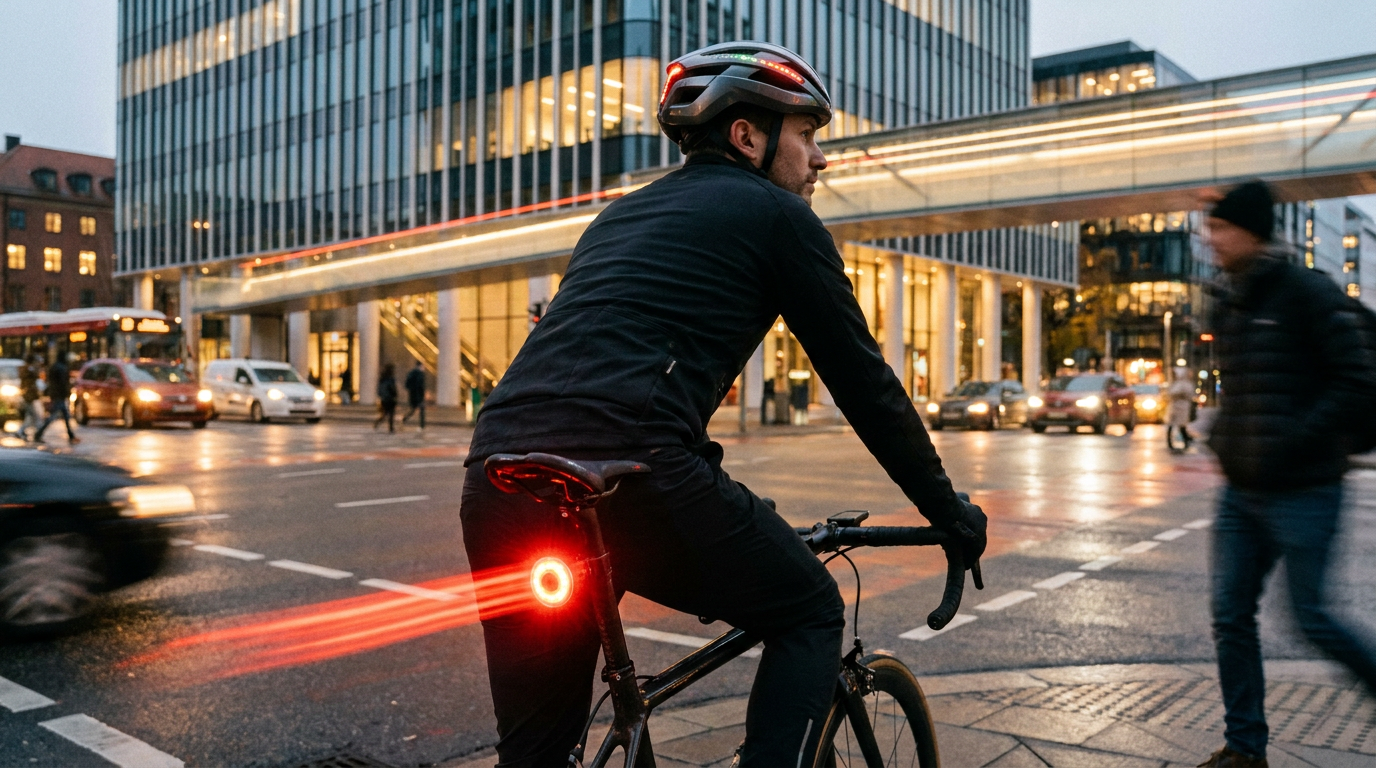
The most widely adopted active safety tool in 2026 is the radar tail light. Mounted to the seatpost, these devices emit a continuous radar cone that scans the road behind the rider. The current benchmark, such as the Garmin Varia RearVue 820, can detect approaching vehicles from up to 140 to 175 meters away. When a vehicle enters the radar's field of view, the system sends an alert to the rider's handlebar-mounted cycling computer or smartwatch, categorizing the threat level based on the vehicle's closing speed. Simultaneously, the tail light alters its flashing pattern—often increasing in intensity or acting as a brake light when the cyclist decelerates—to capture the driver's attention.[2][3]

The evidence supporting radar tail lights is compelling and well-documented. Data aggregated from over 100,000 users of Garmin's Varia system reveals a fascinating behavioral shift: vehicles overtake cyclists with an average of 24 percent more lateral clearance when a radar light is present. This occurs because the sudden change in the light's flashing cadence breaks the driver's visual monotony, causing them to perceive the cyclist as an active hazard rather than a static reflector. For riders navigating high-speed rural roads or chaotic urban corridors, this early warning system provides crucial seconds to adjust lane position or brace for a close pass, fundamentally altering the power dynamic of the road.[3]
While radar excels at detecting mass and speed, it cannot easily distinguish between a semi-truck, a passenger car, or another cyclist. To solve this, the industry is increasingly turning to artificial intelligence and computer vision. Companies like Luna Systems have recently launched AI-powered camera systems designed specifically for two-wheeled vehicles. These forward and rear-facing cameras do not just detect motion; they analyze the visual field in real-time, identifying specific vehicle types, pedestrians, and even infrastructure hazards like potholes. By processing this visual data through trained neural networks, the system can predict whether a vehicle is maintaining a safe distance or initiating a dangerous overtaking maneuver.[4][7]
The integration of AI vision systems offers benefits that extend beyond the immediate safety of the individual rider. When an AI camera detects a close pass or a near-miss, it can automatically record the incident, providing dash-cam-quality video evidence that is crucial for legal protection. Furthermore, these systems capture anonymized data about risk "blackspots"—intersections or stretches of road where close passes frequently occur. Urban planners and city governments are beginning to utilize this aggregated data to identify where cycling infrastructure is failing, allowing them to target road improvements based on actual usage patterns and documented hazard zones rather than relying solely on post-accident reports.[4][7]

The integration of AI vision systems offers benefits that extend beyond the immediate safety of the individual rider.
Despite these advances in crash prevention, accidents still happen, which is why helmet technology has undergone its own quiet revolution. The most significant development is the widespread adoption of the Multi-directional Impact Protection System (MIPS). Traditional helmets are highly effective at absorbing linear impacts—a straight-on blow to the skull. However, real-world cycling crashes rarely occur at perfect right angles; they usually involve the rider hitting the ground at an oblique angle, which introduces severe rotational forces to the brain. MIPS addresses this by incorporating a low-friction slip plane inside the helmet. In the event of an angled impact, this layer allows the helmet to slide 10 to 15 millimeters independently of the head, dissipating the rotational energy before it can cause sheer-stress injuries to brain tissue.[6]
The efficacy of rotational impact protection is supported by extensive independent testing. Facilities like the Virginia Tech Helmet Lab, which has tested hundreds of helmets across various disciplines, consistently rank MIPS-equipped models at the very top of their safety charts. Similarly, tests conducted by the Swedish insurance group Folksam concluded that helmets featuring rotational mitigation technology performed 18 to 76 percent better than average helmets in reducing the risk of concussion and traumatic brain injury. As a result of these findings, MIPS and similar proprietary slip-plane technologies have become a non-negotiable baseline for many consumers, now accounting for over 60 percent of global cycling helmet sales.[6]

However, the scientific consensus on MIPS is not entirely unanimous. Organizations like the Bicycle Helmet Safety Institute (BHSI) have raised pointed questions about the real-world applicability of the lab tests used to validate slip-plane technology. Skeptics argue that standard testing protocols use rigid, sticky dummy heads that do not accurately replicate human anatomy. When researchers introduced a "biofidelic scalp"—a synthetic layer mimicking the natural movement of human skin and hair—some studies found no statistical difference in rotational acceleration between MIPS and non-MIPS helmets. The counter-argument is that the human scalp already acts as a natural slip plane, rendering the additional plastic layer inside the helmet redundant in certain crash scenarios.[5]
As safety technology becomes more sophisticated, it also introduces a new variable: cognitive load. Modern cycling computers now display a dizzying array of data, from radar proximity alerts and AI hazard warnings to live power output, heart rate, and turn-by-turn navigation. Recognizing the potential for distraction, the Union Cycliste Internationale (UCI)—the world governing body for sports cycling—recently announced a controversial rule capping the maximum size of bike computers at 126 by 71 millimeters, effective in 2028. The UCI cited studies indicating that an excessive volume of on-screen data contributes to an increased cognitive workload, which can ironically become a key factor in causing accidents.[8]
The UCI's intervention highlights a growing tension within the cycling community regarding the line between situational awareness and sensory overload. While the rule specifically applies to professional racing, it signals a broader industry reckoning. A rider navigating a busy intersection while simultaneously processing a flashing radar alert, a vibrating smartwatch, and a complex digital map may actually suffer from diminished reaction times. Safety technologists argue that the solution is not smaller screens, but smarter user interfaces that prioritize critical alerts and suppress non-essential data during high-stress moments. The challenge for 2026 is ensuring that active safety systems act as a seamless extension of the rider's instincts rather than a distracting dashboard.[8]

Furthermore, advocates emphasize that no amount of wearable technology can fully substitute for safe physical infrastructure. Advanced rider assistance systems are highly effective at mitigating the risks of mixed traffic, but they are ultimately a technological bridge. An AI camera can warn a cyclist of a careless driver, but a physically separated, concrete-protected bike lane removes the conflict entirely. Urban planners caution against a future where the burden of safety is placed entirely on the cyclist to purchase expensive detection gear, rather than on municipalities to design streets that are inherently safe for vulnerable road users.[1][4]
This reliance on technology also introduces a significant cost barrier. Equipping a bicycle with a premium radar tail light, an AI-powered camera, and a top-tier MIPS helmet can easily add hundreds of dollars to the cost of riding. For daily commuters and lower-income riders, these life-saving innovations remain financially out of reach. Industry experts suggest that as adoption increases and manufacturing scales, the prices of these components will inevitably drop. Until then, the most effective approach to cycling safety remains a layered one: investing in the highest-yield technology one can afford—such as a basic radar light—while continuing to practice defensive riding habits and advocating for better civic infrastructure.[1][4]
How we got here
2016–2020
Rotational energy absorption systems like MIPS become standard in premium cycling helmets.
2022
U.S. cyclist fatalities peak at 1,105, highlighting the urgent need for active safety measures in urban areas.
2024
Radar tail lights gain mass adoption among road cyclists, proving effective at increasing vehicle passing clearance.
Early 2026
AI-powered cameras and smart bikes launch, offering predictive collision warnings and hazard mapping.
June 2026
The UCI announces a maximum size limit on bike computers to reduce cognitive load, effective in 2028.
Viewpoints in depth
Safety Technologists
Active detection is the most effective way to prevent crashes.
Proponents of radar and AI systems argue that human senses are no longer sufficient to navigate modern, distracted traffic. By equipping bicycles with the same Advanced Driver Assistance Systems (ADAS) found in cars, technologists believe they can fundamentally shift the power dynamic on the road. They point to hard data—such as the 24 percent increase in lateral passing clearance when radar lights are used—as proof that active tech prevents accidents before they happen.
Traditionalist Skeptics
Technology introduces dangerous cognitive load and lab-test biases.
Skeptics caution against treating technology as a panacea. Organizations like the Bicycle Helmet Safety Institute argue that lab tests for features like MIPS often use rigid dummy heads that fail to account for the human scalp's natural slip-plane properties. Furthermore, the UCI's recent cap on bike computer sizes reflects a growing concern that bombarding riders with radar alerts, AI warnings, and performance metrics creates a dangerous cognitive load that distracts from the physical act of riding.
Urban Infrastructure Advocates
Tech is a costly band-aid for poor city planning.
Urban planners and cycling advocates emphasize that relying on personal technology shifts the financial and moral burden of safety onto the victim. While a $300 radar light and AI camera setup might save a rider's life, it creates an equity issue where only wealthy cyclists can afford to be safe. They argue that true safety comes from physically separated, concrete-protected bike lanes that remove the conflict between bicycles and multi-ton vehicles entirely.
What we don't know
- Whether AI camera systems will successfully scale down in price to become accessible to everyday commuters.
- How the UCI's size limits on bike computers will impact the development of future safety-alert interfaces.
- If the widespread use of radar tail lights will eventually cause driver habituation, reducing their effectiveness over time.
Key terms
- MIPS
- Multi-directional Impact Protection System; a low-friction layer inside a helmet designed to reduce rotational forces on the brain during a crash.
- Radar Tail Light
- A rear-facing bicycle light equipped with a radar sensor that detects approaching vehicles and alerts the rider via a connected display.
- Oblique Impact
- An angled collision, which is the most common type of impact in cycling crashes and the primary cause of rotational brain injuries.
- Cognitive Load
- The total amount of mental effort being used in the working memory; in cycling, this refers to the distraction caused by processing too much digital data while riding.
- Biofidelic Scalp
- A synthetic material used in helmet testing that mimics the natural sliding movement of human skin and hair.
Frequently asked
Do radar tail lights actually make cars give you more room?
Yes. Data aggregated from over 100,000 users shows that vehicles overtake cyclists with an average of 24 percent more lateral clearance when a radar light is present, as the flashing pattern alerts drivers to an active hazard.
Is a MIPS helmet safer than a standard EPS foam helmet?
Independent testing by facilities like Virginia Tech shows that MIPS-equipped helmets perform significantly better at reducing rotational forces during angled impacts, though some skeptics argue the human scalp already provides natural slip-plane protection.
Can AI cameras prevent cycling accidents?
AI cameras can predict dangerous overtaking maneuvers and alert the rider. They also record near-misses to help urban planners identify and fix infrastructure blackspots.
Why did the UCI ban large bike computers?
The UCI announced a size limit of 126 by 71 millimeters starting in 2028, citing concerns that excessive on-screen data increases a rider's cognitive load and contributes to accidents.
Sources
Source coverage
8 outlets
3 viewpoints surfaced








[1]The BeamUrban Infrastructure Advocates
Cycling safety trends and gear innovations for 2026
Read on The Beam →[2]GarminSafety Technologists
Garmin unveils Varia RearVue 820, its brightest and most powerful radar tail light for cyclists
Read on Garmin →[3]BestGadgetSafety Technologists
Radar Tail Lights with AI Crash Detection: 2026 Buyer's Guide
Read on BestGadget →[4]Road.ccSafety Technologists
Is this AI cycling camera really 'the future of two-wheel safety'?
Read on Road.cc →[5]Bicycle Helmet Safety InstituteTraditionalist Skeptics
MIPS and rotational energy management in bicycle helmets
Read on Bicycle Helmet Safety Institute →[6]BikeRadarUrban Infrastructure Advocates
What is MIPS, how does it work and is it really worth it?
Read on BikeRadar →[7]I'MNOVATION #HubSafety Technologists
AI-Powered Bike Enhances Cyclist Safety with Collision Alerts
Read on I'MNOVATION #Hub →[8]BikerumorTraditionalist Skeptics
UCI Says Bike Computers Are Big Enough, Moves to Cap Head Unit Size
Read on Bikerumor →


Every angle. Every day.
Get sports stories with full source coverage and perspective breakdowns delivered to your inbox.