
The Evidence Is In: 'Missing Middle' Zoning Reforms Are Successfully Lowering Housing Costs
A critical mass of empirical data from cities like Austin and Minneapolis proves that legalizing duplexes, triplexes, and townhomes significantly expands housing supply and drives down rents.
By Factlen Editorial Team
- YIMBY Advocates & Urbanists
- Argue that removing restrictive zoning is the primary lever to solve the housing shortage and lower costs.
- Housing Researchers & Economists
- Emphasize empirical data showing that while supply lowers costs, the design of the reform dictates its success.
- Affordable Housing Providers
- Note that while zoning reform is necessary, it must be paired with subsidies to reach the lowest-income brackets.
What's not represented
- · Neighborhood preservationists who oppose density increases
- · Incumbent homeowners concerned about property value depreciation
Why this matters
For years, the debate over housing affordability has been dominated by theory and political gridlock. This new wave of hard data proves that the housing crisis is a solvable policy choice, offering a proven blueprint for communities struggling with skyrocketing rents and home prices.
Key points
- Austin added 120,000 homes between 2015 and 2024, driving median rents down by over $250 a month.
- Rents in Austin's older, non-luxury buildings fell by 11 percent, proving that new supply benefits lower-income renters.
- Minneapolis saw housing costs drop 16 to 34 percent relative to similar cities, largely by reducing speculative demand.
- Houston's reduction of minimum lot sizes spurred the construction of 80,000 townhouses, keeping the city broadly affordable.
- National polling shows that over 60 percent of Americans support zoning reforms to allow more diverse housing types.
For years, the debate over housing affordability has been dominated by theory. Advocates argued that eliminating single-family zoning to allow duplexes, triplexes, and townhomes would increase supply and lower costs, while skeptics warned it would only enrich developers without helping renters.[7]
Now, in 2026, the theoretical debate is giving way to empirical reality. A critical mass of data from cities that pioneered zoning reform over the last decade has arrived. The evidence points to a clear conclusion: when cities meaningfully legalize middle housing, supply increases and housing costs fall.[7]
The most striking evidence comes from Austin, Texas. After experiencing one of the sharpest runups in housing costs in the country during the 2010s, the city embarked on a comprehensive deregulation strategy to unlock its housing market.[1][2]
Austin's "HOME" initiatives effectively allowed up to three homes on most lots that previously could host only one, while simultaneously eliminating parking minimums citywide. The results have been transformative. Between 2015 and 2024, Austin added roughly 120,000 units to its housing stock—a 30 percent increase, which is more than three times the national growth rate.[1][2][6]
This surge in supply had a direct and rapid impact on prices. According to data analyzed by the Pew Charitable Trusts, Austin's median rent fell from a peak of $1,546 in December 2021 to $1,296 by January 2026. This decline occurred even as the city's population continued to grow by tens of thousands of residents.[1][6]

Crucially, the data refutes the common fear that new, market-rate construction only benefits the wealthy. In Austin, rents in older, non-luxury buildings—known as Class C properties, which typically serve lower-income renters—fell by 11 percent. This provides strong empirical backing for the "filtering" effect, where adding supply at the top of the market relieves price pressure at the bottom.[1][6]
While Austin demonstrates the power of a construction boom, Minneapolis offers a different, equally fascinating mechanism for how zoning reform lowers costs. In 2018, Minneapolis became the first major U.S. city to eliminate single-family zoning citywide via its 2040 Plan.[4]
While Austin demonstrates the power of a construction boom, Minneapolis offers a different, equally fascinating mechanism for how zoning reform lowers costs.
A comprehensive 2025 economic analysis using a "synthetic control" approach compared Minneapolis to a counterfactual city constructed from similar metro areas. The study found that five years post-reform, Minneapolis home prices were 16 to 34 percent lower, and rents were 17.5 to 34 percent lower, than they would have been without the reform.[4]

Yet, surprisingly, Minneapolis did not experience a massive construction boom. Researchers found that the policy's success stemmed largely from altering market expectations. By signaling a future expansion in housing capacity, the reform reduced speculative demand. Anticipating a less constrained market, buyers and investors became less aggressive, suppressing price growth even before the physical supply dramatically increased.[4]
However, the Minneapolis experience also highlights the limitations of modest reforms. The Urban Institute notes that while Minneapolis eliminated single-family zoning, it only modestly increased the allowable size of buildings on those parcels. When upzoning is coupled with restrictive building envelopes or costly mandates, the physical supply response can be muted.[3]
To maximize actual construction, researchers emphasize that reforms must be mathematically viable for builders. Austin succeeded because its HOME-1 initiative allowed builders to shrink the median lot size for new completions from 7,800 square feet to roughly 2,800 square feet for a three-home project, making the underlying economics work for entry-level price points.[2]
A similar dynamic played out in Houston, which reduced its minimum lot sizes years ago. This simple regulatory tweak allowed developers to build more than 80,000 townhouses. By not forcing buyers to purchase more land than they needed, Houston kept its housing market broadly affordable for middle-income households.[1]
The downstream effects of these policies extend beyond middle-class affordability; they directly impact the most vulnerable populations. Pew research highlights a stark contrast between Houston and Dallas. While Houston's flexible zoning kept rent growth in check and helped reduce homelessness by 29 percent over a recent eight-year period, Dallas maintained strict 7,500-square-foot minimum lot sizes, seeing rents soar and homelessness rise by 35 percent.[1]

Despite the historical political toxicity of zoning reform, public opinion has shifted dramatically in favor of these changes. A 2025 survey by NeighborWorks America found that 61 percent of adults believe increasing "missing middle" housing would positively impact affordability, with majorities supporting zoning changes to make it happen.[5]
This bipartisan consensus is mirrored in Pew's national polling, which shows that more than 60 percent of Americans—across low, moderate, and high-income brackets, as well as suburban, rural, and urban geographies—support policies that enable diverse homebuilding.[1]
The evidence pack assembled from these pioneering cities delivers a hopeful message for the rest of the country. The housing affordability crisis is not an intractable law of nature; it is a policy choice.[7]
While zoning reform alone cannot build homes for the lowest-income populations without accompanying subsidies, it is the necessary foundation. By getting out of the way and allowing the market to build missing middle housing, cities can halt runaway housing costs, restore middle-class accessibility, and build more vibrant, inclusive communities.[5][7]
How we got here
2018
Minneapolis becomes the first major U.S. city to pass a comprehensive plan eliminating single-family zoning citywide.
Dec 2021
Austin's median rent peaks at $1,546 amid a massive population influx and constrained housing supply.
Dec 2023
Austin City Council passes the HOME-1 initiative, allowing up to three homes on most single-family lots.
Jan 2026
Data reveals Austin's median rent has fallen to $1,296 following a historic surge in housing construction.
Viewpoints in depth
YIMBY Advocates & Urbanists
Proponents of deregulation who argue that restrictive zoning is the primary cause of the housing crisis.
This camp points to cities like Austin and Houston as proof that the laws of supply and demand apply strictly to housing. They argue that local zoning codes, minimum lot sizes, and parking mandates act as artificial constraints that make it mathematically impossible to build entry-level homes. By removing these barriers, they believe the private market can naturally provide 'missing middle' housing, driving down costs across the board and reducing the need for massive public subsidies.
Housing Researchers & Economists
Data-driven analysts who emphasize the nuances of policy design and market expectations.
Researchers acknowledge that supply lowers costs, but they caution that not all upzoning is created equal. As seen in Minneapolis, merely legalizing duplexes without expanding the allowable building envelope can result in a muted construction response. They highlight that zoning reform can lower prices through two mechanisms: actual physical supply increases (as in Austin) and the dampening of speculative demand by signaling future capacity (as in Minneapolis).
Affordable Housing Providers
Advocates focused on the lowest-income populations who require direct assistance.
While supportive of zoning reform to ease overall market pressure, this group stresses that the private market will never build housing cheap enough for extremely low-income earners. They argue that the savings generated by a healthier, deregulated market must be paired with robust public subsidies, housing vouchers, and dedicated affordable developments to truly solve the homelessness crisis.
What we don't know
- How long the current pace of construction in deregulated cities can be sustained in a high-interest-rate environment.
- Whether smaller municipalities and suburbs will adopt similar reforms, or if upzoning will remain concentrated in major urban centers.
- The exact threshold of new supply required in severely constrained coastal markets like California to achieve the price drops seen in Texas.
Key terms
- Upzoning
- Changing local zoning codes to allow for higher-density development, such as permitting triplexes on lots previously restricted to single-family homes.
- Synthetic Control
- An economic research method that constructs a simulated version of a city using data from similar areas to estimate what would have happened without a specific policy change.
- Filtering
- The process by which the construction of new, often higher-priced housing frees up older, existing housing stock for lower-income residents as people move.
- Class C Properties
- Older, non-luxury apartment buildings that typically offer fewer amenities and serve as naturally occurring affordable housing for lower-income renters.
Frequently asked
What is 'missing middle' housing?
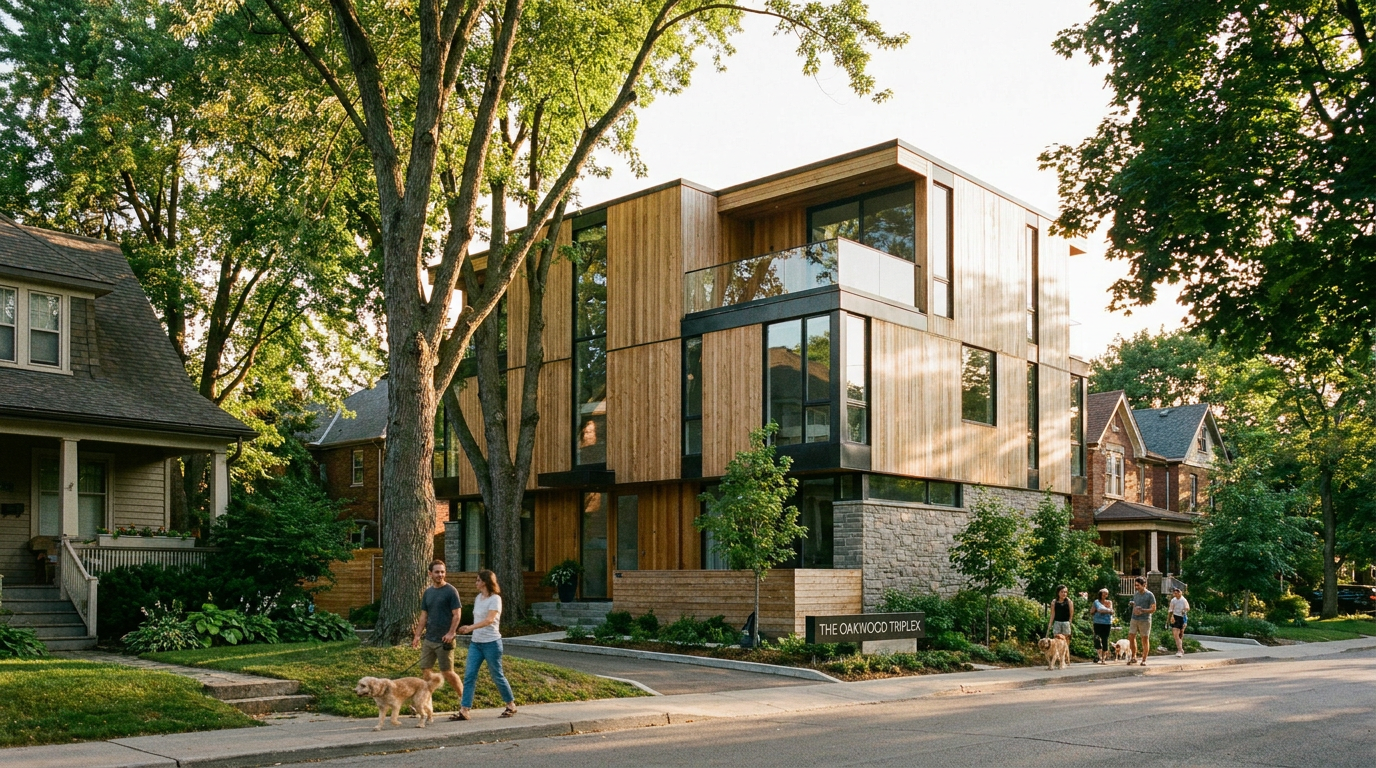
Missing middle housing refers to multi-unit structures like duplexes, triplexes, townhomes, and accessory dwelling units (ADUs) that fit seamlessly into traditional residential neighborhoods.
Did Austin's new housing only benefit the wealthy?
No. While much of the new construction was market-rate, the surge in supply relieved pressure across the board. Rents in older, non-luxury buildings (Class C) fell by 11 percent.
Why did Minneapolis home prices drop without a massive construction boom?
Economists found that the zoning reform altered market expectations. By signaling that more housing could be built in the future, it reduced speculative demand and urgency among buyers, which suppressed price growth.
Does zoning reform solve homelessness?
It is a crucial first step. Cities with flexible zoning, like Houston, have seen significant drops in homelessness compared to strictly zoned cities like Dallas, though experts agree direct subsidies are still needed for the lowest-income populations.
Sources
Source coverage
7 outlets
3 viewpoints surfaced






[1]Pew Charitable TrustsHousing Researchers & Economists
Austin's surge of new housing construction drove down rents
Read on Pew Charitable Trusts →[2]Texas Public Policy FoundationYIMBY Advocates & Urbanists
Austin's Simple Fix for Soaring Housing Costs
Read on Texas Public Policy Foundation →[3]Urban InstituteHousing Researchers & Economists
How Upzoning Affects Housing Supply: Evidence and Implications
Read on Urban Institute →[4]EconStorHousing Researchers & Economists
Zoning Reforms and Housing Affordability: Evidence from the Minneapolis 2040 Plan
Read on EconStor →[5]NeighborWorks AmericaAffordable Housing Providers
Bridging the Missing Middle
Read on NeighborWorks America →[6]Slow BoringYIMBY Advocates & Urbanists
The YIMBYs were right
Read on Slow Boring →[7]Factlen Editorial TeamHousing Researchers & Economists
Synthesis by Factlen editorial team
Read on Factlen Editorial Team →
Every angle. Every day.
Get real estate stories with full source coverage and perspective breakdowns delivered to your inbox.