
Justice Department Approves $111 Billion Paramount and Warner Bros. Merger
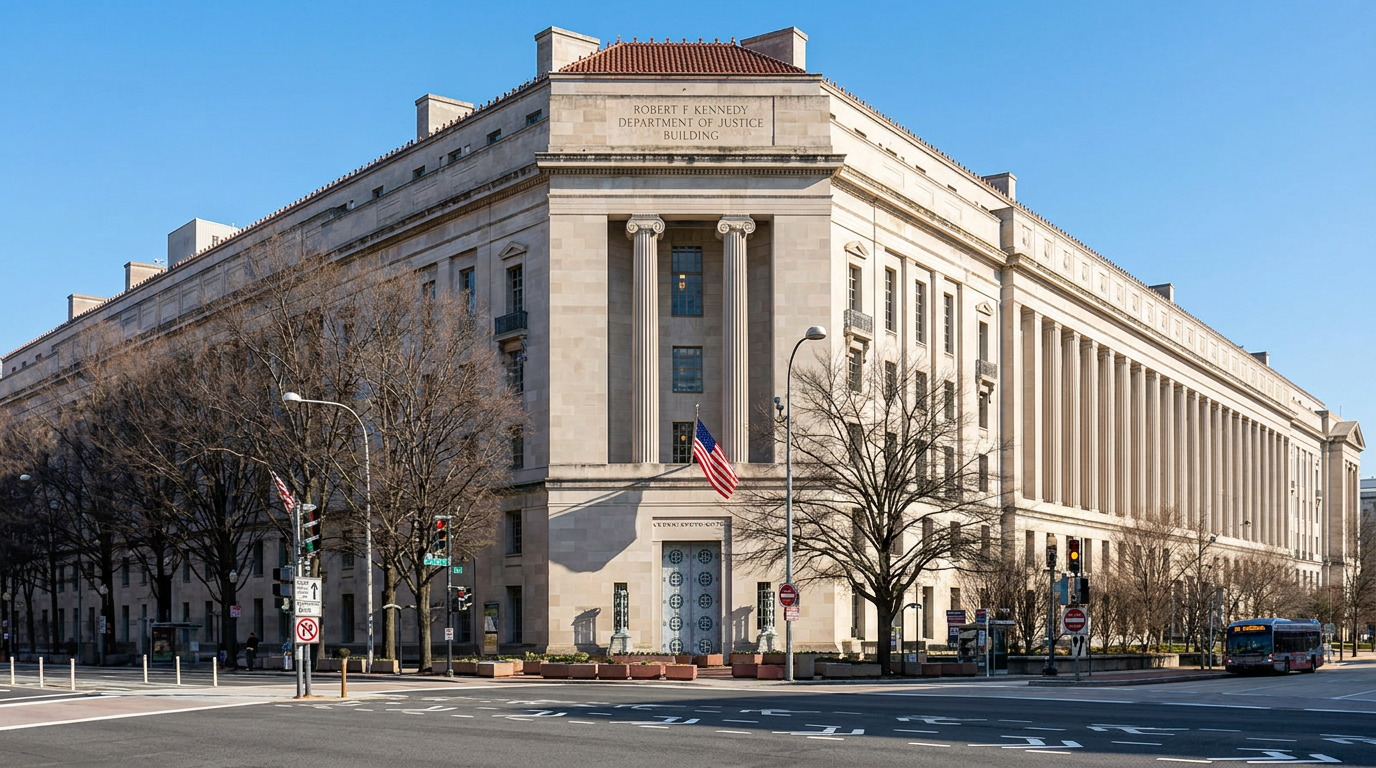
The U.S. Justice Department has cleared the massive merger between Paramount Skydance and Warner Bros. Discovery, concluding the deal will not harm consumers despite combining major film studios and news networks.
By Factlen Editorial Team
- Federal Regulators & Executives
- The merger is a necessary evolution to keep legacy media competitive against dominant tech platforms.
- State Prosecutors & Consumer Advocates
- Consolidating major studios and news networks threatens consumer choice and journalistic independence.
- Political Critics
- The swift approval reflects concerning political favoritism toward the Ellison family.
What's not represented
- · Independent Film Producers
- · Media Union Representatives
- · Consumer Subscribers
Why this matters
This $111 billion consolidation places two of America's largest news organizations (CNN and CBS) and premier entertainment libraries (HBO and Paramount) under a single corporate roof. The approval signals a major shift in federal antitrust enforcement, accepting that legacy media companies must merge to survive against tech giants like Apple and Amazon.
Key points
- The U.S. Justice Department has approved the $111 billion merger of Paramount Skydance and Warner Bros. Discovery.
- The deal combines major streaming platforms, historic film studios, and two leading television news networks, CNN and CBS News.
- Federal regulators concluded the merger will not harm consumers, citing intense competition from tech giants like Netflix and Amazon.
- California's attorney general and other state prosecutors are still investigating the deal and may file lawsuits to block it.
- The merger faces ongoing scrutiny from UK and European regulators ahead of late-summer deadlines.
The United States Justice Department has officially cleared the $111 billion merger between Paramount Skydance and Warner Bros. Discovery, removing the largest federal regulatory hurdle for a landmark deal that will fundamentally reshape the American media and entertainment landscape. The antitrust division's approval, announced late Friday evening after an exhaustive eight-month investigation, allows the unprecedented combination of two historic Hollywood film studios, major streaming platforms HBO Max and Paramount+, and television news giants CNN and CBS News. The decision marks a defining moment in corporate consolidation, signaling the federal government's willingness to allow legacy media conglomerates to scale up dramatically in response to the shifting dynamics of the global entertainment industry.[1][2]
In its detailed closing statement, the Justice Department concluded that the massive transaction is unlikely to result in harm to competition or American consumers across streaming video, linear television, or theatrical film distribution. Regulators argued that the modern media ecosystem has expanded so significantly—now heavily dominated by deep-pocketed technology behemoths like Apple, Amazon, and Netflix—that combining these legacy entertainment companies will actually serve to increase market competition. By pooling their vast content libraries and production resources, the newly merged entity is expected to possess the financial leverage necessary to compete head-to-head with Silicon Valley's streaming dominance.[1][3][4]
Paramount Skydance, controlled by tech heir David Ellison, welcomed the federal decision, stating that the newly formed conglomerate will be far better positioned to compete for audiences, premier talent, and crucial investment dollars. A company spokesperson emphasized that the merger is inherently pro-competitive and that leadership remains intensely focused on completing the transaction as quickly as possible to deliver tangible benefits to creators and consumers alike. The swift accumulation of power under Ellison’s leadership represents a generational shift in Hollywood, as traditional studios pivot aggressively to survive the streaming era.[2][5]

However, the federal government's green light does not guarantee a completely smooth path to finalization for the media giants. California Attorney General Rob Bonta immediately responded to the Justice Department's announcement by stating that the merger remains under active investigation by his office. This public declaration strongly signals that a coalition of state attorneys general could still file their own antitrust lawsuits in an attempt to block or alter the consolidation, setting the stage for a potential legal showdown between state prosecutors and the newly approved conglomerate.[1][5]
State prosecutors and consumer advocacy groups have consistently warned that merging two of the world's largest news organizations and entertainment libraries could ultimately reduce choices and drive up subscription prices for American households. If state officials do decide to sue, they will face the exceptionally high legal burden of convincing a federal judge that the nation's top antitrust regulators fundamentally failed to properly assess the market. The Justice Department emphasized that its career staff reviewed over two million documents from more than 80 custodians before reaching their conclusion, creating a formidable evidentiary record for any challengers to overcome.[1][4][5]
Beyond the economic arguments, the $111 billion deal has drawn intense political scrutiny and sparked fierce debate in Washington. Critics and Democratic lawmakers have repeatedly pointed to the close personal and financial ties between President Donald Trump and the Ellison family. David Ellison's father, Oracle co-founder Larry Ellison, is a prominent financial backer and close adviser to the president on artificial intelligence and other policy matters, leading some watchdogs to question whether political alliances influenced the regulatory review process.[3][4]

Beyond the economic arguments, the $111 billion deal has drawn intense political scrutiny and sparked fierce debate in Washington.
Adding to the complex optics of the merger's approval, David Ellison is scheduled to join President Trump this weekend at a high-profile Ultimate Fighting Championship event hosted on the White House South Lawn. The gathering, which coincides with the president's 80th birthday, doubles as a highly visible celebration of the merger's clearance. Paramount executives have consistently and forcefully dismissed allegations that political favoritism played any role in the approval, while the Justice Department explicitly noted that career antitrust staff—not political appointees—led the rigorous and independent review.[4][6]
While the domestic federal hurdles have been cleared, the mega-merger still faces significant international regulatory scrutiny before it can be finalized. Earlier this week, the United Kingdom's Competition and Markets Authority officially opened an investigation to determine if the deal will result in a substantial lessening of competition within the UK market. The British watchdog has set an August deadline to determine whether the merger requires a more in-depth, phase-two review, which could potentially delay the integration of the companies' global assets.[1]

Simultaneously, European regulators are conducting their own rigorous examinations into the complex funding structure behind the acquisition. Investigators are specifically scrutinizing the $24 billion in equity financing provided by three sovereign-wealth funds based in the Gulf, raising questions about foreign influence and market capitalization in the European media sector. Both the UK and European reviews have late-summer deadlines, keeping the final global architecture of the deal in a state of conditional suspense as international authorities weigh the broader implications of the buyout.[1]
As the companies navigate these final international and state-level roadblocks, the broader entertainment and journalism industries are bracing for a seismic operational shift. The impending integration of CNN and CBS News under a single corporate umbrella has sparked widespread anxiety among media professionals regarding potential layoffs and the homogenization of national news coverage. Ultimately, the Justice Department's approval cements a new reality for Hollywood and broadcast journalism, consolidating a century of media history into a streamlined conglomerate designed to weather the digital age.[2][5]
How we got here
July 2025
David Ellison's Skydance Media assumes control of Paramount and CBS.
October 2025
Paramount and Warner Bros. Discovery announce their intention to merge in a $111 billion deal.
June 12, 2026
The U.S. Justice Department officially clears the merger after an eight-month antitrust investigation.
August 2026
Deadline for the UK's Competition and Markets Authority to issue its initial findings on the deal.
Viewpoints in depth
Federal Regulators & Executives
The merger is a necessary evolution to keep legacy media competitive against dominant tech platforms.
Antitrust officials and corporate executives argue that the definition of a media monopoly has fundamentally changed. In an era where Apple, Amazon, and Netflix dominate content distribution, combining Paramount and Warner Bros. Discovery is viewed as a survival mechanism rather than an anti-competitive threat. The Justice Department concluded that the expanded streaming market provides ample consumer choice, meaning this consolidation will strengthen the industry's ability to invest in high-quality production and talent without inherently driving up prices.
State Prosecutors & Consumer Advocates
Consolidating major studios and news networks threatens consumer choice and journalistic independence.
State attorneys general, led by California's Rob Bonta, view the merger as a dangerous concentration of power. Advocates warn that placing CNN and CBS News under a single corporate umbrella could homogenize national news coverage and reduce journalistic competition. Furthermore, they argue that while tech giants are formidable, allowing legacy studios to merge will inevitably lead to reduced output, fewer choices for theatrical releases, and higher subscription fees for American households once the newly formed conglomerate exercises its market dominance.
Political Critics
The swift approval reflects concerning political favoritism toward the Ellison family.
Democratic lawmakers and media watchdogs have raised alarms over the optics and speed of the approval process. Larry Ellison, David Ellison's father, is a major financial backer of President Trump, and critics argue this relationship smoothed the path for the $111 billion deal. Skeptics point to recent editorial shifts at CBS News and the highly publicized joint appearance of David Ellison and President Trump at a White House UFC event as evidence that the merger's clearance was influenced by political alliances rather than pure antitrust doctrine.
What we don't know
- Whether state attorneys general will officially file a coordinated lawsuit to block the merger despite federal clearance.
- How the newly formed conglomerate will integrate the distinct editorial operations of CNN and CBS News.
- If the UK's Competition and Markets Authority will demand structural concessions or divestitures before approving the deal.
Key terms
- Antitrust Division
- A law enforcement agency within the U.S. Justice Department responsible for enforcing laws against anti-competitive business practices and monopolies.
- Linear Television
- Traditional television broadcasting where scheduled programs are watched at a specific time on a specific channel, rather than streamed on demand.
- Sovereign-Wealth Fund
- A state-owned investment fund that invests in real and financial assets globally, often funded by a country's foreign exchange reserves.
Frequently asked
Will this merger raise the price of my streaming subscriptions?
The Justice Department concluded the deal is unlikely to harm consumers, but state prosecutors warn that reduced competition could eventually lead to higher prices for households.
Are CNN and CBS News merging?
The deal places both major news networks under the same corporate parent, though it remains unclear how their specific newsrooms and editorial operations will be integrated.
Can the merger still be stopped?
Yes. While the federal government approved the deal, state attorneys general could still file lawsuits to block it, and European regulators are still conducting their own reviews.
Sources
Source coverage
6 outlets
3 viewpoints surfaced






[1]The GuardianState Prosecutors & Consumer Advocates
US justice department approves $111bn merger of Paramount and Warner Bros Discovery
Read on The Guardian →[2]The Washington PostFederal Regulators & Executives
Justice Department approves Paramount's deal to buy Warner Bros.
Read on The Washington Post →[3]NPRFederal Regulators & Executives
Paramount-Warner Brothers merger gets Justice Department approval
Read on NPR →[4]ForbesPolitical Critics
Justice Department Greenlights Paramount-Warner Bros Merger With No Conditions
Read on Forbes →[5]Los Angeles TimesState Prosecutors & Consumer Advocates
Justice Dept. approves Paramount's acquisition of Warner Bros.
Read on Los Angeles Times →[6]NYTPolitical Critics
Merger Cleared, David Ellison to Join Trump at U.F.C. Bout
Read on NYT →

More in news politics
See all 8 stories →Digital Provenance
How 'Digital Provenance' is Replacing Traditional Fact-Checking in the Deepfake Era
0 sources

US-Iran Relations
Anticipated US-Iran Peace Deal Complicated by Israeli Strikes on Beirut
0 sources

US-Iran Relations
US and Iran Near Peace Deal as Israeli Strikes on Beirut Threaten Ceasefire
0 sources

US-Iran Relations
Trump's US-Iran Peace Deal Nears Signing as Israel Strikes Beirut
0 sources

Every angle. Every day.
Get news politics stories with full source coverage and perspective breakdowns delivered to your inbox.