
US and Iran Near Peace Deal as Israeli Strikes on Beirut Threaten Ceasefire
The United States and Iran are reportedly hours away from signing a memorandum of understanding to end their four-month war, even as Israeli airstrikes in Lebanon complicate the diplomatic breakthrough.
By Factlen Editorial Team

- U.S. Administration
- Prioritizes ending the four-month war, reopening the Strait of Hormuz to stabilize global markets, and securing a baseline commitment from Iran to halt nuclear weapon development.
- Israeli Government
- Deeply skeptical of the deal, arguing it provides Iran with sanctions relief without dismantling its nuclear infrastructure or halting its support for proxy groups like Hezbollah.
- Iranian Leadership
- Seeks the lifting of the U.S. naval blockade and access to frozen assets, but faces internal pressure from hardliners who believe giving up control of the Strait of Hormuz surrenders their primary leverage.
- Lebanese Militant Factions
- Hezbollah rejects the separate Lebanon ceasefire proposal, demanding a full Israeli withdrawal, and continues cross-border strikes despite the broader regional de-escalation efforts.
What's not represented
- · Lebanese civilian population
- · Global shipping industry executives
Why this matters
This proposed agreement could end a four-month war that has choked global energy supplies and threatened a wider regional conflict. However, the simultaneous escalation in Lebanon highlights the fragility of the deal, leaving the Middle East teetering between a historic diplomatic breakthrough and renewed all-out war.
Key points
- The U.S. and Iran are preparing to sign a 60-day memorandum of understanding to end their four-month conflict.
- The deal would reopen the Strait of Hormuz and lift the U.S. naval blockade on Iranian ports.
- Iran has reportedly agreed to dilute its highly enriched uranium and not acquire a nuclear weapon.
- Israel launched airstrikes on Beirut's southern suburbs hours before the anticipated signing.
- Israel stated the strikes were in retaliation for Hezbollah firing projectiles into northern Israel.
- The ongoing Israel-Hezbollah conflict threatens to derail the broader U.S.-Iran diplomatic progress.
The United States and Iran are reportedly hours away from signing a landmark memorandum of understanding to end their four-month direct war. Yet, as diplomats rush to finalize the text, Israeli airstrikes on the Lebanese capital of Beirut threaten to unravel the fragile diplomatic progress.[1][5][6]
The proposed agreement represents the closest Washington and Tehran have come to halting a conflict that has choked global shipping and fueled a spiraling energy crisis. U.S. President Donald Trump announced that the deal is scheduled to be signed on Sunday, promising that the strategic Strait of Hormuz will immediately reopen to all international vessels.[1][2][3]
The draft memorandum is not a final peace treaty, but rather a framework designed to de-escalate immediate hostilities and set a timeline for deeper negotiations. According to officials familiar with the text, the initial deal extends the current ceasefire for 60 days.[3][8]
During this 60-day window, Iran is expected to lift its blockade on the Strait of Hormuz—a critical waterway that previously carried a fifth of the world's oil supplies. In exchange, the United States will lift its naval blockade on Iranian ports and begin the process of unfreezing billions of dollars in Iranian assets.[1][2][4]

The core of the U.S.-Iran dispute—Tehran's nuclear program—is addressed through a phased approach. Senior Iranian officials indicate that under the draft agreement, Tehran commits to neither producing nor acquiring nuclear weapons.[1][5]
Specifically, the U.S. has reportedly secured an agreement for Iran to dilute its stockpile of highly enriched uranium. The exact technical mechanisms and inspection regimes for this dilution will be the primary focus of the 60-day negotiation period, leaving significant details unresolved in the short term.[5][8]
However, the U.S.-Iran negotiations are inextricably linked to the ongoing war between Israel and Hezbollah in Lebanon. Iran has consistently demanded that any comprehensive peace deal with the United States must include an end to Israeli military operations against its Lebanese proxy.[3][6]
However, the U.S.-Iran negotiations are inextricably linked to the ongoing war between Israel and Hezbollah in Lebanon.
A separate U.S.-brokered ceasefire between Israel and Lebanon, announced in early June, has rapidly deteriorated. The agreement called for the creation of "pilot zones" under the exclusive control of the Lebanese Armed Forces, but Hezbollah leadership firmly rejected the proposal, demanding a complete Israeli withdrawal.[7]

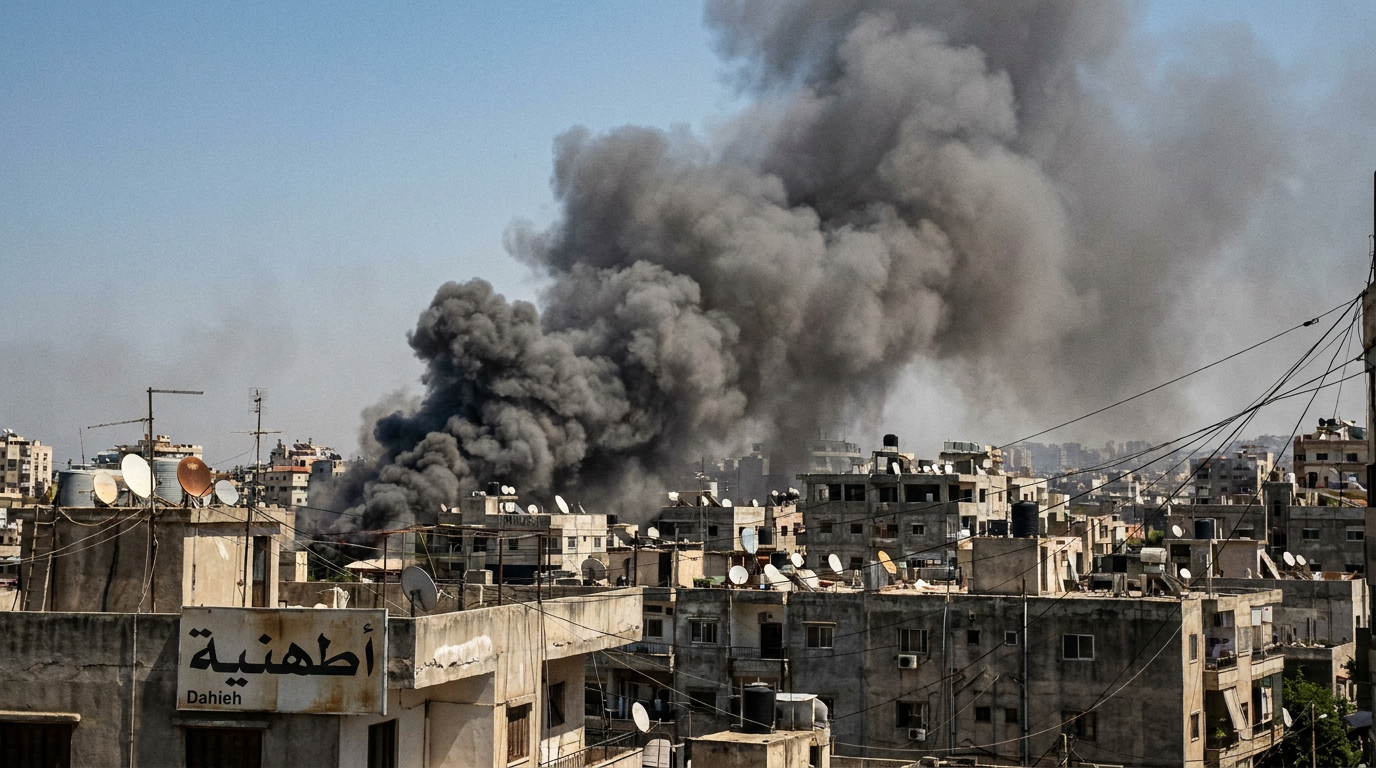
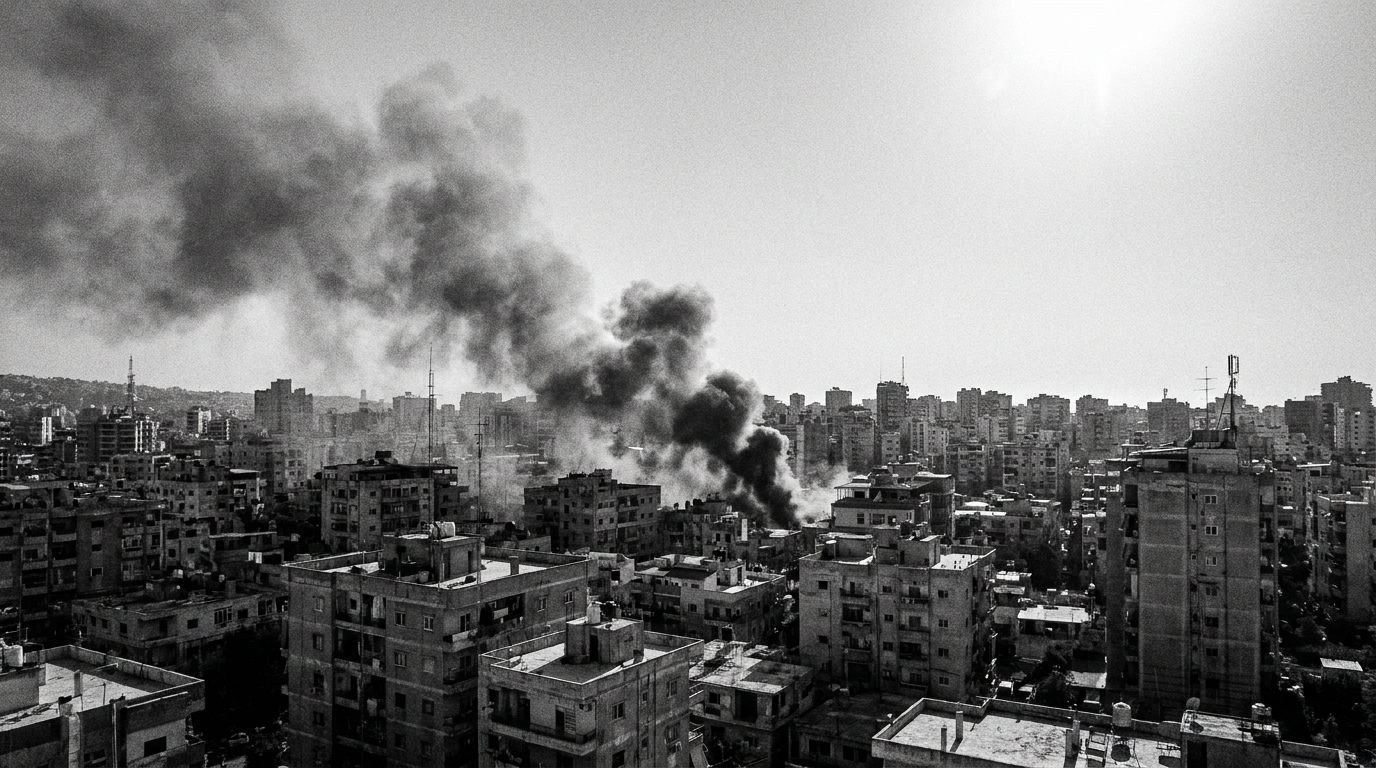
On Sunday, just hours before the anticipated U.S.-Iran signing, the Israel Defense Forces (IDF) launched targeted airstrikes on the Dahiyeh district in Beirut's southern suburbs. The IDF stated the strikes targeted Hezbollah command centers.[5][6]
Israeli Prime Minister Benjamin Netanyahu and Defense Minister Israel Katz issued a joint statement confirming the strikes, framing them as a direct response to Hezbollah launching projectiles into northern Israeli communities. "Israel will not tolerate fire directed at its territory," the statement read, underscoring Israel's refusal to halt operations while under attack.[5]
The timing of the Beirut strikes highlights a growing rift between Jerusalem and Washington. Netanyahu has clashed with the Trump administration over U.S. pressure to curb military action in Lebanon. Israeli officials are deeply concerned that a U.S.-Iran deal will leave Hezbollah's infrastructure intact and allow Iran to rebuild its proxy network under the cover of a ceasefire.[1][4]
While Israel is not a party to the U.S.-Iran memorandum, Netanyahu has publicly expressed his expectation that any final agreement must include the total dismantling of Iran's enrichment infrastructure and a cessation of its support for regional militant groups. Defense Minister Katz reiterated that Israel expects Trump to prevent Iran from obtaining nuclear weapons and will not withdraw from its security zones in Lebanon.[2][4]

In Tehran, the proposed deal faces fierce opposition from hardline factions. Critics argue that the agreement disproportionately benefits the United States by stripping Iran of its primary leverage—control over the Strait of Hormuz—in exchange for temporary sanctions relief and vague promises regarding future negotiations.[2][3]
To bridge these divides, international mediators are working frantically. Qatari negotiators flew to Tehran on Sunday morning to help facilitate the final signing, joining Pakistani officials who have spent months leading the back-channel communications between Washington and Tehran.[3][5]
Despite Trump's confident timeline, Iranian state media has cautioned that Tehran has "not yet" made a final decision on signing the memorandum. The recent Israeli strikes on Beirut add a volatile new variable, testing whether Iran will prioritize sanctions relief or its commitment to Hezbollah.[1][3]
If the memorandum is signed, it will mark a significant diplomatic breakthrough, but only the first step in a long process. The ensuing 60 days will require the U.S. and Iran to translate broad commitments into verifiable actions, all while navigating the explosive reality of the Israel-Hezbollah conflict on the ground.[3][8]
How we got here
February 2026
Direct military conflict breaks out between the United States and Iran, leading to naval blockades and the closure of the Strait of Hormuz.
April 2026
A fragile, temporary ceasefire is established between the U.S. and Iran, initiating months of back-channel negotiations mediated by Pakistan and Qatar.
Early June 2026
The U.S. brokers a separate ceasefire proposal between Israel and Lebanon, which Hezbollah subsequently rejects.
June 13, 2026
U.S. President Donald Trump announces that a peace deal with Iran is scheduled to be signed on Sunday, June 14.
June 14, 2026
Hours before the anticipated signing, Israel launches airstrikes on Hezbollah targets in Beirut in response to cross-border rocket fire.
Viewpoints in depth
U.S. Administration's view
The primary goal is to end the immediate conflict and stabilize global energy markets.
For the U.S. administration, the immediate priority is halting a four-month war that has severely disrupted global shipping and energy supplies. By securing a commitment to reopen the Strait of Hormuz, the U.S. aims to alleviate economic pressures. Furthermore, officials view the 60-day window as a necessary stepping stone to establish verifiable limits on Iran's nuclear program, arguing that a phased approach is more realistic than holding out for an immediate, comprehensive treaty.
Israeli Government's view
The deal provides Iran with premature relief while leaving its proxy networks intact.
Israeli leadership views the proposed memorandum with deep skepticism. Prime Minister Benjamin Netanyahu and Defense Minister Israel Katz argue that lifting sanctions and unfreezing assets will only embolden Iran to further fund proxy groups like Hezbollah. Israel insists that any agreement must mandate the complete dismantling of Iran's nuclear infrastructure, rather than just a temporary freeze, and maintains that it must retain full military freedom of action in Lebanon to protect its northern borders.
Iranian Leadership's view
Sanctions relief is necessary, but giving up control of the Strait of Hormuz is a significant concession.
Within Tehran, the leadership is balancing the urgent need for economic relief against fierce internal opposition. While the lifting of the U.S. naval blockade and access to billions in frozen assets are critical wins, hardliners argue that relinquishing control over the Strait of Hormuz removes Iran's most potent geopolitical leverage. They remain wary of the 60-day negotiation period, fearing the U.S. will demand excessive nuclear concessions without guaranteeing long-term economic stability.
Hezbollah's view
Any ceasefire in Lebanon must be accompanied by a complete Israeli withdrawal.
Hezbollah has firmly rejected the U.S.-brokered ceasefire proposal for Lebanon, which called for the Lebanese Armed Forces to take exclusive control of southern "pilot zones." The militant group argues that such terms fulfill Israeli objectives and insists that it will not halt its cross-border operations until Israel completely withdraws its forces. The group views its ongoing conflict with Israel as separate from, yet integral to, the broader regional power dynamics involving its primary backer, Iran.
What we don't know
- Whether the Israeli strikes on Beirut will cause Iran to pull out of the signing at the last minute.
- The specific technical mechanisms that will be used to verify the dilution of Iran's highly enriched uranium.
- How the U.S. will enforce the reopening of the Strait of Hormuz if hardline factions in Iran resist the deal.
Key terms
- Strait of Hormuz
- A critical waterway between the Persian Gulf and the Gulf of Oman, through which roughly a fifth of the world's oil supply passes.
- Memorandum of Understanding (MoU)
- A formal agreement between two or more parties that establishes a framework for future negotiations, though it is often not a legally binding treaty.
- Dahiyeh
- A predominantly Shia Muslim district in the southern suburbs of Beirut, known as a stronghold for the Hezbollah militant group.
- Highly Enriched Uranium
- Uranium that has been processed to contain a high percentage of the U-235 isotope, making it capable of being used in nuclear weapons.
Frequently asked
What does the proposed U.S.-Iran deal actually do?
It is a memorandum of understanding that extends the current ceasefire for 60 days. During this time, Iran agrees to reopen the Strait of Hormuz and halt nuclear weapons development, while the U.S. lifts its naval blockade and begins unfreezing Iranian assets.
Why is Israel bombing Beirut right now?
Israel states it is retaliating against Hezbollah for firing projectiles into northern Israel. The strikes target Hezbollah infrastructure in Beirut's southern suburbs, complicating the broader U.S.-Iran peace efforts.
How does the Lebanon conflict affect the U.S.-Iran deal?
Iran has previously insisted that any peace deal with the U.S. must include an end to Israeli strikes in Lebanon. The ongoing fighting between Israel and Hezbollah threatens to derail the signing of the U.S.-Iran memorandum.
What happens to Iran's nuclear program?
Under the draft deal, Iran commits to not acquiring a nuclear weapon and agrees to dilute its highly enriched uranium. The specific mechanisms for this will be negotiated during the 60-day window.
Sources
Source coverage
8 outlets
4 viewpoints surfaced








[1]The GuardianU.S. Administration
Trump says Iran peace deal could be signed by Sunday, with strait of Hormuz to open shortly after
Read on The Guardian →[2]CBS NewsU.S. Administration
Iran peace deal to be signed Sunday and strait reopened immediately, Trump says
Read on CBS News →[3]The Washington PostU.S. Administration
U.S. and Iran close to signing ceasefire deal, officials say
Read on The Washington Post →[4]The Times of IsraelIsraeli Government
As Trump pursues his Iran deal, Netanyahu is left in a precarious position
Read on The Times of Israel →[5]The Jerusalem PostIsraeli Government
IDF conducts strikes against Hezbollah infrastructure in Beirut hours before US-Iran deal signing
Read on The Jerusalem Post →[6]Al JazeeraLebanese Militant Factions
Israel attacks Beirut on same day Trump says Iran deal to be signed
Read on Al Jazeera →[7]TIMELebanese Militant Factions
Hezbollah Rejects U.S.-Brokered Cease-Fire Proposal With Israel
Read on TIME →[8]CBCIranian Leadership
U.S., Iran signal agreement to end war is close
Read on CBC →
More in news politics
See all 6 stories →Supreme Court
Supreme Court Enters Final Stretch With 23 Cases That Could Reshape Executive Power
0 sources
US-Iran Deal
Israel Strikes Beirut as U.S. and Iran Near Potential Peace Deal
0 sources
Iran Diplomacy
US and Iran Near Mediated Security Framework Amid Regional Pushback
0 sources
EV Transition
UK to Water Down 2030 Electric Vehicle Sales Targets Amid Industry Pressure
0 sources

Every angle. Every day.
Get news politics stories with full source coverage and perspective breakdowns delivered to your inbox.